A just-starting-out writer had contacted me, asking if I could take a look at their spec.
I did. It wasn’t easy, but I did.
The script had a lot of the usual problems. On-the-nose dialogue. One-dimensional characters. A story that was more a jumbled collection of random events rather than a cohesive series of scenes and sequences.
But even with all of that, what really stood out was the excessive overwriting when it came to setting up a scene, with excessive being a major understatement. The writer seemed to feel the need to provide an extraordinary amount of details – for just about everything.
Just to name a few:
-What kind of furniture is in every single house or apartment
-What kind of food is on the table during a dinner scene
-Why a character, who’s only in one scene, is wearing a particular item of clothing, along with what it looks like
-A detailed list of all the items of clothing a character removes when getting undressed
-The direction a character is driving, along with street names
Did any of these have anything to do with the story?
All together now – of course not.
Then why is it in there?
I posed this question to the writer as part of my notes. They haven’t responded yet, but it’ll be interesting to see what they say about it.
I can’t remember the specific joke/comment about sculpting, but it’s something along the lines of “Start with a block of marble, and then chip away everything that doesn’t look like a (whatever you’re sculpting).”
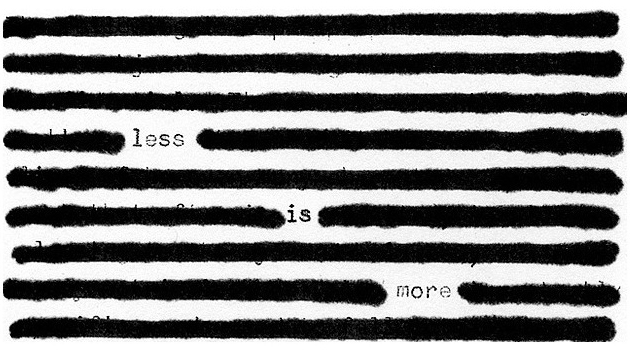
Screenwriting’s very similar. While it’s true you should describe what we’re seeing, there’s no need to drastically overdo it. Some writers don’t know the difference between “painting a picture with words” and “overwhelming us with information”. Or worse, think they’re more or less the same thing.
They are most definitely not.
Everything on the page should have a reason for being there. If it doesn’t, take it out. Trust me, it will not be missed. If you argue that it should stay, you better have a mighty good reason why. Helpful tip – saying “Because I want it to” or “Because I like it” will totally invalidate your argument.
When the writing goes into Overly Descriptive Mode, it simply slams the brakes on the momentum of the story; things really do come to a screeching halt. Wouldn’t you rather the reader stayed interested in what’s going on, and not think “Hold on a second. Why is this here? Is it relevant?”
For a lot of writers starting out, they think they need to cover all the bases and include as much info and detail as possible. Only through constant self-educating will they eventually learn what they should and shouldn’t be doing.
I sincerely hope this writer takes my notes to heart and is able to figure out how to transition from the latter to the former.
 Maximum Z