Ask a Multi-Award-Winning Script Consultant!

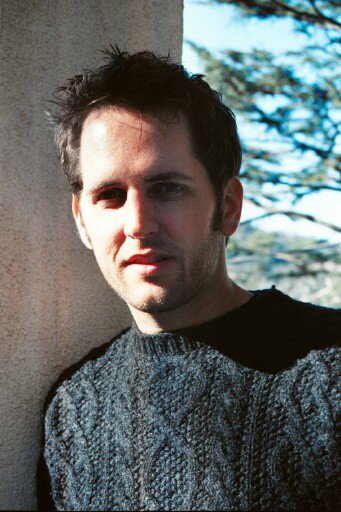
Erik Bork

The latest in a series of interviews with script readers and consultants who would be worth your while to work with if you want to get your script in shape. Today’s spotlight is on Erik Bork, who also runs the website Flying Wrestler.

Erik Bork is best known for his work as a writer-producer on the HBO miniseries Band of Brothers and From the Earth to the Moon – for which he won two Emmy and two Golden Globe Awards. He’s also worked on the writing staff of two primetime dramas, sold multiple original series pitches, and written pilots and features for such companies as Universal, Sony, NBC, Fox, Imagine, Original Film and The Playtone Company. He teaches screenwriting for UCLA Extension and National University’s MFA Program, and has been called one of the Top 10 Most Influential Screenwriting Bloggers.

His book The Idea: The Seven Elements of a Viable Story for Screen, Stage or Fiction is now available.

1. What’s the last thing you read/watched that you thought was incredibly well-written?

I’m continually impressed with how DOWNTON ABBEY tells interesting, emotional, heartfelt stories that are grounded in the realities of its setting, for the various kinds of people who populate it. I’ve been re-watching the first three seasons lately – and think it’s great model for what makes characters and stories compelling, and easy to invest in.

2. How’d you get your start reading scripts?

I’d been a professional screenwriter for about a decade and was being asked to speak to writers groups, teach classes, and give feedback on scripts.

3. Is recognizing good writing something you think can be taught or learned?

Absolutely!

4. What are the components of a good script?

An intriguing and original concept about a compelling and high stakes problem for a character most people can relate to (either the character, and/or the problem) – which focuses on that character as they actively try to solve it, which is complicated and difficult for them, and entertaining for us to watch. I think working with the ten genres in the SAVE THE CAT books are a great tool for working on achieving this.

5. What are some of the most common mistakes you see?

Writers jump to script too quickly, without really developing a concept that has the ingredients necessary to have a chance at success. Stories often don’t have a main character that readers understand and have reason to care enough about, and sometimes it’s not told subjectively through that one person’s point-of-view. The main story problem is often not high stakes enough to the main character’s external life situation (as opposed to their internal life of thoughts, emotions and attitudes). It might not be an active enough challenge where they are pushing the story forward, or a problem that is big enough and hard enough, with enough twists and turns to it. Ultimately, it comes down to achieving the audience’s strong caring, and holding onto that – which is not easy to do.

6. What story tropes are you just tired of seeing?

I get tired of violent adventure stories with life-and-death stakes and a simplistic good vs. evil approach. It’s easiest to grab an audience with that, but it tends to leave me cold – especially when it’s just about visual spectacle, as opposed to realistic characters going through something relatable.

7. What are the three most important rules every writer should know?

-Basic story concept is the most important thing, and hardest to get right.

-The audience must emotionally become one with your main character, which isn’t easy to achieve.

-It’s hard and rare to write something that REALLY works, even for professionals – so stay open to feedback, lots of rewriting, and a long-term process that requires a lot of persistence and ongoing belief.

8. Have you ever read a script that was an absolute, without-a-doubt “recommend”? If so, could you give the logline?

I don’t really provide coverage-style “recommend”/”consider”/”pass” ratings, and don’t exactly think in those terms. I’m more about helping the writer better their craft and project(s), and never look for or expect a script that comes to me to be something they could instantly do something with in the marketplace.

9. How do you feel about screenwriting contests? Worth it or not?

They’re in no way a panacea or golden ticket, and most of them probably won’t do much to advance one’s career – unless you finish really highly in one of the top contests. But it can be a good way to see how you’re doing, and get quality feedback, if you find the price reasonable.

10. How can people can get in touch with you to find out more about the services you provide?

You’ll find my script consulting page on my “Flying Wrestler” blog. You can also e-mail me directly at erik@flyingwrestler.com.

11. Readers of this blog are more than familiar with my love/appreciation of pie. What’s your favorite kind?

Cherry, hands down.
Ask a Proficiently Perceptive Script Consultant!

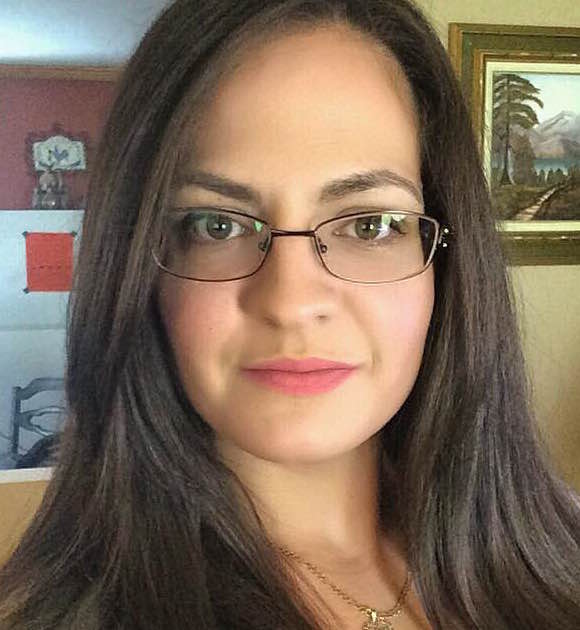
Sidney Stephens

The latest in a series of interviews with script readers and consultants who would be worth your while to work with if you want to get your script in shape. Today’s spotlight is on Sidney Stephens of Sidney Scripts Consulting.

1. What’s the last thing you read/watched that you thought was incredibly well-written?

One of my favorite things is when a novel is adapted to the big screen. That’s when the writer in me really comes out to play. I’ll first read the book, then the screenplay, and eventually I’ll get around to seeing the film. I did this about a year ago with the hit TV series “Under the Dome” by Stephen King (only read the pilot script, however), and I also did this with “Gone Girl” by Gillian Flynn. It’s very interesting to see how the story changes from one medium to the next. I enjoyed both of these the most of my recent reads.

2. How’d you get your start reading scripts?

While getting my Master’s degree in Creative Writing years ago, I read numerous scripts, mostly for my classmates, friends and co-writers, and mostly as a pay-it-forward kind of thing. Over a year ago, a friend of mine asked if I would like to start up a script consulting business together. I’d done so much ‘freelance’ work that it made sense. Three months later, my friend backed out of the whole thing. I, on the other hand, rarely back out of anything. So here I am, sole owner of Sidney Scripts Consulting.

3. Is recognizing good writing something you think can be taught or learned?

Absolutely. Part of learning to write a good screenplay is learning to recognize what that means. And there’s no better way to do that than to read tons of screenplays. Breaking them down into what makes them good and what makes them great. The real trick to recognizing a good screenplay is not finding one that reads smoothly and is error free, its finding one that reads smoothly, is error free, and will translate all its intended emotion to the screen in a way that will captivate its targeted audience.

4. What are the components of a good script?

Believable characters and natural dialogue are two very important components of any decent script. Good characters are what draw the audience into the situation; they are what the audience relates to. If they aren’t believable or their dialogue isn’t natural or strong, it will leave the audience asking themselves why they even care to finish the script/film. Yes, settings are awesome and a twisty plot is always a great way to ramp up a screenplay, but without relatable, believable characters, its not enough to make a good script great.

5. What are some of the most common mistakes you see?

Some writers, mostly new writers, try to dictate every inch of how the story will play out on film. With tons of camera angles, actor cues, and scene transitions it is hard to stay in the story. It’s important for the writer to know their part of the process and to do just that. Let the actors do their jobs, allow the directors and cameramen do their job, and just stick to writing a great story. Always remember to show, not tell.

6. What story tropes are you just tired of seeing?

End of the world stories are really starting to wear me out. I think I’ve read every possible way the earth could end, blow up, shatter, freeze, burn, etc. and yet, the surrounding stories are all the same. Man saves family only to stay behind and sacrifice himself for the future of the world. The entire movie is watching them attempt to stop the inevitable only to fail miserably. Until finally, at the last possible moment, the guy saves the planet and is reunited once again with his loved ones. Yawn.

7. What are the 3 most important rules every writer should know?

  • Writing is rewriting. No matter how great you think your draft is, it needs a rewrite. Deal with it.
  • Have a target audience and know exactly what it takes to reach them.
  • Write what you know.

8. Have you ever read a script that was an absolute, without-a-doubt “recommend”? If so, could you give the logline?

I’ve definitely read some worthy scripts in my days as a consultant. However, it is only after working closely with the writer on rewrites and such and knowing what producers were looking for at that particular time. I think finding any script that is “without a doubt” anything is a rare find that all consultants want that next script on their desk to be.

9. How do you feel about screenwriting contests? Worth it or not?

Screenwriting contests are a great way to get your screenplay read and possibly receive some fairly descent feedback. However, using these contests to “break into the business” or as a way of earning thousands on their scripts, they better be something spectacular. The reality is, hundreds of thousands of writers enter screenwriting competitions every year, and only a handful make it past the volunteer readers in the initial read. Can it be your screenplay? Of course. It is worth it? Well, that depends on the writer.

10. How can people get in touch with you to find out more about the services you provide?

My website: www.SidneyScriptsConsulting.com

My Facebook page: https://www.facebook.com/sidney.stephens.9465

Email me with any questions: SidneyScriptsConsulting@gmail.com

11. Readers of this blog are more than familiar with my love/appreciation of pie. What’s your favorite kind?

Sorry, I’m a brownie girl!*

(*Editor’s note: The blasphemy of this statement will not be held against Ms. Stephens.)