Doing what I can to make some headway with this rewrite, plus a few other items, and believe this post from the archives sums up part of the process quite nicely.
And for the simple reason I like how it turned it out – this.

I’ve noticed a trend recently popping up on a few online screenwriting forums.
Writers are posting their material, asking for feedback. Concepts, loglines, the first page or the first few pages of their script. Any and all of them.
On one hand, I can understand the desire to get feedback. You want to know if what you’ve got works, and if it doesn’t, how it could be improved.
On the other hand, you’re asking what is, for the most part, an assortment of total strangers with unknown levels of experience to tell you what they think. Can’t say that I’m too crazy about that.
It’s like walking into a party where you don’t know anybody, standing in the middle of the room and shouting “Hey! What do you think?”
Don’t do that.
As has been stated many times on these pages – networking is key.
Professional relationships are a vital part of this business. They take time and effort to establish and maintain, but are definitely worth it in the long run.
You need to put yourself out there and get to know other writers, preferably in person, but online/virtually works just as well. Both have benefitted me greatly, and could do the same for you.
Here are a few previous posts which might come in handy.
Lattes, lunches & kindred spirits
Hey! Long time no (preferred form of communication)
Now get out there and meet people.
-Two weeks ago, I ran the SoFi Golden Gate Half-marathon with a time of 2:01:16. Not bad, especially considering the amount of uphill.
This Sunday I’ll be across the Bay and running the Berkeley Half-marathon for the first time (it’s also my 5th and final race for this year). The course is a little flatter than San Francisco, so while coming in under 1:55 would be great, I’ll also be happy with anything under 2 hours.
Once again proving that the journey to succeed really is a (half) marathon, not a sprint.
See you at the finish line.

What’s the last thing you read/watched that you thought was incredibly well-written?
The best book I’ve read this year is Haruki Murakami’s 1Q84. I was absolutely mesmerized and couldn’t put it down. The blend of fantasy with serious fiction was just enthralling.
Tell us a little about your writing background.
I’ve been writing seriously for over a decade and started my blog for writers in 2013. Shortly after I started the blog I went into business as a writing coach and I quickly noticed a pattern with my new clients. Nearly all of them were intuitive, introverted personality types. Using the insights I gained from working with my clients I wrote a book called The INFJ Writer, which came out in 2016. This year I released my addiction memoir, Between the Shadow and Lo. So, I currently juggle a few different writing responsibilities—I still write regularly for my blog, I work on my own books, and then I help my clients with their manuscripts.
Is recognizing good writing something you think can be taught or learned?
Wow, this is a tricky question and I have heavily biased opinions on it. I have a degree in English Literature, and I would say that it’s actually been one of the biggest obstacles in my own writing journey. Studying literature at the university level put me in an environment with a lot of “experts” who felt they definitely knew how to “recognize good writing.” But from my observations, this basically came down to the writers who have won awards, been canonized in some way, or who everyone has agreed is a “master.”
When I was a kid growing up in the 80s, for example, Stephen King was dismissed by a lot of people who liked good literature. Even when I was working in a bookstore in the early 2000s, a lot of the booksellers looked down on his books. Today, he’s been recognized as a “master” and so now it’s a different story. So, no, I don’t think “recognizing good writing” is something that can be taught. I think you have to learn how to read everything with an open mind and trust your own judgement. If you like something, you like something and that’s that,
Your book is called THE INFJ Writer. What does INFJ mean, and how does it apply to writers?
INFJ is one of the 16 different personality types in the Myers-Briggs Typology personality system. The letters stand for Introverted (I) Intuitive (N) Feeling (F) Judging (J). Another way of putting it is that INFJs are introverts who interpret the world through their intuition and use emotion to make the majority of their value judgements. INFJs are about 1% of the population, but from my observations they make up a much larger percentage of the writers out there.
What inspired you to write it?
It was a combination of different factors. I struggled for many years to write anything. I wanted to write more than anything else, but I did horribly in the creative writing classes I took in college. The whole “critique circle” thing didn’t work for me at all. I also couldn’t write in a linear fashion or use any sort of an outline. I had a lot of shame around these issues for years. It wasn’t until I painstakingly stitched together my first novel that I realized I wrote in a radically different way from the norm. When I started talking about these issues on my blog I got a huge response, and then, as I mentioned, I started taking on clients as a writing coach. Almost all of these people had found me through one article or another that I wrote on being an INFJ writer. I saw immediately that we all had the same problems. I knew then that I needed to write a book about this.
Some writers feel their talent and/or creativity might not be strong enough. How would you approach that?
A lot of people say creativity is a muscle, and I do agree with that to a certain extent, but for me, personally, it’s more like a portal. The more you open yourself up, open your heart and let things just show up in your mind without judgment, the more the portal widens and lets more cool things come through. If an idea pops in your head and you instantly go into rational mode and start judging it, or try to analyze how it will work as a plot or how readers will respond to it, you’ve pretty much set yourself up to kill the idea right there. If you’re habitually in judgement mode (toward yourself or others) you’re just not going to get very far with strengthening your creativity.
Is there a “proper mindset” to being a writer?
I don’t know if there’s a “proper mindset” but I would say there is a “helpful mindset” and that would be: Just Chill Out. Almost every single blockage or obstacle I work with my clients on can be traced back to the root of anxiety. Almost every writer is anxious that they’re not talented, they’re not doing it right, everyone else is doing it better, they’re not published yet, their novel doesn’t look like it’s supposed to, etc. If you’re serious about being a writer, you have to chill out on all this stuff. You’ll have good days and bad days and nothing is the end of the world. You’ll write stuff and be convinced it’s the work of a genius and look back a few years later and hate it. You’ll write stuff that you don’t think is very good and then other people will love it. You just have to hang in there and lighten up most of the time.
Are there some basic guidelines you suggest for writers, for both what they write and how (scheduling, timing, etc)?
Honestly, I think our culture is way too obsessed with rules. This also comes back to being in judgment mode. We live in a culture where people judge themselves and others relentlessly. We are so used to our media constantly bombarding us with what other people are doing wrong or how they’re being stupid, and we’re endlessly encouraged to make judgments about those people and their actions. Most people devote probably about 60-70% of their mind power to self-judgment—so when we see the blog post that reads “5 essential rules for successful writers” we eat it up. However, it’s not nourishing. It might feel familiar, because it’s got that judgment energy attached to it, but it’s actually not helpful.
I think most creative people flourish with NO guidelines in place. Write what you want to write. If you haven’t written anything in two weeks, whatever. Try writing something right now. If you’re not feeling it, then you’re not feeling it. I know this runs counter to the standard writing advice out there that “writing is work” and you have to “sit your butt in the chair and get it done,” and yes, I do understand that sometimes you just have to make it happen for yourself, but it shouldn’t be a constant swimming upstream battle either.
You recently released your autobiographical novel Between the Shadow and Lo. Can you talk a little bit about that and how it came about?
Between the Shadow and Lo is an addiction memoir (in the guise of a fictional novel) all about my alcoholic years in Seattle. I’ve been sober for 12 years now, but when I was drinking I was pretty much a lunatic. Between the Shadow and Lo is the story of how I felt like I had a split personality during that time. “Lo” was my other, sociopathic half and she only came out when I was too drunk to fight her off.
The book is very dark, and very gritty. It’s also one of the few transgressive fiction novels you’ll find out there written by a woman. Jean Genet and Charles Bukowski are two of my favorite writers and they were huge influences in terms of the style of that book.
How can people can get in touch with you to find out more about the services you provide?
They can email me at writecitysf@gmail.com. I get a lot of emails so sometimes it takes me a day or two to respond, but I do respond to every email I receive.
Readers of this blog are more than familiar with my love/appreciation of pie. What’s your favorite kind?
Does vegetarian Shepherd’s Pie count? I don’t eat a lot of sweet things, but I love vegetables.

I’d like to discuss something that’s been weighing heavily on my mind for the past couple of weeks, and I sincerely hope you’d be willing to chime in with your thoughts.
But first, a little backstory…
A few years ago, I did some interviews with writers who’d had their scripts featured/reviewed on the script-oriented website Scriptshadow. Those can be read here and here. Based on the correspondence I had with each writer at the time, the result of their script being on the site yielded some positive results. Representation, options, almost the whole shebang – save for an actual completed film, which is probably an important thing to keep in mind.
In the years since, I’ve connected with a few more writers who experienced similar results from having their scripts spotlighted on the site, including one that saw their script purchased. Not too shabby.
Here’s how it works. Readers are invited to submit the basic details about their script – title, genre, logline, and a brief write-up (Why You Should Read). The site’s host selects five from the myriad submitted and posts those details. The one that gets the most votes from the reading public is then reviewed by him, aka Amateur Friday.
So here’s the thing:
Is it worth it to send in a script?
There’s no guarantee my material would be picked in the first place, but I’ve tried many other avenues with little to no success. It’s almost an “I’ve got nothing to lose” approach. And this is no last resort; just something I’ve been contemplating.
While part of my interest in this is the potential for exposure to folks in the industry, there’s also the opposite side of the coin in that my script would be out there in plain sight, losing the chance for first impressions. If it got a negative review, it seems more than likely it would then be seen as damaged goods.
Some of the writers said they were really glad they did it. Others were more or less indifferent about it. Nobody said they regretted it.
To add to that, I’ve read a vareity of mixed reviews about the site and the host. In fact, way back when I would read the site on a daily basis, (which is now more like once or twice a month), I often found myself disagreeing with him regarding his thoughts of why he liked or didn’t like a script.
So the floor is open. Feel free to chime in with your thoughts. Go for it? What have you got to lose? What the hell are you thinking? Turn around and don’t look back?
And no one-word answers please. A little elaboration and the reasoning behind your opinion would be greatly appreciated.
*Chances are the link you took to get here were listed as “Quite the quandry”, which is a total spelling goof on my part, and as you can see, has since been corrected. Thanks, Phil!
Chances are you came to this blog/post via a link from an online screenwriting group or forum. (If you’re a first-timer – welcome! Feel free to subscribe.)
When time permits, I’ll browse through some of the groups to check out what kinds of subjects and topics are being discussed. There are also questions. A LOT of questions. Those can range from “How do I get an agent?” to “What’s the proper format for this?” to “How do these pages look?”, all of which will yield a wide variety of answers.
I don’t usually comment because most of the time I come into it late and somebody with just as much if not more experience than me has already said what I was going to say.
There was a recent post where somebody asked what the best screenwriting book was. Answers ranged from several well-known titles to “read scripts instead”.
To a certain extent, I think those are both good answers. The books that helped me the most were Dave Trottier’s The Screenwriting Bible, primarily in terms of getting a good handle on formatting and the basics of structure, and Paul Lucey’s Story Sense, which expanded on both (and appears to be out of print, but still worth tracking down a copy.)
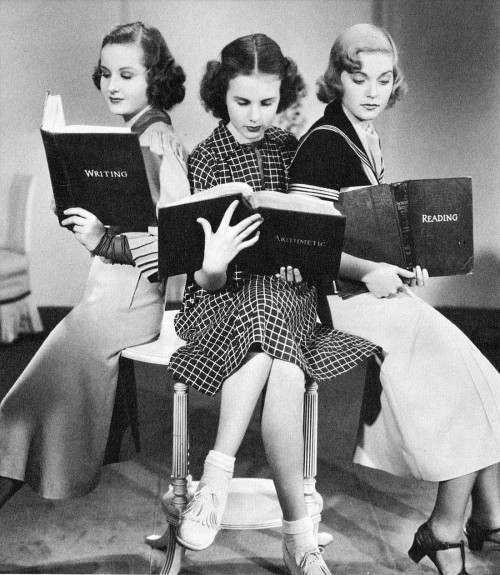
While some books might help you get a grasp of the basics, the real learning comes from immersing yourself in reading scripts and working on your own. Another helpful practice is to watch a film with the script in hand, following along with the action onscreen while seeing how it’s written on the page.
Reading a script can really help show you what should and shouldn’t be there, which you can then apply to yours.
This doesn’t just apply if you’re just starting out. I still get a kick out of reading scripts, whether it’s from the Black List, or one somebody recommended, or even when someone asks me for notes. Bonus points if it’s somebody within my network of writing colleagues; I know they can deliver the goods, and that’ll be reflected in their script.
I’ve also seen my fair share of terrible scripts, usually identified as such by the content of the first page. If that’s not good, there’s little hope of improvement for the rest of it. The silver lining here is you will quickly see how NOT to do it, thereby ensuring you won’t duplicate it.
So while you should definitely devote time to writing your script, make sure you set some time aside to read scripts. You’ll be entertained AND learn at the same time.
-Filmmaker/script consultant/friend of the blog Jimmy George is offering a special limited-time discount for first-time clients – 50% off all script services. No matter what you’re working on, whether it’s a feature, a short, or TV, Jimmy’s ready to help you out. But better hurry – the offer’s only good until October 11th.
 Maximum Z