Q & A with Naomi Beaty of Write+Co

Naomi Beaty is a screenwriting teacher and consultant who works with writers, producers, and directors at all levels to develop their film and TV projects. Naomi has read thousands of scripts and worked with hundreds of writers, first as a junior development exec at Madonna and Guy Oseary’s Maverick Films, and currently through group workshops and one-on-one coaching.

She also wrote the short, actionable guide Logline Shortcuts: Unlock your story and pitch your screenplay in one simple sentence.

What’s the last thing you read/watched you considered to be exceptionally well-written?

I’ve been bingeing a lot of series over the past several months (who hasn’t?) and the three I absolutely fell in love with have been The Great, Mrs. America, and The Queen’s Gambit.

And I was blown away recently by a script I read for a client, but I haven’t asked if it’s okay to mention him here, so I won’t. But if anyone’s looking for an amazing boxing movie, I’d be happy to connect you!

How’d you get your start in the industry?

Like a lot of people, I went the assistant route. I worked for a producer-manager, which was a great introduction to how the industry works. And then moved into development at a larger production company, which was a real education. 

Is recognizing good writing something you think can be taught or learned?

We all have gut reactions that tell us whether a story moves us, right? But being able to read a screenplay and understand whether or how it’s working takes some experience. So there’s obviously something to be said for whether a screenplay gets an emotional response from you, but we shouldn’t stop there. It takes time and effort and a lot of reading analytically in order to truly understand what makes writing “good.” 

What do you consider the components of a good script?

A strong concept, structure that delivers a satisfying experience, characters we care about and invest in who are transformed by the events of the story, clear, meaningful stakes, dialogue we actually want to hear. And all of those things working together in a way that makes us feel something.

What are some of the most common screenwriting mistakes you see?

There are a bunch that I think fall under one big umbrella, which is: forgetting that you’re a storyteller. We want you to guide us through the story, direct our focus, tease out the tension, all to achieve the effect you want. It’s easy to overlook when there’s so much that goes into just figuring out how to put a story together, you know? But the delivery of it can separate good from great.

What story tropes are you just tired of seeing?

The clumsy hot chick comes to mind. It’s right up there with “beautiful but doesn’t know it.”

What are some key rules/guidelines every writer should know?

I often joke that there are no rules in screenwriting… except these three:

1. Don’t confuse us.

2. Don’t bore us.

3. Make us feel something.

Other good guidelines:

– Know what story you’re writing. That doesn’t mean you have to know on the first draft – sometimes it takes time to figure it out – but until you know, that script is going to be a struggle.

– Make sure you share that story with the audience. We need to clearly understand who wants what, why they want it, what they’re doing to get it, and what’s stopping them. It sounds basic, but you’d be surprised how few scripts really nail all of those pieces.

– Start with the strongest concept you can. It’s something that’s tough to correct for later on.

– Learn how to build and escalate emotional stakes! I don’t think I’ve ever read a script that wasn’t better for it.

– Finish your screenplays whenever possible. Abandoning something halfway through because it doesn’t seem to be working means you never get the chance to learn why it isn’t working, how you could fix it, or what you should do differently next time.

Have you ever read a script where you thought “This writer gets it.” If so, what were the reasons why?

Yes! The script doesn’t have to be perfect, but when it’s clear that the writer knows how to put a story together and can convey it in a way that it feels like a movie – then I know that writer gets it.

How do you feel about screenwriting contests? Worth it or not?

Some are, most are not, but in the end it really depends on what you mean by “worth it.” If you’re just looking for a reaction from a fresh set of eyes and a sense of how your script stacks up against others, there are a number of contests that can offer that.

If you’re looking to actually move the needle in your career, there are very few contests that are worth the cost of entry.

How can people find out more about you and the services you provide?

The best place to find information about my services and workshops is my website! writeandco.com. I also have a short ebook that’s available for free on Amazon, called Logline Shortcuts.

Readers of this blog are more than familiar with my love/appreciation of pie. What’s your favorite kind?

If I’m allowed a savory choice, I’ll take a chicken pot pie. But for dessert, chocolate cream pie with graham cracker crust, please.

Q & A with David Wappel

David Wappel is a screenwriter and story consultant. He recently wrote the screenplay for Long Gone By, now available on HBO MaxAmazon, and iTunes. Wappel worked in production and post-production for five years before turning to writing. His stories often feature themes of private courage, nostalgic longings, and contradictions.

He has consulted writers, producers, game developers, and others on their narrative work. In addition to screenwriting, you’ll find Wappel talking about Tolkien, Shakespeare, or sailing.

What’s the last thing you read/watched you considered to be exceptionally well-written?

This is a tough one for me, because I watch or listen to at least one Shakespeare production a week, and it’s hard not to just answer with one of his plays.

So setting the Bard aside, the last thing I watched that was exceptionally well-written was an episode of Star Trek: Deep Space Nine titled The Visitor. Written by Michael Taylor, it’s the second episode of season four of the series, and it’s deftly simple and incredibly human.

I also recently rewatched Dead Again, written by Scott Frank. I’ve already seen it a handful of times, but I wanted to share it with my parents. What I love most about the script is the way it continues to surprise throughout, with twists and turns both big and small. It’s like a rabbit hole that just keeps going down.

Oh, and if I’m not setting Shakespeare aside, the answer is The Globe’s 2015 production of The Merchant of Venice.

How’d you get your start in the industry?

I actually first started out working in post-production in Atlanta. I was an editor for a small production company. Editing is just writing with an extremely limited vocabulary. As an editor, you can only storytell with what is provided, and it’s actually pretty amazing how much power you have to manipulate the moments by organizing shots in various arrangements.

So when I made the pivot into writing, I had already been looking at story as sequential bits of information, and it helped me understand how to build a moment, a scene, a sequence, or a story, piece by piece.

Is recognizing good writing something you think can be taught or learned?

I’m going to be a bit cheeky and say it doesn’t have to be taught or learned. We already know when something is good writing from our emotional reaction. Humans are designed to have stories act on us emotionally. So instead of looking at a text and deciding if it is good writing or not, all you actually need to do is read it and look at yourself. If you’re responding to it, it’s good writing.

What isn’t as apparent, but can be taught and learned is why something is good writing. One can study the patterns and structures, micro and macro, that seem to crop up again and again as effective ways to produce emotions in the audience. Writing, I believe, is both an art and a craft, and has tools and techniques like any other craft. How to employ those tools and techniques can be taught. Why to employ those tools and techniques is a little bit trickier, because it’s far more subjective. That’s what makes it art.

What do you consider the components of a good script?

When I’m reading, I’m looking for a few things. One thing I find myself sensitive to is honesty. Are the characters acting in ways that feel truthful. And that doesn’t mean it has to be grounded, but it has to be truthful to the established world.

I’m also looking for specificity. Whether it’s a feature or an episode of television, I value a script that is doing a “deep dive” into a specific aspect of the human condition. That may sound like it needs to be profound, but it doesn’t. It just needs to be specific. Mediocre scripts tend be about a general idea, but the great ones take a very specific idea, and explore it fully.

On a technical level, I value clarity. Not only do I want to visually understand what is happening, but particularly for the screen, I want to have a good sense of how I’m seeing it. For me, that’s the biggest thing that separates screenwriting from other forms of writing, even playwriting. It’s the explicit visual component, and the limitation of the lens. I don’t need every shot selected, but I want a sense of how this will unfold on a screen.

In my opinion, a major component of a good script is restraint. I’m looking for human behavior, and nothing else. I want to see what characters are saying and doing, and draw my own conclusions. When I read a screenplay that tries to tease out meaning in the action lines (or even in the dialogue sometimes) I find myself checking out. It feels a bit like someone grabbing a puzzle piece and fitting it into the slot for you. People don’t do puzzles just because they like how it looks when it’s complete, they enjoy the act of completing it.

What are some of the most common screenwriting mistakes you see?

I think the most common screenwriting mistake I see is more of an artistic mistake than a craft mistake, and it’s basically not having a specific enough answer to the question, “What are you trying to say?”

Corollary to that question is this one: “Why do you want to say it?”

Those two answers can act as guideposts for a writer, and will help navigate story choices. Without some reflection on these, a technically proficient story will end up vague and dull.

What story tropes are you just tired of seeing?

Honestly, none of them. What I’m tired of seeing are tropes lazily explored. Tropes are simply common patterns that are emotionally effective. What often happens is that more than the underlying pattern gets repeated, and we get bored of seeing the same thing over and over again.

For me, the key to keeping tropes fresh is to understand why they are tropes in the first place. What is the pattern beneath it? There’s clearly a satisfying story element there, and going in the opposite direction to avoid a trope may be going in the opposite direction of that satisfying story element. You want to understand how it’s working so that you can approach it, then zig-zag away in a specific way. You’ll get all the benefit of a story pattern, without it feeling stale.

All that said, I’m completely over the “wife killed, husband wants revenge” trope.

What are some key rules/guidelines every writer should know?

This is in no way meant to be comprehensive or authoritative, but these are some guidelines I try to go by when writing.

-Writing is 90% thinking and feeling, and 10% typing.

-Melodramatic writing is not fixed on the page it occurs. It is fixed in all the pages preceding it, and then on the page it occurs.

-A character’s voice and a character’s worldview are two different things.

-People are different versions of themselves depending on who else is in the room. Characters should be the same.

-Adjectives and adverbs may point to opportunities for stronger nouns and verbs.

-Always be reading.

-Wardrobe, makeup, props, and production design all provide storytelling tools. Make sure you’re using them.

-Turn off the critic for your first draft. After that, question every word.

-When approaching a problem, see if it can be solved first by removing lines, rather than adding lines.

-Understanding how your characters interact with the world outside of the story of your script can provide insight for how they interact with the world within it.

Have you ever read a script where you thought “This writer gets it”? If so, what were the reasons why?

Plenty of times, and while I’m sure it’s different for everybody, for me  the answer is in showing simple, specific moments of humanity. When I feel like a writer lasers in on something small, and then continues to explore each facet of it through a sort of narrative microscope, then I feel like I’m in good hands.

How can people find out more about you and the services you provide?

You can check out my website, davidwappel.com, and while I have a page on there about my services, it’s also about me as a writer. The best way is probably to connect with me on Twitter.

Readers of this blog are more than familiar with my love/appreciation of pie. What’s your favorite kind?

Apple, by a mile.

Dismantle, reassemble

home crew.gif

Sometimes when you’re working on a story, you just have this feeling that the way it’s being told is the way it should be told. It just feels right.

Even though I’d made some good progress with the ongoing revision of the sci-fi adventure outline, something still seemed…off. What I had was good, including several scenes that now felt necessary, but as a whole, not quite there yet.

As I’ve mentioned before, I keep all the previous drafts of the outline and script on file –  you never know when some of that text will come in handy. The recent work on the current revision was accompanied by another tab on the screen containing the previous draft, serving primarily as a sort of roadmap to help guide me through this latest effort.

Despite telling myself that this new draft was supposed to be different from its predecessor, its siren call was a bit stronger than expected. There was just something about it that couldn’t be denied. Not to say that the newer version was no slouch either.

Parts of this one work, and parts of that one work. Why not combine the two?

Sure, this even-newer draft might occasionally take a somewhat unorthdox approach in how the story’s presented, but by gosh, I still like it. “Rules of screenwriting” be damned.

There’s nothing wrong with cherry-picking parts of the new draft and incorporating them into the previous one where applicable. Of course, it would have been nice to have come to this conclustion a few weeks ago, but sometimes that’s just how it works.

What’s really nice is that for the most part, save for a few problem spots, the previous draft is still pretty solid on its own. Nothing serious, and some of these new elements look like they’ll really rectify that.

Based on some extremely helpful notes, another factor that’ll help this time around is putting more of a spotlight on the characters’ emotions. Even in this kind of story, with all of its fantastical and extraordinary elements, it’s important to show how the characters are still people.

Lastly, all the time I’ve been working on this story, I’d forgotten how the initial concept and earliest versions were all written with a certain kind of tone in mind; something to really convey the vibe of what story of story this was supposed to be and how I wanted it to read. Somehow that aspect’s diminished over time, and I plan on re-introducing it for the next draft.

This is gonna be fun.

Q & A with Jim Mercurio

img_7574_edited_paul-option-e1548902704525.png

Jim Mercurio is a writer, author, screenwriter, and filmmaker. His book The Craft of Scene Writing is the first-ever screenwriting book that focuses solely on scenes. He has directed and produced five feature films, and helped countless writers as a teacher, story analyst, and script doctor. He directed more than 40 DVDs on screenwriting, including his own 6-disc set, Complete Screenwriting. One of the country’s top story consultants, Jim works with Oscar-nominated and A-List writers as well as beginners.

Editor’s note 1 – a q&a with Jim was featured in a series of interviews with script consultants that ran on this blog between 2014 and 2015.

Editor’s note 2 – full disclosure: Jim played the role of adviser/sounding board for the rewrite of my dramedy spec.

What was the inspiration/motivation for this book?

I was prepping my webinar on February 7th for The Writers Store on Personal Voice, (FYI – Feb 1 is the last day to save $20 on registering) and I stumbled upon the idea that a writer must figure out what is special about what he does and then focus on that. I feel like it is the same way with me and the book.

I have always focused on the nitty-gritty of craft. Probably because I worked so hard trying to figure it out for myself as a writer. When I directed the 40ish DVDs in the Expo Series, I did my own class concentrating only on theme.

Years ago, I happened to be prepping for a feature I was directing. In a week, I saw the same scene performed more than 200 times by a hundred different actresses. I was trying to figure out what I could do that hadn’t been done before as far as a screenwriting book. My experience as a filmmaker has always informed my approach to understanding and teaching screenwriting. I’m not sure why it didn’t come to me sooner. I had an “A-ha!” or better yet a “Duh!” moment — SCENE WRITING!

There are a lot of screenwriting books out there. What makes this one unique?

The obvious distinction is that it focuses solely on scene writing… the first screenwriting book to do so.

I was fortunate enough to have story gurus Richard Walter and Michael Hauge review the book. Something Michael said really touched me. He said that there were a lot of ideas in the book he hadn’t even thought of. I wanted to cover new ideas or at least some seldom taught concepts in a novel way.

Having been in the screenwriting education niche writing for Creative Screenwriting, directing, creating 50 hours of educational DVDs and working as a consultant, I know what’s out there. I believe this book will carry the torch and be among the next go-to books for all screenwriters entering the field.

As I mentioned, my filmmaking experience and the fact that I am actively writing screenplays and making projects impacts my perspective. I try to be very specific in my examples. For a given topic, I may start with theory but I always try to end with concrete principles and tools that you can apply to your writing on the spot.

Some books are geared more towards covering the screenwriting basics, while others “go beyond (or way beyond) the basics”. Is this a book that both new and experienced writers could use?

I feel very strongly that this book will appeal to writers across a wide spectrum of skill levels. A friend of mine said I teach the last hundred pages of “the screenwriting book” more than I do the first hundred. So, if anything, I would be more concerned about whether this would serve beginners.

I even asked my editor if it did and she gave me a great response. But then out of the blue, the universe gave me a better answer. My 23-year-old stepson who is a computer engineer texted me. He said he was halfway through the book and said “It’s very accessible… nothing’s confusing.”

The only research I did while writing this book was to watch movies and think about them. Each chapter is like a stand-alone piece on topics such as exposition, concept, theme, and rewriting. I tried to begin with my, at least somewhat, original and basic take on a topic to ease the reader in and to orient them. A new writer can jump right in.

More advanced writers might recognize my approach as somewhat novel. I then try to go as deep as I can with the material, so that even professional writers might benefit. A writer who read the book said that 70-80% of it was stuff he had never heard before. He might be overstating it, but I’m proud that the book feels that way. I wanted to offer new insight into the nitty-gritty challenge of craft.

Even though the book’s title is THE CRAFT OF SCENE WRITING, what else does it cover besides writing scenes?

At its essence, scene writing is storytelling and the same principles apply. You are poring over characters, characterization, idiosyncrasies of the world, setups – to create reversals. You’ve heard of turning points, right? Writers have to turn a story. They also have to learn how to turn a scene. Or a line of dialogue.

However, I wanted this to complement all of the other screenwriting books that cover story structure. I am looking at screenplays at the molecular level. In the final section of the book, I cover rewriting in a parallel way to how I discuss scene structure. And then I explore how to discover and use your personal voice in your screenplays.

One of the phrases you really emphasized during the process with my script was “write to concept.” Can you elaborate on what you mean by that?

Whew, no softballs here. Making me earn my pie.

There are 7500 words in my chapter on concept, which have been through the wringer with my 18 copyeditors, but I will try to summarize with insightful pithiness.

Like I mentioned, as a writer you should use what’s special about yourself and your writing. Writing to concept means that you are using what’s special about your story as the main inspiration for its surprises. For fun, consider a 3-D horror movie where an axe flies across the screen left to right. Do you see how on some level that’s just wrong? It should be flying toward the camera. Otherwise, it’s ignoring the most prominent element of its medium.

Of course, I’m not that rigid, but writers have to narrow down the handful of elements that are essential to their concept because not only do their surprises spin out of them, but, for the most part, they spin out only from them. I don’t know if I can teach that here. Hopefully, I can intrigue you to go to the source.

Writing to concept allows you to find a unique way to express what otherwise might be a familiar story beat. Based on their concept, the moments will look very different. In Memento, Natalie hurts Leonard by hiding pencils. In Her, Samantha, an operating system, hurts her lover by telling him she’s in love with 641 other people.

Another of your favorite phrases during the writing process was “go deeper.” What should that mean to a writer?

It refers to a missed opportunity to get at more emotion with a character or to complicate a relationship, which would hopefully do the same. While we were working on your script, there’s a scene I pointed out featuring a moment where you were on the verge of discovering a powerful and transcendent moment, but then it was all over too soon. Sometimes writers hit a beat (in the broader sense), and maybe they are worried about a looming expansive page count or don’t appreciate what they have stumbled upon, so they move on too quickly. They might be better off — pick your metaphor — milking or massaging a moment for a bit longer and letting it play out.

Take a look at the long and emotional monologue in Good Will Hunting where Will’s best friend Chuckie tells him that he should “cash the winning lottery ticket” and get out of town to find a better life. He even tells him that the best part of the day is in the morning when he comes to pick him up, he has a moment of hope that Will has left — without even leaving a note. Imagine, if we cut that down to a sentence: “I will miss you but you gotta get the hell out of here.” We lose Chuckie’s voice, the suspense of it, the emotional heft and importance. It goes from a set-piece scene to a bland, merely functional one.

In addition to the book, Jim also provides a script consulting service. How can people get in touch to find out more?

Easy. Go to my site at www.jamespmercurio.com. I discuss why coaching is my preferred mode of working with writers. You can check out my DVD set and sign up for my free e-newsletter Craft & Career, which will also let you stay informed about classes and workshops I’m offering later in the year.

Last time around, you said your favorite kind of pie was the metaphoric “gross points from my last film”. Still the same today, or something different?

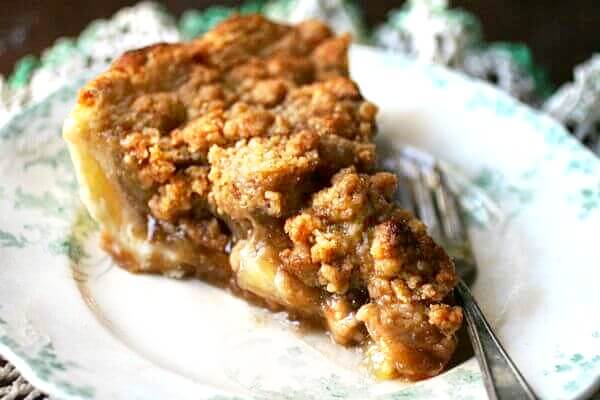
A pie in the hand is worth two gross points in a bush. Or 20 for that matter. So, hand me some Dutch Apple, please.

dutchapplepie

Characters are people!

soylent green
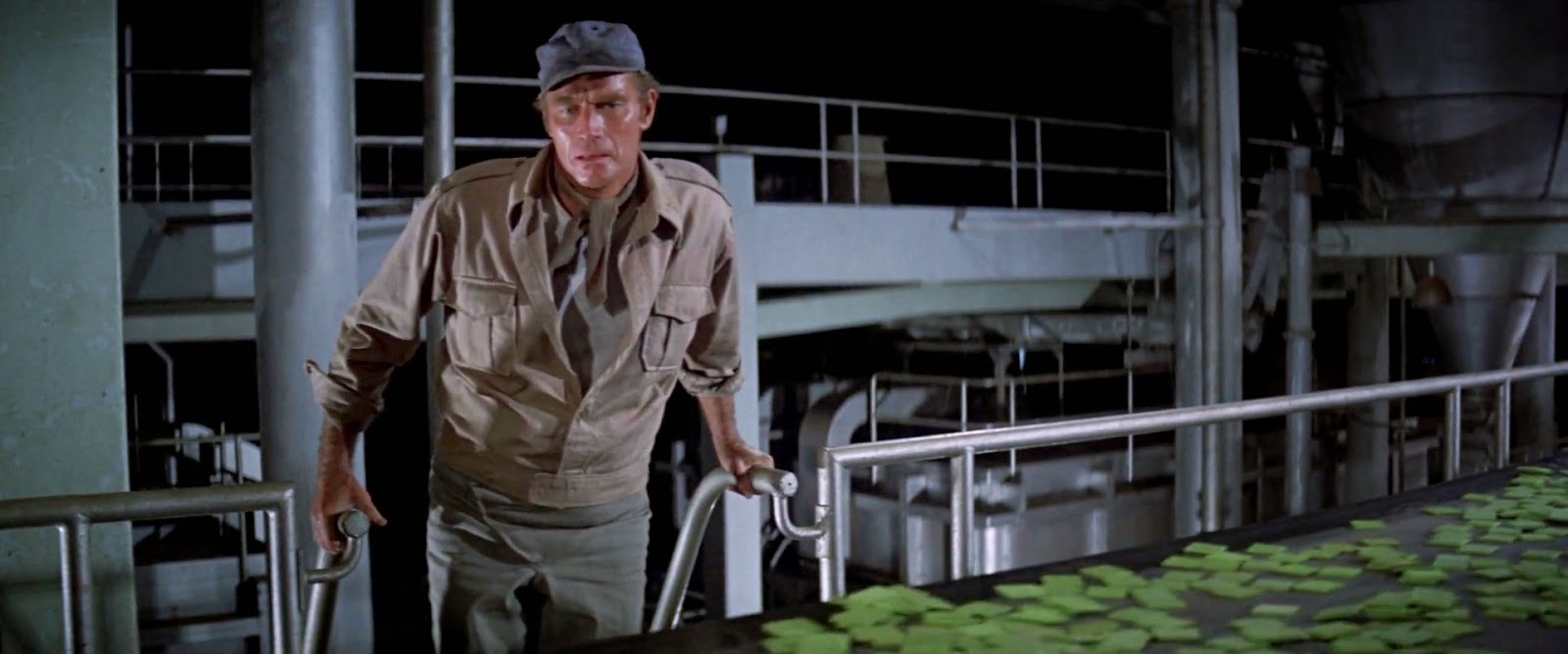
Go ahead. Say it like he would. You know you want to.

I’d always heard how your script should somehow reflect “the human condition”, but never really had a firm grasp of eactly what it meant or how you would accomplish that.

I mentioned the phrase in a discussion with another writer, to which they responded “I don’t care about that. I just want to tell good stories.”

But isn’t the story about the characters to begin with? And a story with under-developed characters won’t be as good as one where the characters feel like actual people.

Accomplishing that has always been one of my biggest challenges.

A comment I’ve received more than a few times in the past is that the reader finds my characters good, but somewhat incomplete. They’re established and believable, but only to a point. This isn’t saying they’re flat, one-dimensional caricatures (something I’ve unfortunately seen in many other spec scripts), but they don’t feel completely real.

Readers/audiences want to be able to relate to the characters in your script. They might feel they’re only getting a glimpse into what kind of person the protagonist is, or know there’s more to them, but that “more” isn’t there, and they want to see that. And this doesn’t just apply to the main characters; it’s everybody.

Digging a little deeper and offering up a few more details would help flesh them out, which in turn would make for a stronger story.

When I recently sent a script out for notes, the reader asked if there was anything specific I wanted them to focus on. Without a doubt, it was the protagonist and the antagonist. I felt while they were good, there was definitely a need to make them better.

The reader agreed and made some good suggestions about how that could be achieved. “We don’t know as much about these two characters as you might think,” they wrote. Since I was the writer, I had a little more insight into their respective backstories and what made them the people we see, but some of those details had stayed in my head, rather than been transferred onto the page.

So I went about adding in some small details here and there; a line of dialogue or a seemingly insignificant action. A few touches to give a little more insight into what makes them tick; why they are the way they are.

All of this, combined with a few alterations with the plot, makes this latest draft feel really different, and hopefully stronger, than its predecessors. I’m giving it a few more days to simmer, and will then give it another look to see if that vibe still holds.

What I’m also hoping is that from here on in, I’ll be able to apply this kind of approach to all future drafts, which would in theory, help achieve the same results but in a shorter amount of time.

Hope and ambition. Just two parts of the human condition, right?