Lead shielding not required

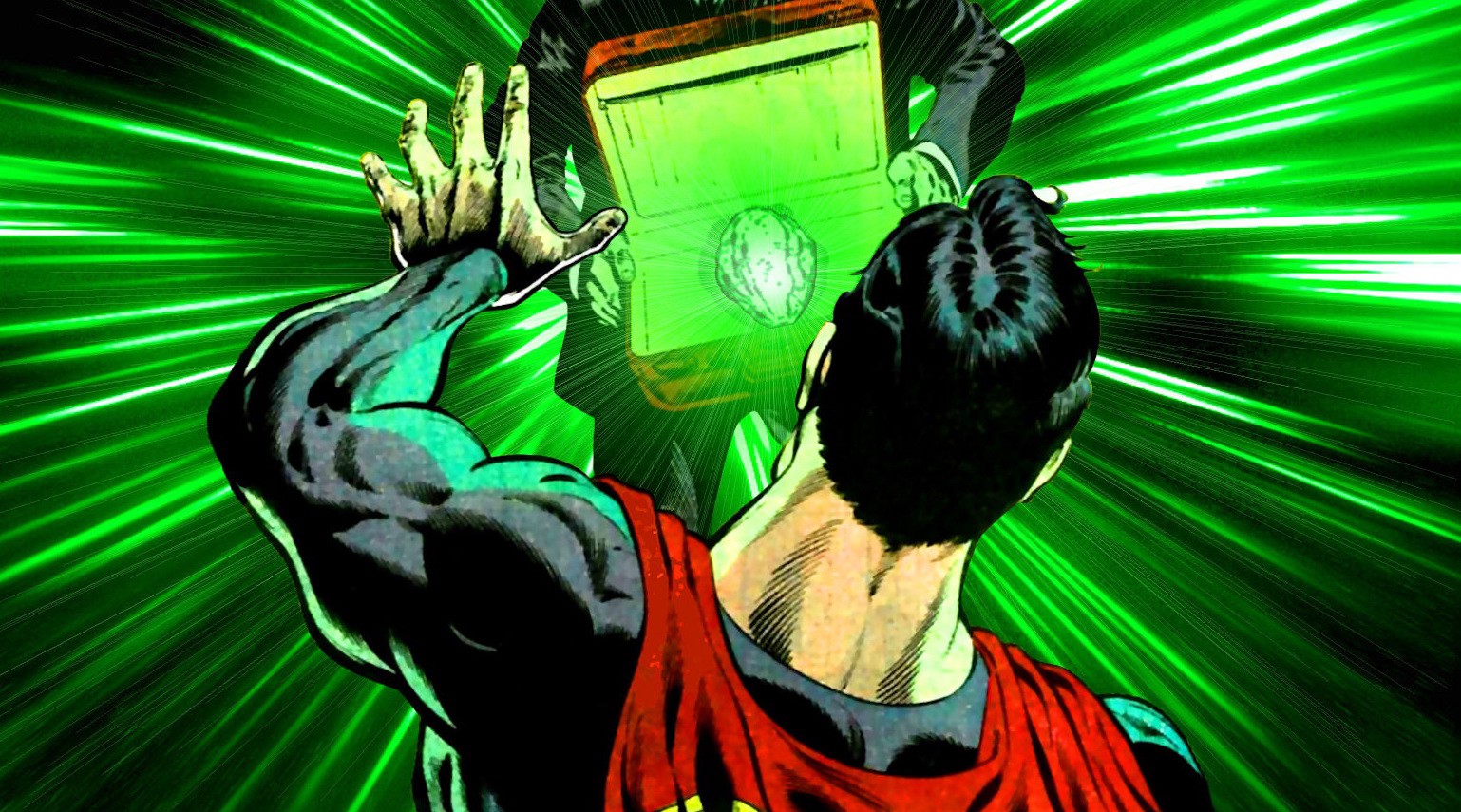
Even if you’re not a comic book nerd, you probably know what that glowing green rock is, or at least have heard of it.

For the truly uninformed, it’s kryptonite, aka The One Thing That Can Harm Superman. It drains his powers and makes him decidedly non-super.

And it’s also incredibly necessary, because without any kind of weakness, Superman is pretty much unstoppable, which is BORING. Who wants a hero who can’t be defeated? Who always wins? Why should we care about him if there’s never any doubt he’ll succeed?

A protagonist needs some kind of weakness or flaw, like kryptonite provides for Superman.

Bonus – it also adds to the conflict.

I recently read a script where everything went perfectly fine for the protagonists. Every obstacle they encountered, they overcame with ease, then casually moved on to the next thing.

Where’s the conflict in that?

If a protagonist’s road to their goal was a long and empty straightaway of perfect asphalt, low gas prices and nothing but green lights so they get to their destination ahead of schedule, is this a story that would hold my interest? Not really.

But what if that road were nonstop twists and turns, laden with potholes, overly aggressive drivers, and a poorly timed construction project blocking 3 of 4 lanes AND the protagonist was running out of time to get somewhere they absolutely had to be? That is a story I’d want to see.

The protagonists in this script had no flaws. Everything always worked out for them – sometimes with little to no effort on their part. I told the writer they needed to do the opposite. There needed to be conflict for these characters at every turn. What was going to stop them, or at least slow ’em down?

Included in my notes – “What’s their kryptonite?”

Your hero needs to have a rough time in reaching their goal. (CONFLICT!!) Overcoming obstacles both physical and emotional is what provides the opportunity for them to learn and change. Without that, they remain stagnant and the reader/audience won’t care about them, let alone if they achieve their goal.

What’s your protagonist’s kryptonite? What’s stopping or at least hindering them from achieving their goal, and how can they overcome it? Does that help them grow and change?

Superman always finds a way to overcome his run-ins with kryptonite. Can you say the same about your protagonist?

No spit, but lots of polish

After receiving several sets of quality notes on the animated fantasy-comedy, the task of applying the most suitable and workable ones into a new draft is well underway.

I had a strong suspicion that the page count would increase, which it has, but as I approach the midpoint of the script, its not as high as I feared it would be. What began as a 97 page script is now 103, so a final tally of 110 or thereabouts seems like a fair estimate. There will most likely need to be some additional tweaks and edits when this draft is done, but for now it’s all good.

What’s also been exceptionally helpful is that each set of notes has a handful in common with the rest. Those are the ones I really took to heart. If two or more people make the same comment, then that’s something you need to really examine.

I was initially concerned that a higher page count would be a negative, but since most of what’s being added in is necessary, I’m not as worried. For a story like this, including a few more details should work in my favor.

Some of the notes were about the story logic, the main character, and the world-building. I’ll admit that some of the points being made were things I hadn’t thought about before, but now that they’d been mentioned, how could I not see it? This is one of those times when taking a step back and examining the bigger picture really pays off.

I’m always a little cautious when I start a new rewrite or polish. How much is going to change? A little? A lot? Can I do more than just a metaphoric rearranging of the furniture? I find it helps to map out what’s going to happen in the scene, along with figuring out the conflict and how the scene fits in in regard to the sequence of events. I’m doing what I can to ensure that where and when a scene takes place in the story is exactly right.

It’s also been somewhat surprising to be able to come up with new ideas for a scene, either a totally new one or a new take on one already in there. A lot of the notes ask questions that can only be answered by creating something new that not only answers the question, but helps solidify the overall story.

I’m not usually one for deadlines, but progress is pleasantly moving forward, so hoping to have this draft done in the next few weeks, followed by cleaning it up.

After that, I’ve got a few ideas for what to do with it.

Is it different for animation?

It was suggested that I come up with a pitch deck for my animated fantasy-comedy, or at least some character designs and concept art – and maybe a title page.

I’ve never been big on pitch decks. I figure if somebody’s interested enough in the script AND willing to shell out the moolah for it, then it’s out of my hands and they can come up with whatever looks they want. It’s not like they’re going to care about what I envisioned.

But dealing with a story that’s meant to be animated is something entirely different. You want to present at least a general idea of what the characters look like. If you’re trying to skew younger, they’d probably look more cartoon-y or Pixar-ish. If you’re going for a wider audience, they have to look like you weren’t seeing this as primarily a way to sell toys and Happy Meals.

I can honestly say these are things I hadn’t thought about while I was writing it. But since marketing is one of those screenwriting topics that doesn’t get mentioned as often as it should, it’s something requiring my attention.

Especially now.

As for the contents of the pitch deck, that was also me starting with a blank slate. What to include? And not include? How much of the story do I describe? How many pages should it be?

Fortunately, several trusted colleagues offered to send me their pitch decks as points of reference – an offer I eagerly accepted. A majority were for television pilots, which is very different from one for a feature. Some were for animation, so it was at least a start.

Like I mentioned before, my pitch deck would need to include character designs. My drawing skills are lousy, so doing it myself was not an option from the get-go. I need an artist. Thus I made my way to Fiverr and deviantart.com to check out artists whose styles match the vibe I’m going for. Several have been found, so initial contacts are underway.

Unlike some folks in the entertainment industry, I’m a firm believer in paying a creator what they deserve to be paid, but I also need to keep a close eye on how much I have available. No idea what the end cost will be, but hoping it’s not too pricey.

Like with a lot of projects in the early, early development stage, it’s all a lot of info to process, so there’s a general feeling of being overwhelmed. But also like those projects, it just requires dealing with it all a little at a time. It might not get done quickly, but this isn’t something to rush through. It’ll take as long as it takes to get it to be as effective as I can make it.

Wish me luck.

From the archives: Writing in your own voice

“Hmm. Billy’s new script. Something about men dressing up as women to hide from gangsters? Hope it’s funny.”

I’ve seen a good number of articles and online comments recently about how a script should convey the writer’s “voice”. That prompted this blast from the past from June 8, 2018.

Enjoy.

“When I’ve done script notes for writing colleagues, no matter what the genre is, I can usually tell who wrote it – because of the way it reads. Each writer has their own particular style, so each of their scripts has its own corresponding “sound”. Or I’ll get notes back on my material which often includes a comment along the lines of “this sounds like something you’d write”.

This isn’t just about dialogue. It’s about a writer’s overall style, or how they tell the story of their script. You don’t just want the reader to read your story; you want them to experience it. Which can be accomplished by adding that extra layer.

Everybody develops their own individual style, and it takes time to find it. The more you write, the more you’ll be able to hone your writing to reflect your own individuality.

Just a few things to think about:

-How does your script read? Is the writing crisp and efficient, or are you wasting valuable page real estate with too many lines of  your loquacious verbosity? Taking it one step further, do you use the same words over and over, or do you relish any opportunity to give your thesaurus a solid workout?

-How is your story set up and how does it play out? Is it simple and straightforward, or complex and full of deliciously tantalizing twists and turns? Are you working that creativeness to show us things we haven’t seen before, or is just page after page of the same ol’, same ol’?

-Is it a story somebody besides you would want to see? Just because you find the subject matter interesting doesn’t mean it has universal appeal. However, there is the counter-argument to that in which you could attempt to have your story include elements that would satisfy fans of the genre while also appealing to newcomers.

-Can’t ignore the population within the pages. Are your characters well-developed and complex, or do they come up lacking? Do we care about them, or what happens to them? Can we relate to them?

-What are your characters saying, or not saying (subtext!)? How are they saying it? Do they sound interesting or dull as dishwater? Very important – do they sound like actual people, or like “characters in a movie”?

Remember – the script is a reflection of you. A solid piece of writing shows you know what you’re doing. Offering up something sloppy is simply just sabotaging yourself.

Who hasn’t heard a variation on the line about a script being a cheap knockoff of a more established writer? While I can understand admiring a pro writer’s style, why would you attempt to copy it? It probably took them a long time to find their own voice, and by trying to write like they do, you’re denying yourself the opportunity to do the same thing for yourself.

Or to put it another way: they didn’t take any shortcuts to become the writer they are today, so why should you?”

Just a little escapist fun

Despite the recent frustration of figuring out how a sequence should play out, I’ve been having a good time with the rewrite of the sci-fi adventure spec outline.

I’ve been working on this off and on for a while – this is probably the sixth or seventh draft of it. While some of the details have changed, a lot of it remains the same. The core concept of it all was what appealed to me from the start.

I get a certain charge out of coming up with these crazy scenarios and high-octane action sequences, not to mention coordinating and laying out all the pieces of the puzzle that is the plot. I always tell writers to “write something you would want to watch”, and this one definitely falls into that category.

Although my stories tend to lean more towards the fantastical, I try to make sure the characters and situations feel real and relatable – or at least as much as they can within the world of the story. Despite the extraordinary goings-on, it’s still about how somebody reacts to what’s going on around them.

I’m currently at the midpoint, so there’s still a ways to go, but like I said, I’ve got a lot of previous drafts from which I can cherry-pick material. There’ll probably be a few more rounds of rewriting, revising, and reorganizing, but I’m still enjoying it.

It’s quite easy to get burned out from working on a story by working longer than you expected to, but I’m fortunate not to have hit that point yet. If anything, I’m more jazzed about it probably because it really feels like it’s finally all coming together.

Not setting up a definitive deadline for having a completed draft, but if I can maintain this pace and output, there’s a strong possibility it could be by the end of the calendar year. Hoping so.

In the meantime, still having a grand old time with it.

Hope your writing this weekend is chock-full of the same sensation.