Proofreading Q&A panel – part 1

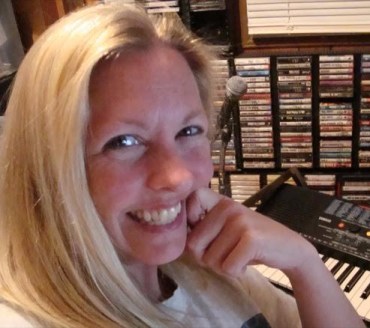
Tammy Gross
Tammy Gross
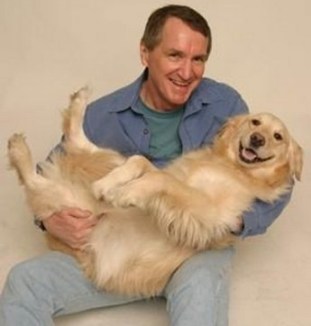
bill.and.puppy.girl.cropped (1)
Bill Donovan and friend (Bill’s the less hairy one)

When you read a script, it’s not just about “Do I find this story interesting?” or ” Why should I care about these characters?”. There’s also “Does it look like a professional script?”

That’s where proofreading comes in handy.

This week offers up a 2-part panel discussion with professional proofreaders Tammy Gross of proofmyspec.com and Bill Donovan of screenwritingcommunity.net to discuss proofreading and its connection with screenwriting.

Enjoy.

How exactly does one proofread a screenplay? What are some of the things you’re looking for?

Tammy Gross (TG): That’s a loaded question! For me it boils down to what I call “the language of screenplay.” Spec screenplays need to be streamlined, devoid of technical distractions and written in a cinematic style that transports the reader to the theater.

And, of course, it’s my job to fix all the “errors.” In context, misspellings and bad grammar are often intentional and work better than perfect grammar and spelling conventions. However, you gotta know the rules to break them. And there are many ways to format some things, though the best is always whatever is clearest, most economical, and relevant to the story.

My job is to make a screenplay easy, fast, and fun to read – and up to professional standards. So I look for anything that gets in the way of that.

Bill Donovan (BD): My service is a bit of a hybrid. I give some story and screenplay structure notes as well as proofread and copy edit. The proofreading/copy editing part covers:

— Typographical errors
— Spelling errors
— Grammatical errors
— Punctuation errors
— Capitalization errors
— Verb tense errors
— Sentence structure and clarity problems
— Basic formatting mistakes
— Cramming in too many words
— “Saying” when you need to show

What’s the difference between editing and proofreading?

TG: When it comes to screenplays, it usually is a matter of time and thoroughness. Proofreading should be the last step before submitting a screenplay to anyone for consideration. In a perfect world, a screenwriter will go through various phases of self-editing. Once it’s polished, it should probably receive a copy edit to have fresh eyes to catch all the formatting, consistency, and text issues. After it’s been cleaned up and the story is solid, it’s time for proofreading. And the depth of proof-editing depends on the writer’s level of proficiency.

I take it a couple steps further than most. First, I create a style sheet to ensure that preferences are observed and maintained throughout. I also work very hard to help the screenwriter understand the edits I’ve made so they can grow in their craft. I’ve seen writers improve from script to script as a result. Some have gone from disaster to master.

BD: There are key differences. Proofreading, strictly defined, is a bit more limited. It involves fixing actual errors, such as typos, missing words, missing punctuation or wrongly-placed punctuation, capitalization errors and other outright mistakes. Copy editing covers all of those mistakes and also addresses larger issues of clarity, such as fixing a sentence or paragraph which may be grammatically correct but is vague.

I have great difficulty leaving a badly-written sentence or paragraph alone even when it might be okay in strict proofreading terms. Since I make my changes in colored type, I figure that the writer can go in and change it back if he/she prefers his or her own phrasing.

For example, some of my clients write much of their scene description in partial sentences. That’s fine if you can do it well. However, most of the writers who come to me do not write partial sentences well. The meaning is clear to them because they know what they mean. However, if it’s not clear to the reader, I fix it or give the writer a note suggesting that he or she fix it.

A lot of writers might say “I can do just as good a job proofreading it myself.” Your response?

TG: In nine years I’ve read only one screenplay that was error-free, including shorts. The biggest mistake even the most experienced writers make is assuming that because they understand some mechanics, they have a full grasp of format. While everyone claims there are no “rules”, there really are guidelines that are basically rules. Very few writers can keep up with the latest standards the way I and other professionals (hopefully) do.

My favorite trick for self-editing is to simply read backward from bottom to top. But it won’t catch everything. Most quality scripts go through many revisions and rewrites. It’s bound to pick up some introduced errors along the way that you become blind to.

BD: If you’re very good at English language usage, and if you’re an experienced editor, and if you walk away from it for a while, and if you then focus on every word and every bit of punctuation for all possible mistakes from overall clarity down to missing commas, yes, you can.

But will you? For example: I’ve sent out email blasts for my proofreading service about 15 times in the past 15 months. Three times, recipients have written back, gleefully and snidely, “Ha-ha! I found a typo in your email blast.” They were right. How could I make such a mistake, in a blast advertising proofreading, when I have thousands of pages of experience as a proofreader and copy editor? I know exactly how: The mind tends to gloss over the tiniest little details of that which you have written yourself, and you become both tired of reading it and eager to get it out.

What are some common mistakes you usually see?

TG: I have a very long, and boring list of words and format issues I plan to turn into a book once I can figure out how to make it fun and simple to reference. The usual suspects: its/it’s, your/you’re, there/their/they’re, lie/lay. A baffling but common one is “draw” instead of “drawer.” Possibly the biggest peeve and most common issue is passive voice.

There’s also a zeitgeist in the editing world. One year something like “clinch” vs. “clench” needs fixing in every script (or manuscript) I read, then the next year everyone is misspelling or misusing “rifle” vs. “riffle.” It’s weird.

Also, some things in spec writing evolve, so things that were “mistakes” five years ago are perfectly normal or even preferred today. I work hard to keep up on the current trends and roll with the changes, but I’ll probably never accept “how r u” for spoken dialogue.

BD: This is the short answer. I maintain a document on common mistakes screenwriters make. It’s 14 pages of paragraphs and explanations. These are not in order of frequency, but are some of the most common:

1. The “Their, they’re, there” and possessives sort of grammar mistakes.

2. Missing commas. Commas are sneaky little creatures, always slipping away from your text where it needs one.

3. The worst, and surprisingly common, is the “Show, don’t say” mistake. John Vorhaus, author of The Comic Toolbox, summed it up perfectly:

“You could tell by his face he was thinking of Paris.”

But, of course, you can’t tell by his face what he’s thinking of. He could just as easily be thinking about a juicy cheeseburger.

4. Specifying shots. In film school, they used to say that you learn to write by directing and you learn to direct by editing. You don’t learn to direct by writing, so the decision on shots should be left to the director 95% of the time. Even when a closeup is required in order to provide closeup information, it can be done without saying “CLOSEUP” or “CU”. I don’t tell writers not to specify a closeup, but another way to do it is a separate paragraph describing the content of the closeup. The director will get the idea.

5. Run-together sentences. Even grammatically-correct compound sentences can be bad choices when they gloss over the action. They forego the opportunity to emphasize great moments. One way to “direct the director” without specifying shots is to write a separate paragraph for each camera setup.

For example:

“Jack kisses Jill and they walk off into the sunset.”

Better:

“Jack kisses Jill. Their lips lock, long and loving.”

“They break the kiss. Grasping hands, they turn, and walk off into the sunset.”

New writers tend to rush through both the blocking of scenes and the emotions of the moment. In contrast, a recent client of mine, a produced director and stage director, wrote a comedy screenplay so precisely that many of his descriptions were delivered with punch lines in visual jokes. It was marvelous to read.

6. Writing in present participle rather than present tense. A screenplay is action taking place NOW. Sometimes, present participle (“Jack is standing”) is unavoidable because it’s needed for clarity. However, if Jack pulls out a gun and then pulls the trigger, then “Jack shoots,” not “Jack is shooting.”

7. Incorrect use of ellipses.

8. Incorrect parentheticals. If a character does something before speaking or after speaking, it doesn’t belong in the parenthetical; it belongs in the scene description.

9. Failure to do research. When laws, government regulations, and historical events are mentioned, they should be correct. I’ve seen two screenplays in which the writers had significant plot turns saying that under HIPAA, they couldn’t get their own medical records because they were company secrets. It’s the other way around.

My list has quite a few more. Again, the “common mistakes” reference I’ve created is 14 pages long and growing.

Do you have a “most memorable” example of writing that was in severe need of proofing?

TG: My very first client almost scared me off from doing this. I put my website up in the middle of the night and a guy in Australia emailed me almost immediately. He sent me a Word file filled with something more like ideas or musings about some stuff in outer space. No formatting. No story. I don’t think there were even any characters or dialogue. Fortunately, my second client wasn’t high after a long walkabout (that I know of) and let me cut my teeth on a good script in Final Draft (my favorite, though I work in every program under the sun).

BD: Yes, and no. I just turn back the “most memorable” with notes suggesting to the writer what should be done before hiring me to proofread the work. For example, I recently sent back a feature script that was 195 pages with the suggestion that it be cut to 115.

Part 2 will post on Friday

Much ado about…you know

angry writer
Nope. Not that either. How about…?
That’s it. I’m stumped. I honestly have no idea what to write about today.

It’s not necessarily writer’s block; more of a “want to try something new, but not sure what.”

Sure, I could once again bore you to tears with the latest update on how the pulp spec is going, but that implies a lack of originality (along with feeling stuck in a bit of a rut), and I definitely don’t want that.

Or I could regale you with a written account of my latest encounter, virtual or face-to-face, and the events that transpired, followed by the lessons learned. But my social calendar on both fronts has been on the quiet side lately, which subsequently has given me more time to write, so there is that.

Yet another alternative is to share the latest developments for that ongoing goal/dream of “someday I’m gonna be a working writer”. Not exactly a tired old chestnut, but there’s no denying it’s provided me with a lot of material over the years. One might even go so far as to say it’s inspired others to forge their own path. But then again, that’s not for me to say. I’m too busy trying to come up with an interesting topic.

I’ve been working on this blog for quite a while now, so thinking of new material can occasionally be a challenge. There are admittedly times I feel like I’ve covered as much as I can, and I don’t want to bore anybody with a dip into the pool of well-trod screenwriting topics. Seriously, how many times can you read me extolling the values of networking, analyzing the elements of a logline, or discussing what should and shouldn’t go in a query letter?

But counter to all of that, there are days where inspiration comes in and whacks me upside the head, resulting in a few paragraphs of pleasing prose/advice/assorted folderol about something affiliated with screenwriting, or at least how I stumbled onto the point I’m trying to make. That’s when the words flow like you wouldn’t believe. Before I know it, I’ve cranked out a post that could inexplicably be helpful to somebody. Without sounding too egotistical, even I’m impressed when I can pull that off.

While there are numerous other bloggers with significantly more experience than me, it’s rather surprising to see so many readers take a look at my latest offering, possibly make a comment or send me an email, and then keep coming back for more. I can’t possibly imagine what it is about me and/or my writing that would motivate anybody to read something here and then, of their own free will, return for more. Especially on a regular basis.

And then to take it one step further, they enjoy a particular post or two to the point of being so motivated as to then dig through the years of archived material in the hopes of finding anything else I’ve written that they’d consider worth reading.

Dare I even suggest that coming up with new material for this blog is in itself comparable to screenwriting? The ability to create some original material that would be considered professional, informative, and entertaining using nothing but the thoughts in my head and a moderately decent typing speed?

I don’t know if I’d go that far. But since you’re here, you can probably relate to my frustration of trying to write something when you can’t think of what to write.

That can be tough when it happens, but somehow we find it within ourselves to rise to the challenge we’ve given ourselves and actually figure out a way to come up with something and put some words down on the page.

Give me time. I’m sure I’ll think of something.

Fine-tuning in progress

lady-scientists
Aha! Almost missed that extra “the” in that sentence!

As of this writing, the early bird deadline for the Nicholl is about a week away. After some back-and-forth, I decided that, yes, I’ll take the plunge and once again submit my western.

Last year it made it to the top 15 percent, which isn’t bad, but I know it can do better.

And that’s what the next couple of days are all about: taking what I consider to be a pretty solid script and doing a little more editing/tweaking/polishing to make it even stronger.

For a long time I was convinced there was nothing else to be done on this script. Now I’m thrilled to have been so completely wrong. It doesn’t need a lot, but probably just enough to make a significant difference.

Earlier this year, I got some really good professional notes on it that raised some questions I hadn’t considered before. Implementing the suggested fixes really would make a difference.

So that’s what I’m currently in the process of doing. Nothing major, but some little tweaks, modifications, and minor rewriting here and there. And as is usually the case for me, these aren’t as insurmountable as I’d expected.

Part of this also involves going through the entire thing line by line, red pen in hand, just in case anything catches my eye as if to say “CHANGE ME!” Surprisingly, there have been quite a few of those.

I couldn’t say the last time I actually read through the script, but it’s definitely been a while. And it’s probably safe to say that this long stretch of not looking at it has definitely helped in enabling me to identify what needs editing/fixing.

And not to toot my own horn, but gosh this is a fun read.

In retrospect, I probably should have done this before submitting the script to PAGE, but if all this helps it do better with the Nicholl, who am I to complain?

Dipping into the archival depths

miners
Just unearthing a few more invaluable nuggets of wisdom

Lots and lots of activity going on for the hard-working staff at Maximum Z HQ. Writing of pages, giving of notes, assisting with development of outside projects, and assembling material for future posts, just to name a few.

So what does this mean in regards to today’s post?

While our number one priority remains, as always, to provide you with entertaining content, sometimes the producing of original material runs into a bit of snag, resulting in a lack thereof.

But never fear. All is not lost.

Thanks to having just over 8 years’ worth of material to pick from, there are plenty of opportunities to occasionally run a classic (i.e. old) post.

And today is one of those times.

Here’s a post from April 11, 2012, and the subject matter is still relevant. Plus, it features one of my favorite titles and photo captions.

Vamoose! Amscray! Skedaddle! Rampaging thesaurus on the loose!

Added bonus: stronger brainpower!
Egad! A gargantuan leviathan extirpating a metropolitan venue!

I read this the other day and loved it.

It’s too easy to rely on everyday verbs while you’re putting a script together.  The more picturesque a word, the more visual it becomes.  It makes the script that much more exciting and interesting to read.

I usually have two minimized windows running while I’m writing. Pandora for creativity-inducing background music and Thesaurus.com for when I just can’t think of a solid alternate verb. It might take a little effort to find the one that fits, but oh the satisfaction when you do.

Not sure if  a verb works? Follow the example in the quote and read the sentence aloud. Try it with different verbs. Which one sounds spot-on? Does it not only convey action but mood as well?  If somebody storms into a room, you can probably guess how they feel.  Compare it to somebody who slinks, sashays or (always a favorite) moseys in.

The writer’s job is to paint a picture of the story in the reader’s mind. And you want to hold their attention by using words that will do just that. A compelling story with fleshed-out characters helps too, but dull writing makes for boring reading.

I can’t remember the exact wording or who said it, but there’s this great quote that says something like “There are a million words in the English language. Use them.”

Sound advice indeed.

Required: a second pair of eyes

reader
It’s “should’ve”, not “should of”, and I don’t think I’ve ever seen a participle that dangled this much

I’ve been doing a lot of script notes the past few weeks, and most of them haven’t been early drafts. These are long-in-development projects, and I can really see how the writers have poured heart, soul, blood, sweat and tears into their efforts.

These scripts shows tremendous skill applied to the usual fronts – story, characters, plot development, etc.

But there are two categories that sometimes get overlooked:

Spelling and punctuation.

And yes, each does count.

I’m quite a stickler for both, and have had more than a few writers thank me for pointing out such items as a missing comma, or how a character has nothing to “lose”, not “loose”.

I would imagine that after having read through your own script countless times, reading fatigue can set in, and you might overlook things you might ordinarily not. It happens.

The solution: get yourself a solid proofreader. Preferably someone who knows scripts. You’d think that would be a given, but there are some writers out there who don’t take that path. Do so at your own risk.

I recently read a draft that was riddled with misspelled words and poorly-written sentences. When I pointed this out to the writer, they were surprised because they’d used a proofreader who was a writer, but not a screenwriter. I believe that to be the wrong approach on several levels. (And the fact that the spelling and punctuation were still bad after their proofing makes me seriously question their qualifications to begin with.)

After you’ve read a lot of scripts and written more than a few of your own, you develop an eye for it. But your own skills can only take you so far, hence the potential need for a proofreader.

Some might claim “My writing’s fine. I don’t need a proofreader!” I’m not saying everybody does, but what’s the harm? I read scripts from writers of very high quality, but they’re still human and sometimes they make mistakes too.

Wouldn’t you feel better about your script if somebody whose skills you trusted took a look at it? It’s very possible they might spot something you missed.

“But where/how do I find such a generous person willing to give up their precious time in order to help me out?” Once again, let’s refer to that all-powerful word: networking.

There’s absolutely nothing wrong with paying for a proofreading service. Some people swear by it. But you also can’t go wrong in asking someone within your circle of trusted colleagues; preferably someone who knows what they’re talking about.

So whenever you think your script is ready, put together a list of writers of skill within your own personal network. Five is a good number. Politely ask each one if, time permitting, they’d be willing to take a look at your script. And definitely make sure to offer to return the favor. If they say yes, great. If they turn you down, thank them, say “maybe next time” and seek out another name.

While all the elements of storytelling play a vital role in writing a script, never underestimate the importance of making sure a word is spelled correctly or a sentence is properly written. Because people will notice when they aren’t.