Q & A with Peter Russell

Version 2

Peter Russell is a screenwriter who sold two television pilots in 2018 – a crime procedural and a biographical mini-series. He is also a long-time story doctor in Hollywood whose clients include Imagine, HBO, Participant, Viacom, CBS Television and many more. Peter is in demand for his legendary seminars and master classes on film and TV story. Peter’s charismatic speaking style won him UCLA Teacher of the Year in 2009.

Peter ghostwrites for both new and established film and television writers and producers. He has consulted on many TV shows, including GENIUS (National Geographic series 2017-present) MR. ROBOT (Emmy for Best New Television Drama 2015), Chronicles Of Narnia (Lion, Witch & Wardrobe), The Da Vinci Code (Imagine Films) and many others.

Peter privately collaborates with producers, writers, and actors on film and TV story from treatments to pilots and full story development. He teaches his own classes online at: http://peterrussellscriptdoctor.com/, and live at major universities, including UCLA.

What’s the last thing you read or watched that you thought was incredibly well-written?

SNOWFALL. Fantastic writing. The way both the showrunner and the staff-written eps broke the beats in every ep was insanely good. They used every trick in the book to surprise you. The beat almost NEVER went where you thought it was gonna go. Surprises, reversals, ticking clocks, raising stakes – I admire the craftsmanship of that TV writing wonderfully. SNEAKY PETE – the storylines – my god, the storylines! Sometimes 12 in a single episode! And they were wonderful. THE DEUCE – again, with the beats and the storylines! Such amazing juggling. My hats off to them. My tv eps have five storylines max, and even then it’s hard to get those to mesh.

Also just saw McQueen’s WIDOWS. Mystery thrillers are so hard to do. He probably wanted to take a swing at a commercial story. He really hit a home run. It’s such a relief, in a way, to watch a movie these days when you work in TV. The form feels so much simpler. It’s not any easier, but it is simpler. I adore McQueen. If you want to see how I talk about to do what they do, go to my newest TV lecture on creating a great story beat: https://peterrussellscriptdoctor.com/course/creating-the-great-tv-beats/

How’d you get your start in the industry?

Script reading. I read scripts for CBS and then for companies like Imagine. I learned so much from Brian Grazer and Ron Howard. I read scripts for seven years – waaaay too long for anybody in their right mind – it’s suppose to be a year and then you become a supersuccessful industry DYNAMO! LOL. I loooved it, though – I learned so, so much about story, sooo much about every genre. Brian and Ron taught me that a zeal and excitement for the WORLD you wanted to write about was everything.

Is recognizing good writing something you think can be taught or learned?

You can definitely learn how to recognize good writing for sure – just read tons and tons of great scripts. Watch any great story and read along with the script. You can learn it; it just takes a while. Learning how to write? That’s a LOT harder than learning how to recognize great story. It takes a shit-ton more time to do that. I only feel like I’ve done that in the last few years, since I started selling my own stuff. But it took for-fucking-ever! LOL. That’s what you gotta know. And I’m no smarter than anybody – here’s a tip – just watch the movie or tv show 50 times! I’m not kidding. Watch the same show fifty times! You’ll see EVERY device behind the curtain. Don’t take my class, don’t listen to me, never buy a thing from me – just WATCH ONE TV SHOW or one movie FIFTY TIMES.

What do you consider the components of a good script?

Scripts are the most amazingly complex devices on the planet — far more so than an algorithm. It’s a bit like asking me to explain differential equations in a sentence. Okay, I’ll try. In a movie, a hero is a wounded person given a chance to heal (or bleed out.) In TV, it’s a wounded hero with a fascinating objective and fascinating obstacles in his way. You want more? Right here: peterrussellscriptdoctor.com. Okay, I lied. I DO want you to look at my stuff.

What are some of the most common screenwriting mistakes you see?

Characters who don’t have great core wounds. A great core wound (whether in film or TV) is the basis for 90 percent of how good a story is, especially in the first act. Bleed him (or her, or it). BLEED THEM! Show their pain! Instantly!

What story tropes are you just tired of seeing?

I can’t watch 90 percent of network television, simply because the grooves of most of the genres are worn out for me. I loathe seeing hero-worshipping stories about superhero cops and superhero lawyers and superhero doctors – all the old, straight from radio shows (Blue Bloods, CSI, stuff like that.)

None of those professions are worthy of such praise – in fact those professions contain a higher than average proportion of assholes – probably far higher than most professions, and it makes me gag to see the hagiography. But audiences looove to see the make-believe that these people are gods on earth. It depresses the hell out of me.

I realize network TV is a factory and I honor how hard these folks work and the high level of professional product they turn out on an incredibly tight schedule – but that doesn’t mean the product interests me at all. The TALENT involved – both in front of and behind the camera – is insanely great! The level of competence and extraordinary grace under pressure is heroic. Everybody who works in TV has to have extraordinary abilities, or they don’t get on staff. I mean that. The writers I know personally who work in TV – both in writer’s rooms and out – my god, they are sooo talented! It’s just that I find the product godawful. Dick Wolf is a genius, but his product makes me despair.

I do think dark heroes are popular because most people have realized the world is a lot more like a Russian novel than a comic book. Speaking of which, fantasy superheroes, played straight, especially in the DC story world (which suffers from execs who don’t know what they’re doing), are also monumentally boring to me now. Twist the genre – DEADPOOL is genius, THOR: RAGNAROK, too, and the first GUARDIANS OF THE GALAXY – they are FUNNY. My god, that’s the greatest thing on earth to be.

What are some important rules every writer should know?

-Know your craft.

-Know you’ll never really know your craft and that you’ll write a lot of crap. Write anyway.

-Know that you’ve picked a profession that requires either – a) genius-level talent, or b) an enormous work ethic and persistence far beyond what you’ve imagined and that will take you far longer than you believed possible.

-None of these rules apply to a true genius. They can do anything.

-If you have neither genius nor an enormous work ethic, you will absolutely fail. Writing in Hollywood is a job for people who are as smart, or smarter, than nuclear physicists or mathematicians. It’s far harder than, say, brain surgery. I’ve never met smarter, or more mercilessly competitive people, than people in Hollywood. By the way, most of them are also massively unhealthy. This isn’t a business for well-balanced people, in the main.

-The best way forward is to LEARN how to write.

Have you ever read a script that was an absolute, without-a-doubt “recommend”? If so, what were the reasons why?

In my entire scriptreading life, the number of scripts I have fully recommended is a grand total of two. That’s not unusual, by the way. 95 percent of scripts you read are not good (and this is from the very best screenwriters in the biz). But the big secret is – you don’t have to be very good. You just have to be better than most people.

How do you feel about screenwriting contests? Worth it or not?

If they motivate you to write, great. Most screenwriting contests are run by mercenary assholes who are making their money by taking your contest fees. There are a couple of big ‘screenwriting’ websites who do nothing but that – they’ve turned it into a marketing algorithm. That’s okay – if they honor their pact with you and legitimately judge your work and then publicize it if you win or place. Some do, some don’t. Most just want your money. Not saying that’s dishonorable. But it’s true and they’re very, very smart in how they market.

How can people can get in touch with you to find out more about the services you provide?

Suzy Bell, my wife, writing partner and online film business partner whom I work closely with, is also a talented screenwriter, film director and story consultant helping our screenwriters get their scripts to next level.

You can e-mail us at: russell310@mac.com, or go to peterrussellscriptdoctor.com. Mention this interview, and I’ll give you a ten percent discount.

Readers of this blog are more than familiar with my love/appreciation of pie. What’s your favorite kind?

There is nothing better than true key lime pie. Not the type that is mostly white froth. The kind with a dense, green, wonderful pie stuffing, and under that – a buttery, flaky, heart attack-inducing crust.

key lime pie

A sensation most euphoric

hepburn jump
Just a few more jumps, then back to work

The early months of this year, or at least the first one – for now, are all about taking some of the scripts I worked on last year and doing what I can to make them better.

Based on some notes, a quick polish was completed on the dramedy. I like how it turned out.

Next up was the pulpy sci-fi. It was a total blast to write, so a new draft felt in order, and inevitable. This seems to fall square in the category of “genre stuff I’m good at writing”. You can imagine what a shock/surprise it was to discover the last time I’d worked on this script was late summer of 2017, so it’s had plenty of time to simmer.

I don’t know how it is for other writers, but after I complete a draft or two, the story as it reads on the page seems a bit more…maybe “cemented” is the proper word? It’s tough for me to change things up. Tough, but not impossible. If I can come up with something that does the job better and in a more creative and original way, that’s fine by me.

I wanted to really change things up for the better with this story – especially regarding the protagonist. The most prevalent comment from my readers was “more depth”. The way the hero is written now just isn’t enough.

The gears began to turn, and my self-imposed resistance against changes, especially drastic ones, began to fade. As much as I like the current draft, why shouldn’t I challenge myself to make it better – no matter what that required?

I’ve written before that you can’t force creativity, but sometimes you can at least give it a little nudge in the right direction. Start the ball rolling, so to speak. I find the best way to do this is simply by asking myself questions, such as…

-The protagonist is LIKE THIS. What would be the total opposite of that? Or something unexpected?

-Here’s an important STORY POINT,  but its current form just isn’t as effective as it could be, or have the impact it should. What’s another way to present that? What would be another way from that one?

-Several readers commented how they felt the protagonist’s backstory seemed incomplete, and could really use some reinforcing. Rather than clinging to what’s there now, what if a 180 approach was taken, and THIS happened instead?

The number of possibilities continued to grow – for the better. Previously unobtainable solutions were becoming easier to find, and would then be shaped and molded to fit within the contest of the story.

A stronger, more relatable and most importantly – original – way to achieve the desired results for the protagonist’s development was forming, and the added bonus of some  great opportunities to show the hero’s emotional arc!

The fuse had been lit.

More and more questions were posed, pondered, and answered, including an alarming number that could be summed up with “that’s good, but not good enough”. Combined with my willingness to jettison parts of the current draft, a totally new approach began to take form.

As expected, this will require an openness and willingness to totally jettison and replace big chunks of the current draft. Rest in peace, my darlings. (There’s a good chance a few instances of reincarnation may take place somewhere down the line)

Suffice to say, I’m absolutely thrilled about all of this.

When something really clicks for a writer – and I mean REALLY clicks – it’s as if a tidal wave of adrenaline and endorphins are flooding through your system.

That being said, my process of plotting, rewriting and revising is well underway. It’s a big job, but I’m feeling quite confident about how this rewrite is developing.

Consider me definitely ready and eager to take it all on.

Let the simmering commence!

kitchen
Not the current focus of my attention, but always lurking about somewhere in my noggin

Well, here’s the good news: the first draft of the horror-comedy spec is done. Clocking in at a somewhat respectable 89 pages. Not too shabby, but I honestly expected it would be closer to 95.

Which, combined with the notion that there really isn’t any bad news in this scenario, which is nice, leads me to the whole point of today’s post.

Time for a little post-game analysis and strategizing.

Am I thrilled that I got this draft done in something like 4-5 weeks? Most definitely. I wanted to be able to say I typed FADE OUT by the end of the calendar year, and I did exactly that.

Am I happy with how it turned out? Mostly, but more on that in a minute.

Even after my “thorough” plotting and planning of the outline, the script simply isn’t where I want it to be. For now. After all, this WAS a first draft, which will usually be vastly different from each and every one that follows.

I imagine that mindset also applies here.

Even as the pages were being churned out, I kept realizing there were story elements and developments I’d wanted to include, but they’d inadvertently fallen by the wayside. My “thoroughness” had only gone so far.

But there’s hope for me yet. I devised a handy-dandy set of guidelines and questions to use for each scene, so all the things I’d missed this time around won’t suffer the same fate in draft number two.

My younger self would do a fast 180 and dive right back into the rewrite. Current self? Not so much.

Instead, I’m opting to put this draft into the proverbial desk drawer and just let it sit there for a few weeks. The next time I give it a good look-see will probably be in early January.

Full disclosure – some new ideas and fixes for this script came to be while it was being written, but trying to incorporate them would have complicated things more than I wanted, so I simply created a list and kept adding to it when applicable. No doubt it will be extremely helpful when the rewrite begins.

There’s also a strong suspicion that all those changes will result in the next draft being closer to the more-desired 95-100-page range.

In the meantime, I’ve got quite a bit of a backlog of material to work through, ranging from working on some of my other scripts to reading and giving notes. The hope is to shrink that backlog to the point of non-existence, or at least mighty darned close to it, by the time 2019 rolls around, thereby enabling me to jump right into this rewrite.

Exciting times are just ahead, chums. And coming up fast.

Outlines. Yes! No! Maybe?

fillion

Every writer has their own way of doing things, and each way is probably different – maybe a little or a lot – from somebody else’s. If it works for you, then by all means, have at it.

Just because your way isn’t how I’d do it doesn’t mean either of us is wrong; it just means we each have our individual approaches. I’m content with how I get a script written, and you can do yours however you want.

Some recent conversations with other writers, along with reading some interviews with professionals, really reinforced this mindset for me. Especially when it came to outlining your story.

Count me in the camp of those that prefer doing it, while others opt not to.

I’ve written before about how I put a story together, and I find it extremely helpful to make sure the outline is rock-solid (to me) before starting on pages. And as is often the case, there’s a strong possibility some elements of the story will change while those pages are being written. But for the most part, a good portion of my outline remains more or less intact.

Again, this is what works FOR ME.

Not really knowing how those who don’t like outlines operate, I admit to being curious/intrigued/impressed with how they do it.

Do they at least have some kind of basic structure in place? Do they just sit down and start writing? Do they know where things are going? Is it all about feeling spontaneous and just jumping right into it?

All I’m asking is – How do they do it?

One pro said something along the lines of “outlining removes the element of surprise”. Honestly, I’m not really sure what to make of that. I’m fairly certain they don’t mean “didn’t see that coming” – or do they?

Others have commented that “outlining a script takes away from its organic nature”. (Again – paraphrasing.) Not sure how that would work either. If the story’s put together in the most effective way the writer can make it, with a solid structure that flows along nice and smoothly, and with three-dimensional characters, wouldn’t that fall under “organic”?

Like I said at the beginning, if you don’t like to outline your story, don’t outline your story. If that’s how you do it, great. All I’m saying is it’s not something I could do, nor would I expect either of us to suddenly change our methods.

Would I ever give it a try? Probably not. I’d be more concerned the end result would be a big mess. I enjoy taking the time to put things where I think they should be, from both the storytelling and screenwriting aspects.

How about you? Pro- or anti-outline? Or somewhere in the middle?

Q & A with Christopher Lockhart of WME

_MG_0219

Christopher Lockhart is the Story Editor at WME, the world’s largest talent agency. He has produced several feature films and is an adjunct professor in screenwriting. He earned his MFA from NYU’s Tisch School of the Arts. He is a member of the WGA, PGA, and the Television Academy. He moderates a screenwriting group on Facebook called “The Inside Pitch.”

What’s the last thing you read/watched you considered to be exceptionally well-written?

Because I deal with writers and filmmakers, I tend not to answer these kinds of questions. I’d never want anyone to think I have favorites. I’ll say that I’m lucky because I get to read the very best screenplays circulating town. In my personal life, I tend not to share my opinions on these kinds of things. For instance, I rarely recommend a movie to anyone – even if I loved it. I guess because my work day involves having to share my opinion with others (or force it upon them), I’d prefer to keep my opinion to myself when I’m off the clock.

How’d you get your start?

I wrote and taught for a decade until an opportunity arose to interview at talent agency ICM as the story consultant to Ed Limato, one of the industry’s most powerful agents. He ran his own fiefdom within the agency and needed someone to comb through the vast amount of material for his client list, which, at that time, included the likes of Mel Gibson, Richard Gere, Steve Martin, Michelle Pfeiffer, and Denzel Washington. It wasn’t something I wanted to do, but met with him for the hell of it. It was a short interview and afterward I found myself being escorted into a tiny office piled high with screenplays to read. I was hired on the spot and didn’t seem to have any say in whether or not I wanted the job. I had no interest in the agency business but figured I’d give it a chance until the end of the week, and if I hated it, I’d quit. I was asked to read a particular script for Mel Gibson, who was one of the biggest movie stars in the world. On my second day, I was called into the boss’s office to discuss my thoughts. And Mel Gibson was there. We spoke about the script, and it was exhilarating. This is a business where there’s lots of talk and wheelspinning, but these people weren’t talkers, they really made movies, and I could have a small voice in that process. It was pretty cool. There’s been all sorts of ups, downs, and changes since then, but I’m now in my 21st year in the agency business.

Your official title is Story Editor. What does that job entail and what are your responsibilities?

In some ways, I do what a dramaturg in a theater does.  I’m sort of a matchmaker – looking to match projects with a handful of A-list actors. I read a lot, do research, share my opinion and recommendations, give story notes. I work with writers and directors to develop and focus their material. I work in post with filmmakers (like in the editing room) to help them crystalize their story. My whole world is story, and I do anything and everything I can to serve writers, actors, and filmmakers in reaching their creative story goals.

Follow-up – what does the Story Department at an agency handle?

A Story Department is the screenplay hub in an agency, studio, production company.  Generally, it oversees the “coverage” of material (judging the creative value of the work) through a cadre of story analysts. It also looks to bring material into the company.

When you’re reading a script, what about it indicates to you “this writer really gets it”?

The way conflict is utilized. The way it’s used in the concept, the characters, the plotting. For example, in screenplays creating complex characters doesn’t mean layers of backstory and psychology. It means how conflict is used to create the complexities. When a writer is adept at using conflict, I know she gets it.

Is recognizing good writing something you believe can be taught or learned?

I don’t look for good writing. I look for good movies. And there’s a difference. I read lots of scripts that are well written but will never be movies (for a variety of reasons), and they serve no purpose for me. Good writing can win you attention, get you representation, lead to writing assignments, and so on. But that’s not the business I’m in. I’m looking for movies for movie stars. In Hollywood, good writing is subjective, of course, so each person defines it in whatever way suits her needs. While there’s some subjectivity in what I do, I’m also dealing in facts. For example, maybe an actor doesn’t want to play a particular kind of role. That eliminates certain scripts, regardless of their quality. I think the recognition skills you ask about are both taught and learned. When I started reading scripts I was armed with what I was taught in film school. But in the 30 years since, I’ve read over 60,000 screenplays, and I’ve absorbed a lot of knowledge about what works, what doesn’t work, and – most importantly – why. My head is a filing cabinet of stories and story elements, which gives me a large dramaturgical perspective. That stuff I learned.

What do you consider the components of a good solid script?

I take a holistic approach to judging material.  I have to read and swallow the whole script. Scripts can often work in spite of themselves.  The one component I see missing from most scripts – especially scripts from new writers – is the story purpose. This is that singular goal your hero pursues through the story. More often than not, there is no goal. If there is a goal, it’s vague or not substantial enough to sustain 120 pages (or our interest). Another component is conflict (drama). A strong story purpose should create strong conflict. Many stories do not seem to be conceived in conflict. They’re born from themes, ideas, ideals that lack conflict; they  are not dramatized.

What are some very important rules every writer should know?

I guess my previous answer covers this question. I don’t believe in rules, per se. Rules only apply to bad writing. If you’ve written a great script, no one will quote you the rules.

Are there any trends, themes, or story ideas you feel are overused? “Not this again.”

Because I’ve read so much, nothing is new to me. I have seen it all. Georges Polti gave us The 36 Dramatic Situations, which he claimed covered all possible stories. Others theorists have reduced them to 12 or even 3. In theory, everything has been used and will be used again. Ideas are only overused in the hands of inexperienced writers. Great writers with unique voices will take the old and dress it up in a new, refreshing way.

Follow-up – are they are any cliches or tropes you’re just tired of seeing?

I try not to judge those kinds of things until I see how they’re utilized.

Readers of this blog are more than familiar with my love/appreciation of pie. What’s your favorite kind?

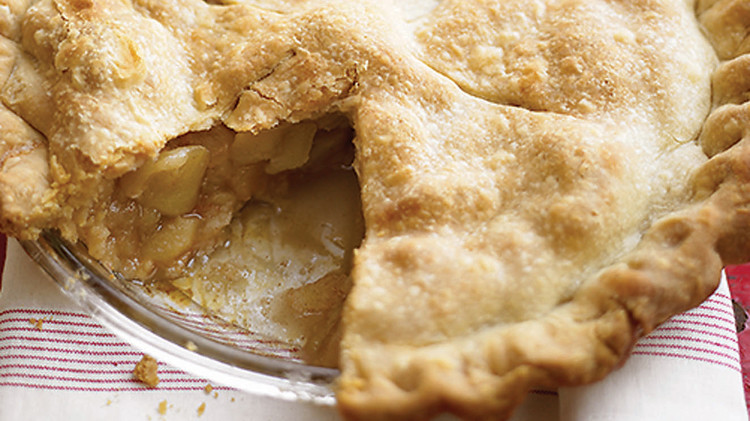
I’m not much of a pie eater.  I only ever ate apple pie – baked by my great-grandmother. When I moved to Los Angeles, she would write me once a month and enclose a five-dollar bill to buy a frozen apple pie to remember her. I was low on funds in those days, and that money would often find its way to buy other things like a few gallons of gas. She’s been gone 25 years, but on the rare occasions I eat apple pie, I remember her.

apple pie