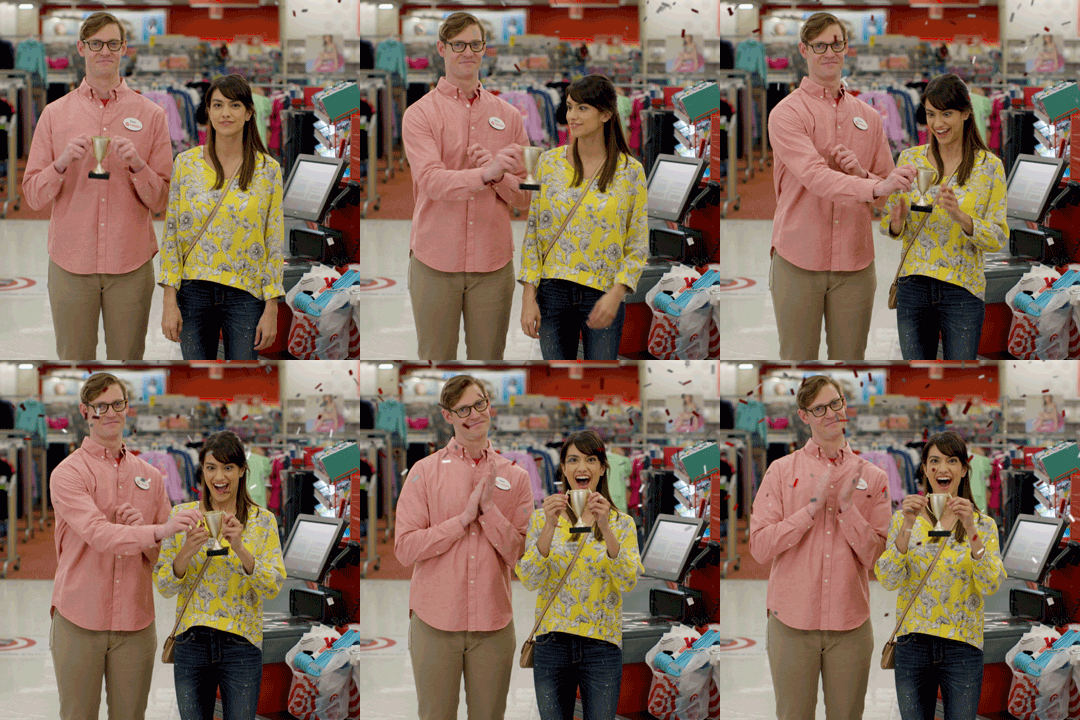
Both have recently achieved success, but of very drastic varying degrees.
The first writer has had some tremendous accomplishments over the past few weeks. Their work has placed very highly in some prestigious contests, resulting in sales, professional writing assignments, membership in the Writer’s Guild, and representation with a management company of significant importance.
The other writer had a script do well in a small contest, and had some nice things said about their writing during an online forum chat.
At first glance, the first writer definitely had the better results. Who’d complain about all of that? This is what we’re all working towards, right? That’s like a dream checklist with every box checked off. No doubt ones such as “script produced”, “film/TV show produced and released”, and “box office/ratings hit” still remain, but this is the initial phase.
Even the writer admitted they’re a bit overwhelmed by all of it.
Meanwhile, for the other writer, the contest win is nice, and while it may not be “makes the industry take notice”-level, it still fills them with a certain sense of pride. They sent their script out, hoping for something good, and that’s what happened.
Regarding the online forum chat, the moderator has raved in the past about the professional-level quality of the first writer’s material, so for the other writer to also receive similar praise was pretty uplifting and encouraging. Truth be told, it was just about the first page of a script, but why quibble?
While the first writer’s journey to success seems to be coming to fruition right before our eyes, the other writer continues to sit at their laptop, diligently plugging away and working on scripts that will hopefully garner some attention from reps and producers.
Also important – the other writer is thrilled for everything the first writer has accomplished. They’ve earned it. There might be a smidge of jealousy, but that’s expected, and the other writer can use that as motivation to do better.
The moral of the story is twofold:
First – be proud of anything you accomplish with your writing, no matter how big or small it might seem. This isn’t an easy thing we’re doing, so try to enjoy the journey and celebrate the high points whenever possible. Don’t hesitate to toot your own horn – within acceptable limits, of course.
And second – everybody’s path to success is going to be wildly different from everybody else’s. What works for one person might not work for another. It’s up to you to find your own path and keep pushing forward on it. It might take you longer than you want to reach that finish line, but it definitely feels worth it when you get there.
Mario Martin’s love for storytelling originated as a young boy when he felt inspired to tell stories through writing. Early on he honed his craft at the Maine Media Workshops and Boston Film & Video Foundation, and has attended many screenwriting boot-camps, worked with multiple coverage companies as well as many screenwriters.
Mario helped develop and produce the award-winning film LA LUZ, on which he collaborated heavily, and helped finance the indie feature GAS STATION JESUS starring renowned actor Patrick Bergin.
Mario followed this success with his writing-directing debut CITY LOVE, a provocative short about a soulful, flamboyant talk radio host starring critically acclaimed actor poet, and performer, Antonio David Lyons of AMERICAN HISTORY X and HOTEL RWANDA.
Mario has dedicated the majority of his life to becoming a better storyteller, writer, and filmmaker. When asked “Which part of the creative process do you enjoy most?”, he often responds, “All of it. The writing, crafting and fully developing your story, making sure it’s on the page.”
Mario enjoys rolling up his sleeves to work with fellow screenwriters. Taking an average story and making it a page-turner “is a lot of work, but fun and so worth it.”
What was the last thing I read or watched that I considered to be exceptionally well written?
BREAKING BAD and OZARK. I love the simple concept and plot. The writing on both these TV series is brilliant at every level.
How did you get your start in the industry?
I made my first film CHECKMATE at eighteen. That experience hooked me for life. I later wrote, directed and produced CITY LOVE, which played in nine film festivals, and worked on several feature films. Primarily my time is invested in the craft of screenwriting. I’ve written eight screenplays and am working on my ninth as we speak. I truly enjoy it.
Is recognizing good writing something you think can be taught or learned?
Yes.I believe it must be taught. It’s important to study film as to how it works so we can become better screenwriters. Understanding the technicals and there are a lot of them and knowing how to apply. Watching a movie or TV show is only what we SEE and HEAR. In a screenplay, that’s how it must be written. Only what the audience will SEE and HEAR.
What do you consider the components of a good script?
Great question. I’ve constructed an algorithm for screenwriting for just that reason. Action lines properly written. Character development, plot, and structure. Really it’s many things. At a bare minimum, there are twelve essential elements working together for great storytelling/screenwriting.
What are some of the most common screenwriting mistakes you see?
Action lines that read like a novel. Action can only be what the audience will see, period. “Show, don’t tell.” Giving each character their own voice.
What story tropes are you just tired of seeing?
Detective/Cop movies.
What are some key rules or guidelines writers should know?
-Action lines. Write them properly!
-Know your plot
-Know your genre
-Character development and characterization of characters.
-Structure
Have you ever read a script where you thought “This writer really gets it?” If so, what were the reasons and why?
I most certainly have. A well-written screenplay is exactly like watching a movie. I become completely engaged, lose track of time, am entertained, I care about what’s happening, and find myself thinking or talking about it later. How enjoyable that story was. All the elements needed for a screenplay to work were present and in place.
How do you feel about screenwriting contests? Worth it or not?
I don’t have a hard and fast opinion on that. If you win or place highly in a contest, that’s a high honor and might open a door for you. There are many other ways to get your work out there these days. Contests are just one of them.
How can people find out more about you and the services you provide?
Check out my website at www.scriptdick.com I post on all the social media platforms daily, including @thescriptdick on Twitter and script_dick on Instagram. I also have a podcast and a blog.
Readers of this blog are more than familiar with my love/appreciation of pie. What’s your favorite kind?
Favorite pie? You may have met your match! Ha ha! Pumpkin. Hands down. All others are a close runner-up. I love pie too.
Kyle Andrews is a Screenwriter, Actor, Producer, and Writer Advocate living in Los Angeles. As a writer, Kyle has written for or worked with several film hubs and online screenwriting resources. As an advocate, his “Kyles List” has helped several up-and-coming writers attain success in the industry. He is currently in development on three features, two as producer and one as writer.
What was the last thing you read or watched you considered exceptionally well-written?
There’s so much thoughtful, inspiring, engaging, and downright special (yeah, I said it) content out there at the moment, sometimes it’s difficult to narrow that down to just one or two. So, I won’t!
Lately I’ve been watching a lot more television than film. This past weekend I binge-watched Ted Lasso and I’ve never been left so deeply inspired by such a lovable goofball. For dramatic flavor, Raised by Wolves reminds me a lot of how I felt watching both The Leftovers and the reboot of Battlestar: Galactica, and I really wish more people would take a chance on it. WandaVision is also fantastic—though if folks enjoy a Marvel show that takes risks, I’d encourage them to check out FX’s Legion (also on Disney+).
I listen to a lot of audiodrama podcasts (a term than encompasses comedies, dramas, sci-fi, horror—basically any fictional podcast). The production/entertainment values are wildly disparate, but some of the standouts I’ve listened to in the last few months include The Magnus Archives; NORA; The Mistholme Museum of Mystery, Morbidity, and Mortality; and 1865.
There have also been a number of exceptional scripts I’ve read from undiscovered writers recently, and I’ve got those up over at my Advocacy page: kylefandrews.com/advocacy
How’d you get your start in the industry?
I’ve been writing screenplays and stage plays for 20 years, since I was a high school drama nerd and indie video store manager in my hometown in Massachusetts. At the risk of being too honest, this is where I admit writing wasn’t really my pursuit—I just enjoyed doing it while I focused on trying to be an actor, a much safer career choice. I ended up at Emerson College where I got a BFA in Acting with a playwriting minor, both of which taught me a great deal about craft…and very little about how to actually apply it all to the real world.
After moving to LA a little over a decade ago I had some moderate success acting in commercials but didn’t start finding real momentum until I started writing and producing my own projects. After a short film I cowrote, coproduced, and starred in got some traction at a few festivals I was approached by a competition and coverage service to help run their contests and manage their reader staff. That gave me the freedom to start meeting kind and generous industry pros while stretching my writer legs. This led me to where I am now: advocating for screenwriters, developing scripts and writer skills, lining up a few feature productions, and writing for myself and on contract.
Is recognizing good writing something you think can be taught or learned?
Any skill can be taught or learned, so long as someone puts in the time, has a level of humility and self-awareness, and is willing to admit they don’t know what they don’t know.
When it comes to recognizing good writing, I would hesitate to make it too binary a distinction, that you either can or you can’t. I think the most important thing is to recognize your own approach to what the author has written is inherently biased, subjective to your own experience and perspective, and—most importantly—not canon. Criticism free of judgement is how you empower artists to flourish.
For me, the most important thing is to recognize whether the writer met the goals they set out to meet, if doing so was an engaging experience for me as an audience member, and if not, how best to help them achieve those goals.
Anything else is just, like, your opinion man.
What do you consider the components of a good script?
Earth, Wind, Fire, Water, and Heart. Go Planet.
The thing I look for most is how a script ties its various components together. The threading of the various aspects of character, plot, theme, relationships, personal history and backstory, setting, and even tone and genre together in a way that makes sense as we come to learn about and experience them for ourselves, and grow as we watch them succeed or fail (or both).
Another thing writers hear a lot is “don’t be boring,” and like, yeah, that’s generally good advice. But how do avoid boring your reader? Interesting characters, smart dialogue, fun action are always useful—but for me, it’s making the threads of the story as dangerous as possible. When a script is connecting with a reader on a visceral level, it’s because we care about the people we’re reading and we don’t know whether they’re going to get out of it.
And danger doesn’t always, or even typically, mean physical—it just means the stakes behind it are life and death, even in comedy. For instance, a character in unrequited love might feel like they’ll die if their love interest ever found out; the opportunity for a potential yes gets overshadowed in the misery of all the ways they could say no. Get some real tension in there and we’ll care what happens regardless of the answer.
What are some of the most common screenwriting mistakes you see?
Writers make the mistakes that fit their level of experience, so every mistake is common in that sense. For a newer writer, it’s thinking that formatting is the biggest concern and not spending enough time in the pre-work before diving into the script itself. For a pro, it’s leaning on habits that may no longer be serving them.
Not following through with actually marketing the script is another concern. Personally, I look to elevate the craft whenever I can, and I love seeing writers who do the same—but our art form is one that is only going to be appreciated by a handful of people. Figuring out how to get the script made into a visual piece of art is something I encourage writers to focus on, at least for a bit before they jump into the next great script idea that they’ll lovingly craft and not pitch to anyone.
I run into plenty of “basically ready” scripts, but the writer has no idea how to market their work—or worse, throws obstacles into their own way through assumptions. Instead of trying to pitch what they’ve got, they spend their time writing new scripts and their money and energy competing for the approval of anonymous screenwriting competition readers with indeterminate levels of experience to soothe their ego.
Combine that time, energy, and money into learning how to pitch your work and grow your network and you might actually see the results.
What story tropes are you just tired of seeing?
I’m actually a huge fan of using tropes if a writer is able to subvert it with purpose and puts it in a new light. Which on some level makes it not a trope, I guess?
That being said, I don’t consider misogyny, racism, ableism, or the like to be “tropes,” but rather a deeper indication of something inherent in the writer’s worldview It’s very easy for me to tell the difference between a character with these qualities and a script that actively or passively engages in these things. I tend not to make time for these works and I let those writers know it.
What are some key rules/guidelines every writer should know?
-Script rejection is not about you, it’s about them and their current needs.
-You will never get anywhere if you don’t let people read your script.
-Disagreeing with a note is as important as agreeing with one because it helps the writer clarify for themselves what their intention is.
-Invite and embrace constructive criticism and encourage yourself not to dismiss all criticism as “unconstructive.”
-At the same time, respect yourself by recognizing when someone isn’t respecting you and allow that person’s opinions to fade into the background.
-“Formatting” is less about demanding adherence to a strict set of rules and more about making sure a script reads clearly to the benefit of potential collaborators.
-Please for the love of all that is holy stop focusing on whether to bold sluglines or use “we see” or include songs and just tell a good story.
Have you ever read a script where you thought “This writer really gets it”? If so, what were the reasons why?
Absolutely, often, and with great aplomb, from new and “elder” writers alike. In these situations, the writer has deeply explored the backstory, invested in the characters’ individual perspectives, and connected the relationship threads between them, their world, and the events of the plot, found the organic rhythm for the story, and presents it to the reader in a way they can engage with, understand, and visualize as often as necessary.
Do all that and no one will care if you’ve bolded shit.
How do you feel about screenwriting contests? Worth it or not?
Hoo boy, this is the most complex question phrased in the simplest way. Having worked within that system, I know first-hand how some writers and their careers have benefited from winning or placing high in them. I have personally worked with contests to help them promote their writers and have connected several with managers, gigs, and a larger network as a result. I’ve even developed a couple of services that certain contests still employ to the benefit of their writers.
I’ve also heard from reps and producers that they’ll receive a Top 10 list of writers from a competition or coverage service and none will get signed because the folks judging the scripts don’t have a frame of reference for what is ready for market. This gets compounded when some writers whose scripts are close but do need some work get an outsized impression of their impact and don’t bring it the rest of the way.
There can also be a lack of transparency that that doesn’t serve to build trust. I don’t want to disparage individual competitions, but some of them also pitch relationships they don’t actually have or prizes that they can’t fulfill. There are also a couple full-on scams, but I don’t want to get sued by the sociopaths who run them (they are, thankfully, fewer and farther between than you might think).
I guess my feelings boil down to how an individual writer uses it to their personal benefit. If they can win or make finals and they promote themselves with those victories, then that’s great. If the service has a presence in the community a writer finds helpful, that’s also good. If the writer is newer and they’re looking for basic, no frills feedback, then it can certainly be a starting point for development. For everyone else, I think they’re best as accessories to the main work—fun for adding some flair but won’t provide you much cover in public.
How can people find out more about you and the services you provide?
My website kylefandrews.com includes all aspects of my work including Writer Advocacy and my own acting, writing, and producing.
They can also find me at @kylefandrews on Twitter and Instagram.
Readers of this blog are more than familiar with my love/appreciation of pie. What’s your favorite kind?
I’m more of a cake guy, but if all we have is pie and “pizza” isn’t an option, then I’m going with pumpkin because it’s savory/sweet, seasonal, and nostalgic—it’s the McRib of pies.
David Schwartz is a freelance screenwriter and script consultant. Prior to being a script consultant, he took a few screenwriting courses in college along with other film courses. After college, he continued working on his first feature and started submitting his scripts to a variety of screenwriting contests. In fact, his first feature made it as a quarterfinalist in the 2019 Bluecat Screenwriting Competition. He’s written several scripts, mainly short films, and is focusing on helping writers with their scripts!
What was the last thing you read or watched you considered exceptionally well-written?
In my spare time, I’ve been watching a variety of things, but as for shows that have been well-written, I’d say WandaVision and Bridgerton. I thought I wouldn’t like those types of shows because I’m not much of a comic book fan and had never heard of Bridgerton, but I find both shows enjoyable to binge. I’m usually someone who likes musicals, so this might sound a bit cheesy, but I’m really enjoying Zoey’s Extraordinary Playlist! It’s got humor, heart, and great songs that tell a story and moves the plot forward. At first I thought the concept sounded corny, but seven minutes into the pilot, I was hooked and became totally obsessed. I sometimes get emotional during that show. Oh, and I also like The Mandalorian.
How’d you get your start in the industry?
I started when I first took a screenwriting course in college. At first, I thought it was going to be a real challenge. Prior to taking the course, I had no idea how much work it takes to write a script. But after completing the course, I actually found screenwriting very enjoyable and took a few more courses to develop my craft. In fact, I’m still working on a script I started writing during one of my courses. After college, I continued working on my script and started submitting it to contests and paying for some feedback. After receiving feedback from professionals in the industry, I was inspired to start my own script consulting business.
Is recognizing good writing something you think can be taught or learned?
I think it’s a mix of both. When I look at a script, I can tell the writer’s experience based on their writing. For example, if someone has dialogue that’s flat or very on-the-nose, I can tell they’re just starting out. But then again, lots of writers, even professionals, tend to sometimes have some on-the-nose dialogue in their writing. When it comes to writing, I see myself as both student and teacher so it could go either way. When I read a script, my feedback is based on both what I’ve learned in my screenwriting courses and the feedback I’ve received on my own scripts.
What do you consider the components of a good script?
A good script in my opinion is a solidly structured story. If you don’t have a structured story from start to end, the reader tends to lose interest early on. I’ve noticed this in more than a few scripts I’ve read, but it can be easily fixed. Before anyone starts writing, I’d suggest having a beat sheet so the writer has a blueprint of their script from beginning to end. Another component of a good script is conflict. Every scene, whether it’s big or small, has to have conflict. And finally, character development is extremely important. I love seeing characters develop from start to end, and that’s what makes movies great.
What are some of the most common screenwriting mistakes you see?
The most common mistake I see is sometimes the writers will start their script with the inciting incident at the very beginning and continue on from there. The problem with this approach is I don’t get a sense of who the protagonist is as a person. I don’t necessarily have a reason to root for them to achieve their goal over the course of the film. That’s why I strongly recommend writers have a beat sheet before they jump into writing their script. It’s going to make things so much easier for the reader and the script is going to be a smooth read. (If you want to know more, I’ve written a blogpost about it.)
What story tropes are you just tired of seeing?
I’m kind of tired of seeing love triangle plotlines. If I wanted to watch a love triangle plotline, I’ll just rewatch Friends. I also hate it when two people are having a conversation in the car and the driver takes their eyes off the road and continues talking with the passenger for 30 seconds or longer. Seriously, it irks me a bit.
What are some key rules/guidelines every writer should know?
Don’t be boring.
Every scene must have conflict and serve a purpose. Additionally, each scene needs to drive the plot forward.
If you have writer’s block, keep writing and come back to it later.
It’s okay to take a break every now and then. Sometimes it’s best to rest after 2 hours of writing nonstop.
Don’t be afraid to ask for help.
Have you ever read a script where you thought “This writer really gets it”? If so, what were the reasons why?
I remember reading a script a while ago where it was a bit hard for me to provide critical feedback on their script because it was so well-structured. I was in awe of their script and in fact, made a few minor suggestions to them in the feedback. A few months later, they posted in one of the Facebook screenwriting groups that their script made it to the quarter-finals in a screenwriting contest.
How do you feel about screenwriting contests? Worth it or not?
It depends on the contest. Some contests, like Bluecat for example, have a reasonable price and the feedback is free. The best part is writers can resubmit their scripts twice, which is nice. But not all feedback is free, and you have to pay an extra fee to get feedback on your script. Plus, depending on where you’re submitting, the contests can be very competitive. As a script consultant, my goal is to help writers develop their craft before they start submitting their work to the professionals in the industry.
How can people find out more about you and the services you provide?
Aiko Hilkinger is an award-winning, queer, German-Japanese screenwriter from Colombia. She primarily works in fantasy and animation, and her pilot “Kate and Ava” placed her in Network ISA’s “Top 25 Screenwriters to Watch in 2021”. Hilkinger creates magical worlds filled with diverse characters that children and teenagers can relate to and see themselves represented in. Not only does she strive for diversity and inclusion in her stories, but most importantly, she believes that through her animation work she can connect with kids and help teach healthy communication and to own up to their mistakes.
When she’s not writing, Hilkinger works as a script analyst for big screenwriting contests and has recently started her own script consulting business.
What was the last thing you read or watched you considered exceptionally well-written?
I feel like I’ve said this to the point where the people who know me have gotten tired of hearing it, but Kipo and the Age of Wonderbeasts on Netflix has to be my pick. I honestly think the show made my 2020 much more bearable while also blowing my mind with their imaginative storytelling. The show was planned as a three-season arc and you can tell when watching it that it was meticulously planned as the story is just so tight and has a clear message all the way throughout.
How’d you get your start in the industry?
I actually don’t feel like I’ve “made it” into the industry yet. I joke that I graduated from “baby writer” to “toddler writer” in 2020 since it was a learning year for me. After I graduated from film school, one of my teachers helped me get an internship with an agency where I perfected my coverage skills. After that I applied to work as a script analyst for a contest site while entering some contests here and there for the first time.
I won some pretty cool awards this year and was named one of the Top 25 Screenwriters to Watch in 2021 by Network ISA. I’m looking forward to new opportunities this year, like getting signed and hopefully selling my first script or getting staffed in a room.
Is recognizing good writing something you think can be taught or learned?
I think you can teach someone what to look out for (structure, format, clear goals, etc.) in a script but after a while it becomes a feeling. It sounds strange, and it definitely is, but after reading as many scripts as I have, you start to very easily pick up on things that make a script good or bad. At times it has everything to do with those “rules” we’re taught in film school, and it’s easy to technically say why something isn’t working, but it’s only through practice of your own craft and opening yourself up to criticism that you really learn what works or doesn’t for you, and how to break those rules.
What do you consider the components of a good script?
A good script has something to say. I’m a sucker for a good theme, and I always suggest looking at it as a “thematic statement” or “the lesson the protagonist or antagonist will learn”. When a writer knows what they want to say with their piece, it gives the story direction, and it is much more enjoyable to see them get there.
Oftentimes when a script doesn’t know where it’s going, you can feel it, it’s like you’re wandering around aimlessly through a world, surrounded by characters who don’t know what they want and thus you don’t know what they need. Definitely start your writing journey by knowing your why (why do you want to tell this story and why does it need to be told now?).
What are some of the most common screenwriting mistakes you see?
One of the most common mistakes I see is characters not having a clear goal. A goal is the driving force behind the protagonist accomplishing something by the end of the script and without it, the story can drag on and become repetitive. We don’t want to see someone live their life day to day because it’s not dramatic; not every action pushes the story forward. That’s why it’s important that not only the protagonist has a clear goal, but the antagonist does as well, since they’re the ones who will get in the way of the protagonist.
I also recommend giving other characters goals of their own so that they can be more rounded and have something going on that gives them more depth other than doing whatever the protagonist needs them to do.
What story tropes are you just tired of seeing?
I’m exhausted of seeing every queer story be about “coming out” and dealing with homophobic families, friends, etc. It’s the same annoyance I have about POC films, especially Asian-American stories, only being about the struggle of immigration. There are so many other beautiful stories that can be told outside of the constant struggle to be accepted by a straight, white society that need to be told in order to showcase the beauty of our cultures and communities.
I want to watch a film about queer love that has nothing to do with strife or struggle, and I’m so happy that we’re slowly starting to get there with shows like Schitt’s Creek and She-Ra. And I would love to take my family to watch a film with characters that look like us where they’re just living their lives unapologetically, like Crazy Rich Asians and One Day at a Time.
What are some key rules/guidelines every writer should know?
Write with a purpose. Know your why. Why are you writing this story? And why is it important to tell it now?
Fill out a bullet point list of your main structure in order to know your main emotional turns before you start writing.
Always outline, even if you don’t like it. Look at your outline as your first draft.
Make sure your characters have clear goals (wants) and clear needs (areas for growth).
Sneak exposition through conflict.
Make sure your characters are emotionally motivated.
Antagonists should have a clear driving force behind them.
Read as much as you can and make it a variety (both produced and peer scripts) in order to figure out what works for you in terms of storytelling, and to practice pinpointing why they don’t work for you.
You don’t have to take every note you get. Take the ones that resonate and throw away the ones that don’t.
Have you ever read a script where you thought “This writer gets it”? If so, what were the reasons why?
The main reason is that it’s clear the writer has something they want to say. I know I’ve mentioned this a lot, but it truly is the most important thing you can do. The second I get your voice and understand your point of view, I’m in. It’s our job to make that as clear as possible because our voice is what will set us aside from other writers. It’s what we bring to the table, what we’ll get hired based on, so it’s the most important thing to develop. And through a lot of practice, giving and receiving notes, you’ll get there.
How do you feel about screenwriting contests? Worth it or not?
Contests can be worth it if you have money to splurge. I know a lot of people who haven’t had a lot of success from them and it can definitely be frustrating. I’ve had a very 50/50 experience. I didn’t make it into a few contests that I was excited about, but then I made it into one that really, really worked for me.
You have to be very clear with yourself about what you want out of these contests (exposure, management, etc.) and make sure you know they’re not your only chance to get into the industry. Also, be sure to ask fellow writers about their experiences in order to find out which contests are the best for you and your goals.
How can people find out more about you and the services you provide?
I am super active on Twitter – @aikohwrites. That’s where you can find me saying things I probably shouldn’t. And if you’re interested in my coverage services, you can go to aikohilkinger.com/script-coverage to find more information.
Readers of this blog are more than familiar with my love/appreciation of pie. What’s your favorite kind?
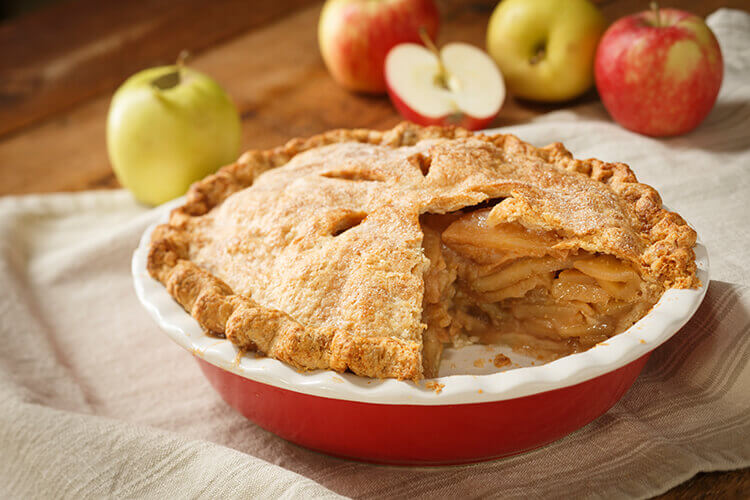
This is such a good question! My favorite is apple. My mom has always had her own recipe and her apples for some reason always taste amazing. But if we’re being more specific, I love a good, warm and buttery strudel (maybe with some ice cream and caramel).




 Maximum Z