Now available for your reading enjoyment

Well, today’s the day.

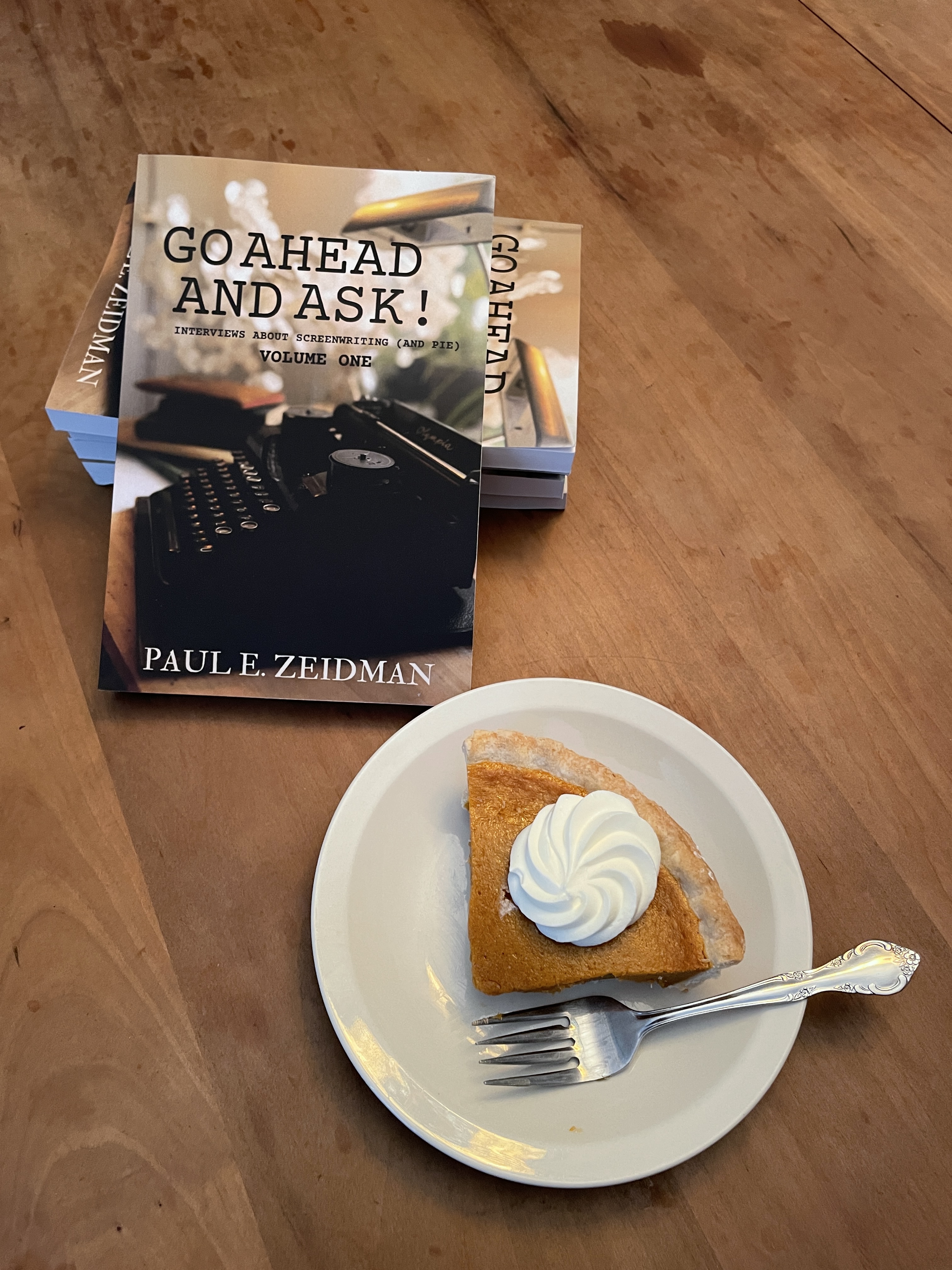
My book – GO AHEAD AND ASK!, VOLUME 1 – is officially available.

It contains 42 interviews with script consultants, and offers a wide variety of helpful advice that could benefit any screenwriter, no matter how much or how little experience they have, as well as each person’s contact info (where applicable), and of course, their favorite kind of pie.

And as the title indicates, this is the first volume. The second and third, featuring interviews with not only more consultants, but also screenwriters, filmmakers, and writers in other mediums, are slated for release in the late June/early July and mid-September timeframes, respectively.

In the meantime, I hope you’ll be interested enough in wanting to take a look at this one.

Thanks for reading, enjoy the book, and have a piece of pie with my compliments.

7 days and counting…

Just a friendly reminder that my book GO AHEAD AND ASK!, VOLUME 1, comes out next week (22 April).*

It contains some of the over 100 interviews I’ve done with script consultants, writers, filmmakers, and overall creative types, as well as their contact information, plus a wide variety of what kinds of pie they all enjoy.

I’ve received an advance copy, and I’m thrilled with how it turned out.

I sincerely hope you’ll take a look.

*Volumes 2 and 3 tentatively scheduled for late June/early July and September, respectively

Clear some space on your bookshelf

Coming soon to a trillion-dollar online retailer near you!

This one’s been a long time in development, and I’m quite thrilled to be able to finally discuss it.

Over the past few years, I’ve done over 100 interviews with script consultants, screenwriters, television writers, filmmakers, and writers across several mediums on this blog, and my intent for quite a long time was to collect them all in a book.

Turns out all of those interviews in print form would have resulted in a book approximately 700-750 pages long, so the book then became two.

After some additional editing and formatting, along with a little more re-evaluating, it was decided that the two would actually work better as three.

So…

My 3-book GO AHEAD AND ASK! series will be coming out over the next few months.

Volume 1 collects the original set of interviews that kicked the whole thing off, and will be available in paperback on Amazon starting on 22 April.

(All three books will only be available in paperback. Sorry, e-readers.)

Volumes 2 and 3 contain the interviews that have come out since then, with Volume 2 slated for release in either late June or early July, and Volume 3 wrapping things up in September.

I am truly elated to finally be able to offer these books to the screenwriting community, and hope they prove to be both informative and entertaining, as well as inspire you to enjoy a piece of pie while you read them, because what else would match so perfectly with something I wrote?

3 months in, and…?

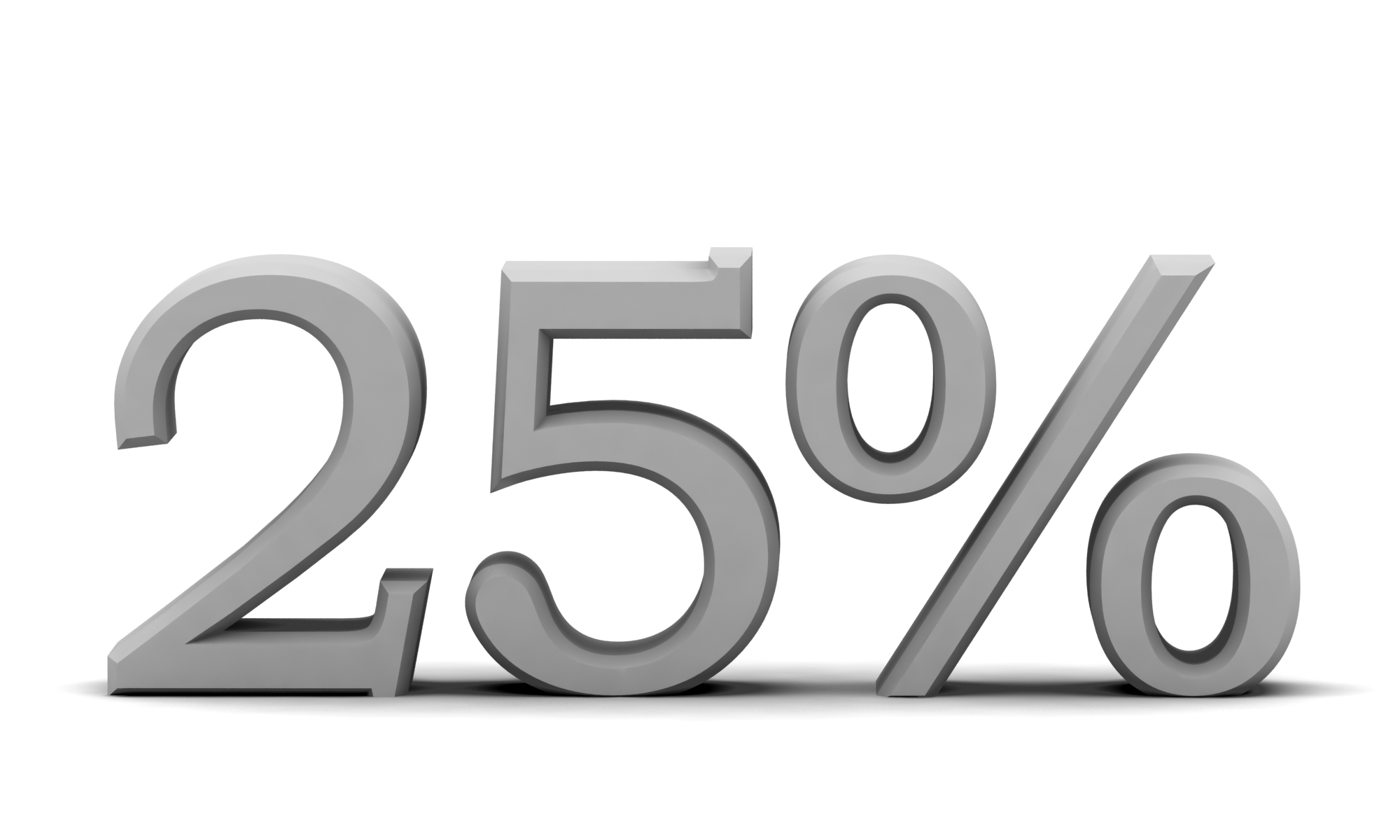
2022 is now 1/4 over. How’s it been for you, productivity- and results-wise?

Are you making the progress you’d hoped you would? Any goals achieved or finish lines crossed?

If so, great!

If not, don’t be so hard on yourself. Sometimes things take longer than we’d like them to.

The important thing is that you’re putting in the effort, and that any progress is good progress.

It can probably said with absolute certainty that lots of writers started the year with the mindset of “I’m going to accomplish X, Y and Z!”. Like with most things, numerous factors play a role, so results will vary.

It’s great to give yourself some long-term goals, but setting up some short-term ones can really help boost your morale. Create goals you know can achieve, like setting aside a specific amount of time per day for writing and writing-related activities, or that you’re going to write X pages a day.

Accomplishing something is all about putting in the work, and that takes time.

Look at it from this way. If you’re not where you thought you might be around now, you still have 9 months to work on getting there.

It’s a marathon, not a sprint.

This applies to more than just writing a script.

Pace yourself. Know what you’re capable of, but don’t be afraid to give those limits a little extra push.

Good luck, and hope you have a wonderfully productive next three months.

Does your script sound like you?

When was the last time you read a script that was really hitting on all cylinders?

Great story, cinematic writing and vivid imagery, compelling characters, the whole kit and kaboodle.

What’s the one thing that ties all of them together?

That writer’s voice.

We hear about it all the time, and I’ve always described it as how the writing in a script is a reflection of the writer’s style.

If you read a script by Shane Black, Judd Apatow, Nora Ephron, or Quentin Tarantino, you’d know it by the way it reads. Each one is written in the distinctive voice of each writer.

And that’s what you want to achieve with your writing. When somebody reads your scripts, they’ll know it was you.

The need to establish your own voice when it comes to your scripts can’t be stressed enough.

I’ve read a lot of scripts that try to mimic an established writer’s voice, and it usually falls flat. Part of the reason is that the writer is trying too hard to sound like the established writer, which seems counterproductive. If I want a script that reads like Judd Apatow wrote it, I’ll read a Judd Apatow script.

It also doesn’t help that some of these established writers created a niche for themselves with their writing style, so anybody who comes after them with the same approach will immediately be labeled a pale imitation. You might have a phenomenal script, but if the only thing somebody remembers about it is that it’s just ripping off Tarantino, you’ve just wasted everybody’s time.

Now this isn’t to say that you can’t write in a similar style, but you need to put your own spin on it to help it stand out.

What are some of your strengths, writing-wise? In what areas do you really shine? Is there a way you can apply that to other aspects of your script? You want your script to have a real impact on the reader; one with a strong voice can help accomplish that.

Another benefit of a script with a strong voice is that it helps make it that much more memorable. Not only does it leave an impression, but chances are it’ll stick with the reader long afterward. Many’s the time I’ve finished reading a script and within five minutes don’t remember a thing about it. Sure, the writing may have been adequate or possibly just slightly above average, but a lack of a distinctive voice from the writer is a key missing ingredient.

Then there are those I’ll remember a long time after. Maybe it was the story or even just the concept, or the protagonist, or a great scene/sequence. No matter what it was, you could come to me a few months from now, or maybe even next year, and ask “Hey, do you remember that script about ____?”

Chances are I will BECAUSE of the writer’s voice.

Which is exactly what you’re aiming for.