All those years of running finally took their toll – a minor tear in my Achilles tendon and a bone spur that inflamed the bursa on the back of my heel.
Thus the recuperation is underway. I’m out of commission for a few more weeks when it comes to hitting the road. Got a stabilizing boot and everything. Great news from the podiatrist – I may be able to start up again in January, which thrills me to no end.
While I may be doing a few more upper body workouts at the gym, it’s also given me time to get some more writing in. Current project status – coming along nicely, thank you.
But this has reminded me of how many posts I’ve written that compare/relate running to writing a screenplay. Turns out – more than a few.
So what better time than right now to offer them up for your reading enjoyment?
Some of them have similar content, but all the sentiments, perspectives, and observations still apply. Even if you’re not a runner, you can probably relate to a lot of it.
One last thing – since running burns a lot of calories, my race-day tradition is to enjoy an incredibly delicious apple fritter from a local donut institution. I don’t have any posts about that specifically, but here’s something that could fall into that category:
One of the most common analogies regarding screenwriting is “it’s a marathon, not a sprint”.
Speaking from experience, it most certainly is.
For long-time followers of this blog, one of the things I enjoy doing when I’m not working on scripts is to go for a run. It’s good exercise, lets me catch up on my podcasts, and offers plenty of time to think about my writing projects.
After years of half-marathons, I decided it was time to take on the next challenge – a full marathon. A whole 26.2 miles.
Despite all the training I did, of which there was A LOT, when I set out that morning, I was still nervous. Could I actually do this?
That’s when I reminded myself, and did so repeatedly over the next few hours:
It’s the distance, not the time.
Much as I wanted to finish with a respectable time and pace, I’d decided it was more important just to finish.
Long story short – I got to mile 20 and a twinge developed in my heels and ankles, which then turned into out-and-out pain, so I ended up walking the rest of the way. It took me longer to get there, and definitely wasn’t the way I’d hoped things would play out, but I kept going and crossed that finish line. All the hard work and effort had paid off.
What does this have to do with screenwriting? It’s the perfect metaphor!
Earlier this week on social media, I posted my standard question to the screenwriting community – how’s your latest project coming along?
Answers covered just about the entire spectrum. From “great!” to “almost done with it” to “working out a problem in the second act” to “slowly” to “not at all”.
I can certainly sympathize with those last two. Frustration about a lack of progress is common. Our creativeness just isn’t cooperating, which doesn’t help either.
It usually boils down to two choices: accept the frustration, dig in a little deeper and keep pushing forward, or give up.
For me, giving up just ain’t an option. I love the writing too much to even consider it. But like with the running, I may not get the results I want when I want them, but I’ll keep trying until I do. It might take longer than I want, which honestly would kind of suck, but if that’s what it takes, then so be it.
As writers, we put way too much pressure on ourselves to succeed, sometimes within a somewhat unrealistic timeframe. “If I don’t get the results I want, I’m a failure.”
NO.
This is NOT an easy thing we’re trying to do. At least give yourself credit for being willing to do the work. Some people don’t even get that far.
Everybody’s path to success is different, as are our individual finish lines. You know the route you need to take, and how challenging it’s going to be, so it’s up to you to decide how you want to take it on.
So to all the writers feeling disappointed or frustrated about how things are (or aren’t) going, remember that the road ahead may seem treacherous and insurmountable, but if you keep pushing forward and do your best to enjoy the journey, you’ll be that much closer to crossing that finish line.
Hang in there, chums. I may be running my own race, but I’m still on the sidelines, cheering you on.
I haven’t written about it in a while, but one of my other interests is running. It’s inexpensive, good exercise, and I’m fortunate to live in a place well-suited for it.
Added bonus – plenty of time to think about whatever script I’m working on at the time.
However, the passage of time and some good old wear-and-tear are starting to take their toll. My pace is a little slower than it used to be, but I don’t mind.
I especially enjoy half-marathons. 13.1 miles is a good, solid distance. In the Before Times, I’d run about 6-8 a year.
This year, kinda-sorta. All but one of the races I’d signed up to do this year were cancelled. Race organizers, however, were undeterred. Runners were given the option of doing the races virtually, as in “you run the same distance, but on the route of your choosing, then send us your time and a map tracking your route, and we’ll send you your shirt and medal.”
With all of this going on, one of the things I’d always wanted to attempt was running a full marathon. 26.2 miles. Running a half wasn’t too hard, but taking on a full seemed much more formidable.
But the biggest challenge was I wanted to see if I could do it.
So I trained. A lot.
This is also where that part about wear-and-tear really started to make itself known – primarily in my heels and ankles.
But I kept at it, always trying to push myself a little more each time. I was confident, but still plenty nervous.
As the days wound down to Race Day, my anxiety levels were growing. The biggest question on my mind was “COULD I DO THIS?” My family were as supportive and encouraging as possible, but in the end, it was all me.
So I started out. The app in my phone announced at the onset that “tracking would continue for 26.2 miles”, which is quite intimidating during those first few steps.
“It’s the distance, not the time,” I reminded myself.
Off I went through the pre-dawn streets. Sunrise was still about 80 minutes away, and save for some hills and a bridge colored international orange, it was a pretty flat route.
The miles ticked away. I got to the halfway point, feeling pretty confident the second half might not be as challenging as expected.
Mile 19. So far, so good. At this pace, maybe an hour fifteen to go.
Mile 20. The wear-and-tear decides to kick in. For my heels and ankles. Steps got a little bit tougher to take. Then a stabbing pain at the base of my left shin. That doesn’t seem good.
I wanted to keep going, but was more concerned about inflicting further damage, so I chose the safest option: I stopped running, and walked. Not what I wanted, but at least I was still moving.
It’s the distance, not the time, remember?
I got to Mile 24 and thought “maybe I can run these last 2.2 miles” and ran for about 4 steps. Nope. The walk continued.
But I kept going, and eventually did cross the virtual finish line, with a time of 5:11:33.
Not the results I was hoping for, and despite some unexpected problems to deal with, the important thing was I DID IT.
One of the most apt metaphors about screenwriting is “It’s a marathon, not a sprint.” It takes a REALLY long time to be able to do it, especially properly, so you need to keep working at it, constantly trying to do better.
The journey to finishing a script, let alone establishing a career as a screenwriter, might not be the one you anticipated. Everybody moves at their own pace, so don’t be discouraged if it seems like everybody but you is moving forward by leaps and bounds.
The important thing is to focus on becoming a better writer and making your script better. Work on crossing the finish line that’s waiting for you, and you alone.
Giving yourself a medal, however, is totally optional.
One of the things I’ve tried to take advantage of during the ongoing sheltering-in-place is being able to set aside time to write. Every day, if possible.
Sure, some days all the other stuff that requires your attention might whittle it down to practically nothing, but hopefully you’ve allowed yourself that window of opportunity to work on your latest project.
So far it’s worked out pretty well. My current project is THIS CLOSE to being done.
Would I have been able to made this kind of progress if I hadn’t been confined to my house all this time? Maybe. Maybe not. The important thing is I PUT IN THE WORK. That’s the only way anything gets written. A writer writes.
If you’re like me, you know writing requires discipline. It takes a real effort to keep at it on as regular a basis as you can manage. Any progress is good progress.
Even if all you can manage is a page a day, that’s still something. It’s a page more than you had yesterday. And the more you write and strive to constantly develop your craft, the more you’ll improve. Because you put in the time to do it.
This isn’t to say you should devote every available second to working on something. You don’t want to burn yourself out. Allow yourself a little downtime and relax. Go ahead and recharge those batteries.
Hard as it to believe, you are allowed to spend some time NOT writing. You can even do something that’s not even related to writing in any way, shape or form. Shocking, I know.
My wife and I have been enjoying the Miss Fisher Mysteries on Amazon Prime, and I’m slowly working my way through all those “I’ll get around to watching this eventually” movies in my Netflix queue.
I’ve also been able to do a little more exercising, which has been beneficial for both mind and body. It helps clear my head, gets me out of the house, and keeps me active. Even just taking the dog for a walk is good.
But my writing still manages to find a way to remind me it’s still there. It’s not uncommon for me to be out on a run and, even though I’m all sweaty, out of breath, and still have several miles to go, I’ll be mulling over potential solutions to a pesky problem involving something in the script.
No matter how you spend your time, I hope you’ve been able to make the current situation work for you as best as you can, and are happy with how your writing’s coming along.
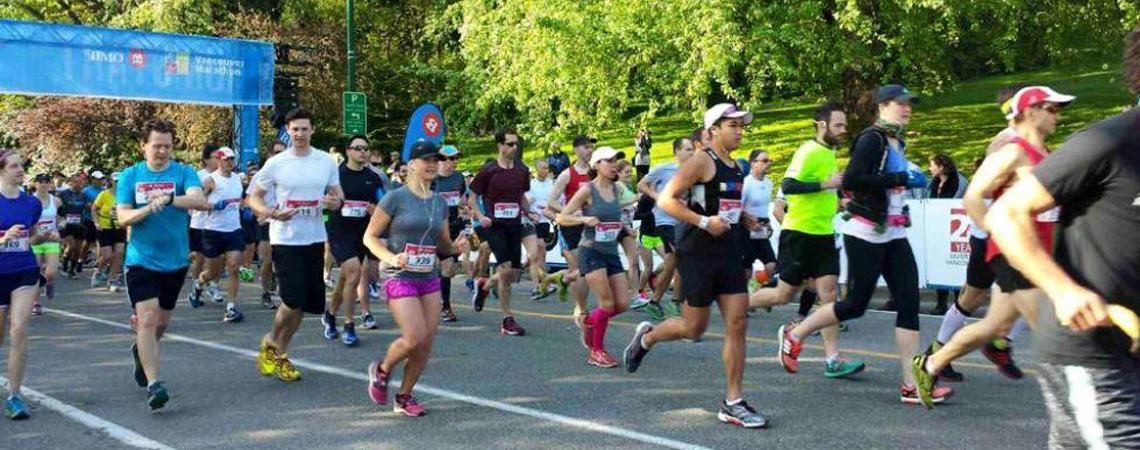
This past weekend, I ran my first half-marathon of the year. Luckily for me, it was a pretty flat course, and I accomplished my primary goal of finishing under two hours. 1:58:43, to be specific.
That works out to about a 9-minute mile, which for me is pretty good. It’s faster than I run during my training runs.
Because it’s an actual race, I tend to push myself a little bit more. Not because I’m trying to beat any of the other runners, but to see what I’m truly capable of.
Naturally, there will be those who finish much sooner than me. I think I was somewhere around the 7-mile mark when the eventual winner passed by in the opposite direction. They were maybe a minute or two from the finish line, while I had just passed the halfway point, so still had another six miles to go (equaling about a little less than an hour or so).
Was I bothered by that? Not in the least. I’m nowhere near being able to run that fast anyway. The takeaway is that we were each going at the pace that worked best for us. Theirs just happened to be significantly faster than mine.
“Well, that’s all well and good, but what does it have to do with screenwriting?” you might ask.
Easy. The results from when I do a race are similar to the results of when I write: I go at my own pace, which is different from everybody else’s. Some writers will get done faster, and some will take longer. As long as you’re happy with the results of how you did is what matters the most.
I know several writers who’ve had some very productive writing sessions the past few weeks; a few have been churning out pages at a seemingly inhuman rate. Do I wish I could emulate them and crank out double-digit numbers of pages every day? Sure, but my personal circumstances being what they are, that’s just not an option. For me, ending the day with three new pages is a victory.
It’s very easy to see somebody else’s progress, compare it to your own, which isn’t as much, and feel like you’re doing a lousy job.
DON’T.
How somebody else writes is absolutely no reflection on how you do. That’s them and you’re you. Comparing and contrasting both sides is pointless. All of your focus and attention should be on you; everything else is a distraction.
Like with running, if you want to improve, you need to work at it. It’s not easy, and takes time. But if you’re willing to put in the effort and keep at it on a regular basis, you’ll find yourself gradually doing better than you did a few weeks or months ago. That, in turn, will boost your confidence and make you want to keep trying to improve.
Writing a script is a long journey, and every single step gets you a little bit closer to finishing. And all those steps add up.
Put in the work, and you’ll see the results. Today, three pages. A week from now, four. After a month, five, six, or even more. Before you know it, you’ve got yourself a completed draft.



 Maximum Z