Work those writing muscles!

00748604.JPG
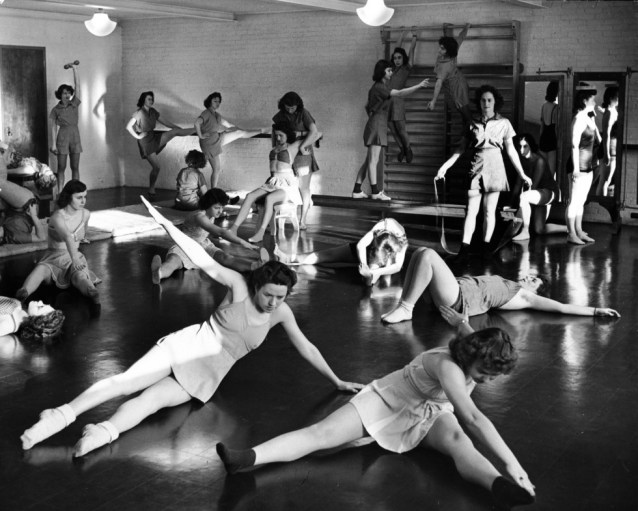
Feel the burn! C’mon! Just one more page!

Earlier this month, I hosted a networking event for screenwriters from the Bay Area and throughout northern California. It was fun and I got to make some new connections as well as reconnect with some already-established ones.

(Can’t recommend this sort of thing enough. Getting to know other writers in your area helps all involved.)

Part of the event involved introducing ourselves and offering up a little background info, including our individual screenwriting- or film-based experience (there were a few writer-directors) and a thumbnail description of our current works-in-progress.

When it was my turn, I mentioned the blog and how I was dividing my time between a few rewrites. At that point, one of the attendees raised his hand.

“A few rewrites? Like, all at the same time?”

I clarified that I’d work on one script for a few days, or at least until I thought I made some significant progress, take a day off, then dive into another one.

“But don’t you find it kind of difficult to stay focused?” He also added that he was relatively new to screenwriting, so the concept of working on a script and then suddenly shifting gears into one that’s totally different was a little mind-blowing.

I explained it this way:

I’ve been doing this a while, and all of these scripts are at least third, fourth, or higher drafts. I’ve gotten to know the stories and characters for each one pretty well, so I can jump right in, fully aware of what each rewrite requires. It might take a while (along with several more rewrites) to finally get there, but I’ve found that always working on something has really helped make the whole process easier.

It really is like exercising. It’s kind of tough and challenging when you’re starting out, and takes time to learn how to do it properly. Then you figure out a pace and/or system that works best for you (with everybody having their own methods and routine). You will indeed discover that the more you do it, the easier it gets.

I try to write every day, even if I only have 30 minutes to spare. You might think such a short amount of time isn’t worth the effort, but I’d disagree. Better to spend a little time writing than no time at all. Friend-of-the-blog Pilar Alessandra even wrote a book to help you do just that. (totally unsolicited plug. It came to mind while I was writing this.)

If you go into a writing session with an idea of what you want to accomplish, it’s a great use of your time. And if you sit down, not entirely sure what to do, you’re still giving yourself the opportunity to focus, which is always good.

That’s really what it all comes down to: Want to be a better writer? Find the time to write.

And reading helps a bit too.

A quick refresher course

library
Researching potential connections takes just as much effort

I’ve noticed a trend recently popping up on a few online screenwriting forums.

Writers are posting their material, asking for feedback. Concepts, loglines, the first page or the first few pages of their script. Any and all of them.

On one hand, I can understand the desire to get feedback. You want to know if what you’ve got works, and if it doesn’t, how it could be improved.

On the other hand, you’re asking what is, for the most part, an assortment of total strangers with unknown levels of experience to tell you what they think. Can’t say that I’m too crazy about that.

It’s like walking into a party where you don’t know anybody, standing in the middle of the room and shouting “Hey! What do you think?”

Don’t do that.

As has been stated many times on these pages – networking is key.

Professional relationships are a vital part of this business. They take time and effort to establish and maintain, but are definitely worth it in the long run.

You need to put yourself out there and get to know other writers, preferably in person, but online/virtually works just as well. Both have benefitted me greatly, and could do the same for you.

Here are a few previous posts which might come in handy.

Getting to know you

Try the direct approach

Lattes, lunches & kindred spirits

Hey! Long time no (preferred form of communication)

Now get out there and meet people.

-Two weeks ago, I ran the SoFi Golden Gate Half-marathon with a time of 2:01:16. Not bad, especially considering the amount of uphill.

This Sunday I’ll be across the Bay and running the Berkeley Half-marathon for the first time (it’s also my 5th and final race for this year). The course is a little flatter than San Francisco, so while coming in under 1:55 would be great, I’ll also be happy with anything under 2 hours.

Once again proving that the journey to succeed really is a (half) marathon, not a sprint.

See you at the finish line.

A very hands-on Q&A with Geoffrey Calhoun

7D25AB88A8B448A9ABA793263FCBF2F3

Geoffrey D. Calhoun of wefixyourscript.com is listed as a Top 100 Indie Writer in the World. He has optioned several screenplays and has worked as a writer on two features coming out in 2017: The Little Girl and Studio 5. His multi-award-winning thriller Pink Bunny is scheduled for a 2018 release. Geoffrey has won multiple screenwriting awards and has worked as a producer, an assistant director, and director on indie film productions. He has been sought out by studios as a script consultant and a re-writer for various stages of development and production.

1. What’s the last thing you read/watched that you thought was incredibly well-written?

The last thing I watched I couldn’t stop thinking about was Arrival. I loved this film. It had depth and really explored her character. I loved how they played around with the structure of the film in creative ways that really built up to a climax. It was fantastic. I could see how Eric Heisserer did over 100 drafts to make that story perfect.

2. How’d you get your start reading scripts?

I actually began writing on a bet. A friend of mine was an editor for a local kids show. He wanted to push himself to write a script so he challenged me to see who could write better. Personally, I wasn’t interested because I have dyslexia. I agreed to do it, and ended up really enjoying the process. Since then it became more than a passion, almost like a volition. I wanted to be the best screenwriter I could possible be, so I started studying and learning from the greats such as Syd Field, Robert McKee, Viki King and reading screenplays by modern legends as well like David Goyer, Jonathan Nolan, and Christopher McQuarrie.

3. Is recognizing good writing something you think can be taught or learned?

I think it can be learned. It comes with time. The average movie attendee can recognize a bad film. Now, some people prefer bad films, but that’s a whole different form of self- torture (wink). I like this question. It reminds me of the debate about raw talent vs. learned skill. Some teachers out there believe if you don’t have a modicum of innate talent with writing, then you’ll never be a good writer. I completely disagree with this. Their defense is that this is an art, and thus you must have a certain amount of “taste” in order to know the difference between what’s good and bad. I think what we do is more than an art. It’s a craft; a learned skill plain and simple. Something that can be mastered with just two things, time and practice. That’s all you need. We are craftsmen, like the blacksmiths of old. At first creating something small and simple like a horseshoe, then with time we master our skill and create compelling stories and works of art like the ornate armors of old.

4. What are the components of a good script?

It all starts with having something to say in your script. What are we trying to pass off to the audience? What do we want to tell them about life? Something that will open their eyes and help them see things from a new perspective? Or something that will reassure them and speak to the struggles they are going through? When we have a theme like this and we pair it with a sympathetic character, then we create a compelling story that’s unforgettable and emotionally moving. Take Arrival. It’s about a woman’s struggle with loss. That’s something that speaks to everyone, which is why it resonated so well with people.

5. What are some of the most common mistakes you see?

Wow, that’s a tough one. I see mistakes of all kinds from new screenwriters to professionals. One mistake I often see is having underdeveloped characters. They’re superficial and are around just to be a face. Sometimes they’re even described as pretty or handsome, which reinforces this. When I get hired for a rewrite, the first thing I do is take the characters and layer in depth to make them more human and sympathetic; give them reasons to do what they’re doing and why they make the choices they do. I create depth by adding to them traits that we all suffer from but never talk about such as secretly insecure, lonely, or lost, etc.

6. What story tropes are you just tired of seeing?

This is more a genre thing for me but I’m sick of the false ending in horror films. Here we spend at least 90 minutes emotionally involved with a character. If it’s a good one – Dawn of the Dead is a good example – then you’ll have me on my seat the entire film. Then at the end, the lucky few characters that have survived finally make it…until there’s a surprise jump scare right before the credits roll and we discover the characters we’d been rooting for this whole time never make it. I’m so frustrated by this. For me it feels like a waste of my time to discover they all die because of a dirty trope in the end.

7. What are the 3 most important rules every writer should know?

1) STEAL: Steal everything from everyone. Writers are the best thieves in the world. I’m not saying plagiarize, but when you find a technique or scene that really works for you, break it down and make it your own so you can add it to your toolbox.

2) STUDY: This goes with stealing. Learn from the masters. Writers like John August have a blog that you should be following. Don’t stop there. Learn from the masters that taught the master such as Aristotle. If you pay attention, all the great screenwriters will quote Aristotle. There’s a reason for that.

3) IGNORE THE BS: There’s a lot of flack out there towards aspiring screenwriters. I recently read an article where a Hollywood writer was bragging about telling screenwriters they’ll never make it. He tells them they should just give up because they aren’t talented. It’s BS. You can make it, but it takes time. A long time. If a dyslexic from Detroit can make it, then you can too. One of the reasons I founded wefixyourscript.com was exactly for that purpose: to give screenwriters that extra helping hand to not just  improve upon their screenplays, but to help them become better screenwriters. That’s why we include the one-on-one consultation.

8. Have you ever read a script that was an absolute, without-a-doubt “recommend”? If so, could you give the logline?

Definitely. In fact, I just did some coverage on a dramatic short that had a fantastic concept. I helped them tweak it, but only a little. I guarantee it won’t have a dry eye in the audience when it films. Unfortunately, that’s all I can say about it.

9. How do you feel about screenwriting contests? Worth it or not?

I think they’re great, and I strongly recommend contests in festivals. That’s where you can really make headway as a writer. You need to network and make connections to build up your reputation. You can meet other writers, producers, and directors that will eventually land you in a spot where you’ll be getting work. When you go to these fests you want to be the life of the party. Have fun. Get yourself out there. And make sure you’re handing out business cards. It will get you work.

10. How can people can get in touch with you to find out more about the services you provide?

They can contact us at info@wefixyourscript.com. They can also sign up for a free 15-minute consultation on our website. With our consultation, we offer ways to help your work or answer any questions about us or the industry in general. We’ve had some great feedback on this service.

11. Readers of this blog are more than familiar with my love/appreciation of pie. What’s your favorite kind?

I’ve got to go with mom’s pumpkin pie. There is one caveat though: it must be smothered with a big dollop of whipped cream.

99 44/100%, or somewhere thereabouts

838-02487048
Gotta be really careful when seeking the exact formula

It was quite an undertaking, involving lots of rewriting, editing and reorganizing, including plenty of self-imposed stress, but the latest draft of the pulp sci-fi is complete.

It could definitely benefit from a little more work – another draft or two would make it that much better, but it’s exactly the kind of fun thrill ride I set out to write, and I really like how it turned out. One of my guidelines has always been “Write something you would want to see.” Man oh man, would I want to see this. And based on some of the notes I received from my squadron of trusted colleagues, so would they. Such an encouraging thing to hear.

Quick side note – I absolutely could not have gotten this script to this point of development without those exceptionally helpful notes. Thanks, chums! Each and every one of you has once again proven yourselves invaluable!

Networking. Worth it like you wouldn’t believe.

So for now, I’ll be taking a little break to let that script simmer for a bit as my focus is redirected towards revamping the outline of the comedy spec. Thrilled to say that even that seems to be coming along nicely, including a most productive writing sprint that got me to the next plot point. Always a good thing.

As much as I hate setting up deadlines for myself, I’m really hoping to have a decent first draft done by the end of the year – at the very latest. If I can maintain a pace like I have over the past few days, no reason I wouldn’t be able to type FADE OUT by Thanksgiving.

Totally doable.

What’s in your peritia scripturae*?

mailroom
This is just the resume pile. You should see the submitted spec script room.

An acquaintance recently told me about a small production company seeking material, and they (the acquaintance) thought one of my scripts might be a good match for it.

“Great!” I responded. “What do they need?”

“Your synopsis (with a logline), along with your writing resume. If they like what they see, they’ll ask for the script.”

Hold on one second. I had the synopsis, but a writing resume? Never heard of that before, let alone including it with the script material. Did such a thing even exist? What would it even look like? Was this some new trend of which I was unaware?

Apparently they do exist, but based on my experience and research, it sounds like being asked to provide one happens very, very rarely.

You’re probably thinking “Couldn’t they just look you up on IMDB Pro?” They could, but that doesn’t contain all my relevant details and information.

But this place wanted a resume, so I had to put one together. What to put on it?

I looked up what I could for “writer’s resume”, but got a lot of non-screenwriting-related information and examples. This resulted in a lot of tinkering around and adapting the best I could.

It all boils down to listing all of your screenwriting and screenwriting-related experience, along with any applicable accomplishments. Many writers with a personal website or blog have a page featuring some kind of version of it.

I wasn’t a produced writer, except for a writing credit on somebody else’s film school short, so I could mention that. Plus some material I’d written and filmed years ago as part of a freelance assignment which at last check was still available on YouTube.

Some of my scripts have won awards in reputable competitions. I listed the titles and their assorted results.

I included being a reader for a few screenwriting contests. (True!)

Oh yeah. THIS BLOG. Been going strong for years, plus a few accolades along the way. This triggered the realization that I could use some other screenwriting-related materials I’d written.

Turns out I had a somewhat decent amount of material to work with.

A little editing and revising, and off it went, along with the one-pager.

Unfortunately, the prodco passed. Not because of my lack of experience, but the script “just wasn’t what they were looking for.” No big surprise and no big deal.

But now I have a writer’s resume, which I keep updated. Chances are nobody’ll ever ask for it again, but I’m glad I put it together and have it ready to go. Just in case. Stranger things have happened.

There’s no doubt that some follow-up thoughts and comments to this will be of a “this is the most ridiculous thing I’ve ever heard” nature. And in some ways, I totally agree. But I chalk it up to just adding another tool to your arsenal of self-marketing materials. It took all of 15-20 minutes to put it together, so no harm done.

Normally, this would be the end of the post, but part of the reason I wrote about this is there are always writers on assorted online forums seeking feedback from other writers, and they get a lot of volunteers eager to offer up their two cents.

While it’s great that somebody’s so willing to help you out, what if their level of experience isn’t similar to yours? What if you’ve written ten scripts, and they’ve written two? Or still working on their first one? How much value would you give their notes?

It’s not a bad thing to ask somebody about their writing experience. It’s also not the best idea to ask a bunch of strangers to give you notes. You’re much better off building and developing strong professional relationships. Most seasoned writers don’t seem to have a problem discussing their experience.

So the next time somebody you’re not too familiar with says they’d be more than happy to give you notes on your script, don’t feel bad asking them how much experience they’ve had.

Or you could even ask to see their writing resume.

*Latin for “writing experience”.