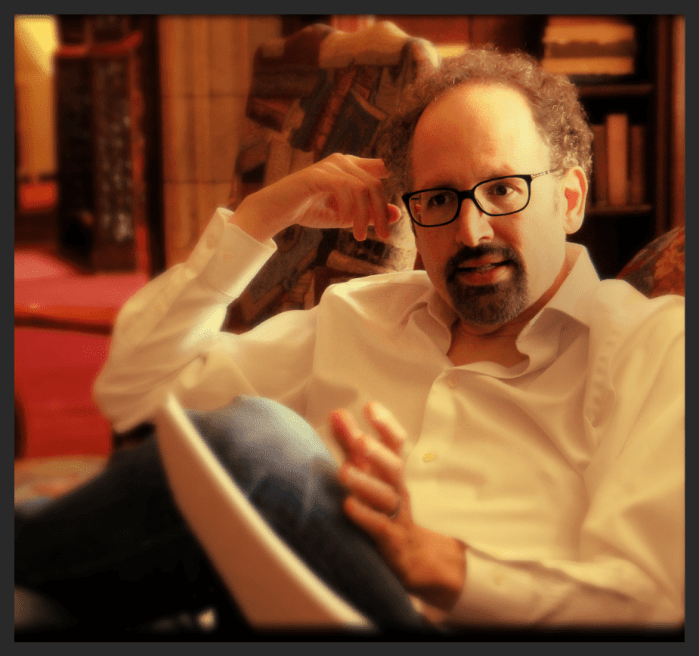
Q & A with Jim Mercurio

img_7574_edited_paul-option-e1548902704525.png

Jim Mercurio is a writer, author, screenwriter, and filmmaker. His book The Craft of Scene Writing is the first-ever screenwriting book that focuses solely on scenes. He has directed and produced five feature films, and helped countless writers as a teacher, story analyst, and script doctor. He directed more than 40 DVDs on screenwriting, including his own 6-disc set, Complete Screenwriting. One of the country’s top story consultants, Jim works with Oscar-nominated and A-List writers as well as beginners.

Editor’s note 1 – a q&a with Jim was featured in a series of interviews with script consultants that ran on this blog between 2014 and 2015.

Editor’s note 2 – full disclosure: Jim played the role of adviser/sounding board for the rewrite of my dramedy spec.

What was the inspiration/motivation for this book?

I was prepping my webinar on February 7th for The Writers Store on Personal Voice, (FYI – Feb 1 is the last day to save $20 on registering) and I stumbled upon the idea that a writer must figure out what is special about what he does and then focus on that. I feel like it is the same way with me and the book.

I have always focused on the nitty-gritty of craft. Probably because I worked so hard trying to figure it out for myself as a writer. When I directed the 40ish DVDs in the Expo Series, I did my own class concentrating only on theme.

Years ago, I happened to be prepping for a feature I was directing. In a week, I saw the same scene performed more than 200 times by a hundred different actresses. I was trying to figure out what I could do that hadn’t been done before as far as a screenwriting book. My experience as a filmmaker has always informed my approach to understanding and teaching screenwriting. I’m not sure why it didn’t come to me sooner. I had an “A-ha!” or better yet a “Duh!” moment — SCENE WRITING!

There are a lot of screenwriting books out there. What makes this one unique?

The obvious distinction is that it focuses solely on scene writing… the first screenwriting book to do so.

I was fortunate enough to have story gurus Richard Walter and Michael Hauge review the book. Something Michael said really touched me. He said that there were a lot of ideas in the book he hadn’t even thought of. I wanted to cover new ideas or at least some seldom taught concepts in a novel way.

Having been in the screenwriting education niche writing for Creative Screenwriting, directing, creating 50 hours of educational DVDs and working as a consultant, I know what’s out there. I believe this book will carry the torch and be among the next go-to books for all screenwriters entering the field.

As I mentioned, my filmmaking experience and the fact that I am actively writing screenplays and making projects impacts my perspective. I try to be very specific in my examples. For a given topic, I may start with theory but I always try to end with concrete principles and tools that you can apply to your writing on the spot.

Some books are geared more towards covering the screenwriting basics, while others “go beyond (or way beyond) the basics”. Is this a book that both new and experienced writers could use?

I feel very strongly that this book will appeal to writers across a wide spectrum of skill levels. A friend of mine said I teach the last hundred pages of “the screenwriting book” more than I do the first hundred. So, if anything, I would be more concerned about whether this would serve beginners.

I even asked my editor if it did and she gave me a great response. But then out of the blue, the universe gave me a better answer. My 23-year-old stepson who is a computer engineer texted me. He said he was halfway through the book and said “It’s very accessible… nothing’s confusing.”

The only research I did while writing this book was to watch movies and think about them. Each chapter is like a stand-alone piece on topics such as exposition, concept, theme, and rewriting. I tried to begin with my, at least somewhat, original and basic take on a topic to ease the reader in and to orient them. A new writer can jump right in.

More advanced writers might recognize my approach as somewhat novel. I then try to go as deep as I can with the material, so that even professional writers might benefit. A writer who read the book said that 70-80% of it was stuff he had never heard before. He might be overstating it, but I’m proud that the book feels that way. I wanted to offer new insight into the nitty-gritty challenge of craft.

Even though the book’s title is THE CRAFT OF SCENE WRITING, what else does it cover besides writing scenes?

At its essence, scene writing is storytelling and the same principles apply. You are poring over characters, characterization, idiosyncrasies of the world, setups – to create reversals. You’ve heard of turning points, right? Writers have to turn a story. They also have to learn how to turn a scene. Or a line of dialogue.

However, I wanted this to complement all of the other screenwriting books that cover story structure. I am looking at screenplays at the molecular level. In the final section of the book, I cover rewriting in a parallel way to how I discuss scene structure. And then I explore how to discover and use your personal voice in your screenplays.

One of the phrases you really emphasized during the process with my script was “write to concept.” Can you elaborate on what you mean by that?

Whew, no softballs here. Making me earn my pie.

There are 7500 words in my chapter on concept, which have been through the wringer with my 18 copyeditors, but I will try to summarize with insightful pithiness.

Like I mentioned, as a writer you should use what’s special about yourself and your writing. Writing to concept means that you are using what’s special about your story as the main inspiration for its surprises. For fun, consider a 3-D horror movie where an axe flies across the screen left to right. Do you see how on some level that’s just wrong? It should be flying toward the camera. Otherwise, it’s ignoring the most prominent element of its medium.

Of course, I’m not that rigid, but writers have to narrow down the handful of elements that are essential to their concept because not only do their surprises spin out of them, but, for the most part, they spin out only from them. I don’t know if I can teach that here. Hopefully, I can intrigue you to go to the source.

Writing to concept allows you to find a unique way to express what otherwise might be a familiar story beat. Based on their concept, the moments will look very different. In Memento, Natalie hurts Leonard by hiding pencils. In Her, Samantha, an operating system, hurts her lover by telling him she’s in love with 641 other people.

Another of your favorite phrases during the writing process was “go deeper.” What should that mean to a writer?

It refers to a missed opportunity to get at more emotion with a character or to complicate a relationship, which would hopefully do the same. While we were working on your script, there’s a scene I pointed out featuring a moment where you were on the verge of discovering a powerful and transcendent moment, but then it was all over too soon. Sometimes writers hit a beat (in the broader sense), and maybe they are worried about a looming expansive page count or don’t appreciate what they have stumbled upon, so they move on too quickly. They might be better off — pick your metaphor — milking or massaging a moment for a bit longer and letting it play out.

Take a look at the long and emotional monologue in Good Will Hunting where Will’s best friend Chuckie tells him that he should “cash the winning lottery ticket” and get out of town to find a better life. He even tells him that the best part of the day is in the morning when he comes to pick him up, he has a moment of hope that Will has left — without even leaving a note. Imagine, if we cut that down to a sentence: “I will miss you but you gotta get the hell out of here.” We lose Chuckie’s voice, the suspense of it, the emotional heft and importance. It goes from a set-piece scene to a bland, merely functional one.

In addition to the book, Jim also provides a script consulting service. How can people get in touch to find out more?

Easy. Go to my site at www.jamespmercurio.com. I discuss why coaching is my preferred mode of working with writers. You can check out my DVD set and sign up for my free e-newsletter Craft & Career, which will also let you stay informed about classes and workshops I’m offering later in the year.

Last time around, you said your favorite kind of pie was the metaphoric “gross points from my last film”. Still the same today, or something different?

A pie in the hand is worth two gross points in a bush. Or 20 for that matter. So, hand me some Dutch Apple, please.

dutchapplepie

Q & A with Peter Russell

Version 2

Peter Russell is a screenwriter who sold two television pilots in 2018 – a crime procedural and a biographical mini-series. He is also a long-time story doctor in Hollywood whose clients include Imagine, HBO, Participant, Viacom, CBS Television and many more. Peter is in demand for his legendary seminars and master classes on film and TV story. Peter’s charismatic speaking style won him UCLA Teacher of the Year in 2009.

Peter ghostwrites for both new and established film and television writers and producers. He has consulted on many TV shows, including GENIUS (National Geographic series 2017-present) MR. ROBOT (Emmy for Best New Television Drama 2015), Chronicles Of Narnia (Lion, Witch & Wardrobe), The Da Vinci Code (Imagine Films) and many others.

Peter privately collaborates with producers, writers, and actors on film and TV story from treatments to pilots and full story development. He teaches his own classes online at: http://peterrussellscriptdoctor.com/, and live at major universities, including UCLA.

What’s the last thing you read or watched that you thought was incredibly well-written?

SNOWFALL. Fantastic writing. The way both the showrunner and the staff-written eps broke the beats in every ep was insanely good. They used every trick in the book to surprise you. The beat almost NEVER went where you thought it was gonna go. Surprises, reversals, ticking clocks, raising stakes – I admire the craftsmanship of that TV writing wonderfully. SNEAKY PETE – the storylines – my god, the storylines! Sometimes 12 in a single episode! And they were wonderful. THE DEUCE – again, with the beats and the storylines! Such amazing juggling. My hats off to them. My tv eps have five storylines max, and even then it’s hard to get those to mesh.

Also just saw McQueen’s WIDOWS. Mystery thrillers are so hard to do. He probably wanted to take a swing at a commercial story. He really hit a home run. It’s such a relief, in a way, to watch a movie these days when you work in TV. The form feels so much simpler. It’s not any easier, but it is simpler. I adore McQueen. If you want to see how I talk about to do what they do, go to my newest TV lecture on creating a great story beat: https://peterrussellscriptdoctor.com/course/creating-the-great-tv-beats/

How’d you get your start in the industry?

Script reading. I read scripts for CBS and then for companies like Imagine. I learned so much from Brian Grazer and Ron Howard. I read scripts for seven years – waaaay too long for anybody in their right mind – it’s suppose to be a year and then you become a supersuccessful industry DYNAMO! LOL. I loooved it, though – I learned so, so much about story, sooo much about every genre. Brian and Ron taught me that a zeal and excitement for the WORLD you wanted to write about was everything.

Is recognizing good writing something you think can be taught or learned?

You can definitely learn how to recognize good writing for sure – just read tons and tons of great scripts. Watch any great story and read along with the script. You can learn it; it just takes a while. Learning how to write? That’s a LOT harder than learning how to recognize great story. It takes a shit-ton more time to do that. I only feel like I’ve done that in the last few years, since I started selling my own stuff. But it took for-fucking-ever! LOL. That’s what you gotta know. And I’m no smarter than anybody – here’s a tip – just watch the movie or tv show 50 times! I’m not kidding. Watch the same show fifty times! You’ll see EVERY device behind the curtain. Don’t take my class, don’t listen to me, never buy a thing from me – just WATCH ONE TV SHOW or one movie FIFTY TIMES.

What do you consider the components of a good script?

Scripts are the most amazingly complex devices on the planet — far more so than an algorithm. It’s a bit like asking me to explain differential equations in a sentence. Okay, I’ll try. In a movie, a hero is a wounded person given a chance to heal (or bleed out.) In TV, it’s a wounded hero with a fascinating objective and fascinating obstacles in his way. You want more? Right here: peterrussellscriptdoctor.com. Okay, I lied. I DO want you to look at my stuff.

What are some of the most common screenwriting mistakes you see?

Characters who don’t have great core wounds. A great core wound (whether in film or TV) is the basis for 90 percent of how good a story is, especially in the first act. Bleed him (or her, or it). BLEED THEM! Show their pain! Instantly!

What story tropes are you just tired of seeing?

I can’t watch 90 percent of network television, simply because the grooves of most of the genres are worn out for me. I loathe seeing hero-worshipping stories about superhero cops and superhero lawyers and superhero doctors – all the old, straight from radio shows (Blue Bloods, CSI, stuff like that.)

None of those professions are worthy of such praise – in fact those professions contain a higher than average proportion of assholes – probably far higher than most professions, and it makes me gag to see the hagiography. But audiences looove to see the make-believe that these people are gods on earth. It depresses the hell out of me.

I realize network TV is a factory and I honor how hard these folks work and the high level of professional product they turn out on an incredibly tight schedule – but that doesn’t mean the product interests me at all. The TALENT involved – both in front of and behind the camera – is insanely great! The level of competence and extraordinary grace under pressure is heroic. Everybody who works in TV has to have extraordinary abilities, or they don’t get on staff. I mean that. The writers I know personally who work in TV – both in writer’s rooms and out – my god, they are sooo talented! It’s just that I find the product godawful. Dick Wolf is a genius, but his product makes me despair.

I do think dark heroes are popular because most people have realized the world is a lot more like a Russian novel than a comic book. Speaking of which, fantasy superheroes, played straight, especially in the DC story world (which suffers from execs who don’t know what they’re doing), are also monumentally boring to me now. Twist the genre – DEADPOOL is genius, THOR: RAGNAROK, too, and the first GUARDIANS OF THE GALAXY – they are FUNNY. My god, that’s the greatest thing on earth to be.

What are some important rules every writer should know?

-Know your craft.

-Know you’ll never really know your craft and that you’ll write a lot of crap. Write anyway.

-Know that you’ve picked a profession that requires either – a) genius-level talent, or b) an enormous work ethic and persistence far beyond what you’ve imagined and that will take you far longer than you believed possible.

-None of these rules apply to a true genius. They can do anything.

-If you have neither genius nor an enormous work ethic, you will absolutely fail. Writing in Hollywood is a job for people who are as smart, or smarter, than nuclear physicists or mathematicians. It’s far harder than, say, brain surgery. I’ve never met smarter, or more mercilessly competitive people, than people in Hollywood. By the way, most of them are also massively unhealthy. This isn’t a business for well-balanced people, in the main.

-The best way forward is to LEARN how to write.

Have you ever read a script that was an absolute, without-a-doubt “recommend”? If so, what were the reasons why?

In my entire scriptreading life, the number of scripts I have fully recommended is a grand total of two. That’s not unusual, by the way. 95 percent of scripts you read are not good (and this is from the very best screenwriters in the biz). But the big secret is – you don’t have to be very good. You just have to be better than most people.

How do you feel about screenwriting contests? Worth it or not?

If they motivate you to write, great. Most screenwriting contests are run by mercenary assholes who are making their money by taking your contest fees. There are a couple of big ‘screenwriting’ websites who do nothing but that – they’ve turned it into a marketing algorithm. That’s okay – if they honor their pact with you and legitimately judge your work and then publicize it if you win or place. Some do, some don’t. Most just want your money. Not saying that’s dishonorable. But it’s true and they’re very, very smart in how they market.

How can people can get in touch with you to find out more about the services you provide?

Suzy Bell, my wife, writing partner and online film business partner whom I work closely with, is also a talented screenwriter, film director and story consultant helping our screenwriters get their scripts to next level.

You can e-mail us at: russell310@mac.com, or go to peterrussellscriptdoctor.com. Mention this interview, and I’ll give you a ten percent discount.

Readers of this blog are more than familiar with my love/appreciation of pie. What’s your favorite kind?

There is nothing better than true key lime pie. Not the type that is mostly white froth. The kind with a dense, green, wonderful pie stuffing, and under that – a buttery, flaky, heart attack-inducing crust.

key lime pie

Q&A with Landry Q. Walker

41xS1G9ZrcL._US230_

Landry Q. Walker is a writer who likes pop-tarts and has been in jail twice and on the New York Times bestsellers list once. He spends his days punching the keyboard until words appear on the magic screen. Books include: The Last Siege, Danger Club, Supergirl: Cosmic Adventures in the 8th Grade, Project: Terra, and more.

What’s the last thing you read/watched you thought was incredibly well-written?

The last thing I watched that I felt was incredibly well written… I’m going to go with movies on this one. The film Get Out is the first thing that comes to mind. I came to that one a bit late, and a lot of plot points had been spoiled. But it didn’t matter because the execution was so solid.

How’d you get into writing comics?

I got into writing comics after noticing that a lot of my friends who could draw weren’t doing much with their talents. I was about 18-19 at this time. My friends had talked about making comics for years, and I had always thought there wasn’t a place for me in the process. Then I decided to write – though writing had been at the back of my head since I was a young child (I had written Indiana Jones and Lord of the Rings fanfic).

A lot of people hear the term “comic book writer”, but don’t really know what the job entails. How would you describe it?

Writing comics requires thinking visually – much more so than other types of writing. You need to be able to see the action on the page with your minds eye, and work from their. that means understanding how much dialogue can fit in a word balloon, when to let the art tell the story, how the eye scans across a page of art. You can also write with a method where you plot the story, and the storytelling exclusively. But I’m not a huge fan of working that way.

You’ve written for established characters and created your own. Do you have a preference of working with either, or are they two totally different worlds?

Totally different worlds. With established characters you have an easier path as the world building has been done for you, but you also have to stay within certain parameters. As example, a proper Batman story leaves Batman in the same place at the end of the book, so that the next writer can pick up the story and run with it. You’re really just taking turns writing chapters.

Follow-up: is there an established character you haven’t written for, but would jump at the chance to?

Probably? To be honest, it all depends on the restrictions. Some jobs look like dream jobs because of the character you’re working with, but then you get the job and the restrictions are so fierce, you don’t really get to explore what drives you at all.

A key component of writing (and not just for comics) is to make the stories and characters relatable. What sort of approaches do you take to accomplish that?

I honestly don’t think much about whether my stories are relatable to other people. I think that if you stop to consider the “rules” of writing, you’re generally not writing. I tend to work off of gut instinct on whether a story feels right to me.

What are your thoughts on writers who want to self-publish their own comics?

Do it. Everyone who wants to make comics should start by making their own. Experience every aspect of making a comic. Deal with distribution, promotion, balancing schedules. Do all of it. And don’t wait for your work to be good enough. If you do that, it will never happen. Just start now.

What are some of your favorite comics and webcomics?

Favorite comics: Lately, I mostly have been digging into old stuff. Charlton comics mainly. Old Blue Beetle and Captain Atom. A lot of the horror stuff from the 60’s and 70’s too. For webcomics, not many. I follow Dumbing of Age and Questionable Content. I’m behind on it, but I really like YAFGC (Yet Another Fantasy Gaming Comic).

What’s some writing advice you would give your just-starting-out younger self?

Play less Mario Kart.

How can people find out more about your work?

I’m terrible at self-promotion, but you can usually find my latest work by checking out my Twitter feed. I’m currently working on a series of all-ages graphic novels called Pepper Page Saves the Universe – these are published by First Second Books and are available in pretty much all major bookstores. I recently completed the first volume of my medieval war epic The Last Siege (published by Image Comics). I previously wrote a series called Danger Club about a group of teen heroes fighting against their own reboots, and an all ages Supergirl series called Supergirl: Cosmic Adventures in the 8th Grade. Did a book with Dean Koontz once and also adapted the sequel to G.R.R.M’s A Game of the Thrones (A Clash of Kings) into comics format. Lots of other stuff too. Check out my Amazon author page.

Readers of this blog are more than familiar with my love/appreciation of pie. What’s your favorite kind?

Apple. From Hostess.

hostess apple pie

105ish pages down to 1

vintage gym
Not that kind of reduction process

With the page-producing phase of the horror-comedy spec now underway, I’m also finding the occasional need to do a little side work on it. In this case, it’s the 1-page synopsis for said script.

Summarizing your entire story on one solitary page (or one and a half, according to some of my associates) is, as many writers already know, not as easy as it sounds. Yours truly being no exception.

Past 1-pagers for past scripts were the usual challenge, but I managed. Somehow. Part of that challenge has always been inadvertently including too much of the story. As much as I’d like to put all of it in there, that just won’t work.

The key is to focus on the main character and what they go through to achieve their goal, with a strong emphasis on conflict. I’ve also found it very helpful to break each act down into its core components – especially key events and plot points.

Trying to include subplots and supporting characters was just clogging the whole thing up, so those quickly fell by the wayside, which really helped streamline the whole thing.

This time is a little different, probably due to having multiple protagonists. Well, at least it starts that way. This is a horror story, so as you’d expect, people are gonna die.

Not being as familiar with the horror genre, I wasn’t sure of the most effective way to put together a 1-pager for this kind of story. Is there more emphasis on the horror part? Or the story with some horror elements thrown in? “The learning never stops” indeed.

Feeling a bit stumped, I did like all smart writers do, and asked my network of savvy creatives for whatever assistance and guidance they could provide.

Glad I did.

(Hearty shoutout to everybody who reposnded and got in touch – I really appreciate it)

More than one said to focus on the one character the reader/audience would consider the heart of the story, and follow what happens to them. That I can do.

Others, who’ve also written stories starting with several protagonists and see their numbers reduced along the way, suggested listing them all at the outset, so as they’re gradually eliminated, there’s no sense of “Who’s that again?” I might give that a try.

There was the smart reminder to “keep things simple”. Don’t fall into the trap of making it too cluttered or complicated. Just tell the story in a clear and straightforward manner.That might take a little editing and revising, but I think I can also do that.

Based on all of these comments, plus my own experience, having a solid 1-pager in my possession seems definitely achievable.

Just made it tougher for myself (which is a very good thing)

hipster writer
Coffee – check. Notes – check. Fresh typewriter ribbon (took a real effort to find one) – check. Ready to go!

A most interesting development has presented itself for the horror-comedy outline, and you can accurately label me as “immensely grateful”.

Although I’m still working my way through the story, somehow that certain pizzazz that was part of the appeal when I first came up with it had slowly faded away. That’s a problem that needed some immediate fixing or this thing would never work.

I went through what I already had. It’s taken a while just to get to this point in the story, so I’d forgotten about some of it. This made for a nice reminder that I had a lot more material to work with than I remembered.

The basics were there, but what was it that was missing? Since this is at its heart a horror story, some of the standard elements had already been used, but it needed more. Something to really hammer the concept home. My protagonists were already in a pretty dicey situation, and I wanted to up the stakes.

Hence my dilemma.

Have you ever suddenly have a solution just present itself, right out of the blue? One that feels like the light bulb actually popped into existence right there above your head? One that caused the muse to do backflips and handsprings while screaming for joy at the top of her lungs?

Inspiration didn’t just strike; it walloped me upside the head.

This new idea feels like such a perfect match for the story. It creates a ticking clock that really ramps up the stakes to the nth degree, and what might be the best aspect – it gives the whole thing the original approach it so desperately needs.

So now that I’ve been fortunate enough to come up with this, the next step is to go back and reorganize a majority of the outline in order to incorporate it. Pretty daunting at first, but I’m not too concerned. I know exactly what I want to happen. It’ll just require a little more of an effort.