Q & A with Marlene Sharp

Marlene.Sharp.Halloween.2019

Marlene Sharp is a creative and business-savvy entertainment multi-hyphenate who originally hails from New Orleans but is now a (San Fernando) Valley girl. Firmly ensconced in LA life, she currently serves as the Head of IP Strategy and Acquisitions for Rainshine Entertainment and its dedicated animation divisions Kinsane (kids and family focus) and Raijin Studios (animation for teens and grown-ups).

Formerly, as Producer, TV Series, at Sega of America, Marlene worked on much more than the Teen Choice Award-nominated Cartoon Network series SONIC BOOM. For example, her Hedgehog duties took her to the heights of nerd-dom as an official San Diego Comic-Con 2017 panelist.

 As a freelance journalist, Marlene concentrates on pop culture for buzz-worthy fan destinations, such as DOGTV, ToonBarn.comGeekified.net, and CultureSonar.com. As a short film auteur, she has snagged recognition at the Kids First! Film Festival, the Canine Film Festival, the San Luis Obispo Film Festival, and many more.

Marlene is the proud winner of 2019 LA Shorts International Film Fest Script Competition (an Oscar and BAFTA-qualifying fest), at which her backdoor sitcom pilot received a staged reading by The Groundlings. And as a human being, she loves dogs. For proof of the aforementioned, please see her website www.pinkpoodleproductions.com.

What’s the last thing you read or watched that you thought was incredibly well-written?

I love Shia LaBeouf’s screenplay for his autobiographical film Honey Boy. The storytelling is clever! 

Podcasts are a relatively new obsession of mine, and there are a few standout wordsmiths. American Scandal (Lindsay Graham); Broken: Jeffrey Epstein (Adam Davidson, Julie K. Brown); Gangster Capitalism (Andrew Jenks); and Hitman (Jasmyn Morris) immediately come to mind.

How’d you get your start in the industry?

My start in the biz was almost my end in the biz. I was bitten during pre-K and subsequently began serious research on kids in show business. Sesame Street was the inspiration. It seemed like a neat place to be, and I wanted in. During grade school, I devoured library books about stage moms and such, and then told my mother that I needed an acting agent. She said ‘no’ and encouraged me to play with my Barbies instead, which I did in earnest. She continued tough love at every turn and for many years. When I declared a Drama/Communications major in college, though, it was time for the Sharp family to face the music . . . and drama! 

Is recognizing good writing something you think can be taught or learned?

If one is industrious enough, then one could self-teach. For today’s inquisitive, budding writer, there are so many resources (many are free or low cost): books, eBooks, seminars, writers’ groups, classes, online classes, podcasts, YouTube videos. Perhaps the best resource, though, is actual content consumption, especially in the genres that one loves best. 

What do you consider the components of a good script?

Relatable characters and story, clever dialogue, and an unexpected plot turn or two are elements of my favorite scripts. Good non-sequiturs also tickle me!

What are some of the most common screenwriting mistakes you see?

Spelling and grammar errors abound. They’re everywhere!

What story tropes are you just tired of seeing?

I’m really tired of the deus ex machina that recur in garden-variety superhero/fantasy movies, such as the uber hero or uber anti-hero – with his/her signature moves – who appears at the eleventh hour. In my opinion, Joker is groundbreaking (and therefore entertaining), because it discards the usual cliches.

What are some key rules/guidelines every writer should know? 

1) Spell check

2) Proofread

3) Patience, and lots of it.

Have you ever read a spec script that was an absolute, without-a-doubt “recommend”? If so, what were the reasons why?

Yes! A spec script for The Simpsons by my friend Adam Kosloff. The premise is absurd and hilarious. Adam and his writing partner nail Bart’s character; he becomes a grilled cheese celebrity chef. The humor is magical, laugh-out-loud funny. I’ll never forget it.

How do you feel about screenwriting contests? Worth it or not?

Definitely worth it! Such cost-effective personal marketing! Highly recommend!

How can people find out more about you and the services you provide?

1) My business website: www.pinkpoodleproductions.com

2) My script and bible doctoring services: www.wefixyourscript.com 

3) My CV: www.linkedin.com/in/marlenesharp

4) A few of my credits: www.imdb.me/marlenesharp

Readers of this blog are more than familiar with my love/appreciation of pie. What’s your favorite kind?

A solid tie between pumpkin and chocolate!

pumpkin pie 2chocolate pie

Q & A with Allison Chaney Whitmore

image1

Allison Chaney Whitmore is a screenwriter and graphic novelist from Los Angeles. She loves to tell coming-of-age stories with a hint of romance, fantasy, or adventure, but also enjoys a good gothic horror story. She’s also the writer of the comic Love University.

Allison holds a Master’s degree in English education and has studied screenwriting at the graduate level. Outside of her work, she enjoys classic films, genre television, a good book, traveling, and spending time with family and friends.

What’s the last thing you read or watched that you thought was incredibly well-written?

The current season of This Is Us is really good. I love the way they weave together plot, character, and theme. I also got to watch all of Fleabag and Killing Eve this summer, both of which I found amazing. I’m looking forward to watching season 3 of The Crown, as it always has top writing, and The Haunting of Hill House, which I hear has incredible writing as well. I can never pick one thing.

Were you always a writer, or was it something you eventually discovered you had a knack for?

I’ve always been a dreamer and a story enthusiast. I wanted to be an actor from a young age and started writing skits in elementary school. Long-form prose came in high school, and I wrote my first screenplay in a pink composition notebook with graph line paper the summer after graduation. So, if I haven’t always been a writer, I’ve been one for a pretty long time.

What inspired you to write your comic Love University?

The concept came to me many years ago. One Friday after work, I was stuck in traffic on Sunset behind UCLA and just randomly thought — What if there was a school for cupids,  called Love U? I thought it was funny at the time, but also strongly felt it was something I could see on television. When the opportunity came up to write a comic book series, I pitched it, and they really liked it.

What was your process for writing it?

This particular story just had a concept, no character to start. That’s not usual with me. Both typically come to me at the same time. This one I had to take the idea and pull the story out of it. I found the main character, Lucy, then I began thinking about the journey she might take over several issues as the world around her began to populate in my mind. I wondered about her day-to-day struggles, her lifelong personal wounds, and her hopes and dreams. From there, I just let the story unfold. After that brainstorming phase, I went through my usual process of theme, logline, beat sheet, outline, and script. Then it was notes, revision, and so forth.

How did you connect with the publishing company for your comics, and what role do they play with your projects?

I was working with another writer on a web series who was also a comic book writer. I’d recently been hired to write a couple of comics for a pair of independent creators. They were looking for screenwriters to complete the work. I was sort of lost in terms of what to do, so I asked my colleague to take a look at what I’d been working on. He really liked my work and sent it on to his publisher, who asked if I’d like to write a series of my own.

A key component of writing (for both film and comics) is to make the stories and characters relatable. What sort of approaches do you take to accomplish that?

To me, my characters are reflections of the human experience. I simply remember the human sides of their experiences — wounds, worries, hopes, dreams. I think about the way they speak, and why that is. I think about the way they dress, their favorite music, how they navigate through the world. Everyone has a specific journey that makes them uniquely who they are. I realize that should be the same for my characters, and that helps bring them to life, as well as making them more relatable to the reader.

As a writing coach, what are some of the more common mistakes you see?

Most of the mistakes come from finding the core of their stories, hitting plot points, and formatting. Sometimes it’s tough for people to figure out whether they have just an idea, or enough to make an actual story. That’s what we work on. It’s actually a lot of fun.

There are a lot of writing coaches out there. What’s unique about you and your methods?

I come from a teaching background, so my approach is about building skills from the ground up, but also starting with the big picture in mind. I like to help people work through their creative blocks and find the stories they want to tell. I’m much more of a coach than a consultant. I’ll give notes and focus on that type of thing, but I’m often looking to help writers become the best version of themselves. Working with me is like having your own personal teacher. Not everyone needs that, but it definitely works for some people.

What do you consider the components of a good script?

Strong character arcs, relatability, clear concept, emotional hook, and an identifiable theme.

What are some key rules/guidelines every writer should know?

-Always plan to write more stories. Don’t put everything into just one script. Move on. Write more. Keep getting better.

-The writing process is different for everyone. Just like we have different ways of learning and absorbing information, the way we get to a story can vary. Give yourself time to find your way.

-Your first draft is not going to be perfect. Ever.

-Plan if you can. It saves you time.

-Make time for both writing and living.

-Be observant.

-Read as much as you can.

-Stay committed.

-Be open-minded.

-Think outside the box.

How can people find out more about you and the services you provide?

I’ve been busy with my own projects and some work-for-hire projects, so don’t really do much coaching anymore. That being said, I am still open to taking on the occasional client. Email me at allison@theophilusfilms.com and we can talk about it.

Readers of this blog are more than familiar with my love/appreciation of pie. What’s your favorite kind?

Cheesecake could be considered pie, so…cheesecake. In terms of actual pie, probably pumpkin! Perfect time of year for that. Happy holidays!

NY-Cheesecake.jpg

Q & A with Jon Kohan

JK.JPG

Jon Kohan is a script consultant and award-winning screenwriter from Johnstown, PA, who’s worked in both film and television. His horror/comedy short Family Game Night earned him a Best Screenwriter nomination from the Shock Stock film festival (along with winning for Best Actor), and his holiday comedy Deer Grandma won Best Comedy at the Show Low Film Festival.

His project Purple Gang is a pilot based on the Purple Gang who operated out of Detroit predominantly in the 1920’s and 1930’s, with over 300 members during their tenure. The series will be inspired by real life characters and events but will not be a non-fiction story.

His comedy/crime short Spilled Paint picked up several Best Short and Best Cast awards on the festival circuit, and is available on YouTube.

What’s the last thing you read or watched that you thought was incredibly well-
written?

Mindhunter, season two, on Netflix. The first season was great, and the second was just as good. I love the show for all the tension-filled scenes that can last ten-plus minutes, and usually just between two or three characters. The writers of that show are super-talented, and I look forward to being able to read and study the scripts to see how to improve my own writing.

How’d you get your start in the industry?

The lead-up is a pretty long story- working different writing jobs as I gained more experience and building a resume of work – but I’ll talk about how I landed my first real gig.

I was doing freelance writing work on a site called Fiverr.com. I still use the site from time-to-time. On my page, at the time, I offered joke writing and screenwriting, but only for shorts.

I had a customer hire me for a short story idea they had. I work on it for about a week and sent it back to them. A couple weeks go by and that customer comes back and says they have an idea for a family film that could even be a television show but needs someone they feel has the talent and skill to write a pilot; maybe even possibly a whole first season.

I jumped at the chance to work on that script, and in fact did write the pilot and the entire first season (10 episodes). About a year after I wrote the pilot, the customer reached out to me again to let me know that the project was going into production. That customer’s name was Alvin Williams. Since working on that pilot, titled Ernie and Cerbie (currently streaming on Amazon Prime), we’ve teamed up on multiple projects and he’s become one of my main collaborators in the industry.

Is recognizing good writing something you think can be taught or learned?

Anyone can probably be taught or learn how to recognize good writing, but something you can’t teach is how to tell a good story. Not everyone can do that. Just because you can write doesn’t mean you can tell a story in the film or television format.

The rules/guidelines of writing a script is what I think makes screenwriting harder
than with other forms of writing. And not everyone can tell an entertaining story. Knowing and understanding what good writing is and looks like makes the viewer smarter, which allows for smarter movies. With a smarter audience, there’ll be a need for more originality – fresh perspectives, which will hopefully open the door to a more diverse and new pool of writers.

What do you consider the components of a good script?

This could be a very long list, but it all trickles down to one major core component: characters.

Not enough big Hollywood movies take the time to craft a film around strong characters, and instead try to build a film around a plot, or worse, action sequences, tone, look, etc.

What do The Dark Knight and Joker have in common other than the obvious that both are Batman films? They’re two of DC’s best films, and both focus more on character than all the craziness around them.

If you have characters we care about, can relate to, or at least understand where they’re coming from, and put them into conflicts that help our characters grow and become something more, you have a winner on your hands.

Even if your film is more about the concept (Independence Day, Godzilla), if you take the time to do the proper character work, you can throw a great one-two punch, something most Hollywood films seem to be lacking nowadays.

What are some of the most common screenwriting mistakes you see?

Formatting issues. No question. Not everyone uses screenwriting software, which is weird to me. If you’re not just writing a script as a hobby, you should invest in the proper industry tools.

I see formatting issues all the time, and those can easily be fixed, and quickly learned.

One of the most common things to see is a script not written like one. So many writers write action lines like they’re writing a novel. Telling us what the character is thinking, why they’re doing something a certain way, what’s going to happen later without us ever seeing it later.

I urge to my clients how “Show, Don’t Tell” is a huge rule they should always be repeating to themselves. How do you present information in a film or TV show? Either through images or dialogue. If we don’t see it or hear it, we don’t know it. When I have a writer I’m working with go back and look at their script again – with that guideline in mind – they’ll see just how much information is in their script that they are telling the reader, but not showing them.

What story tropes are you just tired of seeing?

I don’t know which I hate more:  “You lied to me?” or “There is a prophecy….”

The first is something you hear more in comedies. The second you always hear in
fantasy, adventure, action, etc. If I’m watching a romcom, I KNOW the end of the second act will have “You lied to me?” as dialogue – usually from the female lead.

For most summer blockbusters, fantasy films, the trailer is probably going to have some version of the “There is a prophecy…” line, and the entire setup will be this typical paint-by-numbers hero’s journey story.

What are some key rules/guidelines every writer should know? 

Show, Don’t Tell. (see my response a few questions back)

Formatting – I know just looking at the first page if the read is going to be enjoyable or if it’s going to feel like I’m doing homework. That all stems from the format of the script. If I can glance and see issues, then I know there’s going to be issues with the characters, story, arcs, and so on. Even if you can can’t tell a story, or write good characters, and have something actually happen in your script, at least make the script look like a script. This sets the tone for your reader and lets them know you know what you’re doing.

As a writer, your goal is to get someone to read your script. A horribly-formatted script is an easy excuse for someone not to take the time to read your script. Don’t give them that choice.

DON’T WRITE CAMERA DIRECTIONS! – This is something a lot of first-time writers do in their scripts. I was no different. Learning how to write your action lines properly and how to influence the director in shooting a scene a certain way by the way it’s written not only makes your script stand out amongst the others but it’ll make you a better writer as a whole. I know it has for me, or at least think it has.

Have you ever read a spec script that was an absolute, without-a-doubt
“recommend”? If so, what were the reasons why?

I’ve read scripts from screenwriting friends of mine that have really impressed me. Some of them are super talented, award-winning writers who are going to be names we recognize one day.

As far as reading a spec script that was sent to me to review and give detailed notes on, I haven’t read a script yet I’d stamp “recommend”. Some have come close, but unless you’re lucky and extremely talented, it’s not going to be your first script that you do something with.

The more scripts you write, the better you’ll be. My first script is god-awful compared to my tenth script, and my tenth script is amateurish compared to the latest draft of a script I recently finished.

What would a script need to get a “recommend” from me? As I keep saying, strong characters. Throw in a joke once in a while. Make me want to keep turning the pages. One of the worst things to see is a massive block of action or dialogue, and know the whole script is going to be that way. The more white on the page, the better.

A script could be for the greatest movie ever made, but if’s it’s a difficult chore to read and takes hours – or even days – to complete, I probably won’t see it as a recommended script.

How do you feel about screenwriting contests? Worth it or not?

Worth it – for sure. Screenwriting contests are great to try and win some awards, network with other screenwriters and filmmakers, and get yourself exposure.

With all that being said, if you place in or even win one of the top contests, that’s going to open a lot more doors for you than winning a much smaller contest.

I don’t agree that you must enter contests to be able to get a film produced. I’ve only recently started entering contests and already have several produced projects under my belt, with and more in development.

How can people find out more about you and the services you provide?

My professional website, www.screenwriterjon.com, my Patreon www.patreon.com/screenwriterjon, and my Fiverr www.fiverr.com/jonkohan. You can also check out all of my projects on my IMDB page.

On my Patreon, I offer screenwriting and script feedback services through two different subscription tiers. I’ve already had two filmmakers subscribe to have me write their feature films, so that’s been really exciting.

Readers of this blog are more than familiar with my love/appreciation of pie. What’s your favorite kind?

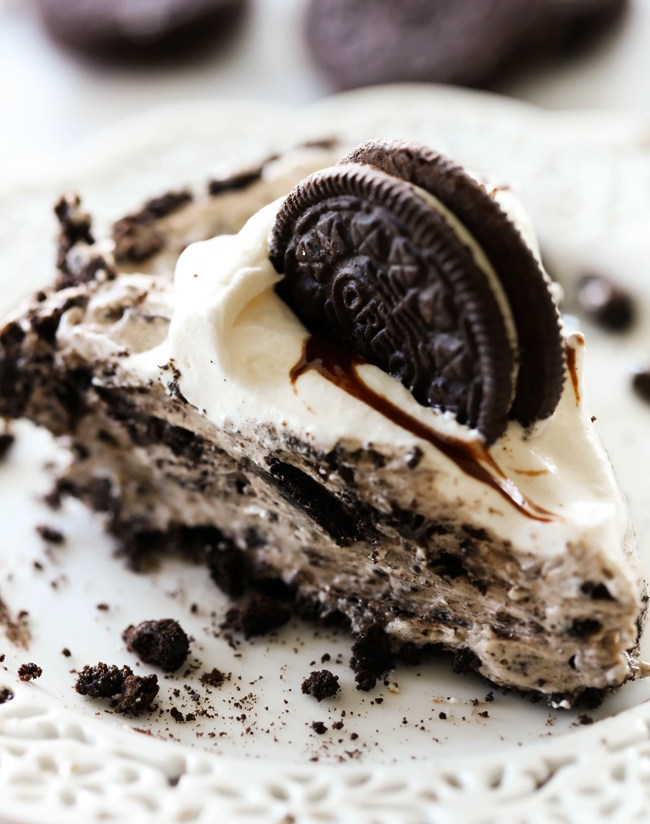
I bet you haven’t heard this one before – Oreo. Store bought or homemade. Either works for me. I have a huge sweet tooth. This may sound like a little kid answer, but it’s the truth.
No-Bake-Oreo-Cream-Pie-3

Footing finally found

keaton wind

Well, that was fun.

After what seemed like endless attempts, I finally came up with what is hopefully a solid beginning for the sci-fi adventure spec. Or at least the first ten to twelve pages or so. If I haven’t grasped you in my yarn-spinning clutches by then and have you begging to turn the page, I’m in trouble.

But with all those previous drafts at hand, along with heeding the guideline that the events of the story need to KEEP PUSHING FORWARD, it all (slowly) came together.

And to make sure I wasn’t deceiving myself, or working with a “Eh. Good enough” mindset, I took a short break (to work on another script, of course). A quick perusal upon my return showed that, yep, it still works.

Finding the right beginning was truly the biggest obstacle. I wanted to really put this world on display, along with better establishing the main characters – primarily the hero and the villain, along with the supporting characters. Numerous options were explored, but none seemed to fully fulfill my requirements. The journey to find that solution was a long and frustrating one, and it was tough to not get annoyed.

But I held on and kept trying, over and over, finally hitting on a solution. Even though the rest of the story looms, I couldn’t have moved forward without reaching this point. Fortunately, most of it is pretty set in place, so hopefully it won’t take too long to work through it.

Quick addendum – during one of my moments of downtime working on this script, I saw several “scripts wanted” listings that were asking for low-budget horror. Last year I cranked out a first draft of a horror-comedy that wouldn’t be too tough to trim down the number of locations and characters so as to make it cheaper to produce. Figure it’s worth a try.

-Writer/filmmaker/friend-of-the-blog Venita Ozols-Graham has put together a crowdfunding campaign to produce a filme version of her award-winning psychological thriller short script WHO WANTS DESSERT? Donate if you can!

Dismantle, reassemble

home crew.gif

Sometimes when you’re working on a story, you just have this feeling that the way it’s being told is the way it should be told. It just feels right.

Even though I’d made some good progress with the ongoing revision of the sci-fi adventure outline, something still seemed…off. What I had was good, including several scenes that now felt necessary, but as a whole, not quite there yet.

As I’ve mentioned before, I keep all the previous drafts of the outline and script on file –  you never know when some of that text will come in handy. The recent work on the current revision was accompanied by another tab on the screen containing the previous draft, serving primarily as a sort of roadmap to help guide me through this latest effort.

Despite telling myself that this new draft was supposed to be different from its predecessor, its siren call was a bit stronger than expected. There was just something about it that couldn’t be denied. Not to say that the newer version was no slouch either.

Parts of this one work, and parts of that one work. Why not combine the two?

Sure, this even-newer draft might occasionally take a somewhat unorthdox approach in how the story’s presented, but by gosh, I still like it. “Rules of screenwriting” be damned.

There’s nothing wrong with cherry-picking parts of the new draft and incorporating them into the previous one where applicable. Of course, it would have been nice to have come to this conclustion a few weeks ago, but sometimes that’s just how it works.

What’s really nice is that for the most part, save for a few problem spots, the previous draft is still pretty solid on its own. Nothing serious, and some of these new elements look like they’ll really rectify that.

Based on some extremely helpful notes, another factor that’ll help this time around is putting more of a spotlight on the characters’ emotions. Even in this kind of story, with all of its fantastical and extraordinary elements, it’s important to show how the characters are still people.

Lastly, all the time I’ve been working on this story, I’d forgotten how the initial concept and earliest versions were all written with a certain kind of tone in mind; something to really convey the vibe of what story of story this was supposed to be and how I wanted it to read. Somehow that aspect’s diminished over time, and I plan on re-introducing it for the next draft.

This is gonna be fun.