The 10-second description

Give or take a second or two

Scenario:  You’re at a social function, engaged in idle chit-chat.  The topic of you being a screenwriter comes up.

“What’s your story about?” they will undoubtedly ask.

The chance you’ve been waiting for!  What do you say?

You want to pique their curiosity, and not bore them.

In the simplest of terms:  provide a quick summary of the main characters(s) and what happens in the main storyline.

Avoid too much information, non-essential characters, intricate subplots, how it’s a metaphor for this totally different other thing, or generic phrases like “and learns about themselves” or “stumbles into a world she wasn’t prepared for” or the ever-dreaded “wackiness ensues.”

What are the components of an effective logline?  Just the following:

1. A protagonist with a flaw.

2. An antagonist with a goal.

3. The situation that pits them against each other

4. What’s at stake.

That’s pretty much it. Keep it simple. Nothing too specific or generic.

Make sure you emphasize the genre. If it’s a comedy, play up the comedic angle. A thriller, go for the suspense. That sort of thing.

And most importantly, make it sound interesting. This is your best chance to grab their attention, so make the most of it (and make sure the script is just as good).
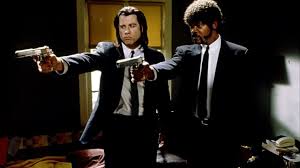
The argument for originality

Nobody saw it coming, and look what happened

As a screenwriter who hopes to one day see my work displayed on the big screen at your local theater, I strive to have each of my scripts present a unique tale that takes the audience on an entertaining ride.

Part of that uniqueness comes from me wanting to offer up a story that hasn’t been seen before. What’s better than being surprised with something you weren’t expecting, and liking it?

A lot of scripts adhere to “familiar, yet different,” which is fine. But there’s something to be said for putting a little more emphasis on the second part.

There’s an abundance of complaints about the lack of new ideas, or at least how sequels/remakes/reboots/re-imaginings are outnumbering original ideas.  (I won’t argue with that, especially with the recent announcement of a planned remake of GREMLINS. As the saying goes, is this really necessary?)

Don’t let that stop you.  New, smart and interesting will always triumph over dull, cliched and predictable.

Part of your job as a writer is to make your story so appealing that it becomes impossible for someone to say ‘no’ to it.

Put your creativeness to work.  Figure out what could make your story different. Don’t be afraid to take chances.

Show off those writing and storytelling skills.  Make the most of it and give ’em something they’re really going to remember.

Don those X-ray specs and press ‘play’

Make sure to use them only for good
Just make sure to use them only for good

Many, many years ago, I attended an abbreviated version of Robert McKee’s seminar on screenwriting. While they usually run an entire weekend, this one was a merciful two hours long.

Of all the things he talked about, of which there were many, there’s only one point I still remember to this day:

If you want to really understand how to write a screenplay, watch a movie while following along with the script.  Do this every day (I’m assuming with a different script each time) for a year. Apparently this will instill in you how a screenplay works, the understanding of structure, etc.

I’m split on this.  On one hand, the only way you’re going to really learn is to just sit down and write.

But there is at least some merit to the idea. The more you watch and read, the more you’ll (hopefully) come to understand all the inner workings, nuances and intricacies that go into these things.

Say you’ve come up with an idea for your next spec.  A comedy.  You’ve got the basic story idea down, but there’s something missing.

Chances are you were influenced by other comedies. Compare your story to some of your favorites. What is it about them that you like? Is your story similar? What do they have that yours doesn’t, and vice versa?

Take the time to watch them again, but don’t just watch. Study them. View them through a writer’s eyes.

Can you see the elements at work? Are you able to look beyond the jokes and follow how the characters and storylines develop? Do the jokes and comic set pieces come naturally or do they feel forced?

Over time, identifying story components will become easier for you, and you’ll be able to put that knowledge into play on the page.

Just call me the human perpetual motion machine

Stop working? That's crazy talk!
Stop working? That’s crazy talk!

Well, this has been an interesting week, to say the least.

-Rewrite was completed and sent it off to my manager. Hope they like it.

-Found out DREAMSHIP was one of 25 semifinalists in the Tracking Board’s Launch Pad competition. The top 10 finalists will be announced at the end of the month, followed by the winner a few days later.

Even if the script doesn’t advance, I don’t mind (although it would be nice). I’m just thrilled to have made it this far.  As K said to me after I got the email from the Tracking Board people, “See? Somebody who doesn’t know you thinks you’re a good writer.”

That’s a nice reminder.

-The Nicholl deadline came and went. DREAMSHIP was sent to that back in March, which makes it one of at least 7,200 submissions. The final count should be tallied sometime soon.

(If you have the time, do a quick search to find out what past winners are up to these days. It’s a fascinatingly diverse range of material, including film and television.)

-With a lot of this contest stuff out of the way, it’s time to return to the first draft of LUCY.  It’s been about a month since I last worked on it, so it’ll be interesting to take a look at what I’ve written so far.  Nothing like fresh eyes on your old work!

-I can also start running again. Next race is in 6 weeks, and I really want to be ready for it.

-Movie of the Moment – SKYFALL (2012) Took me three separate viewing sessions, but I finally made it through.  I enjoyed it.

Easy to see why this was so popular. It was a well-written combination of old-style Bond movies with 21st-century themes, thankfully without dipping too much into cheesy joke territory.

Fighting the latest metaphoric fire

always alert & ready to spring into action
Ever alert and ready to spring into action

It seems to happen especially when you suspect there’s a remote possibility it could.

You’re going over the latest draft of your script. The one you’ve been working on for what feels like an eternity.  The one you’ve been so meticulous in plotting and figuring out what happens, making sure everything ties up nicely.  No loose ends. No gaping plot holes.

After countless rewrites, you’re positive this thing is done.  It’s ready to go out.  But you give it that one last read-through, just to be sure.

Maybe there’s the occasional line rewritten or replacing of words, but for the most part, there’s not a lot to change.

Oh, false sense of security. Why do you torture us so?

Because that’s exactly when you find it:  a small gap in logic that brings things to a screeching halt.  Until now it had stayed hidden.  From everybody.

It’s the kind of thing someone might not notice while they’re watching your movie, but might later come up after further analysis. “Hey. How could he have ___?”

Almost as if on autopilot, your brain and creativeness kick in. What’s the most plausible solution?  Does it mesh smoothly with the rest of the story? Is there a way to set this up so it pays off in a more-than-satisfying way?

You know there’s an answer to this. It’s all a question of finding it.

You’re a writer. It’s what you do. You probably even live for this kind of thing.

That panicky stress upon first realizing there’s a problem has given way to calm and strategic thinking of how to fix this. Maybe you even devise several possible solutions, testing each one out to see which works best.

But in the end, the right words have been found, and that nasty ol’ logic gap has been filled.

As far as you’re concerned, the script has once again reclaimed the empowering adjective of bulletproof.

At least until you get your next batch of notes, and it starts all over again.