Now it gets really interesting

desert
First few steps are always the toughest. Good thing I came prepared.

Let’s pause now for your humble blogger-in-residence to proudly proclaim that Act One of the first draft of the pulpy adventure spec is complete.

Whoopee.

But you know what that also means.

Yep. Time to buckle down even more, strap myself in, and jump feet-first into the intimidating arena commonly known as Act Two.

I’ll also admit it’s a little thrilling, too. There was a particular charge in working out the action sequences and story set-ups in Act One, so I’ve a strong suspicion the continuing build-ups for the former and the gradual development of the latter will be equally, if not more so, fun to write.

(and believe me when I say this is the kind of story that automatically requires a sense of fun)

Maybe it’s from continuously trying to improve as I go, but working on Act Two doesn’t seem as intimidating as it used to. Not to say that it comes easily; just slightly less insurmountable. I spent a lot of time on the outline, so confidence in that is pretty solid.

I read a lot about how a spec script might have a phenomenal Act One, but then things fall apart in Act Two for a myriad of possible reasons: the characters don’t do much/nothing really happens, or the overall story’s too thin, so a lot of Act Two is empty filler, and so on.

The only writing process I know is my own, and I always strive to make sure the story feels…complete? Full? It comes down to “I know what has to happen to tell this story,”, and while the first act is all about setting it all up, the second act is about fleshing everything out.

We get a closer look at the characters and how they’re progressing through the events of the story. We can see how they’re changing from when they were first introduced. Plot threads of all sizes get further developed. The central question is continuously asked (oh-so-subtly, of course).

It also involves steadily-mounting complications for your protagonist. They’ve got a goal, and it’s our job to throw all kinds of obstacles in their way that just keep making it harder for them to reach it. Again, a lot of it happens during our second act.

Act Two really is where the meat of the story takes place, so stuff needs to happen that not only holds our interest, but makes us want/need to know what happens next, and even that better be that much more intriguing.


As you’d expect, our work is cut out for us.

So off I go. Dispatches from this formidable excursion as they develop.

See you on the other side.
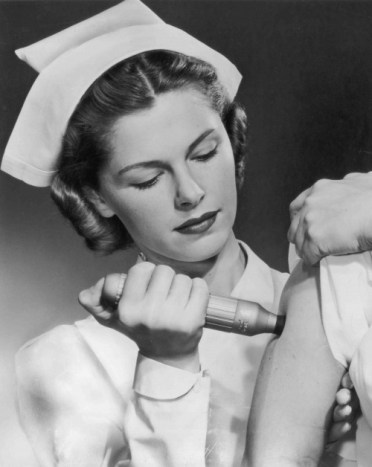
A little booster shot for you

shot-in-the-arm
Don’t worry. This won’t hurt a bit.

Not a lot of writing done this week due to being slammed with a nasty cold. Hoping to get back on track next week.

In the meantime, waiting to hear about some potential leads. Exhilarating in that they exist in the first place, and frustrating in that things seem to advance as fast as molasses in January.

Each one part of the process we all put ourselves through in this crazy ongoing pursuit. It’s not easy. Far from it. But we knew that going in.

Some days it feels like success is a little closer within reach, and sometimes it feels like you’re caught in a fiery downward spiral of doom.

Given my druthers, I prefer the former.

In the meantime, here are two posts from last year that might help restore, or at least remind you of your confidence in yourself, why you’re doing this, and what you’re capable of.

In it for the long haul

Expiration date: NEVER!

Don’t lose hope, chums. Trust me, you’re not alone. I’ve been there too. We’re all in this together.


The “sound” of your writing

eavesdropping
No! Find your own style of writing. Don’t copy someone else’s.

When somebody reads your script,is there something about the writing that they can tell you’re the one who wrote it? Do you have a certain style or “voice” regarding how your material reads?

Each writer develops their own particular way of not only how they write, but how that material comes across on the page.

When you’re just starting out, maybe you play it safe and keep things simple and straightforward. Or you might try from the get-go to emulate a script or writer you really, really like, because if it worked for them, then it stands to reason that it will undoubtedly work for you in the exact same way. This is occasionally referred to as the Tarantino Syndrome.

There’s nothing wrong with appreciating a pro’s style, but for crying out loud, DO NOT try to duplicate it. That’s how they do it, which is not the same as how you do it. It also smacks of laziness. You want to make a name for yourself, right? So how are you going to do that by writing like somebody else?

Find a way that works for you and stick with it. Hone your writing skills with each draft until every script you offer up is undeniably identifiable as yours.

The more you produce, the more comfortable you’ll get with how you write, along with becoming more confident in your abilities. You’ve put in the work learning the rules, so now you feel ready to see how far you can bend them (but not too much! They can be very fragile at times.).

Soon you’ll have no hesitation to start putting your own spin on things; little touches here and there. Although the usual challenges and obstacles will still be there, you might discover that your overall process of writing has gotten just a little bit easier.

My enthusiasm, your enjoyment

rollercoaster
Offering up excitement and thrills for everybody

I admit it. I was weak. I couldn’t resist. The urge was just too overwhelming.

So I accepted the reality of the situation, and just went ahead and did it.

I went back and revised the pages I’d already written for the pulpy adventure spec.

No regrets.

The character that shouldn’t have been in there was cleanly removed, but in the process of doing so, a new idea emerged with a way to further weave some of the subplots together. Always nice when that happens.

Engaging in this mini-rewrite also provided me with the opportunity to take a step back and just read. Was it still working? Were my aspirations of producing a ripping yarn being achieved?

Seems that way so far. Then again, I’m slightly biased.

Some notes I got on an earlier draft of the western were along the lines of “it’s good, but the writing’s a little dry.” With this script, there’s more of an effort to avoid repeating that by really punching things up.

I’m getting a real kick out of seeing what I can do to make this an exciting read for anybody, including myself. Many’s the time I’ve heard that you should be able to see the writer’s love for the material on the page. That’s something I’ve always tried to do, and working on this script is no exception.

So after this temporary pause, things are back on track. Momentum will be regained, and progress shall continue.

Exciting times all around, chums.

-Friend of the blog/consultant Jim Mercurio is running a crowdfunding project for his latest film project American Neorealism. It’s VERY close to being funded, and there are just a few days left, so donate if you can to help him reach (or even surpass) that goal.

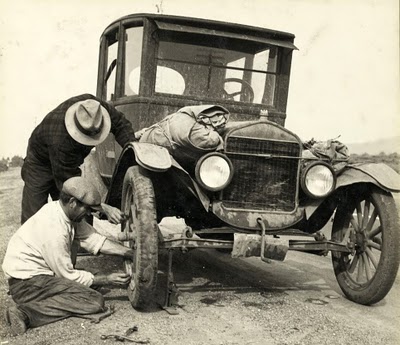
Tire, meet nail

flat-tire
You don’t expect it, but it’s good to prepared for when it happens

There I was, happily churning out pages for the pulpy adventure spec. The daily output was respectably above average.

(Gotta say, this new practice of writing out/establishing the beats of each scene has proven invaluable.)

If I could maintain this kind of pace, dare I even contemplate the possibility of having a completed draft, if not by month’s end, then maybe by mid-February?

But like the man who operates the guillotine might say, let’s not get too far ahead of ourselves.

Story-wise, things are still pretty solid, save for a previously unforeseen wrinkle: I need to do some emergency revision regarding exactly where and how a supporting character is introduced.

What was in the outline is completely different from what ended up on the page, so looks like I’ve given myself a few options:

  1. Leave it as is, but come up with how to tie everything together. A few possible solutions here. Not crazy about it.
  2. Go back and rewrite so it plays out as originally planned. It may lack some of the punch I was hoping to start with, but that sequence already has a significant amount of “attention-grabbing oomph” to begin with.

Some alternate approaches are currently under consideration, as are those of a drastically different nature. It’s also being discovered that implementing some of these changes could actually assist in reducing the number of pages, which was going to happen anyway. Only now it would be sooner. Not a bad result.

No matter which I choose, there’s some serious editing and rewriting in my immediate future.

This whole scenario definitely falls under the “kill your darlings” category because even though I really like what I’ve already written, as we all know, fixing the story takes precedence over placating the writer’s ego.

Keeping with the metaphor of this post’s title, what initially felt like a major problem is, after some careful analysis, evaluation, and plain old level-headedness, slowly developing into more of a bump in the road.