Some tasty tidbits to tide you over

vintage-buffet-1
Go ahead and dig in! More than enough to go around!

Maximum Z HQ is in a transitional phase, geographically speaking, so all attention and efforts are focused on that for the next two weeks.

As a result, no new posts until at least the end of the month.

In the meantime, here are some classic posts from years past.

Enjoy.

All that on a single piece of (digital) paper?

The good bad of your antagonist

Introduce your character with character

The twiddling of thumbs is strictly prohibited

Characters are people!

Work those writing muscles!

I see what you did there, Mr. Kasdan

Respect your reader/audience

That’s not the question you should be asking

Hey! Long time no (preferred form of communication)

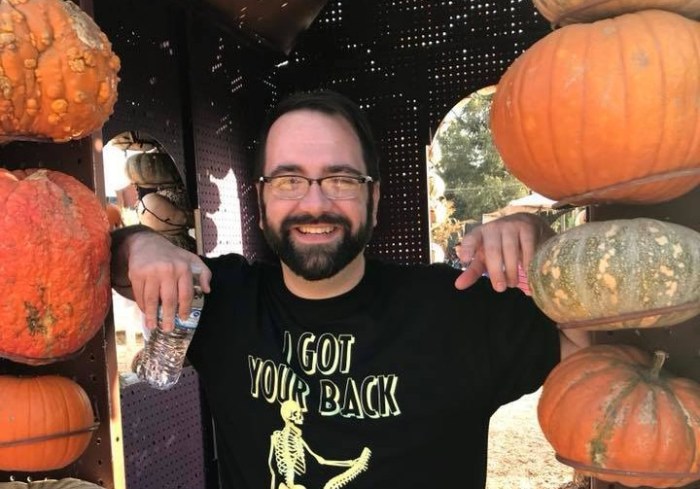
Q & A with Travis Seppala

back-pumpkins-e1564682152670.jpg

Travis Seppala is a Los Angeles-based screenwriter. In addition to selling shorts, optioning features, being hired to write dozens of feature films and episodes of television, he’s also published the book 365: A Year of Screenwriting Tips.

What was the thing you read or watched you considered incredibly well-written?

My favorite script of all time was A KILLING ON CARNIVAL ROW. I’m thrilled to see it’s being turned into a series on Amazon, and will be very interested to see how the format changing from feature to TV affects the amazing story.

I think the perfect movie is IT HAPPENED ONE NIGHT. It might be a little corny by today’s standards, but a lot of it (both story and dialogue) still holds up today.

And for TV, we’re in the new golden age where almost everything is super well-written! One of my current favorites is DOOM PATROL. It’s about a superhero team, but it’s also a  deeply emotional drama. It just happens to be about misfits with powers (and problems).

What do you consider the components of a good script?

Compelling (i.e. interesting and fun) story.

3-dimensional characters who are the right people to partake in the compelling story.

Terse, snappy descriptions.

Lots of white space.

Connectivity (i.e. everything makes sense and flows smoothly).

What was the inspiration/motivation for this book?

Facebook!

I’m in a bunch of screenwriting forums on Facebook. There are both experienced writers and total newbies on there. A lot of the newbies, though, seem to keep asking the same questions over and over and over and over and over and over and… you get the point. Many of their questions make it seem like they forget Google is even a thing.

After a while, seeing repeated questions and questions that can be answered with about five seconds of research on Google, I thought “What if all these answers were in one place, by category?”

I figured I could put it all together, plus answer a bunch of questions that aren’t being asked. And so the book was born.

There are a lot of screenwriting books out there. What about this one makes it unique?

Many of those other books are about a specific aspect of screenwriting. Story. Character development. Rewrites. Business.

365: A Year of Screenwriting Tips runs the gamut of covering ALL aspects of screenwriting, from before you have an idea to after you sell a script and everything in between…. all in bite-size tips!

It’s purpose isn’t to try and make you “better” in any specific thing. And I don’t claim to be a guru or expert; I’m just relaying info I’ve learned either through a ton of book reading or personal experience. The book is just meant to help show you the ropes, and makes suggestions on different ways to look at things. Try a bunch of stuff and see what works for you!

Plus, there’s a bunch of coupons for discounts and freebies on a lot of helpful products and services!

Some screenwriting books are geared more towards covering the basics, while others “go beyond (or way beyond) the basics”. Is this a book that both new and experienced writers could use?

The book is geared more toward beginning writers, but my hope is that experienced writers will find some new concepts and suggestions useful as well. Even experienced writers should always be learning.

With 365 tips to choose from, are there any that really seem to resonate with readers? Or any that always instigate an argument?

A couple that have gone over well with people are my tips on creating a positivity calendar (because it’s far too easy to get wrapped up in all the negative aspects of this life) and playing The Comp Game (a great way to produce new stories that are “similar but different”).

The big one that’s gotten people upset is Tip #1: Experts Are Liars!

There’s one section in the book called “Before You Start”, and one called “Prep Work”. What do you consider the difference between the two?

The “Before You Start” section is about things to know before even trying to come up with the idea for a script. It talks about the odds of making it, the fact that there’s a lot of conflicting information out there (and even in this book), and things to consider before you ever start on this journey.

“Prep Work” is about… well… prep work! Ideas. Brainstorming. Outlining. Figuring out what to write a script about.

Before You Start = knowing what you’re getting into.

Prep Work = getting started.

Part of your own backstory involves your relocating to Los Angeles. Where do you fall in the “You have to live in LA to make it” discussion?

Whether or not you HAVE to be in Los Angeles sort of depends on what you’re trying to accomplish in the industry.

If you want to be a television writer, then yes, you absolutely MUST move to LaLa Land! Shows shoot all over the country (and even other countries), but the majority of them have writers rooms in the L.A. Area. How can you expect to get a job if you don’t even live where that job is?

Now, if you want to write features? Then you can live anywhere. But expect to make trips to Los Angeles if/when possible. Why? Because you need to take meetings. Meetings with reps, meetings with producers, meeting with studio heads. Sure, it’s possible to do phone meetings, and you probably will do a bunch… but nothing beats the in-person impression when selling your work.

As a follow-up to that, how has it been for you and your career since arriving in Los Angeles?

There’s been good stuff and bad. 

Like a lot of transplants, I thought I’d get here and “be discovered” in the first year. That didn’t happen. Been here 3 years and still just trying to make it.

I’ve met LOTS of people, though, and made great connections with other writers, reps, showrunners, producers, crew members, and more! My Rolodex is filled out, and it wouldn’t have been if I hadn’t come here.

I’ve also gotten some gigs because I met people at parties out here and hit it off.

The thing to know, though, is that while being here makes it easier to have access to decision makers, it also becomes harder to fit in. You might be the best writer in your small Oklahoma town, but in Los Angeles almost everyone is a damned good writer! It’s the “big fish, little pond” situation. The ocean is where it’s at, but it’s also rougher water.

You offer more than a few tips about networking, especially at social events. How much of an impact has that had for you?

I’ve gotten jobs from people, made loads of friends, and even met my fiancee – all at these kinds of events!

I really enjoyed the final section – “After Your Script Is Done”. How much of that is based on your own personal experience?

Much of the book is based on my own experiences in the industry. I don’t go into a lot of personal stories or examples of my own material like many screenwriting books do, but my experience is definitely where a lot of my “wisdom” comes from.

However, all the stuff in that section is great advice for any writer. It speaks to Serial Starters, Talented individuals, Procrastinators, Newbies who just make mistakes with what they’re writing, Paranoids, Worry-Warts, and Newbies searching for the next steps. There’s also some great coupons in that last section, myths busted, and a suggestion for a killer ice cream place!

Apart from writing scripts, you also offer a script consulting service. How can writers get in touch with you to find out more?

email: flannelmann@yahoo.com

Facebook: facebook.com/travisseppala

Twitter: @TravisSeppala

Readers of the blog are more than familiar with my love & appreciation of pie. What’s your favorite kind?

My favorite pie has always been Shoo-fly Pie. It’s this super sweet molasses pie that, so far as I can tell, you can only get in Amish country. Sadly, I haven’t had it since I was a child. I keep meaning to find a recipe online for it… but… *shrugs* when it comes to pie, I’d rather someone else make it for me.

But for those playing at home, I actually prefer cookies to pie. Sorry. 😉

shoofly pie

An unexpected change of plans


chemical reaction

Bit of an extra-short shorty today, but for a good reason.

A very, very good reason.

A meeting took place earlier this week. Can’t say anything about it at the moment, but the general consensus from all parties involved is “very exciting and encouraging”.

As a result, all of the rewriting and revising work that had been taking place is now on hold until further notice.

Planning to reveal some details as they develop, or at least when the time is right.

Have an excellent weekend, and try to write something.

Seeking that which lies within

Kristen-Bell-Laughing-to-Crying

I won’t say the tough part of this rewrite is over, because it’s not. Well, part of it is. Sort of. Still working my way through Act 3 of the current draft, along with taking care of some minor story developments that have popped up as a result of changes along the way. Seriously hoping to wrap things up in the next week or so. Depends on how all of this goes.

But there’s one thing that’s been weighing heavily on my mind as I crank out the pages and start planning for the next draft. As good and solid as the action parts are, I also want to make sure the characters’ emotional arcs are just as effective.

Every character needs an internal and external goal. While the latter has never given me much of a problem, the former can sometimes be a bit trickier. Sure, there’s the protagonist and antagonist, which really drives the main storyline, but what happens with the supporting characters is just as important.

I’ve always been impressed with seeing how other writers incorporate little details or necessary information about the characters into the story that really help flesh them out AND add to the story. That’s what I’m seeking to do here. It’s also helpful to approach it with the mindset of “how to convey this information without it seeming too expository or on-the-nose?”.

As a writer, you want your characters to come across as realistically as possible, and by offering up some details about them – especially the why they do the things they do, it can help us better relate to them, and also make us wonder if they’ll be able to achieve their goals. When the story’s over, will we have seen how they changed from when they first showed up?

I’ve given myself the homework of watching films of a similar nature to get a better grasp on how to work these sorts of developments into the story. Going over the pages I already have has shown the foundations for each character are more or less in place, and will require digging a little deeper to really put them on full display.

While I’m glad I was able to produce this draft relatively quickly, I’m equally as eager to get started on the next one, taking care of everything it’ll require. That’s becoming a long list, but I’m feeling pretty confident about being able to effectively handle every item on it.

Q & A with Jeff Buitenveld of ScriptArsenal

Jeff Photo

Jeff Buitenveld of ScriptArsenal is an independent producer and former development executive with over 15 years of experience on some of Hollywood’s biggest films. He is currently a producer on the upcoming thriller The Kimberlite Process. After graduating with an MFA from UCLA’s Producers Program, Jeff worked in various capacities on numerous productions for Tom Cruise and Paula Wagner including The Last Samurai, Mission Impossible 3, Jack Reacher, Valkyrie, Lions for Lambs starring Robert Redford and Meryl Streep, Ask the Dust starring Colin Farrell and Salma Hayek, Death Race starring Jason Statham, The Eye starring Jessica Alba, Suspect Zero starring Aaron Eckhart and Ben Kingsley and many more.

What’s the last thing you read or watched that you thought was incredibly well-written?

Spider-Man: Into the Spider-Verse was a blast. HBO’s Barry is a funny and oddly haunting series. I recently re-watched/re-read Hell or High Water, which is a deceptively simple, sad, and suspenseful story with rich, complicated characters. Netflix’s The Haunting of Hill House delivered the goods on scares and family dysfunction for me. Issa Rae (“Insecure,”) Jill Soloway (“Transparent,”) Amy Sherman-Palladino (“The Marvelous Mrs. Maisel,”) and Andrea Savage (“I’m Sorry,”) all have unique, exciting, and powerful voices.

How’d you get your start in the industry?

I didn’t know anyone in LA when I first moved here but developed a sci-fi project that was quickly optioned by an Academy Award-winning producer (and never made). During that time, I was also accepted into UCLA’s Producers Program where I took Meg Le Fauve’s (“Inside Out” “Captain Marvel”) Development class, which was instrumental to my growth and understanding of cinematic storytelling and how to work effectively with screenwriters. I started cold-calling various companies for internships and was lucky enough to land positions at both Artisan Entertainment and Mike Medavoy’s Phoenix Pictures. Back then, Artisan had a deal with Marvel and I was immediately thrown into pitch meetings with various notable writers/directors on properties like Thor, Hulk, The Punisher, Black Widow, and Iron Fist, etc. I was also taking pitches at Phoenix – it was an incredible learning experience. I eventually became an assistant briefly to a Hong Kong action director and then used those experiences to land a job with Tom Cruise and Paula Wagner once I graduated from UCLA.

Is recognizing good writing something you think can be taught or learned?

Though having an eye for quality material can be a natural instinct, it needs to be honed. I ultimately feel that recognizing good writing can be learned and taught.

What do you consider the components of a good script?

Generally speaking, a good script maintains a captivating concept, and a flawed but likeable hero with a concrete objective attached to grave stakes (whether intimate or epic). The hero’s emotional flaw is often rectified as a result of him/her achieving their practical goal (he/she should also be active, resourceful, and exhibit a range of change). It’s helpful if the hero’s goal is time-sensitive and somehow socially relevant. Lastly, if the script is a feature, it should adhere to a three-act structure.

What are some of the most common screenwriting mistakes you see?

Too much description, on-the-nose dialogue, flimsy structure, and the lack of a flawed hero with a concrete objective, attached to grave stakes.

What story tropes are you just tired of seeing?

I’m not at all opposed to writers using things like “one last job,” “a reluctant hero who can save the world,” “a family in peril,” or “a fish out of water,” etc. The familiar can be very accessible and., if used effectively, can lure a reader into the story. The trick, however, is to infuse that story with other unique and complex qualities so that it unfolds in fresh and unexpected ways. What can make your story different or set it apart? I always urge writers to challenge the reader’s expectations or preconceived notions as to what type of story they’re entering!

What are some key rules/guidelines every writer should know?

-Use Final Draft.

-Study the most notable screenwriting books and authors.

-Read every script you can get your hands on whether good, bad, or mediocre.

-Have conviction but be open to ideas – ultimately this is a collaborative industry.

-Don’t be afraid of genre and don’t be afraid to push the boundaries on the tenets of said genre (but know what those tenets are).

-Actively seek feedback and don’t be precious.

-Strive to be both clear and complex in your writing and understand the difference between the two.

-Don’t be a hater – watch all kinds of movies and TV shows, and be mindful of those that are both commercially and critically successful as well as those that aren’t.

-Read the trades to better understand the marketplace.

-Don’t chase trends – write from the heart.

Have you ever read a spec script that was an absolute, without-a-doubt “recommend”? If so, what were the reasons why?

“Recommends” are a rare breed. Those that do qualify show a master of the craft, are usually somewhat familiar but also somehow unique, tend to maintain complex characters, rich themes, and have an easily identifiable position in the marketplace (you can visualize the poster, trailer, audience, etc.) That being said, most of the scripts I’ve read, even from the most notable A-list writers in the industry, still needed some further development.

How do you feel about screenwriting contests? Worth it or not?

I think it can be incredibly important and worthwhile, particularly for young writers, to enter screenwriting contests. However, I would also encourage writers to do some homework on which ones are notable and relevant so as to not waste too much money and time.

How can people find out more about you and the services you provide?

Go to www.scriptarsenal.com and follow us on FaceBook and Twitter to get updates on upcoming sales and weekly helpful screenwriting tips.

Readers of this blog are more than familiar with my love/appreciation of pie. What’s your favorite kind?

Given my mid-section I generally try to stay away from sweets, but a few years ago, I had some homemade pecan pie (numerous pieces actually) for Thanksgiving and it was an absolutely transformative experience…a chemical portal to another dimension that somehow transcended the time-space continuum…okay, maybe I’m being a bit dramatic but damn, it was good!

pecan 2