Q & A with Dominic Carver

Dom Carver

Dominic Carver is a screenwriter, script consultant, and script editor.

In 2008 his first short film, AGN, was produced by Split Edit in Norway and broadcast on Norwegian TV. His second short film written in 2010, the mystery thriller THE TRAVELLER, was a collaboration with Dubai-based director Musaab Ag. In June 2011, Dominic won the Prequel To Cannes Feature Screenwriting Prize for FAITH, a bleak unflinching look at the life of a London street prostitute.

Dominic has since been commissioned for seven feature screenplays and has also worked as a script editor on other projects, including the feature THE DYING EYE (2013).

Dominic continues to place highly in many competitions most notably the FINAL TEN of FINAL DRAFT’S BIG BREAK 2016 FEATURE COMPETITION – FAMILY/ANIMATED, the FINAL TEN of STAGE 32 TV WRITING CONTEST 2017 and the FINAL TEN of Idris Elba’s GREEN DOOR, GREEN LIGHT INITIATIVE 2017.

What’s the last thing you read or watched you thought was incredibly well-written?

DUBLIN MURDERS by Sarah Phelps. Utterly spellbinding, a haunting examination of loss set in and around the search for the murderer of a young girl. Sarah’s work is wonderfully paced and her dialogue frighteningly good. She writes beautifully dark, complex characters, and with THE ABC MURDERS she breathed new life into the well visited character of Poirot.

How’d you get your start in the industry?

I have always loved stories, often reading a novel a day during my teens. On one particularly slow and boring day at work, I decided I’d had enough and needed to do something other than rot away in a dead-end job, so I signed up to do the Scriptwriting for Film & TV degree at Bournemouth University. Skip forward a few years and I won the Prequel To Cannes Screenwriting Competition, and one of the judges recommended me to a producer, who offered me my first feature commission.

Is recognizing good writing something you think can be taught or learned?

A very interesting question. I believe that to be a truly great writer you have to have a certain amount of natural storytelling talent. You can be taught how to create characters, develop ideas, write characters and dialogue to a reasonable level and to recognise what works and what doesn’t, but if that natural storytelling ability isn’t there. you’re going to struggle and will only ever be average.

Good storytelling is instinct; getting to the emotional core of your characters and their journeys and being able to put that on a page to move and manipulate your audience in ways they weren’t expecting. It’s easy to spot a good screenwriter – they stand out from the crowd. From the hundreds of scripts I’ve read over the years, only four really made me sit up and pay attention and go, ‘This writer has real talent!’

What do you consider the components of a good script?

The characters and the journey they’re on. If your audience doesn’t feel for your characters or their journey, then you’ve lost them before you’ve even begun.

The film JOKER is the perfect example. He’s the most despicable character, a psychopath you would go out of your way to avoid in real life, but on the screen we understand and can empathise with the circumstances that made him. Even when he goes on a killing spree at the end of the movie, regardless of how horrifying and distasteful it is, we understand why and empathise with him. If, as a writer, you can make even the most despicable character sympathetic, that’s masterful writing.

What are some of the most common screenwriting mistakes you see?

Where do I start? Poorly developed characters. If you don’t know who your characters are, how can you expect your audience to? Generic storylines. A popular one at the moment seems to be the ‘mid-life crisis’ and the search for meaning in characters’ lives.

If you don’t approach it from a unique angle, give the audience something they haven’t seen before, then why bother as your screenplay will be lost amongst a sea of similar scripts. Static scenes where characters share their secret feelings around a table and a cup of tea. It’s a visual medium, people sitting around chatting about their feelings is boring to watch. Busy those static scenes up. And when have you ever opened up to a stranger and told them your inner most feelings? Never! People just don’t do that, unless verbal diarrhea is a character trait.

If new writers took more care in developing their characters and their stories, rather than copying what has come before and populating those tired stories with generic characters, there would be a lot more interesting stories out there.

What story tropes are you just tired of seeing?

The mid-life crisis. The hero whose family is murdered and they go on the hunt for revenge. And that’s just two. There are so many more, I’d be here all day listing them. Dig deeper, people!

What are some key rules/guidelines every writer should know?

-Spend time on developing your characters and ideas.

-Don’t write great chunks of dialogue or scene description. Less is more. You’re writing a screenplay, not a novel.

-Study people. Find out how people tick.

-Don’t try and write a Tarantino (or another writing hero) movie. Write your own, what appeals to you. Find and develop your own voice.

-Always, always, always have your work read by a professional screenwriter before you send it out into the wider world. Yes, it will cost you money, but you need to know if your story and characters work as it will save you a lot of time and effort. Far too many writers send work out before it’s ready and they wonder why they experience so much rejection.

-Write the first draft quickly without over thinking it too much. The following draft will be a lot better. Just get those ideas on the page and then worry about reworking them. A page of crap is easier to rewrite than a blank one.

-Don’t make a tit of yourself on social media. Be kind, be polite, be inquisitive but never ever pester others to read your work. If you are friendly, polite, respectful and get to know them as friends, people will start to ask to read your work or even recommend you to others.

-Rewrite! Rewrite! Rewrite!

-Network like your life depends on it… because it does.

-Never take rejection personally. It’s never about you, it’s just that your script isn’t a fit with that person at that time. If you get rejected, rework your screenplay and then send it out to two more people. Developing a thick skin is an absolute must for being a writer.

Have you ever read a spec script that was an absolute, without-a-doubt “recommend”? If so, what were the reasons why?

Yes, and it still puzzles me why it hasn’t been made. I don’t usually mention clients I read for, or their work, as it’s confidential, but in this case I’m going to name the script and the writer. It’s MINOTAUR by ADEWOLE ADEYOYIN.

I hate horror movies, I don’t see the point of watching something that you know is going to scare the poop out of you, but Ade’s script stood out because of its characters, story, themes and its depth. It took a well-explored genre and turned it into something original and compelling, a thrill ride from start to finish.

If any producer out there reads this and is looking for a cracking monster movie, get in touch and I’ll pass it on. It needs to be made!

How do you feel about screenwriting contests? Worth it or not?

Yes! Not only do they test your work, but if you do well they can help propel your career forward. A friend and I wrote a feature from conception to finished second draft in twelve days back in 2016. She wrote the first draft in seven days and I spent the next five rewriting. We entered it into Final Draft’s Big Break and made it through to the final ten in the family category. If it had been entered in the historical category, I think it would have gone even further. Every competition we entered this script into it made at least the quarterfinals, so we knew we had something special.

But which competitions to enter? Pick the well-known ones, the ones with an impressive lineup of judges or that offer access to industry players. Paying for feedback is a great idea, but how well your screenplay does in the competition will also be a great indicator of how good your writing is.

How can people find out more about you and the services you provide?

From my website at www.thescriptwriter.co.uk. It needs updating, but as usual I’ve been busy. I’m sure I’ll get around to it at some point. Maybe next year.

I’m also on Twitter – @DomCarver

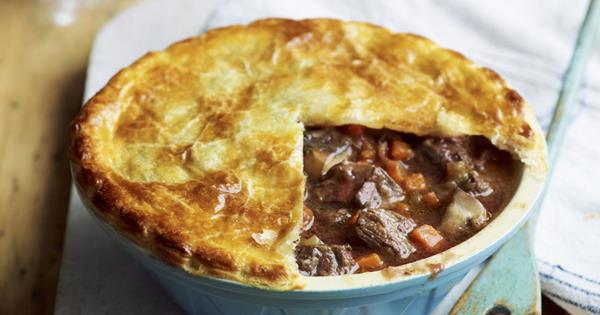
Readers of this blog are more than familiar with my love/appreciation of pie. What’s your favorite kind?

Steak and kidney… nothing beats it!
steak-and-kidney-pie

Q & A with Allison Chaney Whitmore

image1

Allison Chaney Whitmore is a screenwriter and graphic novelist from Los Angeles. She loves to tell coming-of-age stories with a hint of romance, fantasy, or adventure, but also enjoys a good gothic horror story. She’s also the writer of the comic Love University.

Allison holds a Master’s degree in English education and has studied screenwriting at the graduate level. Outside of her work, she enjoys classic films, genre television, a good book, traveling, and spending time with family and friends.

What’s the last thing you read or watched that you thought was incredibly well-written?

The current season of This Is Us is really good. I love the way they weave together plot, character, and theme. I also got to watch all of Fleabag and Killing Eve this summer, both of which I found amazing. I’m looking forward to watching season 3 of The Crown, as it always has top writing, and The Haunting of Hill House, which I hear has incredible writing as well. I can never pick one thing.

Were you always a writer, or was it something you eventually discovered you had a knack for?

I’ve always been a dreamer and a story enthusiast. I wanted to be an actor from a young age and started writing skits in elementary school. Long-form prose came in high school, and I wrote my first screenplay in a pink composition notebook with graph line paper the summer after graduation. So, if I haven’t always been a writer, I’ve been one for a pretty long time.

What inspired you to write your comic Love University?

The concept came to me many years ago. One Friday after work, I was stuck in traffic on Sunset behind UCLA and just randomly thought — What if there was a school for cupids,  called Love U? I thought it was funny at the time, but also strongly felt it was something I could see on television. When the opportunity came up to write a comic book series, I pitched it, and they really liked it.

What was your process for writing it?

This particular story just had a concept, no character to start. That’s not usual with me. Both typically come to me at the same time. This one I had to take the idea and pull the story out of it. I found the main character, Lucy, then I began thinking about the journey she might take over several issues as the world around her began to populate in my mind. I wondered about her day-to-day struggles, her lifelong personal wounds, and her hopes and dreams. From there, I just let the story unfold. After that brainstorming phase, I went through my usual process of theme, logline, beat sheet, outline, and script. Then it was notes, revision, and so forth.

How did you connect with the publishing company for your comics, and what role do they play with your projects?

I was working with another writer on a web series who was also a comic book writer. I’d recently been hired to write a couple of comics for a pair of independent creators. They were looking for screenwriters to complete the work. I was sort of lost in terms of what to do, so I asked my colleague to take a look at what I’d been working on. He really liked my work and sent it on to his publisher, who asked if I’d like to write a series of my own.

A key component of writing (for both film and comics) is to make the stories and characters relatable. What sort of approaches do you take to accomplish that?

To me, my characters are reflections of the human experience. I simply remember the human sides of their experiences — wounds, worries, hopes, dreams. I think about the way they speak, and why that is. I think about the way they dress, their favorite music, how they navigate through the world. Everyone has a specific journey that makes them uniquely who they are. I realize that should be the same for my characters, and that helps bring them to life, as well as making them more relatable to the reader.

As a writing coach, what are some of the more common mistakes you see?

Most of the mistakes come from finding the core of their stories, hitting plot points, and formatting. Sometimes it’s tough for people to figure out whether they have just an idea, or enough to make an actual story. That’s what we work on. It’s actually a lot of fun.

There are a lot of writing coaches out there. What’s unique about you and your methods?

I come from a teaching background, so my approach is about building skills from the ground up, but also starting with the big picture in mind. I like to help people work through their creative blocks and find the stories they want to tell. I’m much more of a coach than a consultant. I’ll give notes and focus on that type of thing, but I’m often looking to help writers become the best version of themselves. Working with me is like having your own personal teacher. Not everyone needs that, but it definitely works for some people.

What do you consider the components of a good script?

Strong character arcs, relatability, clear concept, emotional hook, and an identifiable theme.

What are some key rules/guidelines every writer should know?

-Always plan to write more stories. Don’t put everything into just one script. Move on. Write more. Keep getting better.

-The writing process is different for everyone. Just like we have different ways of learning and absorbing information, the way we get to a story can vary. Give yourself time to find your way.

-Your first draft is not going to be perfect. Ever.

-Plan if you can. It saves you time.

-Make time for both writing and living.

-Be observant.

-Read as much as you can.

-Stay committed.

-Be open-minded.

-Think outside the box.

How can people find out more about you and the services you provide?

I’ve been busy with my own projects and some work-for-hire projects, so don’t really do much coaching anymore. That being said, I am still open to taking on the occasional client. Email me at allison@theophilusfilms.com and we can talk about it.

Readers of this blog are more than familiar with my love/appreciation of pie. What’s your favorite kind?

Cheesecake could be considered pie, so…cheesecake. In terms of actual pie, probably pumpkin! Perfect time of year for that. Happy holidays!

NY-Cheesecake.jpg

Hope this helps

TR
Nothing like a rousing speech to get things going

To all the writers out there having a tough time with their latest script:

It’s challenging.

It’s frustrating.

It’s the way it is.

But that spark within you continues to burn.

Right?

Nurture it.

Feed it.

Work on something else if you have to.

Let your enthusiasm help it grow.

Remind yourself why you write.

Why you do this.

Rediscover the joy.

Your enthusiasm for this particular story.

The excitement of putting ideas on the page.

Grab onto it.

Hold on tight.

There’s no “right” way.

There’s the way that works best for you.

Write when you can.

Don’t worry about how much.

Any amount of writing is better than none at all.

Write because you want to.

Write because you need to.

Write because there’s nothing else you’d rather be doing.

Write for you.

Write.

Dismantle, reassemble

home crew.gif

Sometimes when you’re working on a story, you just have this feeling that the way it’s being told is the way it should be told. It just feels right.

Even though I’d made some good progress with the ongoing revision of the sci-fi adventure outline, something still seemed…off. What I had was good, including several scenes that now felt necessary, but as a whole, not quite there yet.

As I’ve mentioned before, I keep all the previous drafts of the outline and script on file –  you never know when some of that text will come in handy. The recent work on the current revision was accompanied by another tab on the screen containing the previous draft, serving primarily as a sort of roadmap to help guide me through this latest effort.

Despite telling myself that this new draft was supposed to be different from its predecessor, its siren call was a bit stronger than expected. There was just something about it that couldn’t be denied. Not to say that the newer version was no slouch either.

Parts of this one work, and parts of that one work. Why not combine the two?

Sure, this even-newer draft might occasionally take a somewhat unorthdox approach in how the story’s presented, but by gosh, I still like it. “Rules of screenwriting” be damned.

There’s nothing wrong with cherry-picking parts of the new draft and incorporating them into the previous one where applicable. Of course, it would have been nice to have come to this conclustion a few weeks ago, but sometimes that’s just how it works.

What’s really nice is that for the most part, save for a few problem spots, the previous draft is still pretty solid on its own. Nothing serious, and some of these new elements look like they’ll really rectify that.

Based on some extremely helpful notes, another factor that’ll help this time around is putting more of a spotlight on the characters’ emotions. Even in this kind of story, with all of its fantastical and extraordinary elements, it’s important to show how the characters are still people.

Lastly, all the time I’ve been working on this story, I’d forgotten how the initial concept and earliest versions were all written with a certain kind of tone in mind; something to really convey the vibe of what story of story this was supposed to be and how I wanted it to read. Somehow that aspect’s diminished over time, and I plan on re-introducing it for the next draft.

This is gonna be fun.

Bit of a mishmash, but it works

goulash
Try it. You’ll like it.

The overhaul/revision of the sci-fi adventure outline continues, with some significant progress being made – especially over the past few days.

There’ve actually been a few rough spots just to get here.

One being letting go of how the previous drafts started out, story-wise, and not letting those details affect the new one.

Another has been being able to present important and relevant details and backstory without things being way too expository.

Still another has been figuring out how some, but definitely not all, of the story details could be reorganized, restructured, pretty much rebuilt from the ground up but still have it all work within the context of the story.

It’s been quite the challenge, but the gears have been constantly and consistently turning during the search for a solution.

Took a while to get there, but looks like it’s yielding some results.

But first – a little background info.

I make a point of holding onto previous drafts of outlines and scripts, because you never know if part of it will come in handy for a future draft.

Thus was the case here.

There were sections of the story that were going to stay, but some others simply weren’t a solid fit for the new draft – but there was something about them that still worked and that I wanted to keep.

Getting them to that point took several attempts, approaches and revisions. Took a while, but I got there.

Despite being a slow and somewhat drawn-out process, the new story is gradually coming together. I’m not one to impose deadlines on myself, but once I get all of this a little more organized, the outline should come together relatively quickly.

I like the idea of having a completed first draft, possibly even a revised second draft, by years’ end.

No pressure, but we’ll see how it goes. Probably helps that I’m really enjoying putting this one together.