A route most circuitous

twisty road
Hang on! This’ll be a bit of a wild ride.

Most of my attention this week has been on one of my new projects. I’ll admit to originally thinking it would be a little easier to put together, which is most definitely has not.

I started out with the core concept and then proceeded to work on building the story around it. Since that initial effort, it’s probably safe to say I’ve gone through at least half a dozen variations on it. It was a constant state of flux, accompanied by me always thinking “Am I ever going to come up with something I like?”

For a few days, that was the dominant thought. But I knew the concept was solid, so it was just a matter of time and continuous trying before I found the one that worked. A new idea would spark, I’d ruminate over it a little, and if I thought it worked, would keep going. Suffice to say, there were a lot of starts and stops.

Again, I had faith in the concept. The right way to tell the story was out there, but my creativeness still hadn’t connected to it.

The story is in a specific genre, so there were several factors to keep in mind: how this world works, what’s expected, what could be twisted around and given a unique spin while still adhering to the “rules”, and most especially, any original ideas I could add in that reinforced the concept of the story.

As I racked my brain, more and more possibilities for each of those popped up. I doubted I could remember all of them, so I created a second document for the sole purpose of being an idea reference guide. That’s proven to be very helpful.

To also increase the chances this script could actually be produced, I’m putting it together with the plan of keeping things on the cheap: minimal locations, low number of characters, etc. A few of the original ideas threw some of those out the window, so they’d be cut and replaced with something a bit more on the practical side. Again, quite helpful.

As you’ve probably surmised, there was a lot going on both in my head and on the page. But as I continued push forward, with all the writing, cutting, and tweaking, it slowly started to come together.

I like how this new idea builds on that one from a few days ago, but with a great new twist, or modifying this scene in a new specific way does exactly what its previous incarnation did, but now in a more effective way. There’s been a lot of that.

It’s still a work in progress, but despite the delays, the whole thing’s slowly coming together. The plot points and the scenes between them are being filled in a way that works for me and the story.

There will definitely be a lot more work to do on it before I think it’s ready to transfer to script pages, but what was originally a big, jumbled and incoherent mess of ideas is gradually being organized into a well-structured, smartly-put-together (in theory), fun, and entertaining story.
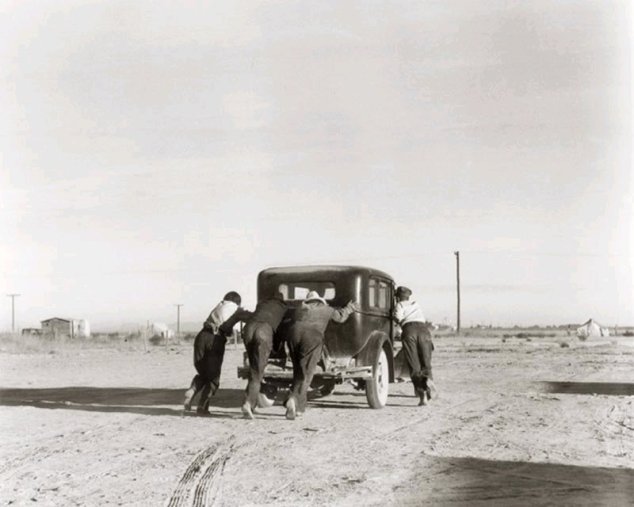
Pushing my way forward (x2)

push
Really putting my back into this

This has been a most interesting week. Based on some quality notes, I wrapped up a polish of the dramedy spec (which is now in the process of getting notes). Feedback so far has been encouraging, which is nice.

So now the focus can shift back to developing the two new stories. With most of my recently-completed projects having been worked on for extended periods of time, it’s been a while since I was really starting out from the very beginning.

I’d totally forgotten how much I enjoyed the process of putting a story together. I know what the core concept for each one is, and now it’s all about finding the best and most entertaining way to tell them.

At times it feels like my mind is going in a thousand directions at once, so I’m constantly writing stuff down. A scene or sequence idea here, a line of dialogue there, plot twists, character development, turning the scene on its head; pretty much the whole kit and kaboodle.

Main storylines have been established, with the expected constant fine-tuning and adjusting, and as I work my way forward, the subplots are making themselves known.

Entirely new worlds (or maybe “settings” might be appropriate, since each story is on the smaller side) are being created, populated with unique and hopefully somewhat original characters.

While one of the stories is based on an old script, there’s a constant discarding of a lot of the original content and trying new approaches. Not necessarily “throw it all at the wall and see what sticks”, but kinda/sorta along those lines.

For the other, this is dipping my toes into a genre I enjoy, but wouldn’t call myself a major fan, so doing what I can to avoid tropes and cliches (of which there are apparently many). If that proves more challenging than anticipated, will do what I can to least go for the unexpected.

Added bonus – watching movies of that genre and style to get a better feel for both.

Sometimes I’ll read a writer’s account about what a chore it is for them to develop a story, or how much they loathe this part of the process. I don’t see it that way. Organizing the story and putting it all together is a key part of screenwriting. Too many times when reading a spec, you can tell when the writer didn’t put in the effort to get all the details of the story right before they started on pages.

I recently asked my online screenwriting newwork their thoughts on outlining versus a “seat of your pants” approach. The responses were overwhelmingly in favor of outlining. Granted, there are some writers who prefer the latter, but I’m not one of them. I’m a firm believer in having a rock-solid outline before starting to write the actual script.

But that’s what works for me. Others may feel differently regarding their own process. No matter how you achieve the end result, as long as you’re happy with it, then more power to you.

The whole creative process in developing a story is a beast unto itself, but I think all the long-term work I’ve done for other scripts is really paying off for these two. For now, it’s still a big and unwieldy mess, occasionally feeling very unorganized and all-over-the-place, but a little bit of work every day will gradually pay off. When all is said and done, I’ll have two new scripts.

Like I said – I’m enjoying it.

Just getting here is a story by itself

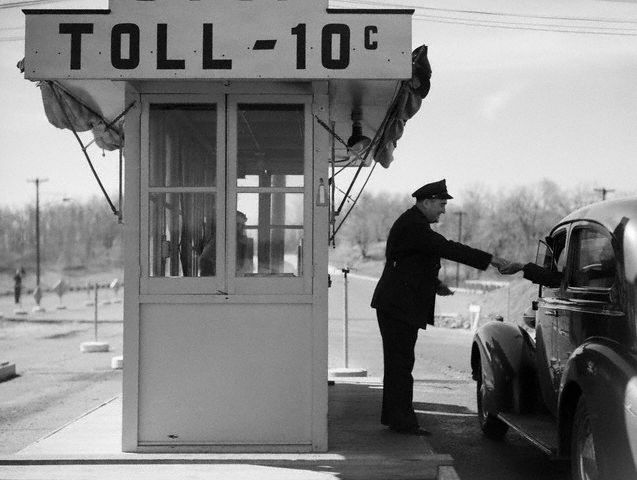
Toolbooth on Merit Parkway
Even better, the journey won’t cost you a cent

First, the good news: I wrapped up the rewrite/overhaul of the comedy spec (which seems more like a dramedy now.) Despite my dread and anxiety over whether or not it’s actually funny, it’s been sent out for notes. As I mentioned to one of my readers, as long as nobody says “What made you think you could write something funny?”, I’m good.

So, industrious scribe that I am, I find the best way to occupy my time while I wait to hear about a project is to redirect my focus and work on another one.

It was originally going to be a new take on the pulp sci-fi, but some story issues still need work, so that remains on hold.

But a few weeks ago, I was cleaning up around my office and found a hard copy of one of my earliest scripts: a horror-western. I don’t think I’d seen it or read it in about 15 years.

Wow, was it bad. Like “This first draft is going to sell for a million in no time!” bad.

But the idea behind it still worked, and was something I could definitely tweak and finesse into something a lot more coherent. I did mention how that old script was really bad, right?

So I started putting together ideas for the new draft. Let’s call this SCRIPT #1, or S1 to keep things simple.

Then another twist presented itself: a script with a low budget (the lower the better), a minimal number of characters and locations, and practically no visual effects has a much better shot of being produced than some mega-budget tentpole effects extravaganza.

With that in mind, there were aspects to this story I could use to create an entirely new and different one that met a lot of those criteria, so I jotted down some potential plot points in the same file. This is SCRIPT #2 (S2).

One file, two scripts. With me so far? It gets better.

After finishing the comedy, I decided I’d take on S1. I only had a vague recollection of all the story details, which I saw as a good thing. Although I’d still have the old draft available as a potential (albeit limited) resource, I don’t think I’ll use it all that much. This in turn, frees me up to go in whatever new direction I feel like.

As I thought up ideas for S1, some of the story elements from S2 started creeping in. Since I didn’t want the two to be too similar, more focus was put on developing S1. It’s still a work in progress, but coming along quite nicely. And so much better than that old draft.

Ah, but what of S2? Like I mentioned, there were story elements I really liked, and putting some of them into S1 forced me to come up with new ideas for it. There was one in particular that really stood out for me, and the more I thought about it, the more it felt like it would be able to be the basis for a solid story.

I combined that idea with the aforementioned low-budget approach and came up with what I really think is a great high-concept idea. Such to the point that I whipped up a logline for it, along with a title that feels very “that’s perfect!”

My belief and enthusiasm for both S1 and S2 is to the point that I’m now alternating between both; working on one, then the other. My objective now is to have at least a first draft done for both by the end of the calendar year. It’s already proven to be, and will no doubt continue to be, a most interesting process.

I’ll keep you posted.

What you want VS what the story needs

838-02491755
Sometimes it takes a little more evaluation

Over the course of several drafts, the core elements of my scripts remain more or less the same. There might be a few changes here and there, but to me, the end result is pretty darn close to what I originally intended.

As part of the development of those drafts, I get notes from trusted colleagues and professional analysts. Everybody has their opinions, of which there were many, and I can pick and choose which ones to use.

I was still presenting my stories the way I wanted to tell them, but is that the way they should be told? Was I falling into the trap of “I’m the writer, so what I say goes! End of discussion!”?

I recently got notes on one of my scripts that offered up some keen insight regarding the antagonist’s storyline. This included the reader’s frustration about what they perceived as a lack of knowing the character’s goal and the reasoning behind it.

At first, that was pretty surprising to hear. But as is usually the case, I took a step back and looked at the big picture, trying to be as objective as possible. Was it really not as apparent as I thought?

And as is also usually the case, their comments were spot-on. I had never made any big changes to how that storyline was written because I saw it as being “just fine the way it is”, which also happened to be the way I wanted it to be.

Which was counterproductive to how the story needed it to be. It wasn’t working within the context of the story itself.

Was it my writer’s ego that prevented me from seeing this through all the previous drafts? Maybe a little. I’ve seen this kind of thing before in other scripts, but just couldn’t see it within my own material.

I knew the script wasn’t perfect, but there’d always been this nagging thought in the back of my mind that it still needed work. Something had to be changed, but I couldn’t identify what. This could also explain why I always felt compelled to keep working on it.

But with those notes, I now had a much firmer grasp of what the reader was talking about, and could begin to rectify the situation.

It took a little time to work through it, including some significant edits and rewrites. It  also entailed cutting some scenes that absolutely broke my heart to see them go, but were totally necessary. All part of the process.

I know I’ve said all of this before, but looking through the latest draft, the script really does seem different now – in a better and much stronger sense. The characters, especially the protagonist and antagonist, feel more developed. The story reads as more concrete. I’m very happy with how it turned out.

Once I was able to put what I wanted aside and focus on what was best for the story, it all came together a lot better than I expected. My hope is that this kind of self-analysis will be a bit easier for me to figure out for future drafts of other scripts.

Can’t wait to give it a try.

Characters are people!

soylent green
Go ahead. Say it like he would. You know you want to.

I’d always heard how your script should somehow reflect “the human condition”, but never really had a firm grasp of eactly what it meant or how you would accomplish that.

I mentioned the phrase in a discussion with another writer, to which they responded “I don’t care about that. I just want to tell good stories.”

But isn’t the story about the characters to begin with? And a story with under-developed characters won’t be as good as one where the characters feel like actual people.

Accomplishing that has always been one of my biggest challenges.

A comment I’ve received more than a few times in the past is that the reader finds my characters good, but somewhat incomplete. They’re established and believable, but only to a point. This isn’t saying they’re flat, one-dimensional caricatures (something I’ve unfortunately seen in many other spec scripts), but they don’t feel completely real.

Readers/audiences want to be able to relate to the characters in your script. They might feel they’re only getting a glimpse into what kind of person the protagonist is, or know there’s more to them, but that “more” isn’t there, and they want to see that. And this doesn’t just apply to the main characters; it’s everybody.

Digging a little deeper and offering up a few more details would help flesh them out, which in turn would make for a stronger story.

When I recently sent a script out for notes, the reader asked if there was anything specific I wanted them to focus on. Without a doubt, it was the protagonist and the antagonist. I felt while they were good, there was definitely a need to make them better.

The reader agreed and made some good suggestions about how that could be achieved. “We don’t know as much about these two characters as you might think,” they wrote. Since I was the writer, I had a little more insight into their respective backstories and what made them the people we see, but some of those details had stayed in my head, rather than been transferred onto the page.

So I went about adding in some small details here and there; a line of dialogue or a seemingly insignificant action. A few touches to give a little more insight into what makes them tick; why they are the way they are.

All of this, combined with a few alterations with the plot, makes this latest draft feel really different, and hopefully stronger, than its predecessors. I’m giving it a few more days to simmer, and will then give it another look to see if that vibe still holds.

What I’m also hoping is that from here on in, I’ll be able to apply this kind of approach to all future drafts, which would in theory, help achieve the same results but in a shorter amount of time.

Hope and ambition. Just two parts of the human condition, right?