Keep your ego out of it

vintage lady writer
As much as she loved that scene, she eventually accepted the fact it would have to go.

I’ve received notes on three separate scripts in the past week or so, and each set is of  very high quality. Each does a very thorough and insightful job of spotlighting What Needs Work for each script.

Daunting and somewhat overwhelming at first, I’ve begun the slow and somewhat laborious process of analyzing and breaking down all the comments and suggestions. I won’t use everything, but there is definitely a lot of good material to work with.

I provided a total stranger with material, and they’re offering up their honest opinions about it. At first glance, some of the comments might be interpreted as negative, but they’re really not. This is what they saw/thought while reading my script.

No axes to grind. No vendettas. No hidden agendas. Just pure, honest opinions. I take what they said, figure out which parts I consider the most helpful, and proceed from there. Ten times out of ten, the result is a better script.

I was told once that getting critically constructive notes and being willing to accept them were signs of a quality writer. Honestly, that was a little surprising.

As much I’d like to think my stuff is great, the reality of the situation is that it’s more along the lines of “it’s okay/pretty solid, but could still use some work”, which is fine. That’s what rewrites are for. From my experience, the final draft is always different from the first. I wouldn’t have been able to produce that final draft without all those helpful notes.

Many times I’ll see a writer ask for feedback on their script, which they get, but might not be the high words of praise they were expecting. Are they ever? Then they respond with something along the lines of “You just don’t get my genius!”, and promptly reject any and all notes. The end result: a lousy script that’s not much better.

Helpful tip: don’t do that.

The whole reason you want notes is to find out how to make your script better. Hard as it is to believe, you can’t make it better if you’re not willing to accept criticism. You can be super-proud of the script you have, but don’t fool yourself into thinking it’s perfect just the way it is now.

Chances are it’s not.

What’s more important to you: having what you think is a good script, or having somebody give you tips that would actually help make it better?

Would we love to see our scripts play out onscreen, just the way we wrote them? Of course. But what you see is up there is usually a lot different from what how it originally read on the page. Happens all the time. Getting upset about it and decrying the sacrilege committed by altering even one letter or syllable from your precious text is definitely the wrong way to go.

In the next couple of days, I’ll be having separate in-depth discussions about two of my scripts with some of the people who gave me notes on them. My emotional state could probably be summed up with “excitedly nervous”. It’s a combination of looking forward to and feeling a bit anxious about hearing what they have to say.

But in the end, it’s not about the writer. It’s about the script and doing what’s necessary to make it better.

A few treats, but no tricks

Halloween candy
…and all the peanut butter cups you can eat

Halloween shorty today due to yet-again busy times around Maximum Z HQ.

Among the highlights:

-Finished the initial overhaul for the outline of the comedy spec. The story is still kind of/sort of the same, but still significantly different than what it was. There’s still some tweaking to be done, but I’m really liking how it turned out.

-Got some notes back on a few of my scripts. For the most part, they’re pretty positive with some good suggestions, but there were also a couple of comments that made me question if my writing abilities are where they need to be. Maybe to a certain extent, but as it was pointed out to me, those comments are from one person, and one person’s opinion is not the final say. That’s something I really need to keep in mind.

-More writers asking me to do notes or engage in a script swap. Some new, some returning for more. Guess my analysis skills are improving. Happy to help when I can, but don’t expect a fast turnaround.

-A slow but steady output of query letters continues, with a handful of “send it” responses. Not a bad percentage so far. Not relying on any of them, but always maintaining a positive & hopeful attitude. Send it, forget it, on to the next one.

Thus the journey to being a working writer continues…

Educate thyself

reading 2
Quiet, please. Writers at work.

Chances are you came to this blog/post via a link from an online screenwriting group or forum. (If you’re a first-timer – welcome! Feel free to subscribe.)

When time permits, I’ll browse through some of the groups to check out what kinds of subjects and topics are being discussed. There are also questions. A LOT of questions. Those can range from “How do I get an agent?” to “What’s the proper format for this?” to “How do these pages look?”, all of which will yield a wide variety of answers.

I don’t usually comment because most of the time I come into it late and somebody with just as much if not more experience than me has already said what I was going to say.

There was a recent post where somebody asked what the best screenwriting book was. Answers ranged from several well-known titles to “read scripts instead”.

To a certain extent, I think those are both good answers. The books that helped me the most were Dave Trottier’s The Screenwriting Bible, primarily in terms of getting a good handle on formatting and the basics of structure, and Paul Lucey’s Story Sense, which expanded on both (and appears to be out of print, but still worth tracking down a copy.)

While some books might help you get a grasp of the basics, the real learning comes from immersing yourself in reading scripts and working on your own. Another helpful practice is to watch a film with the script in hand, following along with the action onscreen while seeing how it’s written on the page.

Reading a script can really help show you what should and shouldn’t be there, which you can then apply to yours.

This doesn’t just apply if you’re just starting out. I still get a kick out of reading scripts, whether it’s from the Black List, or one somebody recommended, or even when someone asks me for notes. Bonus points if it’s somebody within my network of writing colleagues; I know they can deliver the goods, and that’ll be reflected in their script.

I’ve also seen my fair share of terrible scripts, usually identified as such by the content of the first page. If that’s not good, there’s little hope of improvement for the rest of it. The silver lining here is you will quickly see how NOT to do it, thereby ensuring you won’t duplicate it.

So while you should definitely devote time to writing your script, make sure you set some time aside to read scripts. You’ll be entertained AND learn at the same time.

-Filmmaker/script consultant/friend of the blog Jimmy George is offering a special limited-time discount for first-time clients – 50% off all script services. No matter what you’re working on, whether it’s a feature, a short, or TV, Jimmy’s ready to help you out. But better hurry – the offer’s only good until October 11th.

A subject worth discussing

soapbox
Listen up, and listen good

Stepping onto my proverbial soapbox to utter a few thoughts on something that needs to be said.

If you’re part of an online forum, and you post your material in that forum seeking feedback from other members, you will get all kinds of responses. Some will be positive, and some will be negative – maybe to point of being outright condescending.

How do you respond to the positive ones?

“Thanks. I appreciate it.” Maybe elaborate a little, or a follow-up question or two. Possibly even ask to communicate with the person in private.

The negative and/or condescending ones?

“Thanks.”

That’s it. No matter how much you feel the urge to respond with a stinging retort written in ALL CAPS and a lot of exclamation points, just don’t. You asked for comments and you got ’em.

A thick skin is a necessity in this business. Arguing or getting angry because you don’t like what somebody said won’t help you or your writing, and it makes you look petty and unprofessional.

Now let’s address the other side.

Somebody asks you for notes, and based on the quality of the material, you do the best you can, trying to be as helpful as possible. Be honest with your suggestions of what needs to be fixed.

Does it have potential? Mention that. Are there problems? Identify them and how they could be fixed.

If the writing reflects an amateur, or a poorly constructed idea, point out how and why in a constructive manner. There’s no need to be insulting or talk down to them. Chances are they’re still learning, so they don’t know as much as you do.

They may not like what you have to say, maybe even going so far as to insult you and your experience, or deride your comments. But that’s on them. You’ve done your part.

So let’s review.

You want help? Take what you get, even if you don’t like it. After your temper cools down, take a serious look at what was said. There may be something in there worth using.

Somebody asks you for help? Be professional and as helpful as you can. Don’t hold their lack of experience against them.

No matter whether you’re giving or receiving, be patient, tolerant, and open-minded.

Keep that in mind, okay?

Thanks. The soapbox is now available.

Good. Better. Getting there.

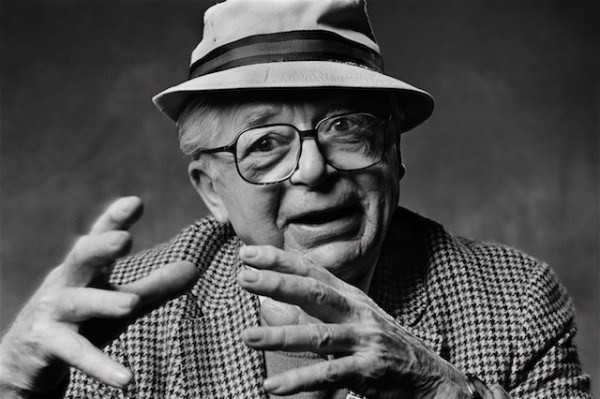
Billy Wilder
Never hurts to have a good role model*

Notes continue to come in for the pulp sci-fi spec, some contrary, many encouraging, and all chock-full of notable suggestions. With some coming from my trusted core of reliably savvy readers, there’s been one statement more than a few have included.

The gist of it is:

“This is the third script of yours I’ve read, and each one has shown a definite improvement over the previous one.”

It warms this writer’s soul to hear that sort of thing. And these are writers who pull no punches. They won’t hesitate to say something doesn’t work.

I’ve been working at this for a while, but it really feels like just the past few years have seen the most significant progress. Just goes to show what constant hard work can do, right?

Nor do I have any intention of slowing down. Doing my best to maintain a dedicated block of time and/or pages on a daily basis. The more you do it, the easier it gets (but is still tough).

The three scripts in question were all adventure-based, which enabled me to exercise a certain set of writing skills. With work now commencing on overhauling a comedy, an entirely new set will get the workout they deserve.

Crafting a sequence involving a train heist in the Old West, or a team of adventurers taking on a mad scientist? Piece of cake.

Writing a story involving everyday people in relatively normal (but funny) situations, peppered with smart (and funny) dialogue, all without the benefit of using special effects to enhance the story?

That is truly the next challenge to yours truly. It initially feels very daunting, but I’ve made it this far, and there’s no reason to think I can’t continue to push my way forward.

Should be a very interesting journey.

*Billy Wilder’s 10 Rules for Good Filmmaking (also applicable to screenwriting)
1: The audience is fickle.
2: Grab ’em by the throat and never let ’em go.
3: Develop a clean line of action for your leading character.
4: Know where you’re going.
5: The more subtle and elegant you are in hiding your plot points, the better you are as a writer.
6: If you have a problem with the third act, the real problem is in the first act.
7: A tip from Lubitsch: Let the audience add up two plus two. They’ll love you forever.
8: In doing voice-overs, be careful not to describe what the audience already sees. Add to what they’re seeing.
9: The event that occurs at the second act curtain triggers the end of the movie.
10: The third act must build, build, build in tempo and action until the last event, and then — that’s it. Don’t hang around.