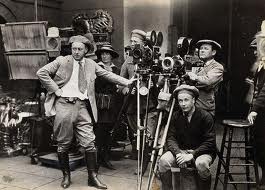
But I look so good in jodhpurs

And a beret, too
And a beret, too

I’ve been poring over the notes I’ve received, and included within were a few suggestions for improvements, including cutting back on the use of CAPITAL LETTERS for emphasis.  In fact, it was recommended I cut them out altogether.

I always thought doing that really got the point across, especially for really active verbs. Add that to the list of things to consider/investigate.

It was also mentioned that I could cut about 4-5 pages if I eliminated my ‘directing the action’ in so many scenes.

Directing? Me?

I looked over some of the pages in question, and wouldn’t you know it? They were right.

This isn’t about camera angles or more technical aspects.  I put in too much detailed description of the action between lines of dialogue, or give too much of a suggestion how a line should be delivered.

Apparently I do it a lot, not even realizing I was doing it.

I’ve always made an effort to avoid an excessive use of adverbs and parentheticals, but this really is something new.  While it’s something I’ll definitely need to work on in the future, making the appropriate fixes this time around doesn’t seem to be too challenging.

At least for now.

Teaching myself to not do this seems a little daunting at first, but the person who pointed this out to me added that he’s been a working screenwriter for 30 years and is still learning.

So there may be hope for me yet.

Just wondering – has there ever been something about your writing that was pointed out to you that completely caught you by surprise?

-This post was written during a very quiet Christmas morning shift at work. Hope you made watching a movie part of your day. Happy holidays!  One of my gifts was the COMEDY FILM NERDS GUIDE TO MOVIES, which comes from the always-entertaining and incredibly hilarious podcast of the same name. Definitely worth subscribing to. Please note the very apt ‘explicit’ tag on iTunes.

What are you waiting for?

Yes, this could be yours (megaphone optional)

As much as I wax poetic about decades gone by, I’m incredibly glad I live in the Digital Age. You probably are too.  How else would you be reading this if it weren’t for the Internet?

Modern technology has made it possible for a screenwriter to not have to live in Los Angeles in order to have a career. Sure, you may have to to go there for meetings, but you can literally write anywhere you want.  And you can do even more than that.

Another benefit has become that you can get people to notice you and your work via an online presence, or as my incredibly-talented marketing-savvy wife would say, “create your own brand”.  You think you’ve got what it takes?  Let’s see it in action.  Put it out there for the world to see. Cliched as it sounds, the possibilities really are endless.

Most likely you’re reading this on a computer that has an abundance of tools at your disposal to produce your own material. You can make something in any number of forms – a short, a web series, etc.  You can post it on YouTube, submit it to Funny or Die, even use it as a work sample or calling card.

If people like it, they’ll let you know.  If that’s the case, chances are they’ll also want to see what else you’ve got.  Why not build up your own arsenal of product?

Undergoing a project like this also gives you something else a lot of people may not have: experience. You think it’s easy to put together a 15-minute film?  Getting the story done is just the beginning. Now you’ve got a zillion other things to worry about. Do you have the necessary equipment?  Where are you going to film?  Can you find the right actors?  Do you need more light?  The list feels endless, but the upside is that you will know what it’s like to be more than ‘just a writer’.

Don’t worry if your first efforts aren’t high-quality. Like the first draft of a script, most likely it will suck. But you’ve got to start somewhere, and more often than not, you’ll learn from your mistakes. Nobody does a phenomenal job their first time out. Like every other skill, the more you do it, the better you’ll get and the easier it will get.

The Internet makes for an incredibly even playing field, but it’s up to you to put yourself into the game.

I think I’d make a good hyphen

The under-appreciated Preston Sturges

I heard back from the person looking for help with their script. They’ve made two shorts and now want to expand into something a bit longer.

They sent 6 pages for me to work on the wide margin material with the instruction to leave the dialogue alone.

Suffice to say, there was a lot I could take out with no impact whatsoever and the editor in me couldn’t help but work on some of the dialogue.

What was surprising was the large amount of Screenwriting 101 mistakes: Telling the reader how somebody feels. Capitalizing a character’s name almost every time they appear in a scene. Repetitive and on-the-nose dialogue.

I have no idea how much formal training this person has had, or even if they went to film school, but this is the second director I’ve dealt with who is woefully misinformed about how to write a script. Shouldn’t that be necessary anyway?

For example, there was way too much information in the set-up for each scene.  I don’t need to know in extensive detail how exquisitely beautiful this summer day in the countryside is. One sentence will suffice.

Years ago, I attended a few seminars by Richard Walter of UCLA’s Screenwriting Department.  Among his many gems of wisdom was “Write as if ink cost $1000 an ounce.”  Every writer should post that above their workspace and consult it daily.  The more white on the page, the better.

The more I look at scripts written by directors (and there are some good ones out there), I can’t help but wonder “Could I do that?” Granted, I don’t know the first thing about setting up a shot, or what the proper lighting should be in a particular setting, but sometimes when I’m watching a ‘major motion picture’ and I get bored with how the story’s developing, I start paying attention to what the camera’s doing. Did they film this scene from this angle, and then from a different one, and then put them together in editing?  How did they manage that shot?

Once I’m able to get things going with the writing, I wonder if anybody will ask “So would you want to eventually direct?” Right now, no.

But down the road? Maybe.