How does “gamut” make you feel?

emotions
Somewhere in here

No matter what your screenplay is about, or what genre it is, it really comes down to one thing: telling a story about the characters and what happens to them.

While some may put more emphasis on the latter part with its vast number of variables and possibilities, it’s equally important to put a lot of effort into developing the former.

You want your characters to be relatable. Let us see ourselves, or at least part of ourselves, in them. How they act and interact. What they do. Even if it’s within a completely ridiculous or unbelievable scenario.

A good example: the works of Judd Apatow. “Comedies with heart,” is often used to describe them. By injecting emotion into what might otherwise be just something silly, he adds that extra layer of humanity. Notice you never heard the phrase “wacky hijinks ensue”? Because it’s about the emotion within the comedy, not just going for the cheap laugh.

Nobody only experiences one emotion, and neither should the fictional population within your pages. If a character’s happy, sad, or angry, show us why. Don’t hold back. Put it there for us to see.

Do they act like a real person? Is this how they would act in this kind of situation? Is it a real reaction or a “movie” reaction? Getting your characters to act using their emotions makes them come across as more realistic, which makes for a better story.

“The characters are too one-dimensional,” or “He/She’s just a one-note character.”  Heard those before? If your character only acts one way, or remains static and never changes, or doesn’t even react accordingly, that’s what the response will most likely be. And you don’t want that.

A savvy writer knows how to use emotion without being blatant about it. Maybe it’s a subtle action, or a turn of phrase, or the subtext within a line of dialogue.

Find the way that works best to develop and advance the character both within their own story and the story overall.

Mel said it best

Once again, the latest round of sending out query letters is underway.

My attitude about the whole process is eloquently stated via the title of the song above by Mr Brooks. This is only because of my experience in dealing with it over the years.

I’d explained this mindset to a friend, who felt I was being too negative and pessimistic.

“Not at all,” I responded. “I send these out, definitely hoping at least one of them clicks. Sometimes that happens, and someone will ask to read the script. Maybe even a handful of requests. Those usually end with “just not what I’m looking for,” and the rest are silent passes.”

There are countless reasons a script gets a pass, so trying to figure it out is a waste of time.

But I move on, determined as ever.

You’d think all of this would make me a lot more jaded and cynical, or at least left with a bitter taste in my mouth after putting myself through this over and over again. Maybe in some ways I am, but I’d also say I now take a much more realistic approach.

Despite the odds being stacked against me, I’ll keep at it. Researching potential recipients. Revising the letter itself.

I send ’em and forget about ’em. If they’re interested, they’ll contact me, which could be anywhere from five minutes to a year, or longer. If they’re not, they won’t, and that’s the way it goes.

I’m also not going to sit around waiting to hear back. I’d rather spend my time, y’know, actually writing (a lot of which is coming along nicely, thank you very much).

My aforementioned friend understood where I was coming from. They’ve also read (and really liked) my scripts, and remain very, very hopeful that something good will happen for me soon.

Me too. It would be nice.

But until then, Mel’s song remains the status quo.

And since I prefer to end things on a high note, here you go…

All that on a single piece of (digital) paper?

bad 1st impression
It can only go downhill from here

You only get one chance to make a good first impression. And that also applies to a screenplay. If your first page doesn’t make us want to keep going, why should we? Chances are the rest of it is exactly the same.

The first page is your golden opportunity to start strong straight out of the gate. Show us from the absolute get-go you know what you’re doing. A lot of the time, I’ll know by the end of the first page what kind of ride I should be expecting.

Just a few items to take into consideration.

-First and foremost, how’s the writing? No doubt you think it’s fine, but face it. You’re biased. You want a total stranger to find it fault-free, so look at it like one. Is it easy to follow and understand? Does it flow smoothly? When I read it, do I get a clear mental image of what you’re describing? Does it show, not tell?

-Is there a lot of white space? Are your sentences brief and to the point, or do they drone on and on with too many words?

-Do you point the reader in the right direction and let them figure things out, or at least get the point across via subtext, or do think it’s necessary to explain everything, including what a character is thinking or feeling? Yes, that happens on the first page.

-If your protagonist is introduced here, are they described in the way you want me to visualize them for the next 90-110 pages? Does a notable physical characteristic play a part in the story? Are they behaving in such a way that it establishes the proper starting point for their arc? Are they doing something that endears them to us, making us care about them?

-If your protagonist ISN’T on the first page, does it do a good job in setting up the world in which the story takes place? Do the characters introduced here play any kind of role later on in the story?

-Are there any mistakes regarding spelling or punctuation? Are you absolutely sure about that? SPELLCHECK IS NOT YOUR FRIEND. A team does not loose a game, nor do I think they should of won either. Two glaring errors that your software will not recognize. But a reader will.

-Does it properly set up the genre? If it’s a comedy, should I be prepared to have my sides ache from laughing too hard? If it’s a horror, should I make sure the lights are on, even if it’s 12 noon? If it’s a drama, should I have a box of tissues within arm’s reach to dry the expected river of tears?

-Do your characters sound like people saying actual things, or are they spouting nothing but exposition and overused cliches?

Not sure about any of these? Read it over with as critical an eye as you can muster, or get help from somebody within your network of savvy writing colleagues. DO NOT go to somebody who doesn’t know screenwriting.

Think I’m being overly critical? Ask any professional consultant or reader, and I bet 99 out of 100 will say they know exactly what kind of read they’re in for by the end of the first page. And number 100 might also agree.

Then again, there’s also the possibility that the first page could be brilliant and it stays that way until FADE OUT.

Or the wheels could fall off anywhere between page 2 and the end.

Your mission, and you should choose to accept it, is to make that first page as irresistible as you can, grab us tight, and not let go. Make us want to keep going. Then do the same for page 2, then page 3, page 4, etc.  Make us totally forget what page we’re on.

Take a look at the first page of your latest draft. Does it do what you and the story need it to?

-Didja notice the spiffy new look? Had to make some behind-the-scenes changes, and this is the result.

The (much) tougher part

ali hit
99% of the time, you’re George Foreman

In this week’s previous post, I wrote about the necessity of how a writer needs to enjoy the actual writing part of being a writer.

A few colleagues piped in, saying while that part of it holds true, they also find the business aspect (i.e. the marketing of YOU) to be significantly harder and much more challenging. Taking it one step further, lack of progress on that front adds to their frustration.

I can’t argue with any of that. I’ve experienced it firsthand many times.

Friend of the blog Phil Hardy had this to say:

“…this should resonate with most of us that are doing the same thing as you are. However, one of the keys in trying to be a successful writer is spending a fair amount of time crafting query letters, answering ads or attempting to make contact with industry people anyway you can. Many writers fall flat in this area. One should definitely spend as much time as they can trying to promote and sell their work, as well as taking joy in the act of writing it.”

Simply put, marketing and promoting oneself is a necessary evil that a writer has to be willing to undergo and endure as many times as it takes if they want to succeed. Sucks, but it’s the truth.

After working on a couple of scripts and building up my arsenal of materal, I’ve decided to take the plunge again.

I’ve put together what I consider to be a pretty effective new draft of the query letter. Gone through the list of managers, agents and production companies, researching who might a good match for each script.

A few queries have been sent, so the waiting and hoping for a positive response begins yet again. All the while, working on more scripts. It’s all I can do.

My efforts to improve my networking skills have also paid off. Every once in a while, a colleague will send me a listing that seems tailor-made for one of my scripts. Even though none of them have worked out, it’s made me aware of more opportunities than I would have been able to find on my own.

We all know this is not an easy path. It’s extremely tough and really puts your endurance to the test. The question you have to continually ask yourself is “Am I willing to keep working at this until I get the results I want, no matter how long it takes, how frustrated I get, or how impossible it seems?”

I can only speak for myself.

Yep.

-You might find these older posts somewhat relevant and worth a read.

The me businsess – a 24/7 operation

A support staff of one

The reason why

sunset-holden
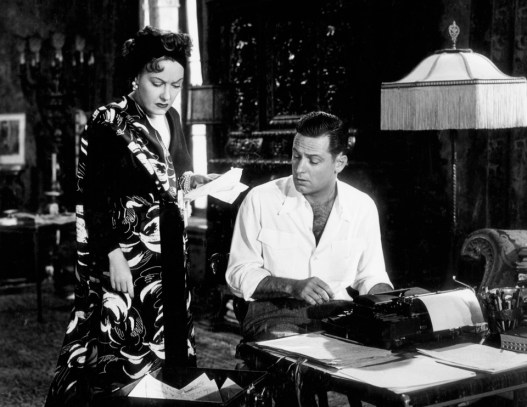
Only a slight connection here. I just like referencing this movie.

The busy times never stop around Maximum Z HQ. Among the latest tasks being undertaken:

-Rewrite/overhaul of the low-budget comedy

-Sporadic rewrite work on the pulp sci-fi spec, with initial sets of notes being carefully scrutinized

-Crafting together some pretty solid query letters, along with researching the best places to send them

-Jotting down notes for several future projects, including a comedic take on one of my favorite genres

-Providing scriptnotes to patient writer colleagues

You’d think with all of this going on, plus the non-writing normal life, I’d be exhausted.

Actually, I am, but it’s cool.

The way I see it, keeping busy like this helps me be a better writer; continuously working on something helps me be productive and further develop my skills.

Sure, sometimes the amount of actual writing is bare minimum, or maybe even not at all, but that’s okay too. All work and no play and all that.

Most importantly, I’m just getting a real kick out of doing it. If I wasn’t, I’d be a lot less likely to want to keep going.

And there are also days where it all gets so frustrating that I want to just walk away from it all. But I like doing it to much to even consider that.

Some recent interactions I’ve had with other writers have included more than a few of them expressing frustration about their diminishing hopes of making headway with breaking in and getting a writing career going.

I feel for them. I really do. As just about any writer will attest, this is not an easy undertaking. “It’s a marathon, not a sprint,” right?

Even though all of our chances are somewhat slim, I suggested they keep at it, if only for the sheer joy of writing. Isn’t that what got us all started?

When I asked one writer how their latest project was going, the response was “Really enjoying working on this, even though I know nobody else will ever see it.”

I totally get that. We all have our reasons for deciding whether or not to put our work out there, but the important thing was that they were having a good time with it. And you can tell if they were by what’s there on the page. It it was a chore for you to write, it’ll be that much more of a chore for us to read. Is that really the route you want to take?

So no matter what it is you’re working on right now, I sincerely hope that it’s bringing you as much joy and pleasure as you’re hoping to provide to your reader/audience.