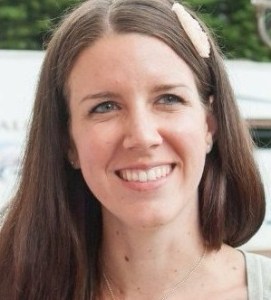

Q & A with Angela Bourassa and Tim Schildberger of Write/LA

Write LA Logo

hs-e1521810938693.jpgTim S

Screenwriters enter contests for a variety of reasons: industry connections, cash, software, notes on their script. And there are a lot of contests to choose from. How your script places can make a significant impact on helping you establish a screenwriting career.

And now there’s a new contest that wants to help you do just that.

Write/LA launches today (with early bird pricing in effect until April 30th), and is the brainchild of Angela Bourassa and Tim Schildberger. I had the opportunity to speak to them about it.

But first, a little background info…

Angela Bourassa is the founder and editor in chief of LA Screenwriter, a leading online resource for working and aspiring screenwriters around the world. Angela graduated from UCLA back in 2008 and has been writing feature screenplays — mostly comedy — ever since. In addition to writing, she spends much of her time wrangling her 18-month-old son, watching Survivor (#DropYourBuffs), and trying to keep track of which jail her public defender husband is visiting today.

Tim Schildberger is the founder of LiveRead/LA as well as a script consultant, writer with thirty years’ experience, an expat Australian, creator/writer of a Travel Channel comedy/reality series no one saw, and the man who led the team who found all the people for the feature film Borat. He’s a big fan of Aussie rules football (which isn’t anything like football or soccer or any other known sport) and baking treats with his twin girls for LiveRead/LA’s events.

Both of you have extensive experience providing information & resources to screenwriters. Tell us about your respective paths to get there.

Tim: I started writing for an Australian soap opera called Neighbours when I was 21. For the last twenty years I’ve been in the USA, and I’ve been a member of a writing group that holds weekly live reads. Not only has working with actors helped me enormously as a writer, but so has hearing all the feedback from my peers. That experience helped me overcome my hatred of re-writes (does anyone like re-writing?) and showed me the only path to becoming a better writer is writing more, sharing your stories, and being open to feedback. It also showed me I have an aptitude for identifying strengths and weaknesses in other people’s work, offering suggestions while maintaining the writer’s self respect.

In 2016, I decided that rather than continue assisting others with their scripts as a favor – which was becoming a little time consuming – I would put my own spin on the live read concept and build a new collaborative community, so I launched LiveRead/LA – and it’s already helped many writers. But I wanted to do more – to help more writers, to reach more people. I couldn’t make it happen alone, though, so it wasn’t until I met Angela and we discovered we had a similar sensibility about helping and giving back that Write/LA was born.

Angela: I started LA Screenwriter in 2011, and at first it was just a small blog where I would bring together produced scripts that I wanted to read and screenwriting articles that I found helpful as I worked toward my own dream of becoming a working screenwriter. But over the years, it’s really taken off, and now thousands of people a day come to the site for advice and resources, and that’s a responsibility I take very seriously.

I’ve thought about launching an annual competition before, but I honestly think that a lot of the screenwriting competitions out there – maybe even most of them – are ripoffs that don’t have the writer’s best interests at heart, and I didn’t want to be part of that cycle. I only wanted to start a competition if I had the ability to offer great prizes and great judging that could actually help writers in their careers, and that ability showed up in the form of Tim.

What prompted you to create Write/LA?

Tim: I was prompted to create Write/LA because I wanted to share what I’ve learned about writing, about the power of hearing your work read by actors, and about giving and receiving feedback. And the importance of interacting with working industry folk. Los Angeles is the global epicenter of writing for TV and film, so it seemed obvious to try to find a way to bring people to LA to learn, connect, and be celebrated for what they’ve achieved so far.

Angela: And I really wanted to be a part of Tim’s vision, because his idea for this competition and the prizes got me excited. Both of us are writers, so we know what it feels like to do well in a competition and then end up with no real benefit. We’re trying to change that by creating a competition that we both would want to enter.

What makes Write/LA different from other screenwriting competitions?

Tim: Write/LA is a competition aimed at the process of writing at a professional level. Most other competitions offer prizes in the hopes of discovering a script that can sell or a writer who can get representation. We’re focused on building command of the craft. Let’s be clear – our three grand prize winners will be writing while they’re in town. They’ll also be mingling with working writers and Industry people and gathering knowledge and experience that’s vital for lasting success. We aim to help our writers become professionals, not just one-hit wonders. It’s that combination of experience, education, and celebration that sets us apart.

What sort of criteria are you looking for in scripts that are entered?

Tim: We’re looking for evidence of command of the craft. That means we want original stories, compelling characters, an understanding of format and genre, and way above all else – an emotional connection with the material. There has been so much written about the structure of writing for TV and film: act breaks, inciting incidents, midpoint turns, and the rest. As a result, many writers are good at moving characters from point A to B to C.  But very, very few are good at letting us know what this particular story is doing to the emotional well being of the characters. An audience needs to feel something, or the script is flat.

As I like to say, no teenage girl saw Titanic ten times because it was a cool special effects movie about a boat sinking. They felt for Jack and Rose. We want to find scripts that make us feel, show us the writer knows how to tell a story, and will really benefit from the grand prize we’re offering.

Angela: That’s why we’re not judging film and television scripts separately. We’re accepting both, and we might end up with completely different genres and formats for the three grand prize winners, which I’m personally really excited about. We’re interested in emotional, engaging storytelling above all else.

Seeing as how this is Write/LA’s inaugural year, what are you hoping to establish with it in terms of opportunities for screenwriters?

Angela: We want to establish ourselves as a different kind of screenwriting competition. Our prizes stand out from the crowd, and we’re hoping a lot of writers out there understand the undeniable value of a private, intensive writing lab, an inside look at the industry, and the value of having their words read in front of an invite-only LA crowd.

Tim: Our winners will have a rare gift for any writer – a moment to be celebrated. Obviously, we hope their time with us will be a springboard to a writing career, or perhaps the final step toward breaking through, but what we’ll be focused on is helping them make connections and bring their writing up to a professional level so that – when they’re ready – they can begin long and successful writing careers.

We will also give everyone who makes the quarterfinals and above something of value. Being named a quarterfinalist feels good, but usually means little else. We want to change that.

Readers of this blog are more than familiar with my love/appreciation of pie. What’s your favorite kind?

Tim: Gosh. I love pie. But if you’re forcing me to choose, I think I lean toward the more pudding/custard pies. In Australia we have custard pies, which are my absolute favorite. But here in the US, I love a good banana cream pie. No disrespect to the fruit pies – as I said, I wouldn’t say no to any of them!

Angela: For me it has to be blackberry. Blackberry pies remind me of my childhood. But I’m a sucker for basically any sweets that don’t have nuts. (Apologies to the pecan pie fans out there.)

banana cream pieblackberry pie

What you want VS what the story needs

838-02491755
Sometimes it takes a little more evaluation

Over the course of several drafts, the core elements of my scripts remain more or less the same. There might be a few changes here and there, but to me, the end result is pretty darn close to what I originally intended.

As part of the development of those drafts, I get notes from trusted colleagues and professional analysts. Everybody has their opinions, of which there were many, and I can pick and choose which ones to use.

I was still presenting my stories the way I wanted to tell them, but is that the way they should be told? Was I falling into the trap of “I’m the writer, so what I say goes! End of discussion!”?

I recently got notes on one of my scripts that offered up some keen insight regarding the antagonist’s storyline. This included the reader’s frustration about what they perceived as a lack of knowing the character’s goal and the reasoning behind it.

At first, that was pretty surprising to hear. But as is usually the case, I took a step back and looked at the big picture, trying to be as objective as possible. Was it really not as apparent as I thought?

And as is also usually the case, their comments were spot-on. I had never made any big changes to how that storyline was written because I saw it as being “just fine the way it is”, which also happened to be the way I wanted it to be.

Which was counterproductive to how the story needed it to be. It wasn’t working within the context of the story itself.

Was it my writer’s ego that prevented me from seeing this through all the previous drafts? Maybe a little. I’ve seen this kind of thing before in other scripts, but just couldn’t see it within my own material.

I knew the script wasn’t perfect, but there’d always been this nagging thought in the back of my mind that it still needed work. Something had to be changed, but I couldn’t identify what. This could also explain why I always felt compelled to keep working on it.

But with those notes, I now had a much firmer grasp of what the reader was talking about, and could begin to rectify the situation.

It took a little time to work through it, including some significant edits and rewrites. It  also entailed cutting some scenes that absolutely broke my heart to see them go, but were totally necessary. All part of the process.

I know I’ve said all of this before, but looking through the latest draft, the script really does seem different now – in a better and much stronger sense. The characters, especially the protagonist and antagonist, feel more developed. The story reads as more concrete. I’m very happy with how it turned out.

Once I was able to put what I wanted aside and focus on what was best for the story, it all came together a lot better than I expected. My hope is that this kind of self-analysis will be a bit easier for me to figure out for future drafts of other scripts.

Can’t wait to give it a try.

Characters are people!

soylent green
Go ahead. Say it like he would. You know you want to.

I’d always heard how your script should somehow reflect “the human condition”, but never really had a firm grasp of eactly what it meant or how you would accomplish that.

I mentioned the phrase in a discussion with another writer, to which they responded “I don’t care about that. I just want to tell good stories.”

But isn’t the story about the characters to begin with? And a story with under-developed characters won’t be as good as one where the characters feel like actual people.

Accomplishing that has always been one of my biggest challenges.

A comment I’ve received more than a few times in the past is that the reader finds my characters good, but somewhat incomplete. They’re established and believable, but only to a point. This isn’t saying they’re flat, one-dimensional caricatures (something I’ve unfortunately seen in many other spec scripts), but they don’t feel completely real.

Readers/audiences want to be able to relate to the characters in your script. They might feel they’re only getting a glimpse into what kind of person the protagonist is, or know there’s more to them, but that “more” isn’t there, and they want to see that. And this doesn’t just apply to the main characters; it’s everybody.

Digging a little deeper and offering up a few more details would help flesh them out, which in turn would make for a stronger story.

When I recently sent a script out for notes, the reader asked if there was anything specific I wanted them to focus on. Without a doubt, it was the protagonist and the antagonist. I felt while they were good, there was definitely a need to make them better.

The reader agreed and made some good suggestions about how that could be achieved. “We don’t know as much about these two characters as you might think,” they wrote. Since I was the writer, I had a little more insight into their respective backstories and what made them the people we see, but some of those details had stayed in my head, rather than been transferred onto the page.

So I went about adding in some small details here and there; a line of dialogue or a seemingly insignificant action. A few touches to give a little more insight into what makes them tick; why they are the way they are.

All of this, combined with a few alterations with the plot, makes this latest draft feel really different, and hopefully stronger, than its predecessors. I’m giving it a few more days to simmer, and will then give it another look to see if that vibe still holds.

What I’m also hoping is that from here on in, I’ll be able to apply this kind of approach to all future drafts, which would in theory, help achieve the same results but in a shorter amount of time.

Hope and ambition. Just two parts of the human condition, right?

A change for the better

gym
A struggle now, but worth it in the end

Ah, the sensation of liberation that comes from not holding back AT ALL when you really throw yourself into a rewrite.

That’s kind of how it’s been working out for the latest draft of my western.

What was originally anticipated as a nerve-wracking ordeal involving constantly second-guessing my choices has actually become quite a fun, thrilling, and surprisingly eduational experience.

Part of the initial objective was to flesh out the characters some more while keeping the story intact. The former seemed to pose the biggest challenge. Tough, but not impossible.

I figured the best approach was to take it scene by scene, starting with page one and the mindset of “what can change about these characters?”

I couldn’t say if it was having not looked at the script for several months, or just going into this with a “just have at it” attitude, but there was definitely something different about this time. Both for me and the story.

The words came, and I really like how it’s coming along so far. There are the expected slight modifications to the story, but nothing too drastic, and overall it feels a little more developed.

In the meantime, the “one scene at a time” approach seems to be working out just fine. I thought the script was pretty decent before, but now think there might actually be a chance the end result could be even better.

One last ride

cowboys
Saddle up

Last week, work on the comedy outline wrapped up a bit earlier than expected, so while I wait for the notes on that, I’ve decided to venture back into some territory I’d considered over and done with.

My western.

Although it’s done alright in some contests (and I suppose top 15 percent in the Nicholl isn’t too shabby), I really think it can be better. Plus, more than a few opinions and comments from totally non-biased outside parties confirm this.

As one set of notes so succinctly put it, “Don’t get me wrong. The story’s a lot of fun and the structure is solid. It’s the characters that could use more development. Nothing too drastic, but just enough to flesh them out a little more.”

Makes sense to me.

On top of that, a recent conversation with another writer, who is starting on their new western script, included mention of how I should read the script for UNFORGIVEN – even though that and my script are worlds apart.

I downloaded it and started reading it. Just a few pages in, and it absolutely confirms I need to step up my game. There’s no reason I shouldn’t strive to present that kind of quality, even in a script that would most likely be labeled a “popcorn-tentpole” kind of story.

Luckily for me, I’ve always enjoyed working on this story and am actually kind of psyched about jumping back into it. I thought it was pretty good before, and now hope to make it even better.

Safe to say this should be pretty interesting.