Equal time for B, C, D, and the rest

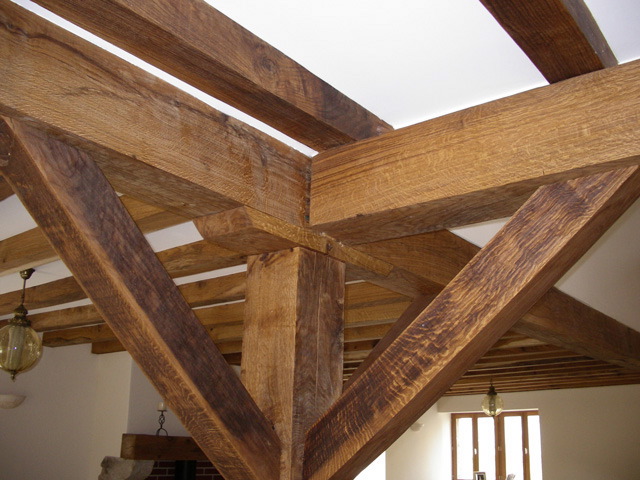
support beams
Each one doing its job as part of something solid and sturdy

Got a key set of notes back on the dramedy spec, so from this point forward, it’s all about working with those and making the appropriate fixes. (Fortunately, not as many as I expected, but still lots of tweaking in store.) A future post will cover the gist of the advice I was given.

Up until those notes came in, I’d been dividing my time developing the stories of the two new scripts. One of them was revamping an old story, whereas the other was entirely new, so it was really building from the ground up.

Quick sidenote – I hadn’t realized how long it had been since I’d plotted out a brand spankin’ new story. Quite a while. It felt thrilling and a bit intimidating to take it on, but both sensations were heartily welcomed.

While I knew what the main storyline was, the more I worked on filling in the blanks between plot points, the more it became obvious I’d need to start developing the subplots, especially the ones among the core group of characters.

This new story is unlike anything I’d written before, so as part of putting it together, I watched a couple of films of a very similar nature to get a better idea of how things could go. I soon had a stronger sense of what worked and what didn’t from an overall perspective, but also paid close attention to each character’s story – especially the main protagonist, how it connected to the supporting roles, and how all of them factored into the main storyline.

Doing this really helped in several ways:

-the films made it easier to see how each subplot was a part of the main story, as well as being its own separate (and unique) entity.

-each subplot provided lots of opportunities to show character growth and development, again contributing to the main story, as well as emphasizing the theme as it applied to each of the characters.

-because these stories are set in a specific kind of genre, there are certain elements that are more or less required (or “expected” might be a better term). As a result, the subplots provide an almost limitless number of chances to really let the imagination run wild and go for something totally unexpected, as it applies to those elements, but still have it fall within the realm of “this is the type of thing that would happen in this type of film.”

It’s a lot to take into account, but I suspect the more I plan things out, the easier it’ll be to arrange things so all the pieces fall into their proper places.

So for now it’s all about the dramedy, but I know that when I eventually return to working on these two stories (which I definitely will), I’ll have a stronger sense of not only what should happen for the main storyline, but also all the scenes, sequences, and developments of the subplots that go along with it.
Pushing my way forward (x2)

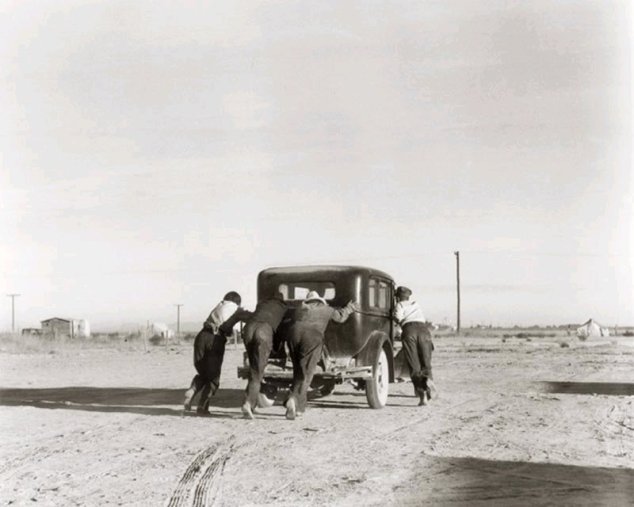
push
Really putting my back into this

This has been a most interesting week. Based on some quality notes, I wrapped up a polish of the dramedy spec (which is now in the process of getting notes). Feedback so far has been encouraging, which is nice.

So now the focus can shift back to developing the two new stories. With most of my recently-completed projects having been worked on for extended periods of time, it’s been a while since I was really starting out from the very beginning.

I’d totally forgotten how much I enjoyed the process of putting a story together. I know what the core concept for each one is, and now it’s all about finding the best and most entertaining way to tell them.

At times it feels like my mind is going in a thousand directions at once, so I’m constantly writing stuff down. A scene or sequence idea here, a line of dialogue there, plot twists, character development, turning the scene on its head; pretty much the whole kit and kaboodle.

Main storylines have been established, with the expected constant fine-tuning and adjusting, and as I work my way forward, the subplots are making themselves known.

Entirely new worlds (or maybe “settings” might be appropriate, since each story is on the smaller side) are being created, populated with unique and hopefully somewhat original characters.

While one of the stories is based on an old script, there’s a constant discarding of a lot of the original content and trying new approaches. Not necessarily “throw it all at the wall and see what sticks”, but kinda/sorta along those lines.

For the other, this is dipping my toes into a genre I enjoy, but wouldn’t call myself a major fan, so doing what I can to avoid tropes and cliches (of which there are apparently many). If that proves more challenging than anticipated, will do what I can to least go for the unexpected.

Added bonus – watching movies of that genre and style to get a better feel for both.

Sometimes I’ll read a writer’s account about what a chore it is for them to develop a story, or how much they loathe this part of the process. I don’t see it that way. Organizing the story and putting it all together is a key part of screenwriting. Too many times when reading a spec, you can tell when the writer didn’t put in the effort to get all the details of the story right before they started on pages.

I recently asked my online screenwriting newwork their thoughts on outlining versus a “seat of your pants” approach. The responses were overwhelmingly in favor of outlining. Granted, there are some writers who prefer the latter, but I’m not one of them. I’m a firm believer in having a rock-solid outline before starting to write the actual script.

But that’s what works for me. Others may feel differently regarding their own process. No matter how you achieve the end result, as long as you’re happy with it, then more power to you.

The whole creative process in developing a story is a beast unto itself, but I think all the long-term work I’ve done for other scripts is really paying off for these two. For now, it’s still a big and unwieldy mess, occasionally feeling very unorganized and all-over-the-place, but a little bit of work every day will gradually pay off. When all is said and done, I’ll have two new scripts.

Like I said – I’m enjoying it.

The gears, they’re a-turnin’ again

chaplin 2
Sometimes you have to really throw yourself into your work

During a break from working on the comedy spec rewrite, I was digging through some files on some of my other scripts and found a friend’s notes on the pulp sci-fi spec.

I hadn’t read them in months, and vaguely remembered there were some quality comments, so since this is one of the scripts I’m considering working on next, I gave them a quick skimming.

(This is also a good time to remind you that unless you honestly and truly feel that a script is finished, never throw away any of the documents associated with it. You’d be surprised how invaluable those can end up being.)

Yep, definitely some good stuff in here, along with some very valid points about the story and the characters. One of the comments that really struck home for me was that while they liked the story and the ideas behind it, a lot of it still felt too familiar. There were a few moments of uniqueness, but they wanted more. Something slightly different from what they’d read.

“Familiar, but different.” I’ve heard that before.

And it really got me thinking. Even more so this time around.

As it reads now, it’s a good, fun story, but I know it can be better. And different. All while still maintaining the qualities and elements you’d expect for this kind of story, which is what made the idea of developing it so appealing to me in the first place.

Working in my favor is that this was an early draft, so some significant changes were already inevitable, and I at least have a pretty solid foundation from which to start the rebuilding process.

Another bonus is that this is the kind of story where the more new and original ideas I can come up with will only help make the end result stand out that much more.

As I mentioned, this script is a potential “next up”, but not a priority. If an idea or concept for it suddenly pops up, I can easily open up the script’s notes file and jot it down. That way I’ll have it right there and ready to go when that rewrite gets underway.

But for now, back to the comedy.

-A few items for the bulletin board:

-Filmmaker friend of the blog Hudson Phillips is running a crowdfunding project for his post-apocalyptic tale of female empowerment This World Alone. As of this writing, they’re just over 2/3 of the way there, so donate if you can!

-If you’re a screenwriter looking for something a little different in terms of a writing retreat, take a gander at what the Aegean Film Lab has to offer: an international screenwriting workshop in July on the Greek island of Patmos. It’s part of the Aegean Film Festival and a partner of the Sundance Film Festival. I won’t be able to make it, but maybe you will.

A population of your creation

deadpool
Part of the appeal was how blatantly non-traditional the characters were

Totally unintentionally, I’ve watched a handful of independent films lately. It’s just the way my Netflix queue was set up.

Apart from each one being a solid example of good writing and demonstrating how to craft a small and contained story with a limited number of characters, they also had the distinction of featuring well-known and established actors in a wide variety of roles.

My first thought was “How did they end up in this?”, but as the film played out and the story progressed, it became pretty apparent that the actors were attracted to the characters and that they were actually part of the story.

Ranging from those in a handful of scenes to the protagonist, each one felt fleshed out and three-dimensional. They had depth. Nobody came across as if they had no business being there to begin with.

This was also apparent in the trailers that preceded the films; many, if not all, I’d never heard of or had a very, very limited release. There must have been something to that script or the roles that would attract actors of that caliber.

As a screenwriter, you want to make sure that not only are you presenting a solid and entertaining story, but it has to be populated with original and unique characters we’re interested in, who are also developed enough that we become invested in wanting to see what happens to them.

Not as easy as you think.

How often have you seen a film or read a script where a character is simply a tired cliché? Notice how fast you lose interest?

Now if that character were something totally different than what you expected, wouldn’t you be more likely to want to go along on their journey?

Just as an example, I read a script last year with a protagonist who was introduced as a “total slacker dude, mid 20s”.

Snore.

And if that wasn’t tropey enough, he was playing a video game in his cluttered studio apartment.

Double snore. Seen it countless times before.

I’d suggested to the writer they consider really changing things up with a totally different approach. Rather than a slacker, what if the protagonist was some kind of genius? Or had been successful, but now fallen on hard times? Something, anything to not go down Cliché Avenue.

See where I’m going with this?

You’re not only telling a story, you’re providing the raw, base material for an actor to work with. They like delving into new territory just as much a reader or audience. By taking a different approach and providing the foundational details, you can create a new and original take on old and f amiliar characters.

Like with the story overall, give us somebody we’re not expecting. The more unique and interesting they are, the more likely an actor will be interested in portraying them, just as much as we’ll be interested in wanting to see what happens to them.

Pause. Refresh.

vintage date
We’ll get back to working on the script as soon as we’re done. Promise.

After having taken a longer-than-expected break from working on the comedy spec, I’m back at it now.

There were the occasional glimpses and minor touch-ups here and there, but I’d estimate it’s been at least several weeks, if not a little more than a month since I was really able to fully focus on it.

During that time (while working on another script), I kept thinking “what if I can’t think of anything new for this?” I also made a point of not looking at the previous draft of the outline; I didn’t want to unintentionally influence the new one.

But the moment of truth had arrived. The other script was done, or at least as much as it was going to be for the time being, and there was no more delaying the inevitable. I had to confront this monster head-on.

Having avoided looking at the previous draft for a while, some of the details were still there, albeit a little fuzzy. Somehow this enabled me to not automatically revert to thinking they were my only option. Instead, I took those details with the thought of “this is what could happen, but what would be a new and really different way of doing it?”

Applying that thought process, along with not feeling tied down to what it was before has really allowed me to come up with some entirely new ideas and approaches, many of which I would have never even contemplated before. Like chunks of an iceberg, elements of the previous draft are breaking off and drifting away, never to be seen again.

The core concept of the story remains intact, but more and more of how that story takes place are experiencing major changes. As of this writing, it’s somewhere past the halfway mark. As is usually the case for me, some elements that still need work, but a new and pretty solid and foundation is being laid.

Would I have been able to come up with any of this if I had dove right back in after finishing the previous draft? Highly doubtful. The material was still fresh in my mind, so it would have been significantly less likely for me to be able to not automatically go to it.

Taking this break, along with focusing on another project, especially one entirely different in genre, provided me with the opportunity to jump back into this one with a strong sense of revived creativeness. Even though it was still a bit on the daunting side, I came into it with a “You got this” attitude.

It also helped that I wasn’t being so hard on myself for not having every line be pure gold the first time out. This is still a work in progress, so everything remains in an ongoing state of flux.

For now, it’s coming along nicely, and forward progress is holding steady. As much as I would love for that to continue all the way to the end, I’m also a realist, so enjoying every productive day as they come.

I’d always heard the recommendation that after you finish a script, you should put it away, or at least not look at it for at least two weeks. That’s not a bad start, but I’d say a month might be better. That way you can give yourself the choice of going back and looking at what you’ve already done (which can be quite eye-opening in both good and not-so-good ways), or starting anew.

Now that I’ve done both, I can honestly say that both have proven equally effective in their respective ways, and I strongly suspect I’ll continue to go back and forth for future drafts of this as well as future scripts.