A decent wifi connection will set you free

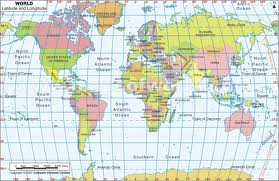
I'm in the mid-upper left. Where are you?

I had a great conversation with Richard Walter on yesterday’s edition of The Script Adventurer!.  He was his usual entertaining, anecdote-filled self. (Missed it? Never fear – it’ll play again Sunday at 7PM PST on radioslot.com)

There were two things in particular he talked about I thought were extremely important for any screenwriter to keep in mind.

When asked what was the most important thing any writer should know, his answer was Move The Story Forward.  If you have an interesting story that really flows and holds the reader’s attention, then your script is already that much more ahead of others.

Scene A should lead into Scene B, which leads to Scene C, and so on and so on. But if Scene R can fit between B and C, and not disrupt the flow, then it shouldn’t have been Scene R in the first place, or maybe R needs a serious rewrite.

The other thing was that unless you want to be part of series television, it’s not absolutely necessary to live in Los Angeles to be a screenwriter.  In fact, he added that it may even be an advantage:  you’re not constantly surrounded by people in the industry.  I cited Nick Schenk of Minneapolis, who wrote GRAN TORINO.

A big reason for this shift in thinking is the internet.  Query letters by email. Scripts attached as a pdf.  A ton of resources and groups available online.  I’ve connected with writers around the world via Twitter, which at times seems completely mind-blowing.  I could ask for feedback on a script and get responses from just about anywhere.

With a solid script and an internet connection, there’s no stopping you.

Always room for improvement

Some minor fixes can make all the difference

When it rains, there are more problems out on the roadways, resulting in more work for us already heavily-burdened traffic reporters. End result – I’ve worked a lot of hours this week, so not as much time to write as I’d hoped.  A couple of pages a day at best.  Positive spin – nearing the end of Act Two.

Even though I’m working off an outline, sometimes a new approach to a scene will pop in.  Will this work? Does it impact the scene better than the original? Is there conflict? Does it move the story forward?  If it involves the main character, is he the one driving the action? (important questions all).  If I can say ‘yes’ to these questions, then I give it a try.  Lately, it’s been working out.

Case in point: the current sequence.  The way I had it was good, but thought it could be better.  I wanted to expand on it a little.  Keep the tension going.  What would be the most effective way to accomplish this?  I came up with a few different scenarios, finally picking the one I thought worked best. The reshuffling of and minor rewriting of the involved scenes wasn’t as bad as I expected, and I liked the end result.

-My guest on The Script Adventurer! this coming Monday will be UCLA Screenwriting Dept Head Richard Walter.  If you have a question you’d like to ask him, email it to me and I’ll try to ask it during the show.

-Movie of the Moment – JOHN CARTER (2012). This was not the debacle I’d been led to believe; it was actually pretty good. Although I didn’t see the need for the 3-D.

For the most part, I liked it, but some of the story details were a little confusing.  I remember that from the book as well.  If I really like a movie I see in the theatre, I’d consider planning ahead to get it on DVD. I didn’t get that vibe, but I’m more likely to read the book again.

I was surprised Michael Chabon had a hand in the script. I can see that, especially after the great job he did on SPIDER-MAN 2.

Disney’s marketing department completely messed up.  You’d think they’d know better.  A sci-fi adventure story with romantic elements.  How can you not sell that?

I thought Taylor Kitsch did an okay job in the title role, but he looks too generic. A character like this needs more than just a pretty face and muscles.