There’s gold in them thar dumpster fires!

Saw a great quote the other day that was along the lines of “Being a writer is like having homework for the rest of your life.”

From a certain perspective, that definitely has a negative connotation. Emphasizing the ‘work’ part of the word indicates drudgery and toil. Like, strictly dullsville, man.

The obvious solution is to make it a positive experience.

I know. Easier said than done, but bear with me.

(Writing should never seem like work anyway, but that’s another post.)

To be a better screenwriter, you need to read scripts and watch movies. You can see how the pros did it and figure out how that could potentially influence your work.

While watching your favorites and the classics can definitely help, I also suggest watching really shitty movies as well.

Hard as this might be to accept, there’s something be gained from it.

What was it that made them bad?

The possibilities are numerous, but a good percentage of the time – it’s the script.

As a writer, you can use that to your advantage.

Painful an experience as it might be, watch that bad movie from a writer’s perspective. Is it the writing that sucks? The story? The characters (and not the actors)? Is there a coherent sense of structure? Is there any structure at all? Does the story flow naturally, or do things happen because it seems like the story needs them to?

Maybe it feels like the writer didn’t take any chances, or worse, went for the very easy and cliched (i.e. expected) solution. Does anything in your script feel that way? If so, think about what changes you could make that would produce the same results, but get you there in a totally different way.

It may be 90-110 minutes of your life you’ll never get back, but at the very least you’ll get a better idea of what NOT to do when it comes to developing your script.

And that is a worthwhile lesson for any screenwriter.

The possibility of successfully navigating an asteroid field is approximately 3,720 to 1

During a recent break from the writing, I saw a few posts on social media celebrating the 43rd(!) anniversary of the release of THE EMPIRE STRIKES BACK.

I was around for that. Proudly so.

I decided to give it another watch, mostly for nostalgia’s sake.

Even though I’ve seen it numerous times, this time felt a little different. I found myself watching it from a writer’s point of view.*

It made for a very different experience, involving continuously making mental notes and asking questions.

“How did this look on the page?”

“Wow, that dialogue gets right to the point without being on-the-nose”

“What an incredibly tight scene”

“Pay attention to how the characters are shown changing over the course of the story”

Just seeing how smooth the story flows, how tight the whole thing is, and how all the subplots are laid out really struck a chord for me.

THIS is how I want my scripts to come across.

I’ve already said that this current draft of my sci-fi adventure is all about getting pages written and holding off on editing/revising until it’s complete. That still applies.

But when I do get to that point, I’m already anticipating looking at each scene and trying to figure out what changes could be made to achieve that same level of tightness, structure, and efficiency.

And it’s just a coincidence about my script being a similar genre; this approach would help no matter what I was working on.

This is all just further proof that a writer’s education never truly stops, watching well-written films can benefit your own writing process, and that there’s always an opportunity to learn how to improve your writing.

*Full acknowledgment to credited writers Leigh Brackett, Lawrence Kasdan and George Lucas*

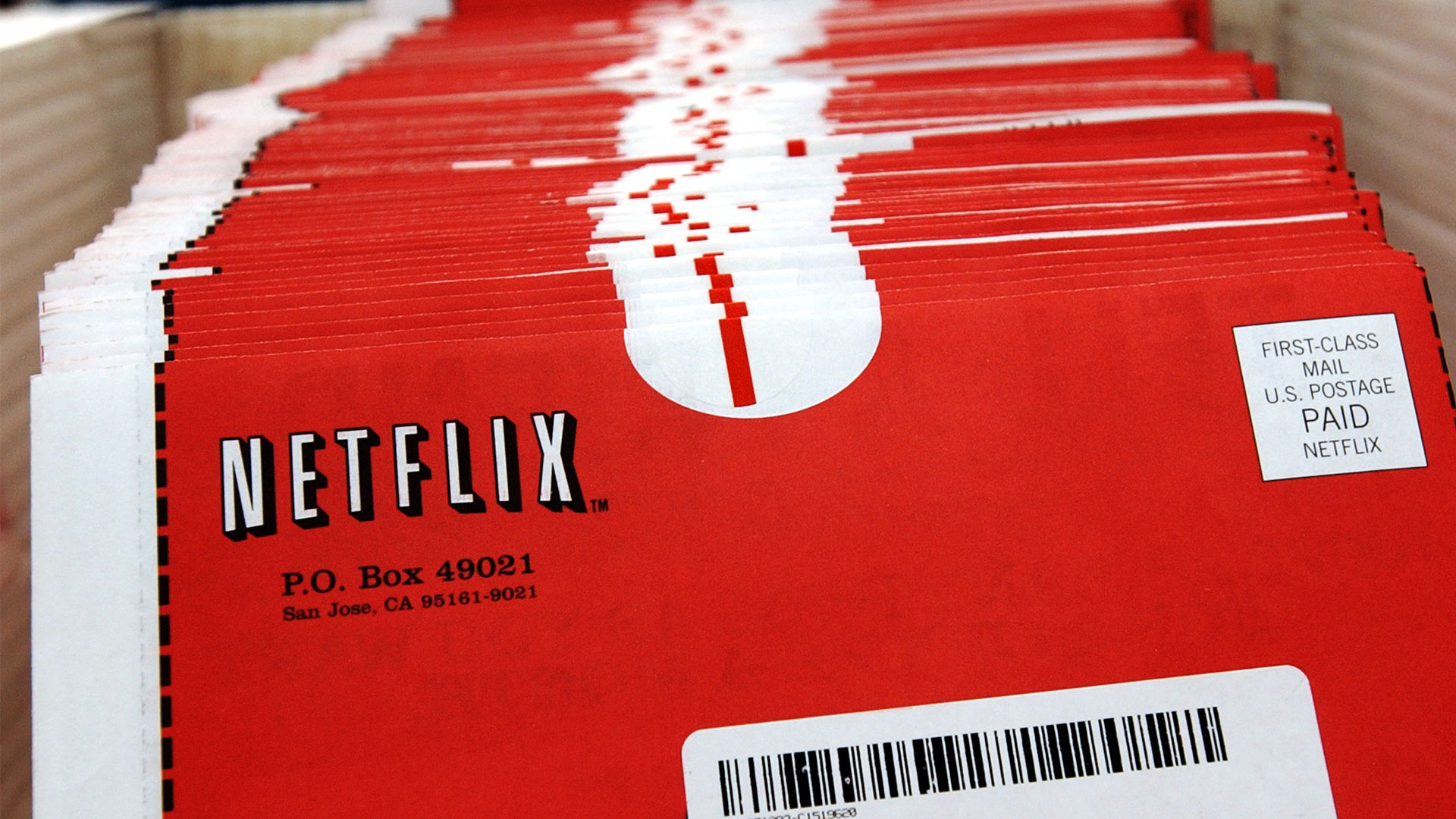
Bye-bye, red envelopes

A sad day for cinephiles is on the horizon, and will be here before we know it.

Netflix has announced they’re ending their DVD service as of the end of September. I still subscribe to it, and deeply regret that it will no longer be an option.

More than a few friends would be surprised about my still getting discs in the mail. “How come, especially when there’s so much stuff streaming?” they would ask.

Simple – there are so many titles on DVD that aren’t available anywhere on streaming.

It’s easy to catch the latest box office smash, but what if you want an obscure C-grade horror film from 1973, or the Oscar winner for Best Documentary from 2002 (Murder on a Sunday Morning), or something from early in the career of a legendary Japanese director?

Without access to an extensive library of DVDs, you’re pretty much out of luck.

As screenwriters, movies are just part of our genetic makeup. We live for them and love to watch them – as many and as often as possible. It’s a no-frills film school.

Those of us of a certain age remember the thrill of going to the local video store with its wide variety of selections across multiple genres. (Blockbuster doesn’t count.). First it was VHS tapes, then DVDs, but the concept remained the same.

And if you were lucky, it had staff members who actually knew something about the films and could make suggestions and recommendations.

Another soon-to-be-lamented loss was that a lot of the films I’d get through Netflix had trailers for other films I’d never heard of but piqued my interest enough to add it to the queue. The cycle of “watch, add to the queue, watch, add to the queue” seemed neverending.

Until now.

So as we enjoy these last few months of DVD options, attention shall be redirected to the streamers. There are options, although not as many choices. Some of the streamers are part of some major studios with vast and expansive libraries of material, but only make available a fraction of what they have.

(Lookin’ at you, HBO Max with access to Warner Brothers.)

I know money and licensing rights play a big factor in this, but the opportunity to just sit down and watch a film I’ve never seen before will soon become a lot less possible.

And that’s a real shame.

A little effort with big results

Who doesn’t like hearing that somebody liked something you wrote? Great feeling, isn’t it? You’ve put all that time and effort into it, and this is the response?

Now look at it from the other side – you read something and really liked it. Did you like it enough to let the writer know?

Go ahead and do that. It doesn’t even have to be somebody you know, or who asked you for a read.

It could be somebody with a script you read after hearing good things about it, or who wrote a book or a movie you really enjoyed.

Since so many creative types have an online presence, it’s becoming easier and easier to drop them a line and tell them what a great job they did.

I’ve done this a few times over the past few weeks. One was a veteran comic book writer, one was the creative team behind a show on Netflix, and another was the writer of a great low-budget horror-comedy. The latter two let me know how much they really appreciated it, while the former never responded, which is also a possibility. I just file it under “one of those things” and move on.

This isn’t saying you need to send a gushing lovefest of an email or tweet; just a few lines telling them you liked it. Probably take you all of a minute or two.

It can’t be stressed enough how much of a positive impact this sort of thing can have on a creator. Maybe they were having a rough day, and then your email or tweet pops up. Mood lifted.

It’s tough enough to succeed as a writer, so getting this little bit of encouragement out of the blue could go a long way in feeling like all the work you put in was worth it.

Even better – being the one who sent it.

Q & A with Christopher Lockhart of WME

_MG_0219

Christopher Lockhart is the Story Editor at WME, the world’s largest talent agency. He has produced several feature films and is an adjunct professor in screenwriting. He earned his MFA from NYU’s Tisch School of the Arts. He is a member of the WGA, PGA, and the Television Academy. He moderates a screenwriting group on Facebook called “The Inside Pitch.”

What’s the last thing you read/watched you considered to be exceptionally well-written?

Because I deal with writers and filmmakers, I tend not to answer these kinds of questions. I’d never want anyone to think I have favorites. I’ll say that I’m lucky because I get to read the very best screenplays circulating town. In my personal life, I tend not to share my opinions on these kinds of things. For instance, I rarely recommend a movie to anyone – even if I loved it. I guess because my work day involves having to share my opinion with others (or force it upon them), I’d prefer to keep my opinion to myself when I’m off the clock.

How’d you get your start?

I wrote and taught for a decade until an opportunity arose to interview at talent agency ICM as the story consultant to Ed Limato, one of the industry’s most powerful agents. He ran his own fiefdom within the agency and needed someone to comb through the vast amount of material for his client list, which, at that time, included the likes of Mel Gibson, Richard Gere, Steve Martin, Michelle Pfeiffer, and Denzel Washington. It wasn’t something I wanted to do, but met with him for the hell of it. It was a short interview and afterward I found myself being escorted into a tiny office piled high with screenplays to read. I was hired on the spot and didn’t seem to have any say in whether or not I wanted the job. I had no interest in the agency business but figured I’d give it a chance until the end of the week, and if I hated it, I’d quit. I was asked to read a particular script for Mel Gibson, who was one of the biggest movie stars in the world. On my second day, I was called into the boss’s office to discuss my thoughts. And Mel Gibson was there. We spoke about the script, and it was exhilarating. This is a business where there’s lots of talk and wheelspinning, but these people weren’t talkers, they really made movies, and I could have a small voice in that process. It was pretty cool. There’s been all sorts of ups, downs, and changes since then, but I’m now in my 21st year in the agency business.

Your official title is Story Editor. What does that job entail and what are your responsibilities?

In some ways, I do what a dramaturg in a theater does.  I’m sort of a matchmaker – looking to match projects with a handful of A-list actors. I read a lot, do research, share my opinion and recommendations, give story notes. I work with writers and directors to develop and focus their material. I work in post with filmmakers (like in the editing room) to help them crystalize their story. My whole world is story, and I do anything and everything I can to serve writers, actors, and filmmakers in reaching their creative story goals.

Follow-up – what does the Story Department at an agency handle?

A Story Department is the screenplay hub in an agency, studio, production company.  Generally, it oversees the “coverage” of material (judging the creative value of the work) through a cadre of story analysts. It also looks to bring material into the company.

When you’re reading a script, what about it indicates to you “this writer really gets it”?

The way conflict is utilized. The way it’s used in the concept, the characters, the plotting. For example, in screenplays creating complex characters doesn’t mean layers of backstory and psychology. It means how conflict is used to create the complexities. When a writer is adept at using conflict, I know she gets it.

Is recognizing good writing something you believe can be taught or learned?

I don’t look for good writing. I look for good movies. And there’s a difference. I read lots of scripts that are well written but will never be movies (for a variety of reasons), and they serve no purpose for me. Good writing can win you attention, get you representation, lead to writing assignments, and so on. But that’s not the business I’m in. I’m looking for movies for movie stars. In Hollywood, good writing is subjective, of course, so each person defines it in whatever way suits her needs. While there’s some subjectivity in what I do, I’m also dealing in facts. For example, maybe an actor doesn’t want to play a particular kind of role. That eliminates certain scripts, regardless of their quality. I think the recognition skills you ask about are both taught and learned. When I started reading scripts I was armed with what I was taught in film school. But in the 30 years since, I’ve read over 60,000 screenplays, and I’ve absorbed a lot of knowledge about what works, what doesn’t work, and – most importantly – why. My head is a filing cabinet of stories and story elements, which gives me a large dramaturgical perspective. That stuff I learned.

What do you consider the components of a good solid script?

I take a holistic approach to judging material.  I have to read and swallow the whole script. Scripts can often work in spite of themselves.  The one component I see missing from most scripts – especially scripts from new writers – is the story purpose. This is that singular goal your hero pursues through the story. More often than not, there is no goal. If there is a goal, it’s vague or not substantial enough to sustain 120 pages (or our interest). Another component is conflict (drama). A strong story purpose should create strong conflict. Many stories do not seem to be conceived in conflict. They’re born from themes, ideas, ideals that lack conflict; they  are not dramatized.

What are some very important rules every writer should know?

I guess my previous answer covers this question. I don’t believe in rules, per se. Rules only apply to bad writing. If you’ve written a great script, no one will quote you the rules.

Are there any trends, themes, or story ideas you feel are overused? “Not this again.”

Because I’ve read so much, nothing is new to me. I have seen it all. Georges Polti gave us The 36 Dramatic Situations, which he claimed covered all possible stories. Others theorists have reduced them to 12 or even 3. In theory, everything has been used and will be used again. Ideas are only overused in the hands of inexperienced writers. Great writers with unique voices will take the old and dress it up in a new, refreshing way.

Follow-up – are they are any cliches or tropes you’re just tired of seeing?

I try not to judge those kinds of things until I see how they’re utilized.

Readers of this blog are more than familiar with my love/appreciation of pie. What’s your favorite kind?

I’m not much of a pie eater.  I only ever ate apple pie – baked by my great-grandmother. When I moved to Los Angeles, she would write me once a month and enclose a five-dollar bill to buy a frozen apple pie to remember her. I was low on funds in those days, and that money would often find its way to buy other things like a few gallons of gas. She’s been gone 25 years, but on the rare occasions I eat apple pie, I remember her.


apple pie