Start with similar, venture into different

path
With one you can play it safe, while the other offers up more of a challenge

In the handful of times I’ve helped out as co-writer or script polisher on somebody else’s project, there have been variations on the following conversation:

ME: And then THIS happens!

THEM: Oh, we can’t do that. ACTUAL MOVIE did the same thing.

ME: Not exactly. ACTUAL MOVIE did THIS, and what I’m suggesting is maybe at the very foundation the same concept, but if we did it THIS WAY so THIS HAPPENS, it would be entirely different.

THEM: But won’t people think we’re just ripping off ACTUAL MOVIE?

ME: First of all, ACTUAL MOVIE has been out for a while, and you’re at least a year away from having this thing done, so I highly doubt the first thing anyone’s going to think is we’re ripping off ACTUAL MOVIE. Second, this is exactly why I think THIS is how it should happen. True, both use the basic concept, but we’re putting our own spin on it so it doesn’t resemble ACTUAL MOVIE at all. They’re similar, if you could even call it that, but still different.

THEM: (thinks it over). Well, okay. We’ll give it a try.

And…scene.

I’ve read about this in articles and seen it firsthand while reading scripts, both times usually associated with newer writers. Somebody really likes how something happens in a film or a script, so then they go and have the EXACT SAME THING happen in theirs. I get that you liked that original, but why, oh why would you want to use it practically verbatim in yours?

Doing the screenwriting equivalent of a “copy, cut, and paste” will do you no good because it’ll be painfully obvious that’s what you did. You’re trying to tell an original story, and THIS is what you do?

If anything, people will definitely think you ripped off that original thing and berate you for your total lack of originality. Was that your goal? Probably not.

Time to get analytical. What was it about that particular something that really got to you? Why do you feel the need to have the same thing happen in your script? That’s the angle from which to approach it.

But this is also where the challenge begins. Once you identify that core detail, it’s up to you, the writer, to figure out a new way to use it in such a way that not only does it serve the purpose you need, but also pays homage to what inspired it in the first place.

You know where things are going, or at least where you want them to go, but now you need to tweak how they get there. Work those muscles of creativeness! Try something new! Don’t hesitate to jump off the beaten path into new territory! If anything, you might come up with an entirely new idea that accomplishes exactly what you needed, but just a totally different way.

Sure, there’s a very slight chance it could potentially remind somebody of ACTUAL MOVIE, but they’ll definitely remember that it came from yours.

Required: a second pair of eyes

reader
It’s “should’ve”, not “should of”, and I don’t think I’ve ever seen a participle that dangled this much

I’ve been doing a lot of script notes the past few weeks, and most of them haven’t been early drafts. These are long-in-development projects, and I can really see how the writers have poured heart, soul, blood, sweat and tears into their efforts.

These scripts shows tremendous skill applied to the usual fronts – story, characters, plot development, etc.

But there are two categories that sometimes get overlooked:

Spelling and punctuation.

And yes, each does count.

I’m quite a stickler for both, and have had more than a few writers thank me for pointing out such items as a missing comma, or how a character has nothing to “lose”, not “loose”.

I would imagine that after having read through your own script countless times, reading fatigue can set in, and you might overlook things you might ordinarily not. It happens.

The solution: get yourself a solid proofreader. Preferably someone who knows scripts. You’d think that would be a given, but there are some writers out there who don’t take that path. Do so at your own risk.

I recently read a draft that was riddled with misspelled words and poorly-written sentences. When I pointed this out to the writer, they were surprised because they’d used a proofreader who was a writer, but not a screenwriter. I believe that to be the wrong approach on several levels. (And the fact that the spelling and punctuation were still bad after their proofing makes me seriously question their qualifications to begin with.)

After you’ve read a lot of scripts and written more than a few of your own, you develop an eye for it. But your own skills can only take you so far, hence the potential need for a proofreader.

Some might claim “My writing’s fine. I don’t need a proofreader!” I’m not saying everybody does, but what’s the harm? I read scripts from writers of very high quality, but they’re still human and sometimes they make mistakes too.

Wouldn’t you feel better about your script if somebody whose skills you trusted took a look at it? It’s very possible they might spot something you missed.

“But where/how do I find such a generous person willing to give up their precious time in order to help me out?” Once again, let’s refer to that all-powerful word: networking.

There’s absolutely nothing wrong with paying for a proofreading service. Some people swear by it. But you also can’t go wrong in asking someone within your circle of trusted colleagues; preferably someone who knows what they’re talking about.

So whenever you think your script is ready, put together a list of writers of skill within your own personal network. Five is a good number. Politely ask each one if, time permitting, they’d be willing to take a look at your script. And definitely make sure to offer to return the favor. If they say yes, great. If they turn you down, thank them, say “maybe next time” and seek out another name.

While all the elements of storytelling play a vital role in writing a script, never underestimate the importance of making sure a word is spelled correctly or a sentence is properly written. Because people will notice when they aren’t.

Edits, inspiration, and the rinse cycle

housewife
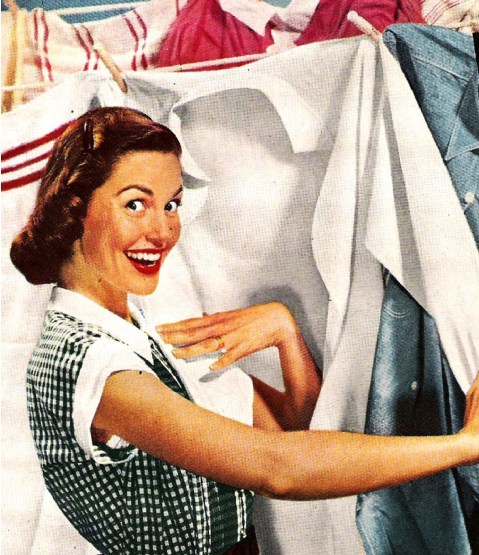
Gosh, what a day! My whites are sparkling AND I have a stronger sense of my protagonist’s internal goal!

I’ve mentioned before about my tendency to overwrite, which usually applies to both outline and actual pages. This time around with the pulpy adventure spec is no exception. There’s simply too much going on, so before the amount of material got too overwhelming, some significant editing was needed.

I don’t know how or why I do this, but sometimes there’ll be a scene or sequence that’s more or less a repeat of what’s already happened. Such was the case here. In the overall context of the story, the second one was more important, so thus began the great removal of the first one, along with reinforcing the connection between what came before it and the second one. It actually wasn’t too bad. It tightened up the story much more than anticipated and, in my opinion, kept that energetic momentum going.

My slightly unusual work schedule allows me to dedicate most of the early afternoon to writing, which is occasionally interspersed with some household chores. For this particular instance, it was laundry.

In some ways, I’ve been quite content with my progress, but there was something still nagging at me about it. Things felt…incomplete.

I was somewhere in the middle of that day’s writing session when the washing machine let me know the latest load was finished. While my body went through the motions of hanging stuff on the drying racks, my mind was barreling along a continuous stream of thought.

“What if THIS HAPPENED? Or THIS? Maybe I’m looking at this from the wrong angle. A lot of this has been about the protagonist. What about the antagonist? I don’t want them to come across as a mustache-twirling cartoon villain. Their goal seems too vague. Hey, I wrote a post about that. This is their plan, but why are they doing this? How about THIS? Hey, that’s not bad. Let’s take it one step further and make it THIS. Ooh! This would tie in perfectly to the rest of the story! Hmm. Would this make them see themselves as the hero? Whoa. It sure does. Hokey smokes, I think I’m onto something. I better write this down!”

And I did. It was like the satisfaction you’d get after finding the long-lost last piece of a jigsaw puzzle and snapping it into place. The more I thought about this, the more excited I got about implementing it. In fact, the editing/rewriting is already underway.

I cannot begin to explain what a surge of writing adrenaline (if there is such a thing) this created. There’s a line of dialogue in my western that even to this day still gives me chills. This new idea – same thing.

While all of this will no doubt push back the projected end date for having a completed first draft, this new development is totally worth it.

This is just another example of how inspiration really can strike when you least expect it. Embrace it when it does.

And if you’ve been sitting at your computer, frustrated that the words won’t come, maybe stepping away and doing something completely mundane might provide the solution you seek.

Plus, you’ll get the laundry out of the way, which is always good.

Why, and why now?

studying
A pair of questions to study thoroughly

An associate of mine is in the early stages of developing a low-budget film. Call it pre-pre-pre-production. The script is part of that (as in “about to be written”), and I was asked to take a look at the outline and offer up my two cents on it.

It wasn’t bad. The structure was a little wobbly, but not too far gone, and a few other minor issues, but overall, I’d call it a fairly solid attempt.

I totally got what kind of story they’re trying to tell, but reading this outline definitely raised some important questions.

Two, to be specific.

First: why is this happening?

I don’t mean this is in a negative way, like “why are you even bothering?” Quite the opposite.

More of a “does what happens in this scene adequately follow what’s come before it, and does it do an equally good job leading into what comes next?” sort of thing.

As it reads now, it felt more like a lot was happening because the story required it to, rather than letting it all unfold smoothly and organically. There wasn’t enough setting things up in order to pay them off later. Almost like each scene is saying “This MUST happen HERE, logic be damned!”

A should lead to B, which leads to C, and so on, but then you also find out that not only did A lead to B, but it also resulted in H.

Second: why is this happening now?

This applies more to the primary storyline. Things are taking place, but I never really got a sense of how or why it all started. A lot happens after whatever event triggered it all, but there’s no indication of exactly what that trigger was. When I asked the writer about it, even they admitted they didn’t know and were having trouble trying to come up with something.

A writer needs to know every part of their story; what things were like before it started, how it started, what happens, and how it ends. Sometimes you can even throw in what happens next. No matter what approach you take, all of these elements play a key role in the telling of that story. If one of those elements isn’t there, it just gums up the whole works and you’re left with an incomplete story.

The writer was very appreciative of my comments and was looking forward to finishing the latest draft in order to provide answers to the questions I’d raised. It’s probably safe to say we’re both quite interested to see how it all turns out (although I suspect I come in a close second).


Doesn’t get any cheaper than this

cashier
Our helpful staff is ready to assist you!

As my network of fellow screenwriters has expanded over the past few years, I’ve become more active with exchanging script notes with some of them. It’s a pretty even split between me approaching them first, and vice versa.

From my perspective, the whole thing has been quite helpful and I think my scripts are definitely better for it. And as far as I know, none of the other writers have any complaints about my notes. If they do, they’re not saying anything.

It’s gotten to the point where every once in a while, an email will pop up from one of these folks asking if I could look over their latest draft and offer up my two cents. I’m fairly certain I’ve never said no.

Full confession: it usually takes me a little longer than I expect to get it done, but I do make a point of getting it done. I try to extend the same courtesy to them that they would to me.

I bring all of this up because I had a great catching-up coffee chat with a writer yesterday; somebody I haven’t seen since last summer. We shared what’s been going on with our respective projects, and I mentioned finishing/sending off some notes.

“Do you charge for that?” they asked.

No. It’s just an exchange, and I like helping out when I can.

“That’s really generous of you to give up your time like that. Have you thought of charging for notes?”

Of course, but I don’t consider myself qualified to. If I was a working writer and had a couple of produced features under my belt? Maybe.

I’ve always found the bios of professional consultants and readers to be pleasantly diverse and equally fascinating. Almost all of them have spent time working in the industry, many having read or given coverage on thousands of scripts.

Me? I can’t make the same claims. I’ve read a lot of scripts, but nowhere near those numbers, and a large percentage of my time has been (and continues to be) focused on honing my writing skills.

They have a fairly solid grasp of what works and what doesn’t, and provide much more insightful comments than I believe I could.

All things being equal, I’d say my analytical skills have definitely improved over time. I don’t know what kind of pro reader/consultant I’d be, but for the time being, I’ll stick to the friendly no-cost, between-writers exchange.

As mentioned earlier, I like helping when I can, and will continue to appreciate any opportunity to read an associate’s script in order to give them notes that will in theory help them make it better.

*personal note – this is my 800th post. Thanks for being part of the journey, and hope you’ve enjoyed it. I certainly have.