Does it have to be a light bulb?

The title of this post is the punchline to the classic joke “How many studio execs does it take to change a lightbulb?”

In other words, “How about this other option (that probably has nothing to do with the original concept)?”

I bring this up because the struggle with developing the action-comedy spec continues, now with the added concern that too many aspects of the story are too similar to other more well-known films. That is something I’m definitely trying to avoid, hence the struggle.

It goes without saying that the last thing I want is for somebody to read this and think “This is just a ripoff of _____”, so recent brainstorming sessions have all been about coming up with alternatives that still work within the concept of the story but are also unique enough so as to feel like a fresh take.

Another key part is that the details that need this attention are a key part of the story, so if they don’t work, the rest of it more or less falls apart – which is also something I’m hoping to avoid.

I’m not crazy about how challenging this one is or how long it’s taking to develop, but I’d much rather take the time to really fine-tune things and make sure everything works on all the appropriate levels than crank something out and not be happy with it.

I also wholeheartedly accept that no matter what the final choice is, it’ll involve a lot of rewriting to accommodate it. Then again, the overall story is still a work in progress, so either way there’s a lot of writing in my future.

Despite all of this, I’m still psyched about the story and really am having fun with putting it together. It’ll be quite interesting to see what the end result is.

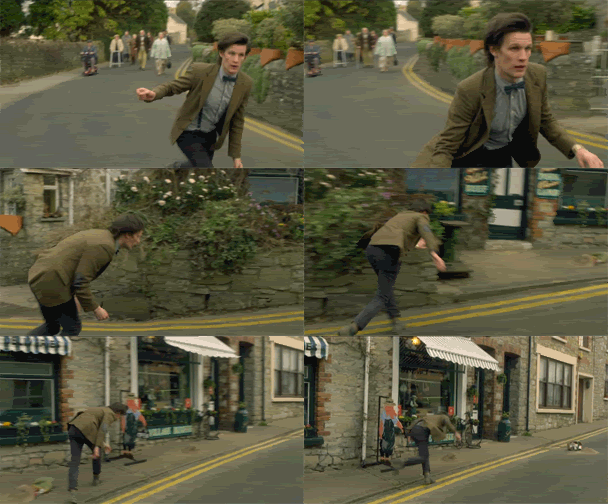
No rush -OR- Pumpin’ the brakes!

Between my attempts at brainstorming ideas for this new spec, I’ve been getting a real kick out of reading scripts from other writers. After completing one from a longtime associate, I asked about what inspired them to write it.

Paraphrasing their response to “This was something I’ve always to try. This is the script I mentioned a year or two ago, but took my time with the notes. Once I decided to write it, I had it written out in about two weeks.”

That may be part of my problem with mine. I’m too focused on trying to get it done that I’m ignoring the part about taking the time to make it right first.

It feels like it’s getting there, but also like a few important pieces are still missing. Once I can figure those out, I’m fairly certain more details will fall into place.

I’ve discussed this story with a few other writers, many of whom are familiar with my work. The responses have been more or less “You’ll figure it out. Just give yourself the time to do it.”

That’s the plan. Sometimes the best ideas come when I’m not thinking about them.

My self-imposed deadline of having a semi-respectable outline by the end of the month is still possible, but I’m not going to obsess about it. A majority of the story is in place; it’s the rest of it that needs figuring out. If it takes a little longer, that’s cool too.

A few filmmaker friends have launched crowdfunding campaigns for their respective projects:

Alicia McClendon’s THE WOMAN WHO KNOWS

Kaia Alexander’s BLEED

Check ’em both out and donate if you can!

Just stumbling my way through

T-minus one week to shooting my short film SHECKY, which means constant checking and re-checking of the seemingly infinite list of “stuff that needs to get done”.

And just about every item on there involves me asking a ton of questions to those with much more experience and doing my best to not feel foolish while doing so.

Fortunately, everybody has been extremely understanding and patient while explaining, coupled with “You’re actually doing a really good job.”

Certainly doesn’t feel that way.

One of the things I severely dislike is not knowing how to do something I’ve set out to do. It’s very frustrating and can easily throw you off-kilter. But nobody’s good at something they’ve never tried before. (Hello, screenwriting!) Mistakes will be – and have been – made, and the best thing to do is learn from them.

Which is what I’m trying to do with this.

I’ve also been told on multiple occasions of how excited everybody is about the project and being part of it, and how great it’ll feel during the shoot and once it’s all over.

That’s what I’m hoping (post-production notwithstanding). In the meantime, back to the list.

A lot of moving parts

Progress on the new spec has been slow but steady-ish.

Biggest development was finally figuring out the reason why my antagonist is doing what they’re doing, and that in turn will have an impact on the rest of the story. Still working out some of the details about the subplots connected to that; some directly and some not so much.

As I work my way through all of it, more subplots for the overall story are popping up. It’s gotten to the point that I’ve put together a pair of lists – one for the protagonist and one for the antagonist, each listing their respective subplots (along with some important details about their storylines).

Both have grown exponentially, and I have to be careful not to overdo it. I don’t want things to get too confusing. The last thing I want is a reader to stop and ask questions, or have something left unexplained. Things need to be easy enough to understand, but not too simple. I try to make sure everything plays a part.

Honestly, this is one of those parts of the process I enjoy – just figuring stuff out. It’s a challenge, to say the least, but it’s oh so worth it to take the time to make sure all the pieces fit together the way they should. This probably explains why the development and outlining take me so long – trying to get everything organized and set up in the right places.

As I work my way through all of these potential ideas, there’s a good chance a lot of them will be dropped – wouldn’t be the first time – but it’s easier to cut and revise than to try and jam something in that feels forced. Sometimes I get lucky and discover a viable connection set up earlier in the story, which is more likely serendipity than me being exceptionally cunning.

A reader on my fantasy-comedy had commented there was a lot going on over the course of the story and they were wondering if I’d be able to pull off keeping things organized. But when they were done, they admitted to being impressed with how all the subplots played out both individually and how they all came together in Act Three. They could tell I’d put in a lot of effort to ensure that happened.

That’s what I’m going for with this one. There really is a lot going on for this story, which is why I’m really taking my time to figure everything out so it all works the way it’s supposed to.

Muscle memory kicking in

It’s been a while since I’ve worked on a new project, so there was the initial sensation of feeling overwhelmed and constant thoughts of “Is this going to work?”

I’d spent so much time rewriting and revising the previous script, so sitting down and having that blank page staring back brought back that all-too-familiar sensation. You know the one – you’re so used to working on a script that’s around 97 or 98 percent complete, and now you’re back to one that’s in single number territory, or at least low double digits.

Fortunately, I’ve been down this road before, and like with writing at any point in the process, the only way to get it done and move things forward is to put that ass in the chair and get to it.

Which is what I’ve been doing.

Plot points are in place – some a bit on the vague side or primarily functioning as a placeholder (“____ defeats _____”), so now it’s about filling in all those blanks that connect them.

Some have been created easily, others took multiple attempts, and some are still very vague. Notebook pages are filling up as I write down everything and anything that comes to mind, no matter how crazy or wild it might seem. Ideas and inspiration can come from anywhere, so why not hang on to all of it?

They don’t call it a work in progress for nothin’.

Very important – the first draft is going to be a big flaming mess, so don’t stress about it. Just get the damned thing written.

This has been the experience with previous scripts, so there’s no reason to have it happen again. It’s all about taking the time to figure things out. Also like usual, there’ll be a lot of stuff that will most likely end up not being used, but that’s how it goes.

It’s been a while since I last went through this part of the process. I’ve missed it, and am just as eager this time around to take it on.