From the archives: One happy fanboy

We’re preparing to take Ms V back for her final final year of school. Felt like the appropriate time to re-post this post from way, way back in May 2011 – when she was 8. This was a truly memorable experience, and I still have the shirt.

Enjoy.

There was no work done on the rewrite at all yesterday because I got to do something I honestly never I thought I’d get to: visit Skywalker Ranch.

If the name sounds unfamiliar, it’s the compound in Marin County (the one north of San Francisco) where George Lucas had set up Industrial Light & Magic after the success of STAR WARS.  ILM has since moved to the Presidio in SF, but Skywalker Sound and a lot of the administrative offices are still there.

A mom of another student at V’s school works at Skywalker Sound.  In fact, she won an Oscar earlier this year for Best Sound Editing for INCEPTION (her and two other guys).  One of the silent auction prizes at our school’s spring fundraiser was a private tour of the grounds.  Since there was no way we could afford that (I think it went for something like $275), I ran into her about six weeks ago at a school function.  I casually mentioned missing out on the opportunity to take part in the tour, to which she said she’d see if she could arrange something.

A few weeks later, I got an email saying that if we could be there during her lunch hour, she’d be happy to show us around.  Deal.

Our dilemma now was whether or not to bring V, because that would mean taking her out of school early.  My first reaction was it would be worth it, but the more we discussed it, we decided that this wasn’t an amusement park-type environment, but more an actual production facility, which your typical 8-year-old would probably find boring.

But I had heard they had a gift shop, so we’d get her something.

The Ranch is way out there on Lucas Valley Road, and it’s quite easy to drive right past it if you’re not looking for it. No signage; no big-ass Star Wars logo anywhere.  Just a nondescript driveway off a quiet country road.

You get through the gate and up to the security guard booth.  While the guard was contacting our friend, I couldn’t help but notice the EMT-type patch at the top of her sleeve.  Like a fire department logo, except with an X-Wing Fighter in the middle.  Cool.

We got our map and directions where to go, then drove ahead.

My first reaction was “It’s a lot smaller than I expected.”  And it is.  It’s not the sprawling estate I thought it would be.  Everything was a lot closer than the map indicated.

We passed the ball field, then the horse corral, the organic garden on the other side of the road, and then pulled into the Tech Building parking lot.  Our friend was waiting for us and took us inside.  The first thing you’ll notice is the abundance of movie posters for US films but in foreign languages.  They’re all over the place.

If you’re into sound or audio production, you’d feel as if you’d died and gone to heaven.  There are studios of varying size throughout the whole building, each equipped with sound boards that would seem more appropriate for the Starship Enterprise.  What was also cool was that the larger ones had a theatre-like design, so each room got the maximum results for what was being worked on.  We also got to see one of the humongous rooms that they would record orchestras in, complete with adjustable walls so you can actually tune the sound of the room.

Our friend is currently working on the sound for COWBOYS & ALIENS, but she didn’t show us any footage.  The movie comes out in July, and all of the post-production will be done up until just a few weeks before the release.  We found that very strange, expecting there to be more lead time between wrapping it up and the release, but apparently that’s become common practice for most studio films these days.

Although we were only in it for a few minutes, the screening room was simply incredible. About 300 or so seats with a nice big screen.  Apparently they were setting up for some kind of demonstration later in the day, but we got to see a short snippet of a scene from RAIDERS OF THE LOST ARK in black and white, but with only the dialogue sound.  No music, no effects; just “throw me the idol, I throw you the whip.”  It sounded strange to hear it like we were on the set.

Then we stopped in the Foley Room, where traditional sound effects can be created. Walking on certain types of surfaces, dropping, smashing or manipulating something to get a particular sound.  Very similar to how they did sound effects for old-time radio.

We were then asked if we wanted to see the main building, which is the one in the photo above. Very Victorian-era architecture, reminiscent of a New England beach house. In some of the cabinets just off the main door are the only proof that George Lucas is connected.  On display are some lightsaber handles (I’m fairly certain they’re the originals), the fertility idol from the opening sequence in RAIDERS, the Crystal Skull, an AT-AT model from EMPIRE, Indy’s hat and whip (also originals, I assume) and what I thought was incredibly cool – Charlie Chaplin’s cane and derby.  I’m pretty sure Lucas could afford to buy them.

Our first stop was the library, which is two floors, with a wooden spiral staircase and a gigantic stained glass window in the middle of the ceiling.  No matter what department you work in, you can come here and do research on whatever you’re working on to get the utmost in accuracy.  I asked if George’s office was in the building.  It is, but I thought it would have been presumptuous to ask if we could see if he was there.

I asked if the gift shop was here, but it was in another building.  We zipped over to another building.  The gift shop is a whole lot smaller than I expected.  We got a t-shirt for V, one of those EMT-style shirts for me (Millenium Falcon in the logo – nice!) and a pair of lightsaber chopsticks (Luke green and Darth Maul red, which also have magnets in the bottom for the complete double-bladed effect).

Our friend had to get back to work, so we thanked her and headed home.  On the drive back, K asked what I thought about what we had just done.  I said I was really glad we did it.  I also confessed that I couldn’t help but think I’d love to go back someday when they’re working on a film that I wrote.

That would be quite awesome.
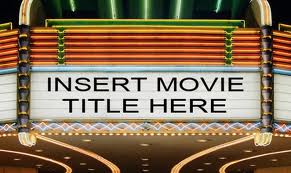
From the archives: Because ‘Journal of the Whills’ just doesn’t cut it*

How DOES it look on a marquee?

As part of the ongoing rewrite of the animated fantasy-comedy, there have been more than a few suggestions to come up with a title of stronger significance and impact. While I struggle with that latest wrinkle, here’s a post from waaaay back in February of 2013 about the same situation with an earlier script. I eventually did come up with one, and am confident I can do the same this time around.

In the meantime, enjoy this blast from the past.

*the original title George Lucas had for STAR WARS. Not as good, right?

After reading countless spec titles in places such as The Black List and Done Deal Pro, I’ve come to the conclusion that my script really needs to undergo a name change.

DREAMSHIP

It sort of just…sits there, when instead it should be grabbing your attention and making you think, “Cool! I’ve gotta see this!”

Examples: BACK TO THE FUTURE. CHINATOWN. DIE HARD. See what I mean? Solid. Succinct. To the point.

I may go back to the original title – THE AMAZING DREAMSHIP ADVENTURE. It feels like it does a better job of conveying what the story’s about and what kind of ride you’re in for, but I wouldn’t put it past me to try and tweak it a little more.

It was also suggested that since this is more of a family-oriented kind of story, I should go the HARRY POTTER route and include the main character’s name. I’m not sure how I feel about that.

Having a good, strong title is key because it and the logline create the first impression. Do an effective job with that and you’ve got their attention. Just make sure the script/story can hold onto it.

The possibility of successfully navigating an asteroid field is approximately 3,720 to 1

During a recent break from the writing, I saw a few posts on social media celebrating the 43rd(!) anniversary of the release of THE EMPIRE STRIKES BACK.

I was around for that. Proudly so.

I decided to give it another watch, mostly for nostalgia’s sake.

Even though I’ve seen it numerous times, this time felt a little different. I found myself watching it from a writer’s point of view.*

It made for a very different experience, involving continuously making mental notes and asking questions.

“How did this look on the page?”

“Wow, that dialogue gets right to the point without being on-the-nose”

“What an incredibly tight scene”

“Pay attention to how the characters are shown changing over the course of the story”

Just seeing how smooth the story flows, how tight the whole thing is, and how all the subplots are laid out really struck a chord for me.

THIS is how I want my scripts to come across.

I’ve already said that this current draft of my sci-fi adventure is all about getting pages written and holding off on editing/revising until it’s complete. That still applies.

But when I do get to that point, I’m already anticipating looking at each scene and trying to figure out what changes could be made to achieve that same level of tightness, structure, and efficiency.

And it’s just a coincidence about my script being a similar genre; this approach would help no matter what I was working on.

This is all just further proof that a writer’s education never truly stops, watching well-written films can benefit your own writing process, and that there’s always an opportunity to learn how to improve your writing.

*Full acknowledgment to credited writers Leigh Brackett, Lawrence Kasdan and George Lucas*

Flashing back in less than 12 parsecs

The big project continues, but I’m definitely in the home stretch now. Feeling very confident and rejuvenated about wrapping it up in the next couple of days. Planning to offer up all the sordid details once it’s completely finished.

While all energies are focused on that, here is another throwback post from a long time ago in a galaxy not so far, far away. From me, anyway.

And yes, I still have the t-shirt and chopsticks.

Ask a Mega-franchise-experienced* Script Consultant!

Phil Clarke
*Jedi, Hogwarts, & MI-6, if you need points of reference

The latest in a series of interviews with script readers and consultants who would be worth your while to work with if you want to get your script in shape. Today’s spotlight is on Phil Clarke.

Phil Clarke is a UK-based script consultant and screenwriter with over twenty years’ service to cinema. After years working on such features as Sleepy Hollow, Enigma, The Beach and two of the biggest box-office franchises: Star Wars and Harry Potter, he turned to writing – both for the screen and the page. His screenplays have spent time with production companies both in the UK and Hollywood, including a James Bond ‘scriptment’ considered for the twentieth entry in the franchise. As a script consultant for over a decade, his clients have won or placed highly at major script competitions, had their projects optioned, while others have gone on to be produced, the best débuting at Cannes.

1. What’s the last thing you read/watched that you thought was incredibly well written?

The last film I thought was particularly well put together was Palm Springs — a kind of Groundhog Day rom-com featuring Brooklyn 99’s Andy Samberg. That felt very fresh and kept me deeply engaged. I’ve also recently watched the Johnny Worricker trilogy starring Bill Nighy and written by the playwright David Hare – Page Eight, Turks & Caicos, and Salting the Battlefield. These are three espionage dramas in the vein of Le Carre rather than Ian Fleming with superb dialogue (as you’d expect from an award-winning writer for the stage.)

2. How’d you get your start reading scripts?

I started reading screenplays as work following my years working on the sets of movies like Sleepy Hollow, Enigma, Star Wars and Harry Potter. For example, on the latter I was Chris Columbus’ on-set personal assistant.

3. Is recognizing good writing something you think can be taught or learned?

Absolutely. But you do need to be willing to be taught. Many aspiring screenwriters seem too keen to find a shortcut and bypass the learning side.

4. What are the components of a good script?

Tough to answer succinctly in a Q&A like this, but a good script tends to be well structured, have a well-executed and compelling premise along with engaging, relatable protagonists.

5. What are some of the most common mistakes you see?

Generally speaking, I see too many new writers wanting to rush through the process. Consequently, they submit their work too early when several rewrites would have immeasurably improved the project. More specifically, I see poor grammar and spelling, inadequate formatting, poorly defined characters with unclear goals and a lack of conflict in the scenes and in the story as a whole.

6. What story tropes are you just tired of seeing?

Personally, my heart always sinks when I see a script open with a voice-over narration. It’s often a sign that the entire script will be uninspiring and derivative. While it’s a way to convey a lot in a small amount of time, most writers don’t use it in the right way.
 Dream sequences and flashbacks more often than not annoy because of the way they’re usually handled. Cutting back unnecessarily to explain or overload with exposition certainly grates.

7. What are the 3 most important rules every writer should know?

It’s hard to limit it to just three, but I would say:

1) know your story inside out and the reason for your story

2) above all else, make your story entertaining

3) never stop trying to improve your writing. Continue to hone your craft, and never think you’re the finished article.

8. Have you ever read a script that was an absolute, without-a-doubt “recommend”? If so, could you give the logline?

Yes, of course. I would be most disenchanted with my job if I hadn’t. But these stick-on, guaranteed ‘recommend’ reads are rare. As for the loglines, I’m afraid I am unable to give you one.

9. How do you feel about screenwriting contests? Worth it or not?

It depends on the contest. Some are beneficial, others – not so much. Make sure to research which ones offer you the most for your time and money. If they can guarantee your script will be read by those who can help get your script sold then they’re definitely worth it as that’s what all writers are aiming for.

10. How can people get in touch with you to find out more about the services you provide?

People can find me all over the internet. I’m on Twitter (@philmscribe) and Instagram (@philmscribe), Facebook (@philmscribeconsultancy), Stage32.com and LinkedIn. Or they can reach me via my website: www.philmscribe.com

11. Readers of this blog are more than familiar with my love/appreciation of pie. What’s your favorite kind?

I also love my pie. Anything from Key Lime to Raspberry Crumble. I’m also partial to a quality Tarte Tatin.