A few words about dialogue

So when your characters speak, does what they say SOUND like something people would actually say, or does it come across as “too movie-like”?

Do they say EXACTLY what they mean?

Dialogue is a very tricky part of screenwriting that takes a lot of practice to make the words being spoken sound totally natural. When we listen to what the characters are saying, you don’t want to make us aware we’re watching a movie.

Too many times we’ll read the characters’ dialogue, and it leaves us totally flat. Maybe it’s pure exposition. Or nothing but cliches. Or exactly what you think they’ll say. There’s no subtext. No implying. Just straight-out “this is what I want to say”.

All of this makes for some boring and, in all honesty, awful reading. And if the dialogue isn’t good, it’s pretty likely the rest of the script isn’t that good either.

(And the less said about parentheticals, the better. In short – DON’T!)

A lot of writers will jot down lines of dialogue because they think that’s what the characters should be saying. But it goes a lot deeper than that. The dialogue is just one way for the character to express themselves. In fact, sometimes the most effective dialogue is where the character doesn’t say a word.

Do the lines read like the writer put a lot of thought into the content or intent of what’s being said? Audiences and readers are smarter than you give them credit for. They will get nuance and innuendo, which are both more effective than just saying the actual words.

How many writers say the lines out loud to see how it sounds? You may think that monologue is nothing short of genius, but in reality it probably makes the reader’s eyes glaze over for how much it rambles. There’s a lot to be said for organizing a table read of your script (where you will quickly learn to identify most problems, let alone having them pointed out to you by the actors).

Going back to one of the earlier questions, does what the characters are saying sound like not only something they would say, but something you would say? There’s a little bit of you/the writer in every character, so you know them better than anybody, which therefore makes you the most likely to know what they would say and how they would say it.

Like with the scene itself, you want the dialogue to deal only with the point of the scene, or at least be integrated into the context of the story. Anything extra is just going to slow things down, and the more unnecessary dialogue you have, the more it’s going to drag. Cut what you don’t need so you’re not wasting anybody’s time. Get in late, get to the point as soon as possible, get out.

There’s no secret formula for writing good dialogue. It just takes time to learn how. Read scripts and watch movies similar to yours. See how they did it, and work on applying the same principles to your material. Use what the characters are saying (and aren’t saying) to help tell the story of your script, with the challenge being keeping the words spoken and unspoken true to both characters and story.

And again – stay away from parentheticals. Please.

Finding my forte. Mining my milieu. Spelunking my specialty.

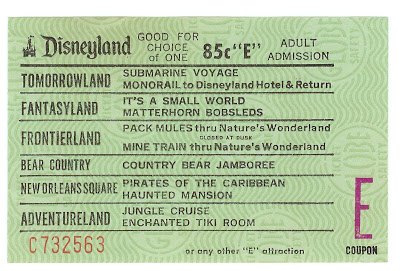
e-ticket
A reference only a select few will get. (85 cents?? Truly a bygone age)

While engaged in a very engaging conversation about screenwriting earlier this week, the person with whom I was conversing with asked the simplest and most straight-forward of questions:

“What do you like to write?”

Without a moment’s hesitation, I proudly stated, “Adventures.”

You can’t even say the word without implying the thrills and excitement it entails. Hands on hips, chest out, shoulders back, and a firmly-set jaw are automatically included.

I’ve enjoyed dabbling in other genres (such as drama and comedy), but nothing really grabs me like thinking up and writing out some sort of heart-pounding, edge-of-your-seat rollercoaster ride of a scene or sequence.

Those really never get old.

They say “Write what you know,” and although I’ve never actually fought monsters, manned a runaway train, or flown a space-faring vessel, years of reading and watching material of that type and nature has taught me an effective way of how to effectively inject adrenaline into what I’m writing.

More than a few readers have commented that my love and appreciation of the material and genre are boldly evident on the page, which is what I’m hoping  to accomplish every time.

My mantra has always been “Write something I would want to see”, and my list of future projects is jam-packed with numerous ideas and concepts that neatly fall into that category; each one a variation on the topic of discussion.

If these are the kinds of stories I was meant to write, you’ll get no complaints from me. I get a real kick out of cranking this stuff out. There’s no reason to think this can’t develop into what I build a career on and eventually become known for (he said, his fingers firmly crossed). My scripts. Rewriting someone else’s. Contributing to another. It’s all cool as far as I’m concerned.

Until then, all I can do is keep writing and making my readers feel their pulses quicken as they eagerly turn the page, absolutely spellbound to find out how the hero gets themselves out of this particular pickle, and, more importantly, what happens next.

Strap yourselves in, chums. This is going to be one helluva ride.

Digging towards the emotional core

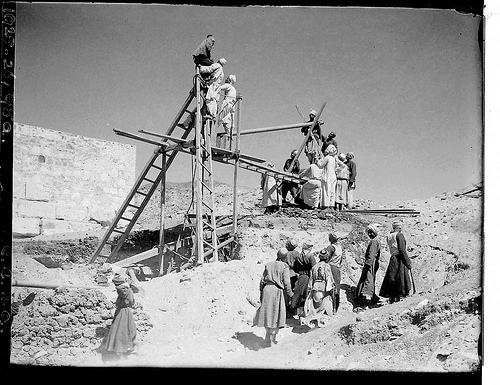
big-dig
I don’t think you’ll need that much gear

Due to both of our busy schedules, my daughter and I go for some quality father-daughter time when we can. Sometimes that means we’ll watch something together.

It might be a movie or a TV show. We’re not picky. No shame in admitting she’s picked up my enjoyment of superhero- and fantasy-based (LOTR, Hobbit, etc) material.

Despite her occasionally sullen and blase teen exterior, V is, at heart, an empathetic and sensitive soul, so no matter what we’re watching, if there’s any kind of hint of emotional resonance in a particular scene, she will feel the full brunt of whatever emotion the film/program is conveying.

Almost any kind of a joke (the sillier the better), and she laughs her head off. Something scary and she hides under the blanket. Something sad and she immediately tears up. Even after years of me saying, “You do know this is just a movie/TV show, right?”, her emotional receptors remain cranked up to 11 (and the teenager reappears with the immediate response, “Will you stop saying that?”)

Looking at these from the writer’s perspective, I can’t help but examine how the writers were able to do that. How did they get to the emotional core of the scene? Jokes and scares aren’t hard to figure out, even though each is pretty subjective, but a good, solid tug at the heartstrings, when done effectively, can be some pretty intense stuff.

A key part is making it relatable. Love. Joy. Heartbreak. Loss. All are universal. Everyone’s experienced them in some form or another. As the writer, you want to convey that emotion so anybody reading or watching your story will not only immediately identify it, but also connect with it on a personal level.

Like this. One of the most effective emotional sequences ever. And not a single word spoken. If you don’t feel anything as a result of watching it, you have no soul.

Even though we may not have gone through the same things as Carl and Ellie, we can relate to a lot, if not all of it.

This isn’t saying that every scene has to be a major tearjerker, but you want to really let us know how the characters are feeling in that particular moment. They’re human, so they feel the exact same things we do. Make us feel how they’re feeling.

Each scene serves three purposes: to advance the story, the characters, and the theme. Let the emotions come through via the best way you envision them enhancing the scene (making sure not to overdo it). It might take a few tries, but the deeper you venture into the emotional level, the easier it’ll get for you to show it, and it’ll also be easier for us to identify it and relate to it.

Could it get made today?

psycho-house
“Another “boy and his mother” story? Pass.”

Originally, this post was going to be about the multiple changing of protagonists in PSYCHO (which is another great potential future topic), but the more I read about the film and thought about the impact it’s had since being released way back in 1960, it triggered a totally different train of thought.

Every once in a while, when a classic film is brought up in some context or another, the phrase “That could never get made today” will get thrown in. After the recent death of Gene Wilder, his talent was lauded via the mention of several of his most well-known roles. Willy Wonka. The Waco Kid. Victor Frankenstein (“That’s Fronken-steen.”). His performances were vital parts of each film, which no doubt contributed to making them “classics”.

But, as always, it starts with the script. (Incidentally, I don’t think Wilder gets enough credit for co-writing YOUNG FRANKENSTEIN.)

Examining the stories being told, each one has something truly unique about it, and then some. The writer (and subsequently the filmmaker) wasn’t afraid to take a chance and try something completely new and different. Sadly, the studios today aren’t as open to it. Better to play it safe then take too big a chance, which is why we’re seeing so many remakes and re-imaginings. Of course, that doesn’t always work out either (e.g. 2015’s PAN, the recent BEN-HUR remake).

While there are always original and innovative scripts floating around, it’s a lot of time, effort and money to make a film. The only recent original film I can think of is SWISS ARMY MAN, which I admit I haven’t seen yet.

Who hasn’t read a “truly original” script or about one getting a lot of attention, but a lot of the time the writer will go on to work on other projects while the script that started the whole thing gathers dust?

The best exception to this that I know of is Travis Beacham’s spec A KILLING ON CARNIVAL ROW, which drew a lot of heat when it sold in 2005, then continued to garner praise while it languished in development for years before ultimately becoming an upcoming series on Amazon – at last check, anyway.

Budgets are getting higher, and the gap continues to grow between microbudget features and mega-budget tentpoles. It’s getting harder for original material to get noticed, let alone something that screams out “NEW!” It also doesn’t help that the chances decrease if the script isn’t based on pre-existing material. This could be why today you’re more likely to see an original film that’s a low-budget independent, probably written by the filmmaker themselves.

Before that, your best bet of seeing something groundbreaking would have been at the hands of established filmmakers, only because they had that kind of leverage (and the budget) to get their projects made. An unknown writer doesn’t have that kind of luxury. All we can hope for is to connect with somebody who likes the script (and our writing) so much that they’re actually excited to help us take things beyond the “Sure, I’ll read it” stage.

That’s our objective as writers: to write something that’s not only compelling and involving, but so eye-openingly original that the reader is compelled to the point that they need to see this as a movie. Doable, but definitely not easy.

Homework time! Part one – find a script you really consider a game-changer for the same genre as yours and give it a read. Can you identify what made it so unique? What really stands out for you? Plot? Story? Characters? A little of everything? Another option is if that script has been produced, then watch the film and follow along with the script. Are they the same? Totally different? Do you think the changes add or take away from the script?

Part two – without blatantly copying the style of that script, work on applying a similar originality to yours. Did reading that script inspire ways for you to make yours really stand out?

Don’t be afraid to take chances. Strive to offer up something we’ve never seen before. The results might surprise you, too.

-Special offer just for you!

course-discount-maximumz

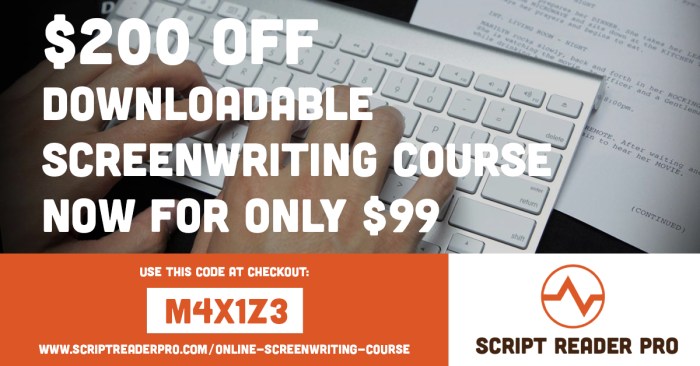
The fine folks at Script Reader Pro are running a discount for Maximum Z readers on their downloadable screenwriting course Script Hackr.

Forget all the confusing and vague “fluff” found in most screenwriting courses, coverage and books. Script Hackr will skyrocket your screenwriting skills by utilizing rarely talked about hacks and hands-on practical exercises to de-mystify theory.

The course retails at $299, but you can get it for just $99 by using the coupon code M4X1Z3 at checkout.

You can check out more details on the course here:

Ask a Book-Writing Script Consultant!

howard casner

The latest in a series of interviews with script readers and consultants who would be worth your while to work with if you want to get your script in shape. Today’s spotlight is on Howard Casner, who has written an e-book about his experiences – More Rantings and Ravings of a Screenplay Reader, and also hosts the podcast Pop Art.

1. What’s the last thing you read/watched that you thought was incredibly well-written?

Right now, screenwriting and moviemaking in the U.S. are at a crisis point. Very little is being done that is interesting or exciting. Most of it is bland, boring, or even if entertaining, falls short of a real success when it comes to quality. I feel we are treading water, waiting for a group of filmmakers and writers to come rescue us. We are in need of a new wave.

The film with the strongest screenplay this year so far has been BORGMAN, a movie from the Netherlands about someone who is pure evil worming himself into the household of an upper middleclass family. It is what I call a WTF film, strange and imaginative with strong characters and fascinating story.

However, my favorite movie of the year so far is UNDER THE SKIN, a sci-fi movie made in Scotland about an alien who seduces men to a house where they are then killed for fodder for another planet. Both are highly original, something that I feel is often missing from American films.  Right now, the two countries producing the most interesting and exciting movies are South Korea and Romania.

2. How’d you get your start reading scripts?

Before I moved to L.A. in 2001, I was in the theater and read scripts constantly. But once here, I met someone in a coffee shop who let me use him as an intro to the person in charge of the Slamdance Screenplay Competition.

After doing a sample coverage (which worried me because I didn’t like the screenplay, but it had won an award the year before), I was taken on. That year I discovered the first place screenplay, Song of Silence by Miranda Kwok, at the last minute and for a few years after that kept discovering the first place winner.

This then gave me the background to get work, also through connections, at Here! Networks and Final Draft Big Break Screenplay Contest.

3. Is recognizing good writing something you think can be taught or learned?

You can be taught to find screenplays that whoever is paying you wants to find. They give you a list of criteria and you can probably get by on that.

Recognizing good writing has some element of instinct to it. You need the ability to create a vision inside your head of whatever is described and hear the voices of the characters, which to some degree, is something you either can do or you can’t.

You also need to have as large a background in seeing movies and reading screenplays as you can. The more you read, the more movies you’ve seen, the easier it is to recognize what is new and original, and you can weed out what is formulaic and has been done many times before. And, of course, you really need to be able to do this and be a fast reader (some people are slower readers than others and that can be a problem).

4. What are the components of a good script?

One problem is that what “good” means can vary from person to person. I see the words “great” and “good” often used to describe screenplays and I’m not quite sure what they mean in the context of the person writing.

If you mean “good” in that commerciality is irrelevant and the screenplay has inherent quality apart from box office and other practical considerations (which is how I use the term), then the most important component nine times out of ten are characters (there are always exceptions). Without strong and vibrant characters, almost nothing else matters. You can have the most original high concept in the world, but with flat and uninteresting characters, I won’t care.

But after that, you need a screenplay that is readable and clear with an interesting plot (though, again, interesting is ambiguous; what is fascinating to one person is a bore to another).

But perhaps even more important, a good screenplay is one written by someone who has a vision, a voice, something to say, who writes from the heart, from a need to get a story out there.

5. What are some of the most common mistakes you see?

Besides the obvious, which is a screenplay that is horrendously formatted, or is almost unreadable, a story that is hard to follow and understand, with novelistic and literary narrative rather than focused and to the point narrative, and screenplays by people who don’t seem to understand the basic concept as to how to write a screenplay in the first place…

I would first have to say that it would include screenplays written according to formula, to a structure they got from a book or guru, screenplays written by people who have nothing to say and don’t have a real, interior reason to write a screenplay. That’s why the first of my ten commandments for screenwriters is to not read a book, or take a class, or use a guru in writing a screenplay until after you have written two or three first.

Beyond that, it’s screenplays that are concept and plot driven rather than character driven; overcomplicated plots; and screenplays written about a subject matter (like crime and espionage thrillers) where the writer hasn’t done the research.

Some of my pet peeves: characters not going to the police when the opportunity presents itself; cell phones lost, conveniently destroyed or losing power; not using social media when it would resolve a situation in no time; female roles that are underdeveloped, or in which women are humiliated for no reason; using lack of insurance as a plot motivator (by the time the movie gets made, the ACA may make many of these plot turns outdated). I could go on.

6. What story tropes are you just tired of seeing?

The romcom where a woman just feels her life is incomplete unless she is married, or at least in a serious relationship and that is her main goal; as a corollary to that, women characters who can only be defined by their emotional relationship to men; a group of people, especially teens or young adults, getting stuck in the middle of nowhere attacked by country folk; screenplays that are about being gay, rather than have a central character who just happens to be gay (especially coming out stories).

As a corollary to this, stories that start with grabber scenes (they are a cliché and they almost never really intrigue me), especially if the grabber scene is a dream or someone being chased through some woods.

7. What are the 3 most important rules every writer should know?

-That the quality of the script might not help you in and of itself and the better quality it is, the harder it might be to ever get the screenplay produced.

-As a corollary to the above, it’s who you know, not how well written your screenplay is, that can make the difference (though your screenplay has to have some modicum of skill to it, or just about nothing matters).

-The way movies are getting made (at least in the U.S.) is changing. You may have to do your first screenplay yourself, and if so, do something new, original and with a vision.

I will add one additional rule: learn how to format a screenplay and learn how to write a screenplay that is a smooth and easy read. This last is far more important than new writers ever seem to want to admit. I don’t know why, but they’ll often be open to any other suggestions, but bristle when I mention their formatting and narrative.

That is why my second commandment for writers is that the exception to reading a book on playwriting is that you must read a book on formatting; no exceptions.  Your narrative can always be reduced by 10 to 20% and will not only not hurt the screenplay, but probably benefit it.

8. Have you ever read a script that was an absolute, without-a-doubt “recommend”? If so, could you give the logline?

Many. Every year I read quite a few of those. I can’t really comment on any I’ve read for current contests, since the contests are still ongoing, but one that I still don’t understand why it hasn’t ever been made is “The most successful television personality that a Middle Eastern country has ever seen has to flee the country after a revolution; years later, working in a bar in Germany, he is given the chance to reclaim his glory if he will just publicly apologize for every negative thing he has ever said about the new regime”.

9. How do you feel about screenwriting contests? Worth it or not?

It’s not so much whether they are worth it. Based on the way things work in the U.S. right now, and the way the economy is working, they are sort of a necessary evil.

This may sound odd coming from someone who makes a living doing coverage and reading for contests, but if you can bypass contests and readers for companies and agencies completely, and get to the sources themselves, to the immediate people who can make a film and get those persons to read your script, do that.

But getting to the position where you can do that takes a lot of time and in the meanwhile, you need to find ways to get some sort of resume and approval of your writing, and screenplay contests are a place to start.

At the same time, there’s little point in entering a contest unless you have a screenplay that has been honed and worked on and is getting positive responses from others. Otherwise, you’re just throwing money away.

10. How can people get in touch with you to find out more about the services you provide?

For more detailed and full information about myself and my coverage services, go to my blog Rantings and Ravings.

I’m also offering a new service: so much emphasis has been given lately to the importance of the opening of your screenplay, I now offer coverage for the first twenty pages at the cost of $20.00 USD. For those who don’t want to have full coverage on their screenplay at this time, but want to know how well their script is working with the opening pages, this is perfect for you. I’ll help you not lose the reader on page one.

And of course, my e-book More Rantings and Ravings of a Screenplay Reader can be purchased on Amazon.

11. Readers of this blog are more than familiar with my love/appreciation of pie. What’s your favorite kind?

When I was young, my family would make Lemon Chiffon and Chocolate Pie, which were my favorites. I’m not a big fan of hard crust pies. I prefer things like cheesecake.