In it for the long haul

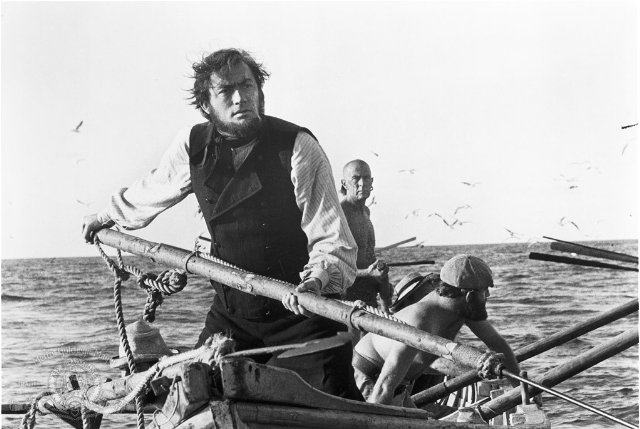
ahab
A somewhat extreme example, but you get the idea

Some days this is quite the struggle. You slave away on a script, send it out (contest, query, what have you) and hope for the best.

Unfortunately, a lot of the time, the best isn’t what happens. There will be rejection. A lot of it.

But every defeat is temporary, and a chance to regroup and try again.

In the beginning, when somebody tells you “no”, you take it personally. But you eventually grasp the concept that they’re addressing the writing, not the writer. You hunker down and keep going, continuously striving to improve.

The “no”s will still come, but eventually you get to the point where you simply shrug it off.

“Why even bother?” some might say. “Why keep doing this to yourself?”

Because the longer and harder you work at it, the closer you get to reaching that goal.

Because we feel this is a goal worth pursuing.

Because we’re compelled to.

Because we believe in our abilities.

Because we love doing it.

Success, especially when it applies to screenwriting, does not come easy. Or quickly. You will need an unlimited amount of patience and perseverance. This is going to be a long, perilous journey.

I’ve started walking. Who wants to come with me?

And I think this is a pretty good way to get things started.

Time for the editor to take over

editor
Where’s the ‘delete’ key on this thing?

The latest undertaking: the edit/rewrite of the low-budget comedy spec is underway.

Even while I was writing it, I knew there were changes that needed to be made. So now it’s time to dive in and make those changes, which tends to be equally as thrilling as the actual writing process. For me, anyway.

This is the part where I force myself to let those changes be made, even for the parts I absolutely love. There will most likely be more than one instance of “Why did I think this was a good idea?” Then I change it.

It happens with every draft of every script. You have to be able to be your own harshest critic. Every decision stems from “How can this be better?”

Sometimes it comes easy, and sometimes it doesn’t. It takes a while to get the hang of it.

“But why not just do it while you’re writing that initial draft?” some may ask. Because you don’t always hit the bullseye on your first attempt. You need a couple of practice tries. Many’s the time I’d suddenly stumble into a solution that proved to be significantly better than the original.

Don’t hold back. Don’t be afraid to make those changes. As I’ve discovered many times in the past, once something is changed, it is very soon forgotten. So much to the point that you’ll barely remember the previous incarnation.

When this whole process is done, at least for this round, I believe the end result will be a better script. I’m fairly confident this won’t take too long, and think writer-me will be quite content with the decisions made and steps taken by editor-me.

And then the whole thing will repeat itself again.

*Side note – blogger-me is proud to announce that the number of visitors to the blog has surpassed the 20-thousand mark. Not too shabby, especially considering the first few years were me and about six other people.

Thanks for reading, everybody!

A little post-comp analysis

scientists
Studying the script data at Maximum Z Labs

The results are in for my standing in two highly-ranked screenwriting contests, and at best could probably be considered partially encouraging.

As mentioned previously in this space, my western did not advance to the quarterfinals of the PAGE International competition. That was somewhat disappointing.

Earlier this week, I’d been informed that it made the top 15 percent for the Nicholl, and was also not advancing to the quarterfinals. This ranking ties a previous personal best. Not bad, but again, slightly disappointing.

As it would probably be for most, my initial reaction to both of these announcements, especially the former, was “Well, I’m just a shitty writer, aren’t I?”

Apparently, not necessarily.

After I’d announced my contest results, I heard from a lot of fellow writers, including comments about the quality (or lack thereof) of the scripts that advance, the quality (or lack thereof) of the readers, but the most-repeated one was:

“It’s all subjective.”

Very true. We produce what we believe to be the absolute best script we can, and either someone’s going to like it, or they’re not. And there’s nothing we can do about it.

If you were also among those of us whose scripts didn’t advance, take heart. It ain’t the end of the world (although it may feel that way). Use this as a learning experience and work on improving your script so it’s ready for next year. Get notes on it. Rewrite. Polish. Whatever you think is necessary.

It’s also important to keep in mind that these contests are not the be-all and end-all. Winning them or placing high doesn’t guarantee a career. Sure, a handful of past finalists are working writers or consultants, but they appear to be the exceptions.

Just to put things in perspective, a friend of mine was a recent Nicholl finalist and says it had zero impact on their career, and still struggle to get their material read.

In all honesty, the sheen of contests is starting to wear a bit thin for me. I’ll probably still enter the western again next year, along with two other scripts I’m hoping to complete, but I’d rather focus on getting my material sold or produced, or at least using my scripts as strong calling cards and writing samples to get assignment work. I’m not picky. Whatever it takes.

There are a lot of ways to break in and become a working writer. Contests are one, but definitely not the only one.


Ask a Proficiently Perceptive Script Consultant!

Sidney Stephens

The latest in a series of interviews with script readers and consultants who would be worth your while to work with if you want to get your script in shape. Today’s spotlight is on Sidney Stephens of Sidney Scripts Consulting.

1. What’s the last thing you read/watched that you thought was incredibly well-written?

One of my favorite things is when a novel is adapted to the big screen. That’s when the writer in me really comes out to play. I’ll first read the book, then the screenplay, and eventually I’ll get around to seeing the film. I did this about a year ago with the hit TV series “Under the Dome” by Stephen King (only read the pilot script, however), and I also did this with “Gone Girl” by Gillian Flynn. It’s very interesting to see how the story changes from one medium to the next. I enjoyed both of these the most of my recent reads.

2. How’d you get your start reading scripts?

While getting my Master’s degree in Creative Writing years ago, I read numerous scripts, mostly for my classmates, friends and co-writers, and mostly as a pay-it-forward kind of thing. Over a year ago, a friend of mine asked if I would like to start up a script consulting business together. I’d done so much ‘freelance’ work that it made sense. Three months later, my friend backed out of the whole thing. I, on the other hand, rarely back out of anything. So here I am, sole owner of Sidney Scripts Consulting.

3. Is recognizing good writing something you think can be taught or learned?

Absolutely. Part of learning to write a good screenplay is learning to recognize what that means. And there’s no better way to do that than to read tons of screenplays. Breaking them down into what makes them good and what makes them great. The real trick to recognizing a good screenplay is not finding one that reads smoothly and is error free, its finding one that reads smoothly, is error free, and will translate all its intended emotion to the screen in a way that will captivate its targeted audience.

4. What are the components of a good script?

Believable characters and natural dialogue are two very important components of any decent script. Good characters are what draw the audience into the situation; they are what the audience relates to. If they aren’t believable or their dialogue isn’t natural or strong, it will leave the audience asking themselves why they even care to finish the script/film. Yes, settings are awesome and a twisty plot is always a great way to ramp up a screenplay, but without relatable, believable characters, its not enough to make a good script great.

5. What are some of the most common mistakes you see?

Some writers, mostly new writers, try to dictate every inch of how the story will play out on film. With tons of camera angles, actor cues, and scene transitions it is hard to stay in the story. It’s important for the writer to know their part of the process and to do just that. Let the actors do their jobs, allow the directors and cameramen do their job, and just stick to writing a great story. Always remember to show, not tell.

6. What story tropes are you just tired of seeing?

End of the world stories are really starting to wear me out. I think I’ve read every possible way the earth could end, blow up, shatter, freeze, burn, etc. and yet, the surrounding stories are all the same. Man saves family only to stay behind and sacrifice himself for the future of the world. The entire movie is watching them attempt to stop the inevitable only to fail miserably. Until finally, at the last possible moment, the guy saves the planet and is reunited once again with his loved ones. Yawn.

7. What are the 3 most important rules every writer should know?

  • Writing is rewriting. No matter how great you think your draft is, it needs a rewrite. Deal with it.
  • Have a target audience and know exactly what it takes to reach them.
  • Write what you know.

8. Have you ever read a script that was an absolute, without-a-doubt “recommend”? If so, could you give the logline?

I’ve definitely read some worthy scripts in my days as a consultant. However, it is only after working closely with the writer on rewrites and such and knowing what producers were looking for at that particular time. I think finding any script that is “without a doubt” anything is a rare find that all consultants want that next script on their desk to be.

9. How do you feel about screenwriting contests? Worth it or not?

Screenwriting contests are a great way to get your screenplay read and possibly receive some fairly descent feedback. However, using these contests to “break into the business” or as a way of earning thousands on their scripts, they better be something spectacular. The reality is, hundreds of thousands of writers enter screenwriting competitions every year, and only a handful make it past the volunteer readers in the initial read. Can it be your screenplay? Of course. It is worth it? Well, that depends on the writer.

10. How can people get in touch with you to find out more about the services you provide?

My website: www.SidneyScriptsConsulting.com

My Facebook page: https://www.facebook.com/sidney.stephens.9465

Email me with any questions: SidneyScriptsConsulting@gmail.com

11. Readers of this blog are more than familiar with my love/appreciation of pie. What’s your favorite kind?

Sorry, I’m a brownie girl!*

(*Editor’s note: The blasphemy of this statement will not be held against Ms. Stephens.)

Ask an Extraordinarily Insightful Script Consultant!

Andrew Hilton

The latest in a series of interviews with script readers and consultants who would be worth your while to work with if you want to get your script in shape. Today’s spotlight is on Andrew Hilton, aka the Screenplay Mechanic.

Andrew Hilton grew up in the U.K. and studied film in England and New York, before working in motion picture development at almost every major studio. Having read more than 13,000 scripts, he is one of the most highly-regarded independent screenplay analysts in the film industry.

Andrew’s first produced credit as a screenwriter was the psychological thriller FATAL TRUST.  He also rewrote and Co-Produced the indie thriller BRAKE, and served as a Co-Executive Producer on the feature documentary WHY WE RIDE.  Andrew also has several feature projects in active development, including his own big-budget action picture BULLET RUN and the Dickens-inspired action thriller THE GUNS OF CHRISTMAS PAST.

What’s the last thing you read/watched that you thought was incredibly well-written?

While I’m more of a feature guy, I love that NEWSROOM is back on TV. At least in terms of dialogue, there are very few screenwriters on Aaron Sorkin’s level. He has the ability to craft dialogue exchanges that are as mesmerizing as any action sequence. Some criticize the heightened reality of his rapid-fire, snappy dialogue, arguing that it’s contrived and inauthentic. Personally, I’m going to savor every episode of this final season.

How’d you get your start reading scripts?

I attended film school in the UK and New York, then finished my final year of university in Los Angeles so I could start interning at the studios. My first gig was working for a producer at Universal and I spent six months reading scripts for him. I then moved to Warner Bros. and worked in the story department of one of my favorite producers, Joel Silver (DIE HARD, LETHAL WEAPON, etc.). After six months there, I landed my first paying job at Paramount, as a Story Editor for Mario Kassar (FIRST BLOOD, TERMINATOR, etc.). It was there I began teaching others to write coverage and really honed my story skills.

Is recognizing good writing something you think can be taught or learned?

The ability to recognize good writing can be learned, but recognizing a good movie is a skill far fewer people possess because it’s partly instinctual. Consequently, there are many agents, producers and actors in the industry who struggle to recognize a good script. That’s one of multiple reasons why so many sub-par projects get off the ground. Often, producers and studio execs are throwing stories against the wall (or into theaters) to see what sticks. On the flipside, there are people in the industry – from readers to top producers – who consistently find that diamond in the rough. 

What are the components of a good script?

It really all comes down to two things: Can this story entertain an audience for a couple of hours? Is that audience going to be big enough to turn a profit? It’s that Goldilocks balance of art and business, and reconciling that reality is one of the first goals every new writer should work towards. You could argue that there are good scripts which won’t be profitable at the box office, but who is that script “good” for? It might make a solid writing sample, but a genuinely good script is one that’s well-written and will make some serious coin in the marketplace once it’s produced.

So what specific components in a script will ensure the audience is entertained? An interesting protagonist is essential. We don’t necessarily have to like the hero, but it’s crucial we find them interesting. Ideally, the screenplay will also feature compelling conflict, engrossing dialogue, and a brisk pace which holds our attention. The end game is to ensure the audience leaves the cinema feeling completely satisfied. Nobody likes leaving a restaurant hungry, and nobody enjoys leaving the multiplex feeling as if they just wasted $15 on a crappy film.

What are some of the most common mistakes you see?

Overwriting the narrative to the point where clarity suffers is very common. Screenwriting is somewhat unique in that one of the best traits a scribe can have is efficiency of language. Don’t use twenty words to describe something when ten will do. Don’t try and impress anyone with your vocabulary or your grasp of metaphors and similes. Just write the most compelling and vivid movie using the fewest words.

What story tropes are you just tired of seeing?

Anything post-apocalyptic is becoming tiresome. MAD MAX was released in 1979 and the spec marketplace is still saturated with clones.

Ditto for “man on the run” stories. Whether the hero is in possession of a flash-drive, witnessed a crime, or underwent some kind of experiment, these screenplays always follow the same structure and climax. There’s often a foot chase in a subway and the protagonist almost always ends up sleeping with the love interest in a hotel. I read one or two of these most weeks.

I’m happy to read big expensive sci-fi epics, but 99.99% of the time the author needs to realize they’re writing it for themselves because it’s not going anywhere. If nobody in this town knows you and the story isn’t based on an existing IP, where’s the $200m budget going to come from?

Another common formula is the comedy about the dishonest hero. Often, these are romantic comedies which feature the protagonist misleading or lying to the love interest. The charade has to be maintained throughout Act II, at which point the love interest learns the truth and shuns the hero, leading to a climatic reconciliation (often a race to an airport).

All that said, if you have a unique conceptual twist, or craft one of these stories in a genuinely fresh and commercial way, there are still plenty of potential buyers out there. Clichés often become clichés because they work repeatedly. It’s also worth pointing out that this is where an experienced story analyst can be most useful. Some people rail against spending money on coverage, but I’ve read well over 7000 screenplays so I might be able to tell you how often I’ve seen a specific idea before and can give you suggestions on how to make your work differ from past fare.

What are the 3 most important rules every writer should know?

Not “rules” per se, but…

Know your audience.

Don’t bore anyone.

Always remember a complete stranger will eventually have to write a huge check to make your story come to life. They’ll want that money back.

Have you ever read a script that was an absolute, without-a-doubt “recommend”? If so, could you give the logline?

I used to read approximately 70% of major theatrical releases when they were still at the script stage, either for production companies or foreign distributors. Hence, I’ve done coverage on everything from THE SIXTH SENSE to THE LORD OF THE RINGS. Many of my clients have written great projects too, most recently Jesse Chatham with LAND and Bao Tran with THE PAPER TIGERS.

How do you feel about screenwriting contests? Worth it or not?

Some are worthwhile, e.g. the Nicholl, but most are akin to entering the lottery. If you’ve written a genuinely brilliant piece of work, it may still go unnoticed because most contest judges are inexperienced and all of them are underpaid. However, there are enough lightning strikes to keep the contest industry alive, and if a writer can afford it I see no harm in rolling the dice. More often than not, it’s akin to a farm program where a small-time manager or agent may discover you. If you’re considering the contest world, target the established ones which have a good reputation.

How can people get in touch with you to find out more about the services you provide?

My website www.screenplaymechanic.com, my Mechanic Facebook page, or simply email me at screenplaymechanic@gmail.com.

Readers of this blog are more than familiar with my love/appreciation of pie. What’s your favorite kind?

I’m going savory on this one. Steak and ale (with a pint, of course).