Let the ensuing commence!

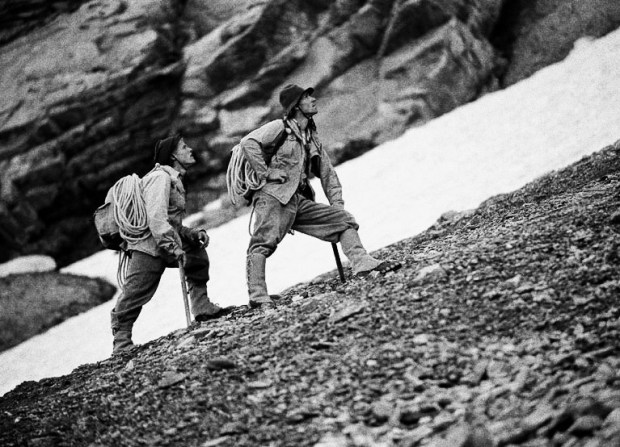
mountain climber 2
That was when our heroes realized things were about to get a lot tougher from here on in…

When I write out a scene, I have a pretty solid idea of what needs to happen in it; how to make it follow the one before it, and lead into the one after it.

Sometimes it ends up the way I intended, and sometimes it needs a little more punching-up.

And a lot of the time, that punching-up involves making things more complicated, which does a simultaneously effective job of upping the conflict, which was already a necessity.

This whole process most recently came into play while working on a scene in the pulp spec. I’d planned out what was supposed to happen, and on the surface, it seemed okay.

And then I wrote it, but it wasn’t the same as I’d envisioned. It was still missing a vital component, and I couldn’t determine exactly what.

Did it successfully connect the scenes before and after? Was there conflict? Did it advance the necessary elements?  Yes on all counts, but it still seemed off.

I read through it again. It was tight and efficient, and did what it was supposed to. But this second read also revealed the hidden problem that was nagging at me.

It was too tight and efficient. The protagonist accomplished what they were supposed to, but it needed to be tougher for them to do so.

So back I went to the planning-out stage, tossing in a few more wrinkles to make it that much harder for my hero. Although they still achieve their goal within the context of the scene, this time I made sure they really earned it.

Plus, the new complications really emphasized the overall nature of the story, which is always good.

This isn’t to say that every scene has to have some kind of monumental obstacle to your protagonist, but the journey towards their goal shouldn’t be an easy one. It might not even be a physical thing; maybe your hero has to overcome an internal or emotional problem.

It may be easier for you to keep things simple and straightforward, but unfortunately that makes for dull storytelling. Making things more complicated for your protagonist may complicate things for you in putting it all together, but it will definitely make for a better story while also improving your skills as a writer.

Don’t hold back. Put both yourself and your protagonist through the wringer. You’ll both be better for it.
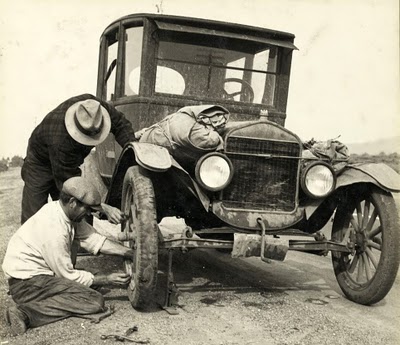

Tire, meet nail

flat-tire
You don’t expect it, but it’s good to prepared for when it happens

There I was, happily churning out pages for the pulpy adventure spec. The daily output was respectably above average.

(Gotta say, this new practice of writing out/establishing the beats of each scene has proven invaluable.)

If I could maintain this kind of pace, dare I even contemplate the possibility of having a completed draft, if not by month’s end, then maybe by mid-February?

But like the man who operates the guillotine might say, let’s not get too far ahead of ourselves.

Story-wise, things are still pretty solid, save for a previously unforeseen wrinkle: I need to do some emergency revision regarding exactly where and how a supporting character is introduced.

What was in the outline is completely different from what ended up on the page, so looks like I’ve given myself a few options:

  1. Leave it as is, but come up with how to tie everything together. A few possible solutions here. Not crazy about it.
  2. Go back and rewrite so it plays out as originally planned. It may lack some of the punch I was hoping to start with, but that sequence already has a significant amount of “attention-grabbing oomph” to begin with.

Some alternate approaches are currently under consideration, as are those of a drastically different nature. It’s also being discovered that implementing some of these changes could actually assist in reducing the number of pages, which was going to happen anyway. Only now it would be sooner. Not a bad result.

No matter which I choose, there’s some serious editing and rewriting in my immediate future.

This whole scenario definitely falls under the “kill your darlings” category because even though I really like what I’ve already written, as we all know, fixing the story takes precedence over placating the writer’s ego.

Keeping with the metaphor of this post’s title, what initially felt like a major problem is, after some careful analysis, evaluation, and plain old level-headedness, slowly developing into more of a bump in the road.


For crying out loud, DO SOMETHING!

bored
Is THIS how you want your audience to react?
While the November writing project moves forward at a pleasant pace (but now appears to be more of a November-December thing), part of my time has also been spent giving notes on some friends’ scripts.

One in particular had a few problems, some of which were easily fixed, but what really stood out was how it committed a cardinal sin of screenwriting by having a lot of scenes where the characters talk repeatedly about something “important” they want to do, but by the end, they end up not doing anything. And I mean that literally. These were some of the most passive characters I’ve experienced.

It didn’t help that the characters also had no arc. They were exactly the same from beginning to end (with maybe the exception of one who might have been arrested, but even the circumstances involved with that are still somewhat unclear).

Let’s face it. A main character who’s all talk, no action, and doesn’t change is the death knell for your script. Why would somebody be interested in seeing what happens to them, especially if they don’t do anything?

One of the most frequent problems I’ve seen is when the main character isn’t the one driving the story forward. They just kind of hang around and watch stuff happen.

Bo. Ring.

Remember, you’re trying to get your main character to their goal over the course of the story. They have to be the one making things happen in order to achieve that, or at least react to what happens in such a way that it helps them. The way these characters were written, I honestly had no idea what their individual goals were.

Take a look at your latest draft. Which character is moving the story forward? Is your main character active or passive? Are they making things happen? If not, can you see what you’d need to change in order to do that?

You definitely want your characters to come across as believably three-dimensional. Having them do little or next-to-nothing throughout the story is doing you no favors. Character motivation and actions are some of those key elements that simply cannot be left out. Audiences can forgive certain things, but a dull, passive main character isn’t one of them.

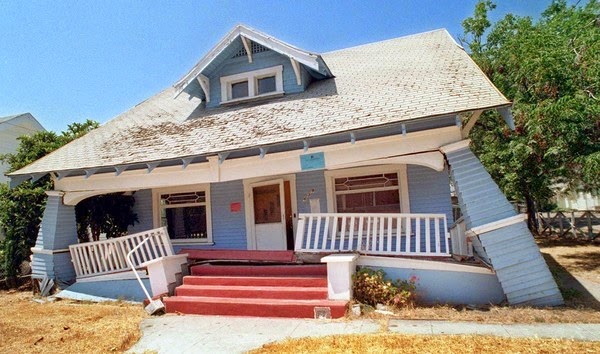
First, you build a solid foundation…

foundation
And this is what could happen if it isn’t

As the daily churning-out of pages continues for my November writing project, I’ve found it extremely helpful that so much time was spent working on the outline.

Only through trial-and-error did I eventually discover that making sure the outline is rock-solid before starting on pages makes a huge difference.

Keep in mind that this is what works for me. You may have an entirely different approach, and that’s totally cool. Actually, I’m curious to hear about some of them. Feel free to discuss in the comments section.

And now, back to the subject at hand…

I see putting together the outline as a gradual building-up process. I start with establishing the main plot points. What are the pivotal moments in this story? Does each one properly fulfill its purpose in the overall context of the story?

Then I fill in the blanks between those plot points. Does it make sense how we get from, say, the inciting incident to the end of the first act? Does each scene do its job in moving the story and characters forward? Are you presenting information we need to know, or setting things up so as to adequately pay them off later? Does each scene appropriately follow the one before and lead into the one after it?

Something important to keep in mind during this part: eliminating unnecessary scenes. You may have a scene you really, really like, but may not be absolutely vital to the story. My recommendation is to either make it vital or get rid of it entirely. The last thing you want is to interrupt the flow of your story for a scene that really doesn’t have to be in there.

Once you’ve got all those blanks filled in, then you move on to expanding each scene – mostly just putting in the necessary elements that reinforce the purpose of the scene. Sometimes I’ll add in a snippet or two of dialogue.

Another very important detail about each scene: get to the point, then get out and into the next one. Once the scene fulfills its purpose, anything after that just slams on the brakes.

Hang in there. You’re almost done. The outline is pretty sturdy, but it could probably use a little more editing, fine-tuning and polishing. When you think it’s honest-and-truly ready, that’s when you make the big jump to pages.

This isn’t to say there won’t be more changes in store once you’re into pages mode, but by putting so much time and effort into your outline, you’ve eliminated a lot of the heavy lifting for when you get there.

Pacing & page numbers

number-line
Looks like there’s a lot going on up ahead

When you start reading a script, you tend to recognize pretty quickly whether or not the writer knows what they’re doing. Their mastery of the craft (or lack thereof) will become soon apparent.

Bad formatting. Misspelled words. Unfilmables. On-the-nose dialogue. Cliches as far as the eye can see. Quite a checklist.

Find one or more of these early on, let alone just on the first page (which does happen), and there’s not much hope of improvement. You’re left with no choice but to force yourself to push forward. Maybe once in a while, you glance up at the upper right corner of the page/screen.

Your shoulders sag. “I’m only up to page ____? This is taking forever!” you exclaim. Making it to the end has suddenly become a question of “if”, rather than “when”.

Now let’s examine the other side, where the writer is in total control.

You encounter writing so sharp and descriptive, you can easily “see” what’s happening. Dialogue that’s not just crisp, it practically crackles. Characters who feel and talk like real people. All of it taking place in original and entertaining situations.

You become so wrapped up that you can’t wait to get to the bottom of the page so you can move on to the next one. And maybe once in a while, you sneak a glance at the upper right corner.

Your eyebrows shoot up. “I’m already at page ____? Wow, this is just zooming by!” you exclaim. You eagerly dive back in, more than ready to continue because you simply can’t wait to see what happens next.

Now here’s the big question for you, the writer:

Of the two experiences listed above, which do you want the reader to have when they read your script?

Do you want them to be bored and see reading your script as a chore that ranks up there with cleaning out the cat’s litterbox or listening to a timeshare presentation?

Or do you want them to be so involved, their attention so riveted to the tale being told in your script, that nothing short of a major crisis or natural disaster could tear them away? (Not to diminish the intensity or significance of major crises or natural disasters, but you get the idea)

It’s tough to be that objective when it comes to reading your own material. You think it’s good (“How could anyone not like it?”), but every reader has their own criteria for what works and what doesn’t. The challenge is crafting together a script so rock-solid that not liking it is not an option. Not sure if yours is? Seek outside opinions. Rewrite with the mindset of “how can I make this better?”.

As screenwriters, our primary goal is to tell an entertaining story. The last thing we want is for someone to be easily distracted by something/anything else when they’re supposed to be reading (and in theory, enjoying) our scripts.