That’s not the question you should be asking

classroom
Class, who can tell me what “familiar, but different” means?

I see variations on this question a lot throughout many online forums:

What kind of script should I write?

Seriously?

And I say that in the least condescendingly way possible.

It amazes me that somebody who wants to write a script has to ask what they should write. Shouldn’t you already know? Isn’t that why you’re doing this in the first place?

Then again, I’ve always been a writer, so it was never a question of “What do I write?”, but more of “Which one do I write now?” and “How do I write this so it’s good?”

But back to the topic at hand…

My immediate response to the question in question is “Write something you would want to see.” But that’s my approach. Others may take a different stance.

One caveat – make sure whatever you write is as original a story as you can come up with that contains original characters and situations. Do whatever you can to make it your own. Readers will instantly recognize if you’ve “borrowed” something.

I recently read a script that was a blatant rip-off of a well-known franchise. Did the writer know this when they wrote it? I don’t know, but the actual concept behind their story seemed unique unto itself, with lots of possibilities, so it was actually kind of surprising and disappointing to see them follow that well-trod path instead of seeking out something new.

Something else to keep in mind – using well-known characters not created by you is a very, very bad idea. A writer friend has a connection at Marvel Studios who handles the non-stop influx of unsolicited spec scripts. No doubt your Spidey spec is brilliant, but you’re seriously fooling yourself and wasting your time.

Wouldn’t you rather your script be known for offering up something new and unique?

A lot of newer writers see what’s hot at the box office and think “I can crank out something like that in no time!” Also a waste of time. Trends come and go very quickly. What’s hot today could be ice-cold tomorrow. And you probably think you’re the only one to come up with some variation on that current big idea.

You’re not. It’s even money deals involving clones of that idea will be announced in the near future, all while you’re still churning out pages.

DON’T CHASE TRENDS. You’ll never catch up.

A writer I’ve exchanged notes with concluded our most recent email conversation with “Also wanted to pick your brain. I want to write a script about ____ . It’s an idea I’ve had for several years, but I don’t know if anyone would want to see it.”

Their concept seemed good with lots of potential, but also sounds very similar to a recent series on Netflix, which I thought increased the chances of inevitable comparisons between the two. But if it’s a story that’s been percolating for that long and they feel really passionate about it, then by all means, have at it.

As a spec writer, you have the freedom to write whatever you want. I suspect a lot of us are inspired by the films we grew up watching up to the ones we enjoy now.  Start there and see where it takes you.

Strive for originality, chums.

Your world. We’re just visiting.

tour group
Ooh! That looks like a vital piece of exposition!

Since you’re the one creating the world of your script, you know exactly what’s going on within it. Or at least you should. This doesn’t just refer to the events of the story. It’s a bit more extensive than that.

You know the world in which your story takes place. We don’t. It’s up to you to show us how things work in here. Some writers write under the impression that everything we need to know is right there on the page for us to see. They do, so how could we possibly not?

Sometimes the information we need to follow the story is presented gradually, or it might be thrown at us all at once in one big info dump (which runs the risk of too much too fast, resulting in something being skipped over). There are also times when we get nothing, so we and the protagonist experience everything firsthand as it happens.

Who hasn’t read a script and found themselves confused about “how things work here” because it wasn’t there, or only got a fraction of what they needed? Without that, your reader’s going to spend more time playing catch-up while trying to figure out what’s going on, which will take away from them being able to focus on the story itself.

You don’t want that.

This goes beyond genre. While stories of a more fantastical nature will require a little more explanation and/or exposition, even a story that takes place in the present day with normal, everyday people will require some kind of “get us up to speed”-type scenes.

One counterpoint to this – the lack of filling us in is intentional. Part of the enjoyment of the story comes from the gradual learning of information. An ideal setup for mysteries, but that’s all I can think of.

Personally, I find it more effective to fill us in as we go along rather than just dropping us in the middle of this new environment with the attitude of “You’re on your own. Good luck.”

Make it as easy for the reader to be able to follow along with what’s going on in your story as you do. Potentially difficult, but not impossible.

I speak from experience

SF running
Exercise, a view, and lots of time to think about your script

“Writing a screenplay is a marathon, not a sprint.”

Bet you’ve heard that one before, right?

It’s true. Learning how to write a screenplay takes time, let alone how to do it well. It might come easier for some, but no matter what your skill level is, it always remains a struggle.

And that feeling when you’re done (at least with the latest draft)? Euphoric sums it up quite nicely.

So that whole running metaphor is pretty apropros. Especially for me.

For those not in the know, I enjoy running half-marathons. Seriously.

I’ve run about a dozen or so the past few years. Like with the writing, it’s a self-imposed challenge and pushes you to keep moving forward. Believe me, there are definitely times during those races I just want to stop and catch my breath, but I don’t because I want to keep going and see what I’m capable of.

I usually finish somewhere just under 2 hours, which isn’t bad.

A few weeks ago, I ran a race in San Francisco and finished with a time of 2:02:56, which some might think is great, but I still considered a little disappointing.

This past weekend was another race – across the Bay in Oakland. The results of the previous race really shook me up. Was I once again going to fall short of my goal?

Only one way to find out.

I did my best to maintain a steady pace and continuously reminded myself that even though it was a challenge, I felt I had a pretty good handle on it. Oakland’s also a lot flatter than San Francisco, which probably helped.

The home stretch for this race is an 8-block-long straight line through downtown Oakland. At the finish line, there’s always a big digital timer. As I got closer, the numbers came into view.

1:54:30? Wow! And just a handful of blocks to go!

You know that feeling when you’re writing the last page of your script and FADE OUT is coming up fast and you get that sudden rush of adrenaline and you can’t believe the end is finally in sight?

Even though you’re exhausted and feeling totally spent, you can always find that hidden reserve of energy, which is just enough to get you to that goal.

Giving it everything I had, I poured on the speed (or at least as much as I could muster) and ran like a madman to that finish line.

End result – 1:54:59. Not only did I break the 2-hour mark,  but I just squeaked by my other personal objective of breaking 1:55.

All that self-doubt from before had been erased. I had given myself a goal and set out to accomplish it.

Notice all those comparisons to screenwriting that could be made?

Every script is your own personal challenge. Sometimes it’ll be easy, and sometimes it’ll feel like nothing is happening, but the important thing is for you to keep at it and not stop trying to reach that finish line.

Like with training for these runs, it requires a lot of work. You find the time to do it when you can, hoping each session yields a slightly better result than the previous one.

My current work on the comedy spec coincides with this latest round of training for my next race – early November, and again in San Francisco. Both script and race will be a little more on the challenging side, but by engaging in regular training, I’m fairly confident I can achieve the results I seek.

A little stretching, a few deep breaths, and off I go.

Let’s get moving, chums.

Good. Better. Getting there.

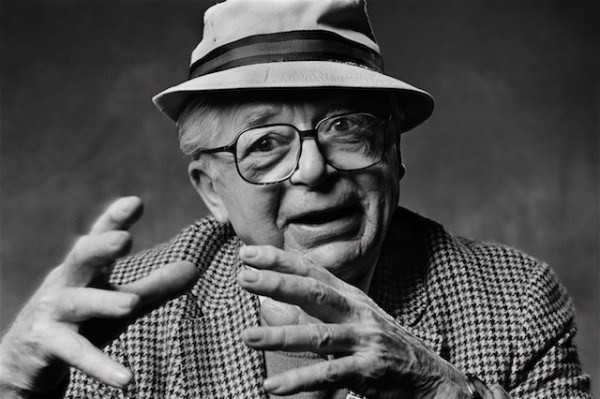
Billy Wilder
Never hurts to have a good role model*

Notes continue to come in for the pulp sci-fi spec, some contrary, many encouraging, and all chock-full of notable suggestions. With some coming from my trusted core of reliably savvy readers, there’s been one statement more than a few have included.

The gist of it is:

“This is the third script of yours I’ve read, and each one has shown a definite improvement over the previous one.”

It warms this writer’s soul to hear that sort of thing. And these are writers who pull no punches. They won’t hesitate to say something doesn’t work.

I’ve been working at this for a while, but it really feels like just the past few years have seen the most significant progress. Just goes to show what constant hard work can do, right?

Nor do I have any intention of slowing down. Doing my best to maintain a dedicated block of time and/or pages on a daily basis. The more you do it, the easier it gets (but is still tough).

The three scripts in question were all adventure-based, which enabled me to exercise a certain set of writing skills. With work now commencing on overhauling a comedy, an entirely new set will get the workout they deserve.

Crafting a sequence involving a train heist in the Old West, or a team of adventurers taking on a mad scientist? Piece of cake.

Writing a story involving everyday people in relatively normal (but funny) situations, peppered with smart (and funny) dialogue, all without the benefit of using special effects to enhance the story?

That is truly the next challenge to yours truly. It initially feels very daunting, but I’ve made it this far, and there’s no reason to think I can’t continue to push my way forward.

Should be a very interesting journey.

*Billy Wilder’s 10 Rules for Good Filmmaking (also applicable to screenwriting)
1: The audience is fickle.
2: Grab ’em by the throat and never let ’em go.
3: Develop a clean line of action for your leading character.
4: Know where you’re going.
5: The more subtle and elegant you are in hiding your plot points, the better you are as a writer.
6: If you have a problem with the third act, the real problem is in the first act.
7: A tip from Lubitsch: Let the audience add up two plus two. They’ll love you forever.
8: In doing voice-overs, be careful not to describe what the audience already sees. Add to what they’re seeing.
9: The event that occurs at the second act curtain triggers the end of the movie.
10: The third act must build, build, build in tempo and action until the last event, and then — that’s it. Don’t hang around.

What’s in your peritia scripturae*?

mailroom
This is just the resume pile. You should see the submitted spec script room.

An acquaintance recently told me about a small production company seeking material, and they (the acquaintance) thought one of my scripts might be a good match for it.

“Great!” I responded. “What do they need?”

“Your synopsis (with a logline), along with your writing resume. If they like what they see, they’ll ask for the script.”

Hold on one second. I had the synopsis, but a writing resume? Never heard of that before, let alone including it with the script material. Did such a thing even exist? What would it even look like? Was this some new trend of which I was unaware?

Apparently they do exist, but based on my experience and research, it sounds like being asked to provide one happens very, very rarely.

You’re probably thinking “Couldn’t they just look you up on IMDB Pro?” They could, but that doesn’t contain all my relevant details and information.

But this place wanted a resume, so I had to put one together. What to put on it?

I looked up what I could for “writer’s resume”, but got a lot of non-screenwriting-related information and examples. This resulted in a lot of tinkering around and adapting the best I could.

It all boils down to listing all of your screenwriting and screenwriting-related experience, along with any applicable accomplishments. Many writers with a personal website or blog have a page featuring some kind of version of it.

I wasn’t a produced writer, except for a writing credit on somebody else’s film school short, so I could mention that. Plus some material I’d written and filmed years ago as part of a freelance assignment which at last check was still available on YouTube.

Some of my scripts have won awards in reputable competitions. I listed the titles and their assorted results.

I included being a reader for a few screenwriting contests. (True!)

Oh yeah. THIS BLOG. Been going strong for years, plus a few accolades along the way. This triggered the realization that I could use some other screenwriting-related materials I’d written.

Turns out I had a somewhat decent amount of material to work with.

A little editing and revising, and off it went, along with the one-pager.

Unfortunately, the prodco passed. Not because of my lack of experience, but the script “just wasn’t what they were looking for.” No big surprise and no big deal.

But now I have a writer’s resume, which I keep updated. Chances are nobody’ll ever ask for it again, but I’m glad I put it together and have it ready to go. Just in case. Stranger things have happened.

There’s no doubt that some follow-up thoughts and comments to this will be of a “this is the most ridiculous thing I’ve ever heard” nature. And in some ways, I totally agree. But I chalk it up to just adding another tool to your arsenal of self-marketing materials. It took all of 15-20 minutes to put it together, so no harm done.

Normally, this would be the end of the post, but part of the reason I wrote about this is there are always writers on assorted online forums seeking feedback from other writers, and they get a lot of volunteers eager to offer up their two cents.

While it’s great that somebody’s so willing to help you out, what if their level of experience isn’t similar to yours? What if you’ve written ten scripts, and they’ve written two? Or still working on their first one? How much value would you give their notes?

It’s not a bad thing to ask somebody about their writing experience. It’s also not the best idea to ask a bunch of strangers to give you notes. You’re much better off building and developing strong professional relationships. Most seasoned writers don’t seem to have a problem discussing their experience.

So the next time somebody you’re not too familiar with says they’d be more than happy to give you notes on your script, don’t feel bad asking them how much experience they’ve had.

Or you could even ask to see their writing resume.

*Latin for “writing experience”.