Just the pep talk I/you/we need

pecan pie
Where else could you find comfort, reassurance, and tranquility, all on the same plate? 

(Author’s note – I wrote a lot of this earlier in the week, but circumstances of a confidence-instilling nature have occurred since then. I considered scrapping it and starting over, but thought the content was still relevant, so opted to stick with it. Enjoy.)

Let’s face it. Trying to make it as a screenwriter is an almost impossible task.

Emphasis on “almost”.

It can be done. Remember, every single writer whose name is up on there on the screen had to go through a lot of the same things you and I have. Probably even more.

The sad truth is that you will have to endure a lot of frustration before you start to even come close to achieving the results you want. And that frustration can easily lead to anger and depression and feeling like you’re wasting your time and this is never going to work out.

I say this because I’ve been that writer. Many times. This week was no exception. Several writer colleagues had some truly awesome things happen for them, and deservedly so.

Still, I can’t help but feel a slight pang of jealousy about it, but that’s all on me. In no way would I ever intend to divert the spotlight away from their success. They earned it, so they are more than entitled to enjoy it.

As for me, sure, I might wallow in self-pity for a little bit, but time and experience have helped me “get over it” faster, but the hurt does tend to linger.

Writing might be the last thing I want to do, but it’s actually been pretty therapeutic. Shifting your attention to another project – maybe one you haven’t worked on in months – helps with the emotional recovery process. Sometimes I’ll vent to another writer; usually someone who’s been through the exact same scenario.

Once I get all of that out of my system, the drive to succeed once again takes over, I get back on the horse and pick up where I left off – because the only way I’m going to make it is to keep trying, and that the only person who can make it happen is me.

That’s how it is for all of us. You’re not alone.

There will be so many situations where things don’t go your way. In the beginning, it feels like somebody’s stomping on your soul. But you eventually learn to accept that it happens, which helps toughen you up for the next time, of which there will also be many.

So on that note…

There will be a lot of times you just want to give up, or feel like the only word you ever hear is “no”, or have it seem like you’re the only writer on the face of the Earth not making progress.

Corny as it may sound, the best piece of advice I can offer is to keep at it. You will definitely hear “no” a thousand times before that one significant “yes”, but you won’t get it at all if you don’t keep going.

This is not a career path for the easily-defeated or the thin-skinned. I’ve had people tell me my story ideas were stupid and my writing was awful. One memorable character even thought my script was so terrible they were certain it was some kind of practical joke. Comments like that sting, but only temporarily. You learn to ignore them to the point they don’t even faze you anymore.

I’ve had the good fortune to make lots of connections with very talented people, many of whom have been more than willing to help me get closer to that goal.

I’m still here, still trying, determined as ever. And I sincerely hope you do the same.

If triple digits is how many it takes…

math lesson
“So you see, Billy, if you edited out 5 pages from the previous draft, that would put your new midpoint around page 54.”

I recently read in an interview with screenwriter Eric Heisserer that included him being asked how many drafts he wrote for ARRIVAL.

“Over one hundred.”

Sounds like a lot, doesn’t it? Keep in mind that this was also spread out over time, not all concentrated in one specific period. And that a new draft doesn’t necessarily mean a complete rewrite. It could be anything from that to a few words changed on pages 33, 52, and 88 through 89.

And ARRIVAL was also nominated for Best Adapted Screenplay at the Academy Awards, so looks like all those drafts Eric went through were worth it.

About two years ago, I had lunch with a writer friend. He was familiar with my western, and liked it very much. When I mentioned I was considering returning to it to work on it some more, he said “I think it’s fine how it is. If you keep messing with it, you run the risk of making it worse.”

At the time, I really took that to heart. I didn’t want to mess up the script, but deep down I also knew it could still be better.

As you probably already guessed, I eventually ignored his advice and dove back in. I got a few more rounds of feedback from trusted colleagues and professional consultants, always tweaking and fine-tuning with every draft.

There’s no way I could say exactly how many drafts I went through to get to where it is now, but it’s probably safe to say it’s at least over one hundred. That is definitely a lot, but reading the script now, the results of all that work are evident on the page.

Plus, all the notes and all the rewriting have combined to make a really positive impact on my writing. While the overall challenge of putting a script together is still pretty daunting, the whole process seems to move forward in a much smoother manner. And, to be honest, maybe a little faster too.

Even though someone may tell you your script is “good enough as it is”, the final product is all on you. Keep working on it as long as you think you need to, with as many drafts as it takes.

You might not get an Oscar nomination, but getting your script to where you want it to be will definitely make you feel like a winner. Yes, that’s a sappy and corny thing to say, but it’s still true.

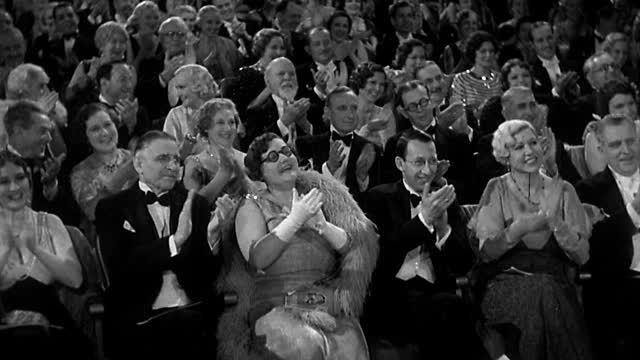
Respect your reader/audience

audience
Treat them the way you’d want to be treated

What we read on the page is what we would expect to see and hear on the screen. Pretty simple, right?

Sadly, not every writer gets it. As a result, some feel they have to explain what it is we’re seeing and hearing. Too many times I’ll read a spec script where a character does something, followed by WHY they’re doing it, or WHAT IT REALLY MEANS.

Maybe they think their writing isn’t getting the point across, so they feel the need to throw this additional info in – just to make sure you’re really getting it? It’s a practice I highly recommend not doing.

Imagine you’re reading your own script. How would you feel if there was a stop in the action to explain what just happened?

My initial thought is that this is how it’s done in books, so the writer figures they should do the same thing for a script. But I’d say that would have the opposite effect.

By laying everything out in front of us, the writer is doing themselves a disservice by not having faith in the intelligence of the reader/audience. They want your story to entertain them. People actually enjoy being able to figure stuff out and reaching their own conclusions.

Which do you think would be more effective and memorable? A script that spoon-feeds you everything, or one that makes you think and challenges you to pay attention?

Another part of this is when the writer includes WHAT A CHARACTER IS THINKING, to which I always ask “How do we know that?” Film’s a visual medium, so we can’t see what’s going on in their head (unless some kind of scene showing exactly that is actually part of the story).

One of the many jobs of the screenwriter is to show the character’s thoughts via their actions and words (or lack thereof).

(Please note the key word in that sentence – show. As in “Show, don’t tell.” Three little words every screenwriter should constantly heed. Make a sign of it and keep it near your designated writing area.)

I’d much rather reach these kinds of conclusions on my own through how the story’s told instead of the writer adding it into the mix. Including the WHY, WHAT IT REALLY MEANS or WHAT THEY’RE THINKING will highlight your abilities, but not the way you want.

Doing this is counteracting how a script should read, interrupts the flow of the story, and just comes across as lazy writing. You want to have every word on the page be there for a reason. Why have something there that doesn’t need to be?

A great piece of advice that’s always stuck with me is “Imagine the sound went out while you were watching the movie of your script. Would you still be able to follow the story?” I’d say yes, to a certain degree. While I may not have all of the specific story details, I’d definitely have a strong sense of what was going on based on what I see the characters  doing and how they’re doing it.

Two suggestions to see this in practice:

-read scripts. Focus on the storytelling. Pay attention to what’s on the page (and what isn’t).

-watch silent movies. Take note of how the actors convey emotion through their actions, gestures, and expressions.

You want your reader and audience to enjoy watching your story unfold as much as you enjoyed writing it. Believe me, they’ll be able to tell.

The drive. The motivation.

feather quill
This would probably be easier with a typewriter or a computer

I’ve been on quite a bit of a tear the past few weeks, with a lot of rewriting, revising and polishing going on for a few scripts. Definitely couldn’t have gotten to this point without some extremely helpful and insightful notes for each one.

Since a few of them involve working with other people, I like to do the polite thing and keep each person updated regarding the progress on the respective script. Where I am in the story, how it went with scenes or sequences that needed work, that sort of thing.

I tend to include my enthusiasm for latest developments and optimism for continuing success in those updates, which seems to garner responses along the lines of:

“I can see it in your energy.”

“I love your work ethic!”

Making headway on a script, no matter how big or small, is addicting. You’re able to make something better, and you want to keep doing it.

To me, it’s really just loving doing this. And the more I do it, I like to think I get a little bit better each time. Probably also safe to say that seeing as how this is what I want to do for a living, enjoying it is a bit of necessity.

It’s always great to see or hear another writer really get into talking about their script because you can see their excitement about it shine through. It’s infectious. But there are also those, myself included, who get frustrated or depressed about their lack of progress. That’s understandable. We’ve all been there. Even the most successful pros.

But at the heart of it all we keep pushing forward, doing our best to not only make the material better, but to also improve how we go about making it better. It’s a challenge, to be certain. One that requires constant effort. Even when you don’t want to, or think it’s all for nothing.

Nobody ever achieved success by giving up.

And I’ve no intention of giving up.

What would Miss Manners think?

20a.tif
Treat them the way you’d want to be treated

Believe me. I get it.

You want to be a working screenwriter more than anything. ANYTHING.

So much that you find yourself occasionally succumbing to lapses in good judgment and common sense, resulting in actions that might initially seem sound and sensible, but in retrospect, become more of a “what the hell was I thinking?”

You want to make a good impression, and overstepping the boundaries of courtesy is a surefire way to have that NOT happen. Sadly, too many aspiring writers tend to ignore that and just plow forward, not taking into consideration the fact that they’re most likely sabotaging their own career before it even gets started.

So presented with the best of intentions, let’s go over a few of the basics:

-This is all on you. You want to be a working writer? Then you need to do the work. All of it.

There are no shortcuts.

The writing, editing and polishing.  Researching reps, producers and production companies on IMDB Pro. Networking. Making and maintaining connections. DO NOT approach a total stranger either online or in person and have the first thing you say be “Hi. Can you help me?”

Be patient and courteous. Everybody’s got stuff going on in their lives, so they might not get to your script right away. Much as you want a fast turnaround, you’re not a priority to them. DO NOT be pushy and bombard them with constant “Did you read it yet?” emails. Send it, give it 4-6 weeks. If you haven’t heard anything by then, send a friendly reminder (“Hey. Just wondering if you’ve had a chance to read MY SCRIPT. Thanks.”)

-Once you do get the comments back, send a thank-you note. If you agree with what they say, or think it makes some good points, say so. If the comments are negative, or at least not what you want to hear, DO NOT respond by arguing why they’re wrong. “You just don’t understand my genius” is never a good idea. They’re doing you a favor and providing their honest opinion. Just say thanks.

Rememeber: there are a lot of other writers in the exact same situation as you, and each and every one of them is spending just as much time figuring out some kind of plan to help them reach that goal.

Use your head while being polite and considerate to help you make a better impression.

-I’ve written about some of these topics before. Feel free to give ’em a look-see.

Psst! Your desperation is showing

You don’t know me, but can you help me?

Make Emily Post proud