Sums it up succinctly

bttf1
“Spaceman from Pluto”?*

While taking a break from working on the comedy spec this weekend, I took an unexpected dip into my file of “ideas in development” – scripts I plan on eventually writing.

One had more details to the bare-bones outline than I remember. In fact, I barely recall even writing it. Still, pretty impressive.

Another was just a logline and three potential titles. While the story really adheres to my ongoing attempt at trying to write material of a smaller nature (i.e. not as big-budget), what really stood out was those three titles and how different they were from each other.

The first stirred up a kind of noble nostalgia, and in retrospect might be better suited for another story.

The second was pretty generic; almost like something you’d see on a VHS copy of a mid-90s B-movie gathering dust on a lower shelf at your local video rental store. If you’re of a certain age, you totally get that reference.

The third was very reminscent of a certain genre and style of older films, and the final word in the title tells you what kind of story to expect. Such was the case here, but as much as I like the word, it wasn’t exactly the right fit for the story I wanted to tell.

Fortunately, the word in question has a lot of synonyms, and one in particular really jumped out at me. Some might consider it of a vulgar nature, but wow did it fit. In fact, as soon as it popped into my head, I actually laughed out loud, thinking “oh my gosh, this is PERFECT.”

Because not only is the new word an ideal fit for the story, but it really drives home the tone.

Although work on this script goes into the ever-growing pool of “future projects”, at least now the concept and story are a little more developed than they were. And any progress is good progress.

There can’t be enough emphasis on the importance of a strong title for your script. It’s the entry point for your reader. You want them to know what kind of story they’re getting, what to potentially expect, and most importantly, you want them to be excited about reading it.

Sometimes your initial title is good, but there’s nothing wrong with a little tinkering to find an even better one. Like your script, it can always do with a little rewriting.

*Universal Studios head Sid Sheinberg didn’t like the title “Back to the Future,” claiming nobody would see a movie with “future” in the title. In a memo to Zemeckis, Sheinberg suggested the title be changed to “Spaceman from Pluto,” and the title reference be worked into the film.

In response, Spielberg sent a memo back to Sheinberg, thanking him for sending his wonderful “joke memo” and that the office “got a kick out of it.” Embarrassed, Sheinberg let Zemeckis and Spielberg keep the film’s original title.
A cavalcade of classics

vintage dj
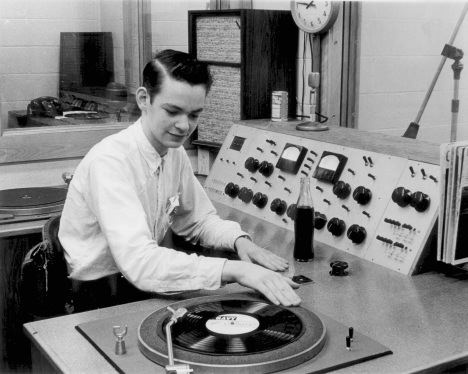
Spinning the hits and spouting some snappy patter!

Another time of busy-ness around Maximum Z HQ, so thought I’d offer up some previous but still quite relevant posts.

Enjoy!

A support staff of one

Avoiding the dreaded unfilmable

Strong rope & solid knots required

Best seat in the house

Behold my awesomeness!

I hope this really registers with you

courtroom
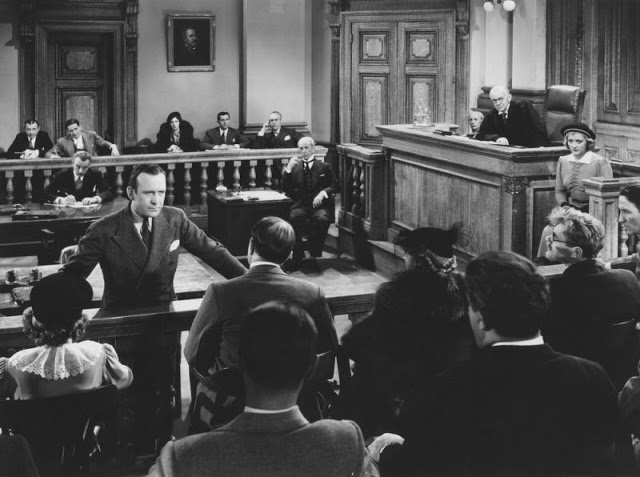
Take the appropriate steps, and this kind of result can be easily avoided

Pop quiz!

You’ve just finished the latest draft of your script. Not the first draft; maybe a few later. Exactly which one is irrelevant.

But you’ve got what you consider a pretty solid script, to the point that you think it’s ready to start sending out. Queries, contests, what have you.

What important step should you take before anything else?

And…pencils down.

For a more thorough explanation than I could ever provide, here’s a post from the apparently defunct cinemoose.com that all screenwriters should read and heed – especially those of you still in the starting-out stage.

(Author’s note – this is just one of the numerous posts about this topic from the screenwriting-based internet, but the info and advice is more or less the same)

“So you’ve finished your new script and you’re ready to send it out to producers and production companies. How do you protect your work?

Registering your script with the Library Of Congress costs $35. The WGA (Writers Guild of America) offers a similar service for $10 for WGA members and $20 for non-members. So which one is better? Or should you do both? And what about the “poor man’s copyright”?

The Library of Congress

The Library Of Congress is the organization within the United States that deals with copyrights. What is a copyright? According the Library of Congress website, copyrights are a part of intellectual property law that protects “original works of authorship including literary, dramatic, musical, and artistic works, such as poetry, novels, movies, songs, computer software, and architecture.”

Copyrights do not protect names, titles or ideas. This last point is an important one. Just because you have a great idea for a movie about a disaster movie involving earthquakes does not mean that you copyright that idea and prevent someone else from making a disaster movie about earthquakes. Copyrights only protect the way an idea is specifically expressed. What this means in plain English is that copyrights may only protect the characters, dialogue and story elements that make your specific telling of the story unique.

Technically speaking, your script is copyrighted from the moment you finish it. However, it is a good idea to register your screenplay with the Library of Congress to establish a legal record that may be used in court if you are unfortunate enough to be involved in a copyright infringement lawsuit as a plaintiff or defendant. Registering your screenplay costs $35 and is a relatively simple and straightforward process. Note: screenplays fall under the category of performing arts, not literary works. You can visit the Library Of Congress’s copyright site for more information or download the forms for copyright application here: Copyright Registration Form PA.

The WGA Script Registry

The WGA also maintains a script registry service for screenwriters to register their works. Their service costs $10 for WGA members and $20 for non-members and is valid for five years. The WGA claims that while their service does not replace registering your work with the Library Of Congress, the WGA script registry offers an additional layer of legal protection for your work.

Hogwash. Registering with the WGA does not offer any legal protection for your script. It is, in fact, a money-making scheme of the WGA. The only thing you can do to legally protect your work that will hold up in a court of law is to register with the Library of Congress. The WGA script registry is a waste of money and is not recommended unless you have money to spare and just wish to support the WGA.

(Author’s note – the WGA registration has to be renewed every five years, whereas the Library of Congress copyright is good for the life of the author, plus another 70 years.)

Poor Man’s Copyright

I’m sure that many of you out there have heard of the poor man’s copyright. This process involves mailing a copy of your work to yourself and keeping the sealed envelope with the certified mailing stamp as evidence of your copyright. The poor man’s copyright is little more than an old wives’s tale as there is no provision in the copyright law regarding any such type of protection. It’s about as useless as the WGA’s script registry.”

The appeal of appealing to a younger demographic

kids
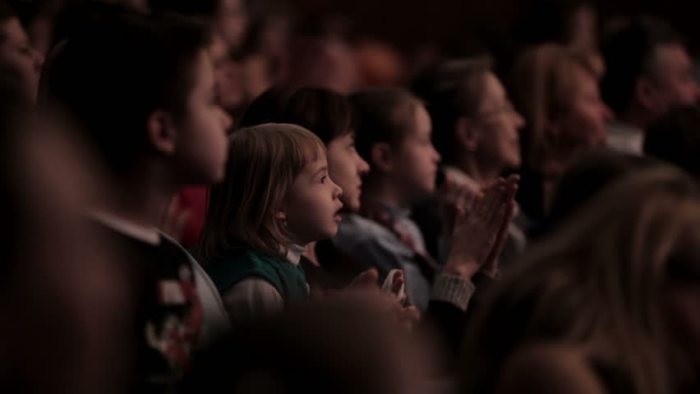
Multiple generations, engaged and enraptured. Fine by me.

During a recent phone conversation with another writer, I’d mentioned having wrapped up work on the pulp sci-fi spec.

“What’s it about?” they asked. I proceeded to give them my 10-second elevator pitch, plus the “THIS meets THAT” combo.

“Huh,” was the response. “It sounds cool, but it also sounds like it would be a kids’ movie.”

I suppose that’s one way to look at it. My preference is “a rollercoaster ride of a story, fun for anybody from 8 to 88”. That’s always been my approach when I set out to spin a ripping yarn.

Was I supposed to view their comment as some kind of insult? As if there’s something negative or shameful about writing material that appeals to kids? Because that hasn’t worked at all for Disney or Pixar.

PIxar especially has a reputation for producing films that appeal to all ages. There’s been a lot written about the immense amount of time they spend on making sure the story is rock-solid. One of the most-read articles for screenwriting is based on part of their process, and those don’t just apply to animation; they’re for ALL screenwriting.

Let me also throw a couple of “kids movies” out there. You might have heard of them.

Star Wars. Harry Potter.

One’s been around for 40 years, with no sign of letting up, while the other just celebrated 20 years of entertaining readers and moviegoers.

On the surface, both are solid, simplistic stories about the fight of good versus evil. But is that all they are? Heavens no! There’s universal appeal, engaging characters who grow and change, themes being explored, conflict like you wouldn’t believe – all told through a filter of imagination. Don’t let the presence of lightsabers, magic wands, or animated, talking animals distract you from what’s really going on.

And let’s be honest. Both of those series have done more than okay at the box office.

Not too shabby for “kids movies”.

Now, I’m not saying any of my scripts are in the same arena as those, but a good story is a good story, no matter who its target audience is. And if it appeals to a younger generation as well as my own, what’s wrong with that?

And you know what else works with kids movies? Kids grow up, and eventually have kids of their own. What do they watch? The movies the parents enjoyed as kids.

Who wouldn’t want to write something that leaves a lasting impression on a young mind, and then see them pass their love of that story to later generations?

For me, that’s what it all comes down to – writing a script that tells a fun and exciting story that anybody could enjoy. And if that includes kids, that’s fine by me.

I speak from experience

SF running
Exercise, a view, and lots of time to think about your script

“Writing a screenplay is a marathon, not a sprint.”

Bet you’ve heard that one before, right?

It’s true. Learning how to write a screenplay takes time, let alone how to do it well. It might come easier for some, but no matter what your skill level is, it always remains a struggle.

And that feeling when you’re done (at least with the latest draft)? Euphoric sums it up quite nicely.

So that whole running metaphor is pretty apropros. Especially for me.

For those not in the know, I enjoy running half-marathons. Seriously.

I’ve run about a dozen or so the past few years. Like with the writing, it’s a self-imposed challenge and pushes you to keep moving forward. Believe me, there are definitely times during those races I just want to stop and catch my breath, but I don’t because I want to keep going and see what I’m capable of.

I usually finish somewhere just under 2 hours, which isn’t bad.

A few weeks ago, I ran a race in San Francisco and finished with a time of 2:02:56, which some might think is great, but I still considered a little disappointing.

This past weekend was another race – across the Bay in Oakland. The results of the previous race really shook me up. Was I once again going to fall short of my goal?

Only one way to find out.

I did my best to maintain a steady pace and continuously reminded myself that even though it was a challenge, I felt I had a pretty good handle on it. Oakland’s also a lot flatter than San Francisco, which probably helped.

The home stretch for this race is an 8-block-long straight line through downtown Oakland. At the finish line, there’s always a big digital timer. As I got closer, the numbers came into view.

1:54:30? Wow! And just a handful of blocks to go!

You know that feeling when you’re writing the last page of your script and FADE OUT is coming up fast and you get that sudden rush of adrenaline and you can’t believe the end is finally in sight?

Even though you’re exhausted and feeling totally spent, you can always find that hidden reserve of energy, which is just enough to get you to that goal.

Giving it everything I had, I poured on the speed (or at least as much as I could muster) and ran like a madman to that finish line.

End result – 1:54:59. Not only did I break the 2-hour mark,  but I just squeaked by my other personal objective of breaking 1:55.

All that self-doubt from before had been erased. I had given myself a goal and set out to accomplish it.

Notice all those comparisons to screenwriting that could be made?

Every script is your own personal challenge. Sometimes it’ll be easy, and sometimes it’ll feel like nothing is happening, but the important thing is for you to keep at it and not stop trying to reach that finish line.

Like with training for these runs, it requires a lot of work. You find the time to do it when you can, hoping each session yields a slightly better result than the previous one.

My current work on the comedy spec coincides with this latest round of training for my next race – early November, and again in San Francisco. Both script and race will be a little more on the challenging side, but by engaging in regular training, I’m fairly confident I can achieve the results I seek.

A little stretching, a few deep breaths, and off I go.

Let’s get moving, chums.