I admit it. I was weak. I couldn’t resist. The urge was just too overwhelming.
So I accepted the reality of the situation, and just went ahead and did it.
I went back and revised the pages I’d already written for the pulpy adventure spec.
No regrets.
The character that shouldn’t have been in there was cleanly removed, but in the process of doing so, a new idea emerged with a way to further weave some of the subplots together. Always nice when that happens.
Engaging in this mini-rewrite also provided me with the opportunity to take a step back and just read. Was it still working? Were my aspirations of producing a ripping yarn being achieved?
Seems that way so far. Then again, I’m slightly biased.
Some notes I got on an earlier draft of the western were along the lines of “it’s good, but the writing’s a little dry.” With this script, there’s more of an effort to avoid repeating that by really punching things up.
I’m getting a real kick out of seeing what I can do to make this an exciting read for anybody, including myself. Many’s the time I’ve heard that you should be able to see the writer’s love for the material on the page. That’s something I’ve always tried to do, and working on this script is no exception.
So after this temporary pause, things are back on track. Momentum will be regained, and progress shall continue.
Exciting times all around, chums.
-Friend of the blog/consultant Jim Mercurio is running a crowdfunding project for his latest film project American Neorealism. It’s VERY close to being funded, and there are just a few days left, so donate if you can to help him reach (or even surpass) that goal.
Nice to see you again. Mind if I ask you something?
Sometime last week, I received a very nice compliment via on online forum regarding the quality of the script notes I give. A mutual associate of ours chimed in with the grumbly “Well, he never does it for me.”
To which I responded “Because you never ask.”
I don’t know what this writer’s standard M.O. is for getting notes, but from what I can gather, usually involves them posting “Anybody want to read my stuff?”
There’s nothing wrong with that, but the drawback is you run the risk of getting feedback from somebody with less experience than you, or worse, has no idea what they’re talking about.
This is why networking and establishing relationships with other writers is so important. If someone posted a generic request for a read, I’d be less inclined to respond. Even if I knew the person. I figure they’ll probably get a few other responses, so why bother?
But if someone came to me specifically and said “If you have the time, would you be able to read this?”, I wouldn’t hesitate to say yes. This shows me that they value my experience and opinions, along with respecting that I can’t simply drop everything to accommodate them. They’ll also include an offer to read something of mine, if I’m interested.
Sometimes I’ll get an email asking me for a read, and it might be because of any number of reasons. They’ve read my stuff before and think this new script is similar. They know I have an eye for fill-in-the-blank. All of this could only have come from myself and this other writer having already established a good professional relationship.
While I always encourage writers to get out there and network, it’s also important to build on those connections once you’ve got them. You don’t have to become somebody’s best friend, but being supportive or offering the occasional words of encouragement really go a long way. Plus, people are much more likely to remember that sort of thing, adding to the likelihood they’d be willing to help you out.
More than often I’ve read about another writer’s projects and introduce myself, tell them how I found them (usually via the forums) and of my interest in the script in question, then ask if they’re cool with me taking a look at it. It’s a rare occurrence when someone says no.
Both of you are writers constantly striving to improve, and some good, solid feedback can play a big part in that. And that can be best achieved by getting to know other writers and treating with the same respect you’d expect to be treated with yourself.
Originally, this post was going to be about the multiple changing of protagonists in PSYCHO (which is another great potential future topic), but the more I read about the film and thought about the impact it’s had since being released way back in 1960, it triggered a totally different train of thought.
Every once in a while, when a classic film is brought up in some context or another, the phrase “That could never get made today” will get thrown in. After the recent death of Gene Wilder, his talent was lauded via the mention of several of his most well-known roles. Willy Wonka. The Waco Kid. Victor Frankenstein (“That’s Fronken-steen.”). His performances were vital parts of each film, which no doubt contributed to making them “classics”.
But, as always, it starts with the script. (Incidentally, I don’t think Wilder gets enough credit for co-writing YOUNG FRANKENSTEIN.)
Examining the stories being told, each one has something truly unique about it, and then some. The writer (and subsequently the filmmaker) wasn’t afraid to take a chance and try something completely new and different. Sadly, the studios today aren’t as open to it. Better to play it safe then take too big a chance, which is why we’re seeing so many remakes and re-imaginings. Of course, that doesn’t always work out either (e.g. 2015’s PAN, the recent BEN-HUR remake).
While there are always original and innovative scripts floating around, it’s a lot of time, effort and money to make a film. The only recent original film I can think of is SWISS ARMY MAN, which I admit I haven’t seen yet.
Who hasn’t read a “truly original” script or about one getting a lot of attention, but a lot of the time the writer will go on to work on other projects while the script that started the whole thing gathers dust?
The best exception to this that I know of is Travis Beacham’s spec A KILLING ON CARNIVAL ROW, which drew a lot of heat when it sold in 2005, then continued to garner praise while it languished in development for years before ultimately becoming an upcoming series on Amazon – at last check, anyway.
Budgets are getting higher, and the gap continues to grow between microbudget features and mega-budget tentpoles. It’s getting harder for original material to get noticed, let alone something that screams out “NEW!” It also doesn’t help that the chances decrease if the script isn’t based on pre-existing material. This could be why today you’re more likely to see an original film that’s a low-budget independent, probably written by the filmmaker themselves.
Before that, your best bet of seeing something groundbreaking would have been at the hands of established filmmakers, only because they had that kind of leverage (and the budget) to get their projects made. An unknown writer doesn’t have that kind of luxury. All we can hope for is to connect with somebody who likes the script (and our writing) so much that they’re actually excited to help us take things beyond the “Sure, I’ll read it” stage.
That’s our objective as writers: to write something that’s not only compelling and involving, but so eye-openingly original that the reader is compelled to the point that they need to see this as a movie. Doable, but definitely not easy.
Homework time! Part one – find a script you really consider a game-changer for the same genre as yours and give it a read. Can you identify what made it so unique? What really stands out for you? Plot? Story? Characters? A little of everything? Another option is if that script has been produced, then watch the film and follow along with the script. Are they the same? Totally different? Do you think the changes add or take away from the script?
Part two – without blatantly copying the style of that script, work on applying a similar originality to yours. Did reading that script inspire ways for you to make yours really stand out?
Don’t be afraid to take chances. Strive to offer up something we’ve never seen before. The results might surprise you, too.
-Special offer just for you!
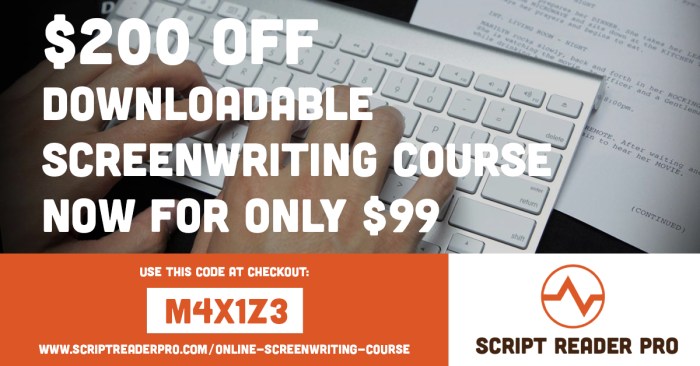
The fine folks at Script Reader Pro are running a discount for Maximum Z readers on their downloadable screenwriting course Script Hackr.
Forget all the confusing and vague “fluff” found in most screenwriting courses, coverage and books. Script Hackr will skyrocket your screenwriting skills by utilizing rarely talked about hacks and hands-on practical exercises to de-mystify theory.
The course retails at $299, but you can get it for just $99 by using the coupon code M4X1Z3 at checkout.
You can check out more details on the course here:
Sparkling wit, bon mots & smart turns of phrase are right at home here
Another three months has passed, making it a more than fitting opportunity to check in with all of you hard-working writers to find out exactly how that writing is going.
That’s right, gang. Put on your public-speaking pants (online edition) and step up to take part in the world-renowned Project Status Update Time!
(insert triumphant fanfare here)
It’s a fairly simple process. In the comments section below, feel free to share with the rest of us what’s new with you and your writing.
Page count. Logline development. Contact with a prodco or rep. Pre-production on a short. Any and all updates are welcome.
As is the tradition, I’ll start things off:
I’ll still give it one more read-through, but I wrapped up the rewrite/polish on the comedy spec. It’s more of a dramedy now, but still quite a charming little story.
I’m also in the process of giving notes on some friends’ scripts, and once all of those are done, it’s onto a pair of new projects. Exciting times, indeed.
Notes are coming in for the comedy spec, and reactions are pleasantly positive. My always-reliable readers have provided some extremely helpful notes, including an across-the-board opinion about a key plot point.
A lot of what they had to say made some good sense and are really helping solidify the script into something more-than-decent.
While they had nice things to say about the script, each reader threw in an extra little tidbit in the form of comments directed at the script’s writer.
AKA me.
“These two lines of dialogue are an anomaly compared to the rest of it. I know you can do better.”
“Great story, but I’d like to see you dig deeper.”
And these are comments from experienced writers who’ve read some of my other scripts, so they know what I’m capable of. They’re not just saying these things in a casual, generic feedback kind of way, or because they’re trying to be nice. They really mean it, and I take what they say to heart.
I thought the script was okay to begin with, but after getting comments like these, it makes me want to try even harder.
When you’re in the process of putting a script together, you really dedicate yourself to doing a good job, and then try to do better with each subsequent rewrite. It’s how we improve.
But it’s also kind of tough to be able to get yourself past a certain point. You think you’ve done everything you can, but then you get a bit of a supportive nudge and your journey resumes.
It’s quite the confidence booster to know there’s somebody out there rooting for you (especially somebody without a vested interest in you). They want to see you succeed just as much as you do. So you buckle down and throw yourself into making that next draft even better.
End result – you have a stronger script and their belief in you and your abilities is confirmed. Wins all around.
And when the time comes and they ask me for notes on their script, I have a strong suspicion I’ll be able to do the same for them.


 Maximum Z