A little re-educating never hurts

I’d already been working on the new spec for a bit when a friend offered up the chance to be a beta tester for his new screenwriting course.

It offers a lesson a day to help you get your first draft done. He admits the course is geared more towards newer writers still learning the ropes, but thought I might enjoy it – as well as provide feedback about my experience with it as needed.

I figured “Why not?” and signed up.

Just a few days in and I like how it’s going.

I’m following the lesson plan, which so far has involved the very basics – What’s your idea? Which genre is it? Tell us about your protagonist. Do you have a few ideas for the title? What’s the logline?

It would be really easy to blow all this off and just jump ahead, but I said I’d adhere to the guidelines, so that’s what I’m doing.

In some ways it’s helping take some of the pressure off and avoiding the trap of the whole “just write it!” mindset. Taking it nice and slow, and being slightly more reflective than usual is reaping some benefits. Getting the more manageable tasks out of the way has also resulted in a few more bursts of creativity – which is especially helpful as I continue to work on coming up with story ideas.

It’s almost zen-like in the approach.

I also like the accountability factor. It’s great for me to work on this, but I want to help my friend make the course as effective as I can, which is why I’m being diligent about completing each day’s lesson. I’d call that a win-win.

This is a 60-day course, and I’m still in the single digits and about to get into the outlining phase. Like I said, I’d already been working on this, so I have a lot of the first act in place – it’s the second act that’s proving to be the challenge.

But I’m not stressing about it. One lesson/task a day equals slow but continuously steady progress.

If things work out the way the course intends, then I should have a pretty solid first draft in just under two months, which is fine by me.

Then the rewrites begin, which will probably a totally different course.

There will be questions

I’ve recently been involved with a few script swaps – some motivated by me asking for notes on a new draft, some instigated by new connections.

I always enjoy giving notes because it allows me to see the talent and creativity on display from other writers, and also enables me to develop my analytical skills which I can then hopefully apply to my own stuff.

Like I ask my readers, I try to identify what works for me and what doesn’t. Regarding the latter, it’s never “I don’t like this” or “this is wrong”; more of a “I’m not sure what you’re trying to say here” or “I’m a little confused about this. Can you clarify it?”

The biggest contribution I can make is to ask the writer questions. Lots of questions. They know their story much better than I do, especially since they’ve been involved with it since day one and this is the first time I’ve ever seen it. That means there’s a good chance something they may think is obvious isn’t to me, so I need to ask about it.

I’ll also make suggestions of how something could be done – especially if it accomplishes the same thing they already have on the page, just in a different manner. “What if your protagonist did THIS instead?” or “What if THIS happened?”

Taking it one step further, I’ll never tell a writer “This is how I would do it” because it’s not my script. It’s their script and needs to be in their voice. If my questions and/or suggestions help them in any way, then mission accomplished. What writer hasn’t gotten a note that makes them think “I never thought of it that way before”?

Like with contest judging, notes are all subjective. You might get notes you think are absolutely 100 percent spot-on, and some where you think the reader barely made an effort. And even when a note seems totally wrong to you, it’s still worth asking “Why did the reader say this?” (AKA The Note Behind The Note). Is there something in what they said you could still use?

Remember: the reader is there to help you make your script as good as it can be.

Also important: no matter what a reader says about my script, I always make sure to thank them for taking the time to do it. Reading a script and giving notes on it is a real commitment, and they should know how much you appreciate that (along with offering to return the favor, if you haven’t done so already.)

Reading scripts is already important to becoming a better writer. Reading a script and asking the writer about it helps both of you become better.

Did it before. Can do it again

The biggest note I’ve received on the animated fantasy-comedy is that my protagonist needs to be more involved; be the thing that drives things forward, and how what she does affects those around her.

The challenging part is figuring out how to do that while keeping a lot of important story details.

Challenging, but not impossible.

Just as I imagine this task becoming more insurmountable the more I think about it, I’m reminded that I did a major overhaul on my western that involved the same thing. The protagonist needed to be more proactive in driving the story forward.

The end result had A LOT of changes that required a new approach. It took some time, but I was able to accomplish that, and the script ended up being better for it.

No reason to think I can’t repeat it this time around.

Thus the revising is underway. Slow, but steady.

I’ll get there.

Lead shielding not required

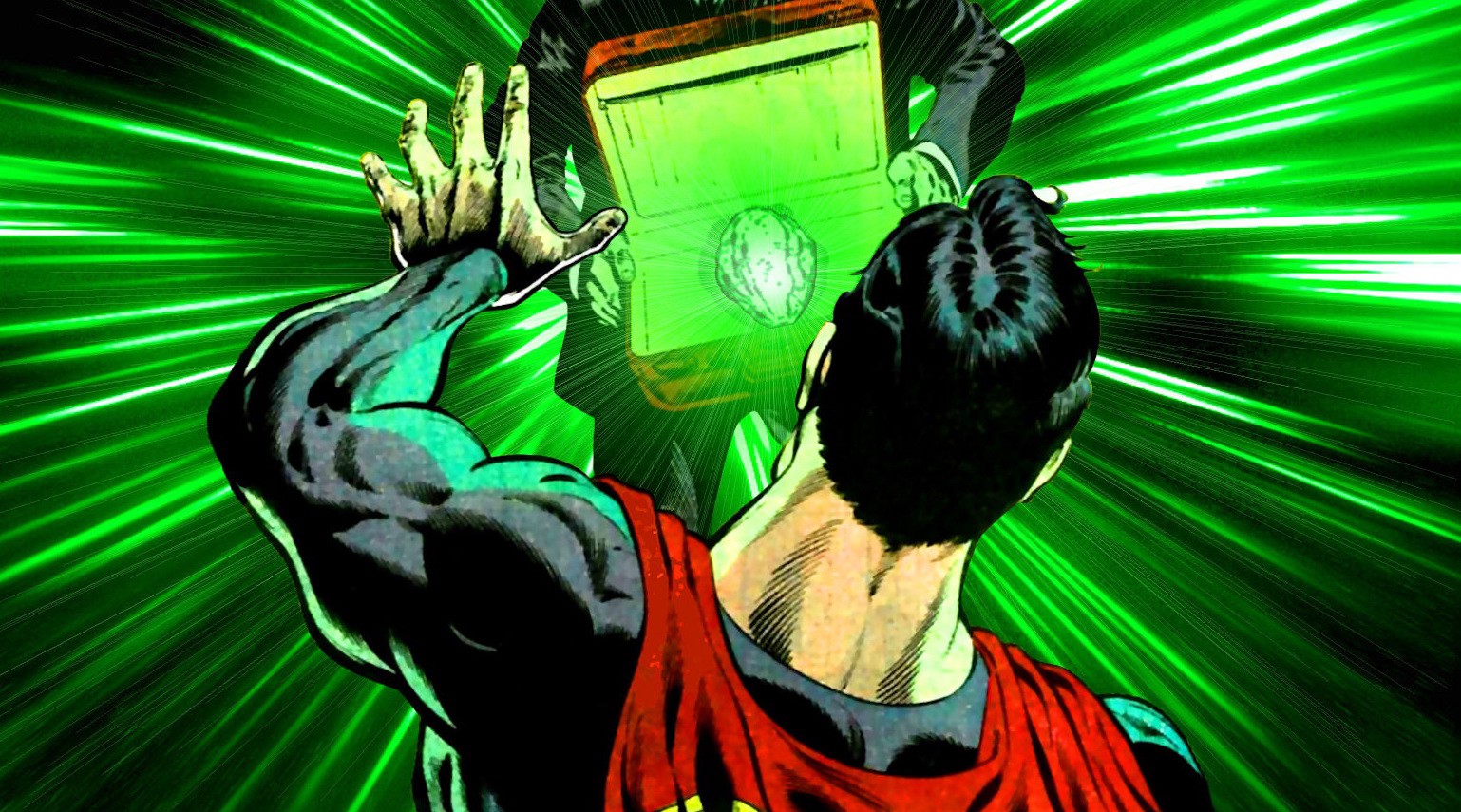
Even if you’re not a comic book nerd, you probably know what that glowing green rock is, or at least have heard of it.

For the truly uninformed, it’s kryptonite, aka The One Thing That Can Harm Superman. It drains his powers and makes him decidedly non-super.

And it’s also incredibly necessary, because without any kind of weakness, Superman is pretty much unstoppable, which is BORING. Who wants a hero who can’t be defeated? Who always wins? Why should we care about him if there’s never any doubt he’ll succeed?

A protagonist needs some kind of weakness or flaw, like kryptonite provides for Superman.

Bonus – it also adds to the conflict.

I recently read a script where everything went perfectly fine for the protagonists. Every obstacle they encountered, they overcame with ease, then casually moved on to the next thing.

Where’s the conflict in that?

If a protagonist’s road to their goal was a long and empty straightaway of perfect asphalt, low gas prices and nothing but green lights so they get to their destination ahead of schedule, is this a story that would hold my interest? Not really.

But what if that road were nonstop twists and turns, laden with potholes, overly aggressive drivers, and a poorly timed construction project blocking 3 of 4 lanes AND the protagonist was running out of time to get somewhere they absolutely had to be? That is a story I’d want to see.

The protagonists in this script had no flaws. Everything always worked out for them – sometimes with little to no effort on their part. I told the writer they needed to do the opposite. There needed to be conflict for these characters at every turn. What was going to stop them, or at least slow ’em down?

Included in my notes – “What’s their kryptonite?”

Your hero needs to have a rough time in reaching their goal. (CONFLICT!!) Overcoming obstacles both physical and emotional is what provides the opportunity for them to learn and change. Without that, they remain stagnant and the reader/audience won’t care about them, let alone if they achieve their goal.

What’s your protagonist’s kryptonite? What’s stopping or at least hindering them from achieving their goal, and how can they overcome it? Does that help them grow and change?

Superman always finds a way to overcome his run-ins with kryptonite. Can you say the same about your protagonist?

From the archives: Introduce your character with character

BETTIE, mid 20s. Don't let her all-American looks fool you. Trouble goes out of its way to avoid HER.
BETTIE, mid 20s. Don’t let her all-American looks fool you. Trouble goes out of its way to avoid HER.

Author’s note: had a great in-person notes session this week. Among the many topics we discussed was character intros, and what made for a good one, as well as a not-so-good (i.e. boring) one. That reminded me of this post from April 2014. Enjoy.

“When we, the reader, first meet an important character in your script, how do you describe them? What are the important details?

A lot of the time, the emphasis is on their physical traits – “tall”, “imposing”, “blonde”, “handsome”, “drop-dead gorgeous”, etc.

Or maybe it’s a simple adjective or two – “bubbly”, “funny”, “a nice guy” and so on.

These are okay, but you have to admit they’re kind of dull, which makes it more challenging for us to be interested in wanting to follow their story.

So how do you fix this? Time to ramp up that creativeness and really focus on what kind of person this character is, rather than what they look like. Unless a physical description is a key character trait, don’t worry about it.

One of the most memorable intros I ever read described the best friend of the teenaged protagonist – “James Dean cool at 15.” That’s it. Pretty effective, and in only five words.

Doesn’t this give you a better idea of what this character is like than say, “cool and aloof?”?  This is the kind of writing that catches our eye AND makes an impression.

A former co-worker of mine used to describe a very talkative friend as “If you asked him what time it was, he’d tell you how to build a watch.” See how it goes beyond the good-but-simplistic “chatty know-it-all”?

Cliched as it sounds, we really are painting pictures with words – not just for the story, but the characters in it. You’re already crafting a unique and original story, so why not develop a unique and original way to tell us about the characters in it?

This isn’t saying you should always strive to be clever and witty about it, but at least try for something different. This is just a small part of showing off your writing skills.

Take a look at how you introduce the characters in your latest draft. Does it really tell us what you want us to know about them? If not, how could you rewrite it so it does?”