From the archives: Guilty as charged

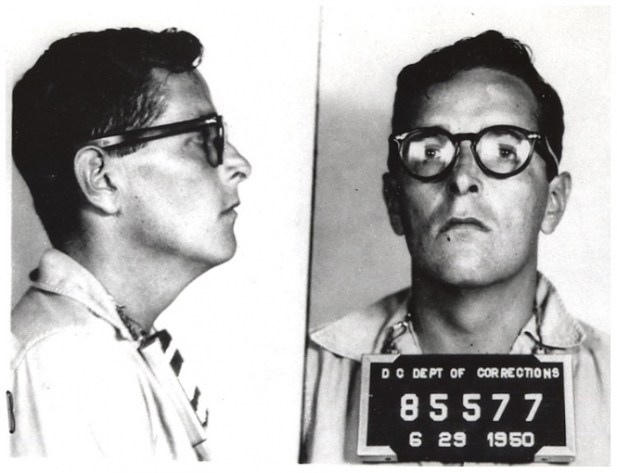
lardner mugshot
I did it. I’m glad I did it. And I’ll do it again. As many times as necessary.*

Got some excellent notes and pro feedback on the latest draft of the animated fantasy-comedy. Some of the suggestions involved totally cutting out some scenes I loved. It was heartbreaking to do it, but it was about what was best for the script, not the writer, so away they went.

Which leads to this classic post from yesteryear – Sept 2017, to be exact. Time has passed, but the sentiment and mindset remain the same. Enjoy.

The clock’s ticking down to the final deadline for an upcoming contest, so almost all of my energies are being directed at getting the pulp sci-fi in as tip-top shape as possible. Overall, I’d say it’s coming along nicely.

As you’d expect, there have already been some big changes made, with more than a few more on the way.

A major part of some of these changes has involved cutting material that I previously considered untouchable, or at least to do so would have constituted a crime against all that is good and wholesome.

Otherwise known as “killing one’s darlings”.

As you edit/polish/rewrite your scripts, changes will (and should) occur within the context of the story, so you have to deal with the consequences and ramifications of making those changes. And that means gettin’ rid of the stuff you love.

Did I really, really like this line of dialogue or that scene? Most definitely.

Did I cut it without a moment’s hesitation because it just didn’t work anymore? Yep.

Any regrets? Not really. Why should I? It’s all about making the script better, right?

A lot of writers won’t cut something because they hold it too close. To them, their ego takes precedence over the material. If a producer or director says something doesn’t work, and says it’ll have to be cut, what are they going to do? Say no?

It’s very rare that the final draft of a screenplay is exactly like the first draft. Changes will always be necessary, whether you want to make them or not. Much as you might hate it at the moment, make those changes. Chances are you’ll barely remember what was there before anyway.

A screenplay-in-progress is the raw material, and your job as the writer is to continuously work with it and shape it in order to get it to the final version – the one that tells your story in the best way possible.

If that means discarding something for something new, so be it. Even more so if the new something is even more effective.

*that’s no random mugshot. It’s Academy Award-winning screenwriter Ring Lardner, Jr. during the Red Scare.

Enjoying it – while it lasts

Slight shorty today.

The latest draft of the animated fantasy-comedy spec is in the hands of some beta readers.

One has already gotten back to me with some suggestions of minor fixes, but overall very positive comments.

Which is really, really nice.

And they also liked a lot of the jokes, which is definitely nice to hear.

I can’t really explain it, but there’s something about this script that’s giving me a real positive vibe.

It’s been a while since I’ve felt this way about a script this early in the process, so like the title of the post says, I’m riding this wave of positivity as long and as far as it’ll take me.

I’m sure it’ll require at least another pass, maybe two, until it gets to the quality I want it to be, but for now, I really like how it turned out.

Like with each of my scripts, I had fun writing it, and hope the reader has an equally great time reading it. This is something every writer should experience. It really does make a difference.

As the wait for the remaining notes continues, the focus shifts to cranking out pages for the microbudget feature, which is coming along nicely, thanks for asking.

Hope you have an exceptionally productive weekend.

What’s new, missing, or different?

It happens to every writer. You start the rewrite of your latest draft, and you need to figure out what needs to be cut or changed. Sometimes it ain’t that easy, and sometimes you hack and slash with wild abandon.

Part of my recent focus has been rewriting the fantasy-comedy spec, which has involved a little bit of both.

It already needed some trimming – at least 5-10 pages’ worth, so that’s just one of the many things taken into consideration as I work my way through it.

I’ve been told my writing is pretty sparse to begin with, so finding material to tighten, let alone cut, has been somewhat tough.

Tough, but not impossible.

There’s the small stuff. A widow/orphan word here, a snippet of dialogue there. Finding some way to get those three action lines down to two, or one if you can swing it.

Then there’s the big stuff. One noteworthy item was a particular story detail that had been around almost since the story’s inception that wasn’t syncing as well with the story as it was now, so that had to be changed. This caused a domino effect on all the things it impacted, which meant making sure all those connections had to be adjusted so everything still meshed in a smooth and organized manner. It was a bit of a pain to deal with, but it had to be done.

The big stuff also has its fair share of little stuff. A scene or sequence that needs a major overhaul – already dealt with a few of those, as well as a few half-page scenes that I hated to cut. Then there was a character I initially loved that proved to be ultimately unnecessary, so out they went.

If I maintain this amount of cutting, there’s no reason the finished draft couldn’t fall within the target range of the aforementioned 5-10 pages. If it ends being more than that, great (but at this point seems highly unlikely). If it’s just a few pages shorter, that’s still okay, and I’ve no doubt my beta readers will have plenty of suggestions that I probably never even considered.

No matter what gets cut or changed, it’s all for the benefit of the story. As long as the script is a tight, succinct and solid read, that’s a win.

(Turns out I’ve written about this before, waaaay back in 2013. A lot of it is still applicable, except for the part about my time in the half-marathon. Those days are long past.)

Friendly reminder: my book Go Ahead And Ask! Interviews About Screenwriting (And Pie) Volume 3 officially comes out on October 7th (two weeks from today), and the final setup of the links on Amazon and Smashwords is just about done, in case you’d like to purchase it slightly ahead of schedule. Signed copies will be available. Just let me know.

Questions? I got lots of ’em.

Steadily working my way through an always-growing queue of scripts in the “to read” pile. Most are for pleasure, while the remainder are for notes.

A majority of my notes usually tend to involve asking questions because something might not be clear to me. This is all part of my effort to try to understand what’s going on with what I’m reading, as I try to figure things out and get a better grasp of what information the writer is trying to convey.

If I don’t understand something, I’ll just come out and ask.

It can range from “I’m not sure why this character was doing that. What was their reasoning behind it?” to “What’s this character’s arc? How do they change over the course of the story?”

Having the writer provide the answer helps them figure out the solution, or at least opens the door for them. More so than I ever could, at least. I don’t want to be the type of note-giver who’s all about “This doesn’t work. I think this would work better.”

(I have seen more than my fair share of notes that include that sort of comment, and I don’t particularly care for them.)

The questions usually come about because something wasn’t clear enough to me. And if I don’t pick up on it, chances are the audience won’t either. Everything we need to know should be there on the page, whether written out or as subtext.

If more than a few of your readers ask the same questions or make the comments about something in particular, that’s an issue you’ll definitely need to address.

A reader wants to like the script they’re reading. They make comments and ask questions in order TO HELP MAKE YOUR SCRIPT BETTER. As the writer, it’s up to you how to interpret them. Sure, you don’t have to incorporate everything, but ask yourself “why did they say/ask this?”

It can be tough to read your own script and see what works and/or doesn’t. You’re too familiar with the material. This is why getting notes can be so invaluable. The reader hasn’t seen this AT ALL, so it’s all entirely new. If they come upon something in your script that stops the read because it makes them think “Wait a second. What does that mean?” or “Why did that happen?”, then you’ll need to fix that so it addresses the issue and makes sure it doesn’t happen for whoever reads it next.

Sometimes a writer will respond to my questions saying nobody had mentioned or asked about that before, but they could totally see why I was asking. This in turn helped them figure out a way to make the changes they felt would eliminate the reason for the questions in the first place.

Which is why I asked them.

A darned good use of one’s time

After a few very hectic weeks involving once again delivering the inimitable Ms. V to school, I’m settling back into my regular routine of reading- and writing-related activities.

And then some.

I did a whirlwind edit/proofread for a friend’s manuscript, read and gave notes on a couple of scripts (with a few more to go in the ever-expanding queue), and started the “wrap it up” phase of the outline for the microbudget project.

Apart from a smattering of fatigue, I’ve been having a great time working my way through it all.

There’s a special kind of buzz that comes with completing a project, and that’s certainly the case here.

I just enjoy the reading part of being a writer.

I don’t think I can maintain this kind of schedule indefinitely, but intend to do so as long as I can. Luckily for me, the responses to those that required notes and/or feedback have been positive, which helps.

This isn’t to say it’s all been work-oriented reading either. During our travels, I picked up a couple of books at a used book store. One a throwback to a sci-fi show from my youth, the other a collection of short stories set in our host city. Both made for some excellent “sit back, pass the time, and enjoy yourself” time.

I hope other writers get that special kick out of reading, whether it’s scripts, books, comics, or whatever. There’s something to be said for feeding the mind in such a way.

Plus, it helps you be a better writer. It’s definitely done wonders for me.