Past You would be really impressed

Ask any screenwriter how their most recent draft compares to, say, their very first one, by which I mean THEIR ABSOLUTE VERY FIRST ONE, it’s probably a sure thing they’ll say something along the lines of “It was awful!” or “An absolute mess!”, or maybe even “I don’t even want to think about it it was so bad.”

Taking a look at some of my first attempts, I can say the exact same thing. Scenes that drag on. Flat action lines, or ones that were way overwritten. Big chunks of text on the page. On-the-nose dialogue that’s pure exposition. Spoonfeeding story details to the reader to make sure they understand what’s going on.

Nothing to be ashamed of. There are vomit drafts, and “looks like my printer vomited words all over the pages” drafts. You gotta start somewhere, and the important part is YOU GOT IT WRITTEN.

Nowhere to go but up, right?

So you start working on getting better. You get feedback. You start to understand why things aren’t working and what you can do to fix them. You learn, and all this new knowledge helps shape the next draft to better than the one that came before it.

You put in the time and the effort and it becomes more noticeable how your writing is getting better. All of those newbie mistakes are a thing of the past. Your script seems more polished. There’s still room to improve, but it doesn’t seem as daunting now, does it?

Multiple drafts and seemingly neverending rewrites are par for the course. It happens to even the most experienced screenwriters. The hardest part is getting that first draft written. Accomplish that and you’re already ahead of the game.

There will most likely be a ridiculous amount of rewriting in your future, and the end result may be totally different from what you started with, but think about how far you’ve come. You probably had no idea when you were just starting out that you’d be so willing to put yourself through all of this, over and over again.

And that might even be for just one script.

Sure, you might be a little embarrassed when you look at your earliest scripts, but look at your most recent draft or the pages you wrote last weekend. As if they’d been written by two entirely different writers. Because that’s exactly what they are.

Past You was just starting out and made a lot of mistakes. Present You knows what’s needed and does it.

And just imagine the skills that Future You is going to have.
(Silent) wheels in motion

Mega-shorty today.

A lot’s been going on over several fronts, including this weekend’s San Francisco Writers Conference.

Much as I’d like to announce these recent developments, I’m opting to keep most of it under wraps for now. Details and updates will be posted as they warrant, if at all.

Nothing earth-shattering or drastically life-changing, but there’s definitely some potential in them thar hills.

Still, pretty excited about all of it.

Lead shielding not required

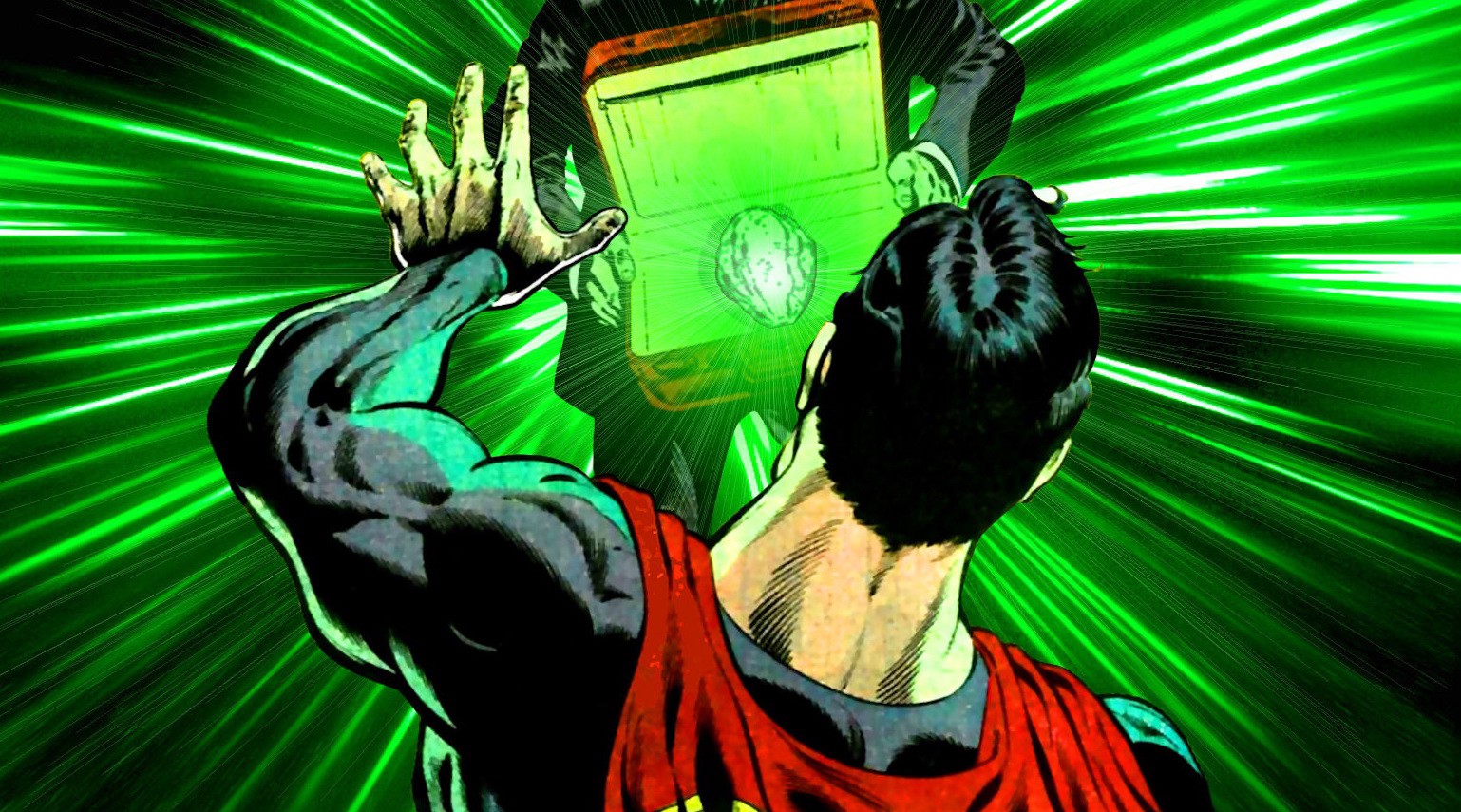
Even if you’re not a comic book nerd, you probably know what that glowing green rock is, or at least have heard of it.

For the truly uninformed, it’s kryptonite, aka The One Thing That Can Harm Superman. It drains his powers and makes him decidedly non-super.

And it’s also incredibly necessary, because without any kind of weakness, Superman is pretty much unstoppable, which is BORING. Who wants a hero who can’t be defeated? Who always wins? Why should we care about him if there’s never any doubt he’ll succeed?

A protagonist needs some kind of weakness or flaw, like kryptonite provides for Superman.

Bonus – it also adds to the conflict.

I recently read a script where everything went perfectly fine for the protagonists. Every obstacle they encountered, they overcame with ease, then casually moved on to the next thing.

Where’s the conflict in that?

If a protagonist’s road to their goal was a long and empty straightaway of perfect asphalt, low gas prices and nothing but green lights so they get to their destination ahead of schedule, is this a story that would hold my interest? Not really.

But what if that road were nonstop twists and turns, laden with potholes, overly aggressive drivers, and a poorly timed construction project blocking 3 of 4 lanes AND the protagonist was running out of time to get somewhere they absolutely had to be? That is a story I’d want to see.

The protagonists in this script had no flaws. Everything always worked out for them – sometimes with little to no effort on their part. I told the writer they needed to do the opposite. There needed to be conflict for these characters at every turn. What was going to stop them, or at least slow ’em down?

Included in my notes – “What’s their kryptonite?”

Your hero needs to have a rough time in reaching their goal. (CONFLICT!!) Overcoming obstacles both physical and emotional is what provides the opportunity for them to learn and change. Without that, they remain stagnant and the reader/audience won’t care about them, let alone if they achieve their goal.

What’s your protagonist’s kryptonite? What’s stopping or at least hindering them from achieving their goal, and how can they overcome it? Does that help them grow and change?

Superman always finds a way to overcome his run-ins with kryptonite. Can you say the same about your protagonist?

Fingers + brain + keyboard

Another shorty this week. I’ve been busy on several fronts, including the latest round of work on the animated fantasy-comedy.

Several sets of extremely helpful notes have been received. I’m quite happy with how it’s coming along. Definitely feels like a stronger script.

When it’s ready, off it goes to another batch of readers, which will most likely result in another draft after that.

I’d initially decided to skip contests this year, but am still on the fence about the Nicholl. One deciding factor is their new limit of total number of entries at 5500 (currently standing at a smidge above 650 as of this writing).

If in a few weeks I’m happy with the end result and they haven’t hit the 5500 mark, I’ll consider it. Early bird deadline is March 1st, with a still-reasonable entry fee of $50 USD, then regular deadline on April 1st for $70, and finally late deadline on May 1st for $120.

And if in the end I still decide to skip it, it’ll definitely be ready for next year.

I’d rather take the time to fine-tune it as much as possible than send in a draft considered “good enough”.

Hope you have a productive writing weekend, and for my fellow Californians – stay dry.