One scene, three points

trident
Careful not to get stuck on any of them

After some thorough self-imposed analysis, the revising of the comedy spec is underway. It’s getting easier to spot trouble spots.

There’s one scene in particular that’s giving me some trouble. It’s a pivotal scene involving the main character and offers a revealing glimpse into his backstory. The problem was in figuring out how to best do that.

After much drumming of fingers, rubbing of chin, and a whole lot of attempts, a potential solution may have presented itself. It’s still in the development phase, but for now, quite workable.

One of the first things I learned about screenwriting was what each scene needs to accomplish:  advance the plot, the character, and the theme.

Regarding plot, does the scene move things forward? Does it fall neatly into place in terms of how the overall sequence of events plays out? If you took it out, would it totally mess things up?

I’ve read a lot of scripts where something happens and I don’t know why. Maybe it’ll pay off later? Sometimes it does. Other times, well…

Another handy tip when it comes to advancing the plot in a scene: do it quickly. Get to the point of the scene as fast as you can, then get out. Don’t wait around. Just get out now. Too many times I’ve seen a scene drag on much, much longer than it needs to.

Regarding character, does each scene show them changing a little bit more from when they were first introduced? This doesn’t just apply to the main character. Every character needs to grow/develop. Wouldn’t it be kind of boring to read a story where nobody changes?

And tying it into the advancement of plot, every situation the character experiences should help move their own development along.

Which brings us to theme. The message of your story. This can be a little tricky.

Each scene should tie into the theme, or have it on display in some manner. I recently worked with a writer having trouble tying everything together. We discussed the story and the main character’s internal and external goals. What was the message they wanted to convey? Based on those discussions, we were able to come up with a theme that worked for both the story and as it applied to all of the characters.

One of my favorite examples of a theme in use is BACK TO THE FUTURE. Early on, Marty says “History’s going to change.” And boy, does it. We get a ton of set-up in the first act, and then everything does indeed change in the second act as all of those setups are paid off. Amazing.

Take a look at your latest draft. Does each scene advance the topics in question? If not, do you have a way to fix that so it does? The more you get in the habit of doing this, the easier it’ll get and the faster it’ll become second nature to do it all the time.
In it for the long haul

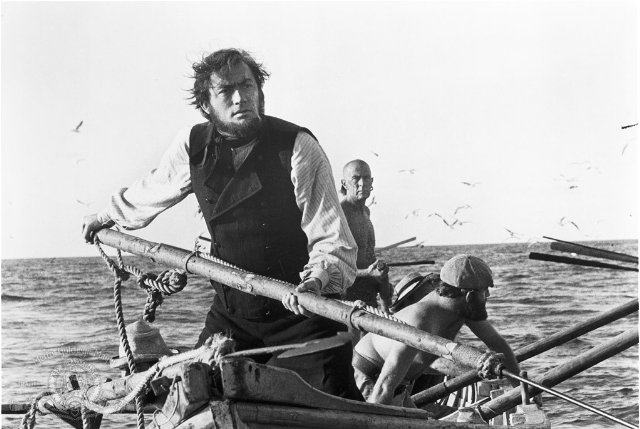
ahab
A somewhat extreme example, but you get the idea

Some days this is quite the struggle. You slave away on a script, send it out (contest, query, what have you) and hope for the best.

Unfortunately, a lot of the time, the best isn’t what happens. There will be rejection. A lot of it.

But every defeat is temporary, and a chance to regroup and try again.

In the beginning, when somebody tells you “no”, you take it personally. But you eventually grasp the concept that they’re addressing the writing, not the writer. You hunker down and keep going, continuously striving to improve.

The “no”s will still come, but eventually you get to the point where you simply shrug it off.

“Why even bother?” some might say. “Why keep doing this to yourself?”

Because the longer and harder you work at it, the closer you get to reaching that goal.

Because we feel this is a goal worth pursuing.

Because we’re compelled to.

Because we believe in our abilities.

Because we love doing it.

Success, especially when it applies to screenwriting, does not come easy. Or quickly. You will need an unlimited amount of patience and perseverance. This is going to be a long, perilous journey.

I’ve started walking. Who wants to come with me?

And I think this is a pretty good way to get things started.

Time for the editor to take over

editor
Where’s the ‘delete’ key on this thing?

The latest undertaking: the edit/rewrite of the low-budget comedy spec is underway.

Even while I was writing it, I knew there were changes that needed to be made. So now it’s time to dive in and make those changes, which tends to be equally as thrilling as the actual writing process. For me, anyway.

This is the part where I force myself to let those changes be made, even for the parts I absolutely love. There will most likely be more than one instance of “Why did I think this was a good idea?” Then I change it.

It happens with every draft of every script. You have to be able to be your own harshest critic. Every decision stems from “How can this be better?”

Sometimes it comes easy, and sometimes it doesn’t. It takes a while to get the hang of it.

“But why not just do it while you’re writing that initial draft?” some may ask. Because you don’t always hit the bullseye on your first attempt. You need a couple of practice tries. Many’s the time I’d suddenly stumble into a solution that proved to be significantly better than the original.

Don’t hold back. Don’t be afraid to make those changes. As I’ve discovered many times in the past, once something is changed, it is very soon forgotten. So much to the point that you’ll barely remember the previous incarnation.

When this whole process is done, at least for this round, I believe the end result will be a better script. I’m fairly confident this won’t take too long, and think writer-me will be quite content with the decisions made and steps taken by editor-me.

And then the whole thing will repeat itself again.

*Side note – blogger-me is proud to announce that the number of visitors to the blog has surpassed the 20-thousand mark. Not too shabby, especially considering the first few years were me and about six other people.

Thanks for reading, everybody!

A little post-comp analysis

scientists
Studying the script data at Maximum Z Labs

The results are in for my standing in two highly-ranked screenwriting contests, and at best could probably be considered partially encouraging.

As mentioned previously in this space, my western did not advance to the quarterfinals of the PAGE International competition. That was somewhat disappointing.

Earlier this week, I’d been informed that it made the top 15 percent for the Nicholl, and was also not advancing to the quarterfinals. This ranking ties a previous personal best. Not bad, but again, slightly disappointing.

As it would probably be for most, my initial reaction to both of these announcements, especially the former, was “Well, I’m just a shitty writer, aren’t I?”

Apparently, not necessarily.

After I’d announced my contest results, I heard from a lot of fellow writers, including comments about the quality (or lack thereof) of the scripts that advance, the quality (or lack thereof) of the readers, but the most-repeated one was:

“It’s all subjective.”

Very true. We produce what we believe to be the absolute best script we can, and either someone’s going to like it, or they’re not. And there’s nothing we can do about it.

If you were also among those of us whose scripts didn’t advance, take heart. It ain’t the end of the world (although it may feel that way). Use this as a learning experience and work on improving your script so it’s ready for next year. Get notes on it. Rewrite. Polish. Whatever you think is necessary.

It’s also important to keep in mind that these contests are not the be-all and end-all. Winning them or placing high doesn’t guarantee a career. Sure, a handful of past finalists are working writers or consultants, but they appear to be the exceptions.

Just to put things in perspective, a friend of mine was a recent Nicholl finalist and says it had zero impact on their career, and still struggle to get their material read.

In all honesty, the sheen of contests is starting to wear a bit thin for me. I’ll probably still enter the western again next year, along with two other scripts I’m hoping to complete, but I’d rather focus on getting my material sold or produced, or at least using my scripts as strong calling cards and writing samples to get assignment work. I’m not picky. Whatever it takes.

There are a lot of ways to break in and become a working writer. Contests are one, but definitely not the only one.


If only you could eat a bad script

pineapple upside down cake
Let the metaphors commence!

Before we get to the gist of today’s post, let’s address the elephant in the room: my western did not advance to the quarterfinals of the PAGE contest.

Honestly, I was a little surprised; I thought it would have done better. After a brief wallow in disappointment, I shrugged my shoulders and moved on. It’s just another one of those things over which I have no control. I still have a ton of confidence in this script and might submit again next year. Also waiting to see how it fares in Austin and the Nicholl.

True, it was a rather lousy way to start the weekend, but over the next couple of days, I managed to redirect my focus, which included a nice long run that involved traversing the Golden Gate Bridge, and attempting something I’ve always wanted to try:

Making a pineapple upside-down cake (from scratch, naturally).

Guests were coming over for dinner, and I’d made pies for them before. But this time,  I wanted to try something entirely new and preferably a little challenging. I’d say this falls into both categories.

I scoured the internet for an ideal recipe, found one to my satisfaction, and followed the directions to the letter. The result? It looked like it was supposed to, and that’s where the similarities end. A little too sweet and the center was still kind of goopy. Nevertheless, my guests still liked it, and K & I split the last piece after they left. Not bad for a first attempt.

Why did it not turn out the way I expected? A lot of reasons. The oven’s a piece of junk. It didn’t bake long enough. The ingredients and the amount of them probably need to be tweaked. No matter what, I know now that I can adjust all of these next time and get closer to the results I seek.

Except for the oven. It will forever remain a piece of junk until it dies. Which can’t happen soon enough. But I digress.

Notice all of the comparisons you could make between baking and writing a script? Trying something new and long-sought-after. Seeking advice and guidance. Following the guidelines. Doing what I was supposed to. An okay-but-was-hoping-for-better initial result. Planning ahead on what to fix/adjust for next time.

If a less-than-determined baker ended up with the cake I made, they’d probably denounce the whole process, give up entirely and probably buy pre-made stuff at the supermarket. But we’re made of sterner stuff. We hit a snag or some kind of unforeseen development, and we compensate as best we can. We learn what not to do next time. Sometimes you end up with something jaw-droppingly amazing, and sometimes you end up with something totally inedible.

With this whole experience behind me, I can now focus on projects of the immediate future, which includes another round of editing and revising a script, and making a pie or two for a dinner party this coming weekend.

It’s my intention to have the results of both of these undertakings be totally and utterly irresistible when they’re done and ready to serve.