
For crying out loud, DO SOMETHING!

bored
Is THIS how you want your audience to react?
While the November writing project moves forward at a pleasant pace (but now appears to be more of a November-December thing), part of my time has also been spent giving notes on some friends’ scripts.

One in particular had a few problems, some of which were easily fixed, but what really stood out was how it committed a cardinal sin of screenwriting by having a lot of scenes where the characters talk repeatedly about something “important” they want to do, but by the end, they end up not doing anything. And I mean that literally. These were some of the most passive characters I’ve experienced.

It didn’t help that the characters also had no arc. They were exactly the same from beginning to end (with maybe the exception of one who might have been arrested, but even the circumstances involved with that are still somewhat unclear).

Let’s face it. A main character who’s all talk, no action, and doesn’t change is the death knell for your script. Why would somebody be interested in seeing what happens to them, especially if they don’t do anything?

One of the most frequent problems I’ve seen is when the main character isn’t the one driving the story forward. They just kind of hang around and watch stuff happen.

Bo. Ring.

Remember, you’re trying to get your main character to their goal over the course of the story. They have to be the one making things happen in order to achieve that, or at least react to what happens in such a way that it helps them. The way these characters were written, I honestly had no idea what their individual goals were.

Take a look at your latest draft. Which character is moving the story forward? Is your main character active or passive? Are they making things happen? If not, can you see what you’d need to change in order to do that?

You definitely want your characters to come across as believably three-dimensional. Having them do little or next-to-nothing throughout the story is doing you no favors. Character motivation and actions are some of those key elements that simply cannot be left out. Audiences can forgive certain things, but a dull, passive main character isn’t one of them.
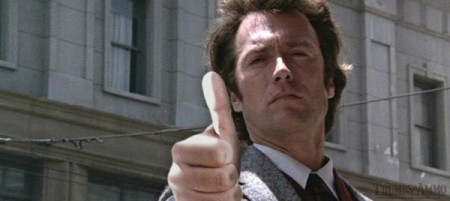
Hopefully not too seldomly heard

callahan
Thanks, Harry! I’m glad you liked it.

So how’s your November writing project coming along?

Mine’s not too bad.

I’m a few scenes into Act 2, and things seem to be progressing smoothly, including coming up with a strong and slightly expository scene at the spur of the moment. Daily page output is fluctuating, but relatively steady; not sure if I’ll have a completed draft by month’s end, but think I’ll at least be mighty close.

This script is actually part of a collaborative effort (more on how that came about another time), so I sent the first ten pages to the other person, just to let them know how it was going.

Their response arrived the following morning.

“Fucking amazing! You are definitely on the right path. Amazing job!”

There was more to it, but I believe that accurately sums it up. They like what I’ve done so far, which in turn buoys my confidence, thereby inspiring me to keep charging ahead. Encouragement combined with enthusiasm is contagious.

Added bonus – several voicemails since then mentioning how they’re been reading those pages a couple of times a day and can’t help but feel a thrilled sense of anticipation about the rest of the script, along with its potential.

No complaints from yours truly about dealing with a case of the warm fuzzies.

A writer always hopes people like what they’ve written. True, not everybody will, but if some positive comments come from another writer whose opinion you value, wouldn’t that give you a little boost?

Who doesn’t appreciate a little vindication for all the hours put into getting to this point? We all know how much effort it takes to write something, let alone something that garners a positive response.

When I’m asked to read something, I’ll be honest with my thoughts on it. I’ll make appropriate suggestions of how it could be improved (which is usually the reason we’re being asked to read in the first place). But if I think it’s good, I won’t hesitate to say so. I will gladly point out what I liked and why I liked it.

Your readers are more than happy to give you positive feedback and words of encouragement, but they won’t do it because they like you or you’re their friend. They will do it because the material you wrote earned it.

And they’ll want you to keep doing it. And you’ll want to too.


First, you build a solid foundation…

foundation
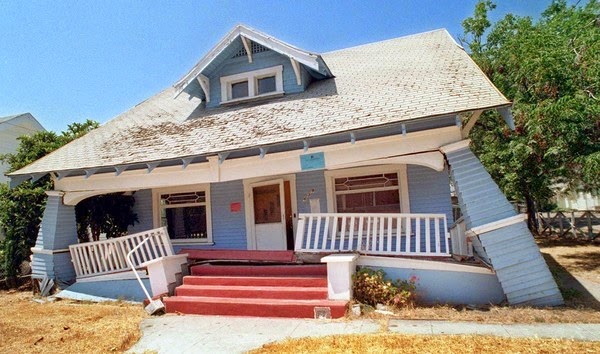
And this is what could happen if it isn’t

As the daily churning-out of pages continues for my November writing project, I’ve found it extremely helpful that so much time was spent working on the outline.

Only through trial-and-error did I eventually discover that making sure the outline is rock-solid before starting on pages makes a huge difference.

Keep in mind that this is what works for me. You may have an entirely different approach, and that’s totally cool. Actually, I’m curious to hear about some of them. Feel free to discuss in the comments section.

And now, back to the subject at hand…

I see putting together the outline as a gradual building-up process. I start with establishing the main plot points. What are the pivotal moments in this story? Does each one properly fulfill its purpose in the overall context of the story?

Then I fill in the blanks between those plot points. Does it make sense how we get from, say, the inciting incident to the end of the first act? Does each scene do its job in moving the story and characters forward? Are you presenting information we need to know, or setting things up so as to adequately pay them off later? Does each scene appropriately follow the one before and lead into the one after it?

Something important to keep in mind during this part: eliminating unnecessary scenes. You may have a scene you really, really like, but may not be absolutely vital to the story. My recommendation is to either make it vital or get rid of it entirely. The last thing you want is to interrupt the flow of your story for a scene that really doesn’t have to be in there.

Once you’ve got all those blanks filled in, then you move on to expanding each scene – mostly just putting in the necessary elements that reinforce the purpose of the scene. Sometimes I’ll add in a snippet or two of dialogue.

Another very important detail about each scene: get to the point, then get out and into the next one. Once the scene fulfills its purpose, anything after that just slams on the brakes.

Hang in there. You’re almost done. The outline is pretty sturdy, but it could probably use a little more editing, fine-tuning and polishing. When you think it’s honest-and-truly ready, that’s when you make the big jump to pages.

This isn’t to say there won’t be more changes in store once you’re into pages mode, but by putting so much time and effort into your outline, you’ve eliminated a lot of the heavy lifting for when you get there.

A splendid use of a month’s time

pilgrim-marilyn
Most apropos Pilgrim-related photo I could find

Bit of an Election Day shorty today (and for readers in the US – make sure you vote, if you haven’t already).

Count me among the legion of writers using the month of November as a 30-day writing exercise.

My project of choice: first draft of a script that’s been in development for about a year and a half. Looking forward to talking about it more once the draft is complete and some next steps take place; but for now – mum’s the word.

The daily goal of 2-3 pages has again been established. So far, so good, especially working with an outline that’s pretty solid. That really helps.

Working on this reminds me of how much I enjoy the writing process, particularly when it involves my genre of choice (action).

My objective is to be finished, or at least as close to being finished as I can get by the end of the month. Fingers remain, as always, firmly crossed.

I sincerely hope your November is equally as productive.

Percolating. Always percolating.

Image result for coffee POT GIF

As writers, we fully realize that inspiration can hit at any time, and in any situation. And it’s what you do when it does that really matters.

Late last year, I was taking the dog for her last walk of the day. Something about that particular moment triggered a story idea. I won’t say the floodgates of creativeness opened wide; more like the squirt from a water pistol. It was just a sentence, maybe two, but I immediately saw so much potential in it.

We got home, I created a file for it on my computer, and I wrote down the tidbits of story I’d managed to come up with.

And in the hard drive it sat, practically untouched for months on end.

In a manner of speaking.

As is usually the case, even thought I may not actually be writing, I’m always thinking about the writing.

Although I’ve worked on several other scripts this year, every once in a while, a new detail about this story would pop up and I’d add it in. It’s definitely an ongoing work in progress, moving at a glacial pace, and there’s no rush to get it done.

It’s actually very beneficial to not put any pressure on yourself and just let the ideas show up at their convenience. And sometimes it pays off when you least expect it.

About a week ago, I came up with an idea for a short, but then realized the location would be a perfect setting for the climax of this script. Determined to hang onto that idea, I reopened the file and figured it was as good a time as any to to move things forward a little, so I started organizing the plot points. There are still a few blanks to be filled in, but it’s slowly coming together.

When the’s next time I’ll work on it? No idea. It’s still very, very early in the development process. A few other scripts currently have priority over this one, but I highly suspect the trend of occasionally adding a few details will continue.

As it should. And then when I finally get around to focusing all of my attention on this one, chances are I might be further along than I expect.

So keep on working on whatever it is you’re currently working on. But feel free to let your imagination wander about once in a while into something else, particularly something you plan to eventually work on. See what you come up with, and if you like it, stash it away for later. Hold onto it even if you’re not that crazy about it; you might find a totally unexpected use for it later.

No matter what you do, Future You will really appreciate everything Present You is doing.