Q & A with Babz Bitela

Babz Bitela

Barbara “Babz” Bitela is a literary manager operating out of northern California, a “hired gun” editor for fiction writers, and hosts the Babzbuzz internet radio show “because folks were nice to me and helped me, so I’m trying to pay it forward, and believe me, I’m keeping it real.”

“We want voice on the page. We KNOW it when we ‘hear’ it.”

Her book Story of a Rock Singer is currently being adapted as a Broadway musical.

What’s the last thing you watched/read that you thought was incredibly well-written?

Justified and Bates Motel are my top two. Joss Whedon is by far one of my favorite writers. Buffy the TV series –  WOW!  You can youtube his interviews: it’s like an AA degree in writing and it’s free to anyone.

How’d you get your start doing representation?

I pitched a semi-retired agent named Ed Silver on a book I wrote. He was Lee Marvin’s manager and finance guy, also for James Coburn and many others. The guy’s ‘seen’ stuff, man – Hitchcock napping, for one. He loved my style and offered me a gig to take over and he’d mentor. We clicked big time. He’s Jewish, I’m Italian. As Sebastian Maniscalco says, “Same corporation, different division.” That’s us.

Is recognizing good writing something you believe can be taught or learned?

You for sure can learn it IF you want to. Here’s why – bad writing obviously sucks. It just does. How do you know that? By reading GREAT (not just good) scripts. I read so much so often I can now tell what’s going to go and what MAY go but here’s the rub: in the absence of money behind it, it may not matter. And I may love it and another may say “meh”. So pov does matter.  So you can learn and pitch but Lady Luck is no lady: she’s a tramp in cheap shoes and she’s fickle. We press on because we believe in the story/writer we hawk. If it goes, it goes, if it doesn’t, well, I’ve had the benefit of “seeing” incredible “movies” and the only down side is, so few others will see that. THE WRITER however, benefits. Why? Job well done. And if you don’t write for the JOY of the craft, there’s no point. Write for the sale? That’s an industry sucker punch. I’ve learned to find great scripts and I’ve learned it can be like screaming in space once you do.

What are the components of a good script?

VOICE, RISING ACTION and TWISTS.  What is voice: it’s a lot like porn – I know it when I see it but it’s hard to describe. Think of it this way: you open a novel, settle in and by page two you’re thinking “Ugh, this just sucks”, but you press on and by page ten you know it’s not the book for you so you donate it to Goodwill. It’s the same with a script. I once read a tv pilot by my client that I couldn’t read it fast enough. Why? I WAS DYING TO SEE WHERE IT WOULD LEAD. The action and characters were alive on the page. That is what makes a good script: I call it NARRATIVE TUG.

What are some of the most common mistakes you see?

Where to start? Typos, for sure. It’s a speed bump.

Wrylies. Just don’t. UGH! Makes me crazy. There’s only one time I’ve seen it used where it worked. ONCE. And that writer is a five-figure-income writer.

Novels posing as scripts. The writer MUST understand the economy of words and do VISUAL storytelling. Telling a story with pictures is a movie. Telling a story with talking is a soap opera.

Avoid using “ing” words – slows narrative, slows the readers eyes.

Avoid “very”. Just find what IT IS. Don’t say “very smart”, say “bright”  – just pick! Not kidding. You’ll thank me. Rodale’s The Synonym Finder is invaluable for writers.

And never fall in love with your stuff. It’s gonna get cut.

What story tropes are you tired of seeing?

Well, many work. Some don’t. My favorite recently was probably in draft form: “Fire all phasers!” But instead he said “Fire everything!” Love it!

But I say write bad and cliché in the draft, leave it there, then go back and rewrite it.

Lots of folks say “Not my first rodeo.” I say “Not my first rocket launch.” Anything to WAKE UP the reader.

What are the three most important rules every writer should know?

I’ve got more than three.

-Don’t enter a script contest pitching a word doc.

-Don’t send a script unless invited.

-Don’t ask me what I think if you don’t want to know.

-Don’t go past 120 pages. I mean it. Try to stay around 100 if you can.

More rules? I think it’s just wise to do 12pt Courier font as it’s tradition. The Coen Brothers don’t use Courier. But they’re already famous, so when you’re famous do what you want. In the meantime, stick to tradition.

What do you look for when it comes to potential clients, both personally and professionally?

No dope. No booze. No drama.

Feet on the ground, and committed to spending tons of time doing what you love, regardless of the outcome.

My clients pitch themselves. They must. If that’s not for you, then I’m not the agent for you, and also, you’re in the wrong business.

Yes, the agent makes inroads, but you must pitch you and build relationships. When you do; AVOID using “I” and ask the person “What do you do, and how do you do it?” Ask about them. We’re people FIRST. That’s why I do Babzbuzz. People like me. They helped me. So I take what they tell me and mush it up with what I’ve learned, and talk about it on my show to try to help.

I’m a small company: I’m WGA.

Meh. Folks hang up on me all the time.

Why?

“Babz, love the script! Who’s funding?”

Crickets.

“Babz, baby. Call us back when you have the dough and I’ll show my client. He may want to star in it.”

EEEK!

What happened to love of story?

Hell, that left the building and moved to an island the actor/director owns. He’s got to feed his family too, ya know. So bring the bricks.

EEEK!

Lightning can and does strike. That’s what I do. I’m really a stormchaser who looks for folks with money who want to buy.

Readers of this blog are more than familiar with my love and appreciation of pie. What’s your favorite kind?

Oh man, you had me at the fridge door. Dutch apple. Key lime. Rhubarb when you can find it. And pretty much any clever use of chocolate.
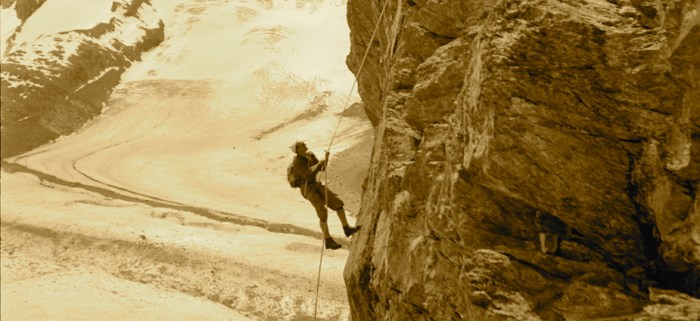
Plan accordingly forwardly

mountain climber
Know what’s ahead and what you’re going to do about it

Now that we’re well into the second half of the year, I’ve been working on scheduling out how I’d like the time between now and December 31st to be filled up, both writing and career development-wise.

As you’d imagine, there’s a lot of writing involved. Finishing the rewrite of one script, polishing another, cranking out a first draft of yet another. I’ve done what I can to establish realistic and achievable deadlines – no more writing marathons for me.

Add to that the efforts to network and meet with other writers, both in-person and online, along with pursuing viable avenues to get the work out there, such as query letters and contests.

One important part of all of this is that, for the most part, I’m the one overseeing all of this. Nothing will get done or happen if I don’t make the effort. As for the things I have no control over, especially the career-oriented ones, I’ll do what I can to get the ball rolling and see what develops.

A friend saw my list of objectives and said “Good idea. Plan to succeed.”

Part of this stems from exactly that. I’m working at this so I can succeed. Being organized about what you want to accomplish helps you stay focused on getting closer to actually achieving it.

While you’re working on your script, you should always be asking yourself “How can I make this better?” Well, this also applies to working on getting a career going. How can you make it better?

–Keep writing. Your skills will improve and your number of completed projects will increase.

–Seek out connections. The internet is your greatest tool for networking with other writers and folks within the industry. Very important – be nice.

–Do your homework. Find out the necessary details as they apply to you and what you’re trying to accomplish. Whether it’s the best format for a query, if somebody’s contact info is still accurate, or which contest is a good match for your script.

–Commit. You know all the things you need to do and want to do. Now dedicate yourself to doing them.

All of this may seem somewhat overwhelming at first, but get in the habit of making it a daily effort – even just a little at a time – and the results will start to take shape.

Lattes, lunches & kindred spirits

coffee
“And then he actually asked, “But what’s your Save the Cat moment?””

It’s been a busy week around here, and not just in terms of writing.

I’ve had some great in-person meet-ups with three other local writers over the past couple of days. Two were first-timers, the third was someone I’ve known for a couple of years. Each one was great in its own way. This really is one of my favorite parts of networking – actually meeting somebody else and getting to know them.

Because of my work schedule, lunch or early afternoon coffee are ideal. I prefer a nice little cafe because it always makes for a better one-on-one environment: quiet, sociable, pleasant. Larger networking events, usually at bars, tend to be pretty crowded and noisy, which makes it tough to establish a solid rapport. I’m not too keen on having to continuously shout and not be entirely sure either of us can hear the other.

The first meeting usually involves the exchanging of “here’s my story” mini-bios, and then moves on to what’s going on for both parties. Over the course of about an hour, we’ll share and discuss our individual journeys as writers. Everybody’s journey is different, and I always find each one quite fascinating.

We often share many similarities: our constantly working in the hopes of eventually succeeding as a writer (or filmmaker), the noticeable excitement while discussing our latest project(s), wondering how it’ll go and how it’ll be received.

We are also allowed free rein to vent our frustration about whatever’s currently sticking in our respective craws. Bad experiences, lack of funds for a project, feeling stuck with developing a story, dealing with lousy notes, and so on. One of my new connections even stated, “It’s nice to know I’m not the only one this has happened to!”

That may be what’s at the heart of all of this: knowing you’re not the only one trying to do this, and that somebody else totally understands what it is you’re going through. Simply being able to chat about it in a casual social setting can do wonders; one might even call it therapeutic.

I also make a point of offering to help out in any capacity I can, which tends to usually be either giving script notes or suggesting potential contacts and strategies, and just about everybody is more than happy to reciprocate. Who can’t use a little help?

If you haven’t done so already, I heartily recommend reaching out and connecting with somebody in your area, especially if both of you are within close proximity to each other. Chances are they’re seeking to do the exact same thing.

You know the saying, “It’s not what you know, it’s who you know”? Well, this not only applies to breaking in, but also to helping you work your way towards that. Building up your personal network of fellow creatives is easy, won’t cost you that much (just what you’d spend on a cup of coffee or a meal), and is a definite plus for all involved.

Leaving an indelible impression

footprint
Not expecting it to last millions of years, but wouldn’t complain about it either

As an avid fan of summer movies, this year has been one big disappointment after another. Granted, I haven’t seen a few of the latest releases yet (STAR TREK BEYOND, SUICIDE SQUAD), but barely remember anything since CAPTAIN AMERICA: CIVIL WAR, and that came out in early May.

Remember all the hoopla preceding the GHOSTBUSTERS reboot? Kind of died off quickly, didn’t it? We saw it opening weekend, mostly because V wanted to, and it was…okay. I don’t attribute it’s lack of success to angry fans of the original, but because it just wasn’t that great a movie.

Was anything from this summer truly memorable? So far, not really (although I’m still holding out hope for the exquisite-looking KUBO AND THE TWO STRINGS).

It honestly seemed like everything simply wasn’t up to standard. Despite what the various marketing assaults might indicate, the end products felt too slapdash and that too many projects were focused on being ready for the release date rather than making sure the script was rock-solid.

Based on this and almost-daily reports of forthcoming reboots, remakes, and overall more of the same-ness, breaking in as a writer of original material suddenly seems significantly harder. Not only does your script have to really wow ’em, but it better pack a significant wallop on several levels.

A great, new story with phenomenal characters, all told in the most captivating way possible. Simple, no? I realize that a lot of films start with great scripts, but the process that leads up to the film being unleashed on the public can drastically affect it – too many times not for the better.

I’ve always seen my objective as to not only tell you a story that hasn’t been told before (or at least tell an old one in a totally new way), but to tell it in the most entertaining way possible. I want you to not be able to get those images out of your head (in a good way, as opposed to a dear-God-please-make-the-nightmares-stop kind of way).

I’ll be the first to admit that I’d love for one of my scripts to be one of the surprise hits of a summer season, but if recent releases are typical of what kind of material I’m up against, my work is more than cut out for me, if not potentially impossible.

It wouldn’t surprise me if somewhere down the line, my script got turned down because it was deemed “too original”.

A scary, sobering, and all-too-possible thought.


One scene, three points

trident
Careful not to get stuck on any of them

After some thorough self-imposed analysis, the revising of the comedy spec is underway. It’s getting easier to spot trouble spots.

There’s one scene in particular that’s giving me some trouble. It’s a pivotal scene involving the main character and offers a revealing glimpse into his backstory. The problem was in figuring out how to best do that.

After much drumming of fingers, rubbing of chin, and a whole lot of attempts, a potential solution may have presented itself. It’s still in the development phase, but for now, quite workable.

One of the first things I learned about screenwriting was what each scene needs to accomplish:  advance the plot, the character, and the theme.

Regarding plot, does the scene move things forward? Does it fall neatly into place in terms of how the overall sequence of events plays out? If you took it out, would it totally mess things up?

I’ve read a lot of scripts where something happens and I don’t know why. Maybe it’ll pay off later? Sometimes it does. Other times, well…

Another handy tip when it comes to advancing the plot in a scene: do it quickly. Get to the point of the scene as fast as you can, then get out. Don’t wait around. Just get out now. Too many times I’ve seen a scene drag on much, much longer than it needs to.

Regarding character, does each scene show them changing a little bit more from when they were first introduced? This doesn’t just apply to the main character. Every character needs to grow/develop. Wouldn’t it be kind of boring to read a story where nobody changes?

And tying it into the advancement of plot, every situation the character experiences should help move their own development along.

Which brings us to theme. The message of your story. This can be a little tricky.

Each scene should tie into the theme, or have it on display in some manner. I recently worked with a writer having trouble tying everything together. We discussed the story and the main character’s internal and external goals. What was the message they wanted to convey? Based on those discussions, we were able to come up with a theme that worked for both the story and as it applied to all of the characters.

One of my favorite examples of a theme in use is BACK TO THE FUTURE. Early on, Marty says “History’s going to change.” And boy, does it. We get a ton of set-up in the first act, and then everything does indeed change in the second act as all of those setups are paid off. Amazing.

Take a look at your latest draft. Does each scene advance the topics in question? If not, do you have a way to fix that so it does? The more you get in the habit of doing this, the easier it’ll get and the faster it’ll become second nature to do it all the time.