How about a li’l boost?

Had the chance to talk to some writing colleagues this week. Some new, some I’ve known for a while. One via Zoom, one on the phone, and the rest in person.

(Ah, the results of networking and making connections!)

While each conversation was specific to each person, there were a few common threads: what we were working on and how it was going, experiences and results of previous projects, and glimpses ahead to potential future work.

But apart from discussing actual writing stuff, there was also a mutual contentedness about just being able to have a nice chat and offer up some morale-boosting encouragement.

For most of us, writing is a solitary activity, so social interactions might be on the sparse side. As much as I enjoy a productive session that sees progress on my script, there’s just as much enjoyment from shooting the breeze with another writer (or writers) over a cup of coffee.

I’m extremely fortunate to have a lot of other writers live nearby, so I take advantage of that and meet in person whenever possible. (Highly recommended if you can)

If this isn’t the case for you, what’s stopping you from dropping another writer a line and inviting them to talk on Zoom? You’re probably already connected on social media, so why not take it one step beyond? It’s a great way to meet and get to know each other better, all from the comfort of home. And you might be surprised how receptive they are to the idea.

No matter how you do it, one of the unspoken benefits of talking with other writers is the pleasant reminder that YOU ARE NOT ALONE IN THIS. It’s more than likely they’ve gone through the exact same things you have, so they can relate. Maybe they’ve endured more, so you can learn from their experience, and vice versa.

Just as it’s important to try and maintain a regular writing schedule when possible, taking the time to step away, relax, and engage in a casual conversation can be just as helpful.

For all the writers involved.
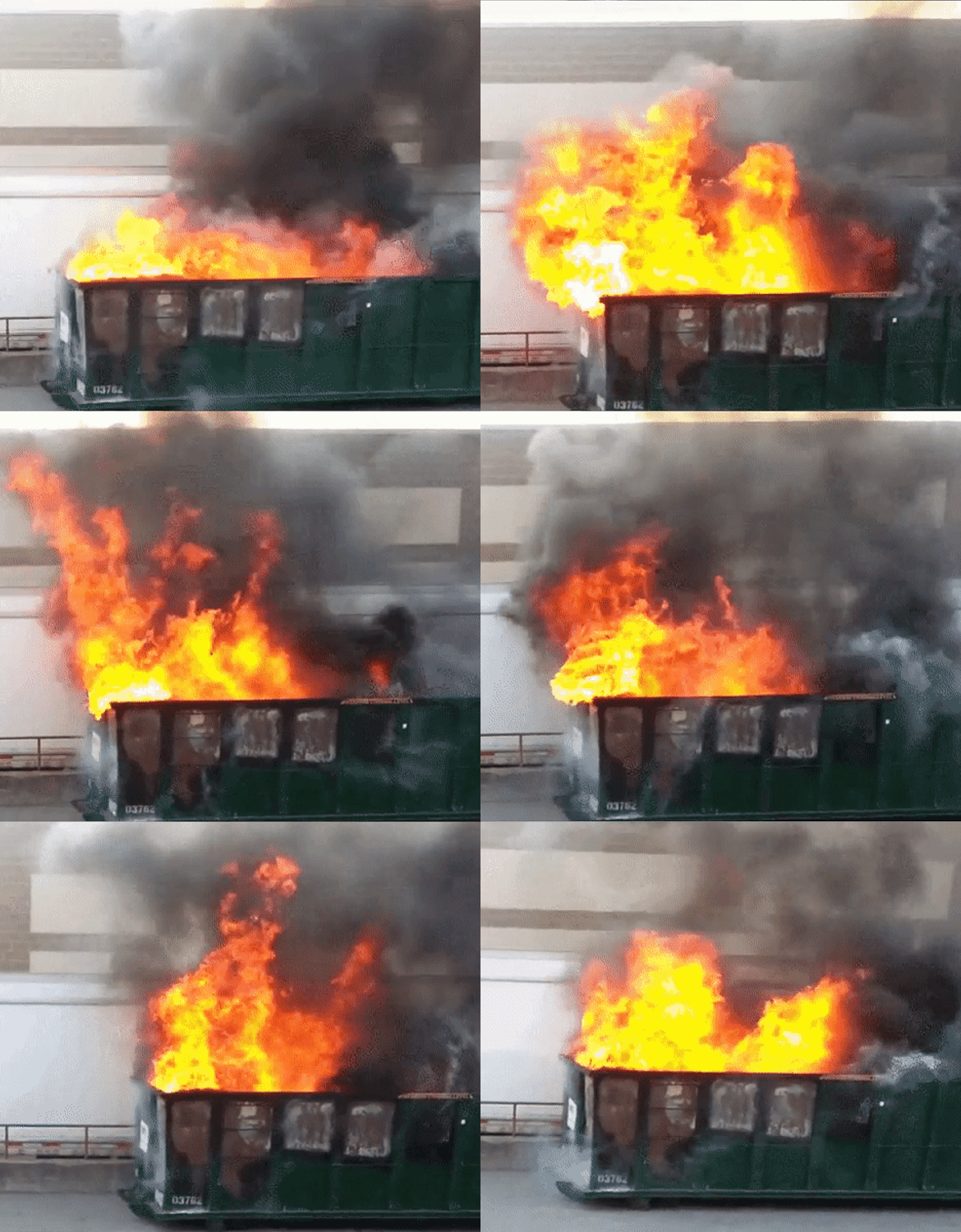
There’s gold in them thar dumpster fires!

Saw a great quote the other day that was along the lines of “Being a writer is like having homework for the rest of your life.”

From a certain perspective, that definitely has a negative connotation. Emphasizing the ‘work’ part of the word indicates drudgery and toil. Like, strictly dullsville, man.

The obvious solution is to make it a positive experience.

I know. Easier said than done, but bear with me.

(Writing should never seem like work anyway, but that’s another post.)

To be a better screenwriter, you need to read scripts and watch movies. You can see how the pros did it and figure out how that could potentially influence your work.

While watching your favorites and the classics can definitely help, I also suggest watching really shitty movies as well.

Hard as this might be to accept, there’s something be gained from it.

What was it that made them bad?

The possibilities are numerous, but a good percentage of the time – it’s the script.

As a writer, you can use that to your advantage.

Painful an experience as it might be, watch that bad movie from a writer’s perspective. Is it the writing that sucks? The story? The characters (and not the actors)? Is there a coherent sense of structure? Is there any structure at all? Does the story flow naturally, or do things happen because it seems like the story needs them to?

Maybe it feels like the writer didn’t take any chances, or worse, went for the very easy and cliched (i.e. expected) solution. Does anything in your script feel that way? If so, think about what changes you could make that would produce the same results, but get you there in a totally different way.

It may be 90-110 minutes of your life you’ll never get back, but at the very least you’ll get a better idea of what NOT to do when it comes to developing your script.

And that is a worthwhile lesson for any screenwriter.

No words

’nuff said.

#paythewriters

#wgastrong

#sagaftrastrong

Behold the tactile experience

A few weeks ago, I printed a copy of the animated fantasy-comedy, and then posted on social media about holding the actual document in my hands and the sensations that resulted from doing that.

(Quick note – said sensations were of a very positive nature. There’s definitely something to be said about holding a physical manifestation of all the time and effort you put into this draft. It’s exhilarating. Uplifting, even. A true sense of accomplishment. And then eagerly accepting the next step of figuring out what’s wrong with it and how to fix it/make it better.)

The post yielded quite a wide spectrum of responses. From “Totally agree. It’s fantastic!” to “I can’t imagine NOT printing it” to “You still print out scripts?”

As I matter of fact, I do. I find it to be incredibly helpful when it comes to editing, proofreading, and overall polishing.

As more than a few people put it, “Printing out a script is a necessary part of my process. I can see things on a page I’m holding that I might not see on a screen.”

That can definitely apply to me. After I finish a draft, I’ll step away from it for a few weeks, then print it out (double-sided) and have at it with red pen in hand. I go through the whole thing page by page, line by line, marking it up as much as necessary.

Could there be some kind of subconscious connection between holding an honest-to-goodness physical printout in your hands and what it does to your creative process? Beats me, but it seems to really make a difference.

I’m much more likely to spot something that needs to be changed when it’s on a piece of paper rather than on a screen. A line of dialogue that doesn’t work or needs retooling. A scene that doesn’t flow the way I need it to, so I try rearranging it. Or those most common of miscreants – a typo, a misspelled word, or a rogue punctuation mark. It happens.

Sometimes I’ll have a page that’s totally mark-free, or maybe one or two little fixes. Sometimes the page has got more red ink and edit marks than actual text, or my notes and comments occupy a lot of that white space.

All of it – not uncommon.

One interesting side note – many’s the time I’d have to decide about cutting something I was hesitant to cut. I would then figure out what was best for the script and story, and not what I wanted. If cutting this or rearranging that resulted in the scene, and subsequently the script, being better, then so be it. The usual follow-up to that was I’d make the change, then immediately forget about what was cut because the new version was better.

Once all the changes and fixes have been taken care of this draft, I’ll go back to the beginning and start implementing those changes and fixes on the digital copy.

Also not uncommon – trying to read my own handwriting, which can occasionally border on appearing microscopic in size from me trying to cram too many notes on the page. It might take a few passes to read it, but I eventually get there.

Before I know it – voila! A new draft.

Printing out my scripts to do some more work on them in order to make the next draft better is a process that’s served me quite well over the years, and I don’t see any reason to stop doing it.