Crafting a tale to thrill, astonish, and exhilarate

mad-scientist
Those fools at the film academy dare call me mad? I’ll show ’em! Mwahaha!

2017’s writing got off to a pleasantly rousing start with the commencement of the first draft of my latest project: the pulpy adventure spec.

Yep. After years of working on the outline, I finally decided to take the plunge and write the damned thing.

Seeing as how this is a genre near and dear to my heart, I dove into the opening sequence headfirst and just had at it, surpassing the original goal of completing at least 2 pages a day by two and a half times that amount. Add to that the 4 pages for yesterday, and that places me further ahead than anticipated. It’s not expected to maintain this kind of output on a daily basis, but no complaints so far.

That being said, upon reflection, the latest scene still leaves a little to be desired, so an impromptu rewrite is already being planned out and will be implemented straightaway.

A few alterations have also been made in regards to the overall writing process.

First, even though the outline needs to be rock-solid before starting on pages, the scene descriptions are sometimes a little vague. “Big fight happens!”, that sort of thing.

When that happens, the focus shifts to plotting out the beats of that particular scene. How do things play out so it tells the story and moves things forward? Is it accomplishing what it needs to? It’s quite helpful, and helps prevent a lot of frustration in trying to think up stuff on the spot.

Another is fully embracing the whole “just get it done” attitude. Write it down and move on. There’ll be time for all that fancy-pants editing and polishing stuff later. It’s also been noticed that sometimes the first idea is still the best.

And in what may be the most important development, seeing as how this is at its core my interpretation of the old pulp novels, I’m doing what I can do to really make it read that way. One could even argue that writing the western was just a warm-up exercise. The writing in this script might be a little more over the top than usual, but that could be exactly what it needs.

Even though it’s a screenplay, I take a certain pleasure in coloring things a slightly stronger shade of purple.

There’s no specific target deadline for completing this draft, but hopefully it won’t take too long. For now, I’m just enjoying the ride.
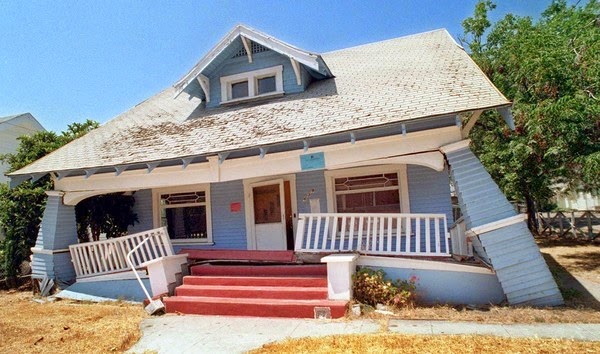
First, you build a solid foundation…

foundation
And this is what could happen if it isn’t

As the daily churning-out of pages continues for my November writing project, I’ve found it extremely helpful that so much time was spent working on the outline.

Only through trial-and-error did I eventually discover that making sure the outline is rock-solid before starting on pages makes a huge difference.

Keep in mind that this is what works for me. You may have an entirely different approach, and that’s totally cool. Actually, I’m curious to hear about some of them. Feel free to discuss in the comments section.

And now, back to the subject at hand…

I see putting together the outline as a gradual building-up process. I start with establishing the main plot points. What are the pivotal moments in this story? Does each one properly fulfill its purpose in the overall context of the story?

Then I fill in the blanks between those plot points. Does it make sense how we get from, say, the inciting incident to the end of the first act? Does each scene do its job in moving the story and characters forward? Are you presenting information we need to know, or setting things up so as to adequately pay them off later? Does each scene appropriately follow the one before and lead into the one after it?

Something important to keep in mind during this part: eliminating unnecessary scenes. You may have a scene you really, really like, but may not be absolutely vital to the story. My recommendation is to either make it vital or get rid of it entirely. The last thing you want is to interrupt the flow of your story for a scene that really doesn’t have to be in there.

Once you’ve got all those blanks filled in, then you move on to expanding each scene – mostly just putting in the necessary elements that reinforce the purpose of the scene. Sometimes I’ll add in a snippet or two of dialogue.

Another very important detail about each scene: get to the point, then get out and into the next one. Once the scene fulfills its purpose, anything after that just slams on the brakes.

Hang in there. You’re almost done. The outline is pretty sturdy, but it could probably use a little more editing, fine-tuning and polishing. When you think it’s honest-and-truly ready, that’s when you make the big jump to pages.

This isn’t to say there won’t be more changes in store once you’re into pages mode, but by putting so much time and effort into your outline, you’ve eliminated a lot of the heavy lifting for when you get there.

Time for the editor to take over

editor
Where’s the ‘delete’ key on this thing?

The latest undertaking: the edit/rewrite of the low-budget comedy spec is underway.

Even while I was writing it, I knew there were changes that needed to be made. So now it’s time to dive in and make those changes, which tends to be equally as thrilling as the actual writing process. For me, anyway.

This is the part where I force myself to let those changes be made, even for the parts I absolutely love. There will most likely be more than one instance of “Why did I think this was a good idea?” Then I change it.

It happens with every draft of every script. You have to be able to be your own harshest critic. Every decision stems from “How can this be better?”

Sometimes it comes easy, and sometimes it doesn’t. It takes a while to get the hang of it.

“But why not just do it while you’re writing that initial draft?” some may ask. Because you don’t always hit the bullseye on your first attempt. You need a couple of practice tries. Many’s the time I’d suddenly stumble into a solution that proved to be significantly better than the original.

Don’t hold back. Don’t be afraid to make those changes. As I’ve discovered many times in the past, once something is changed, it is very soon forgotten. So much to the point that you’ll barely remember the previous incarnation.

When this whole process is done, at least for this round, I believe the end result will be a better script. I’m fairly confident this won’t take too long, and think writer-me will be quite content with the decisions made and steps taken by editor-me.

And then the whole thing will repeat itself again.

*Side note – blogger-me is proud to announce that the number of visitors to the blog has surpassed the 20-thousand mark. Not too shabby, especially considering the first few years were me and about six other people.

Thanks for reading, everybody!