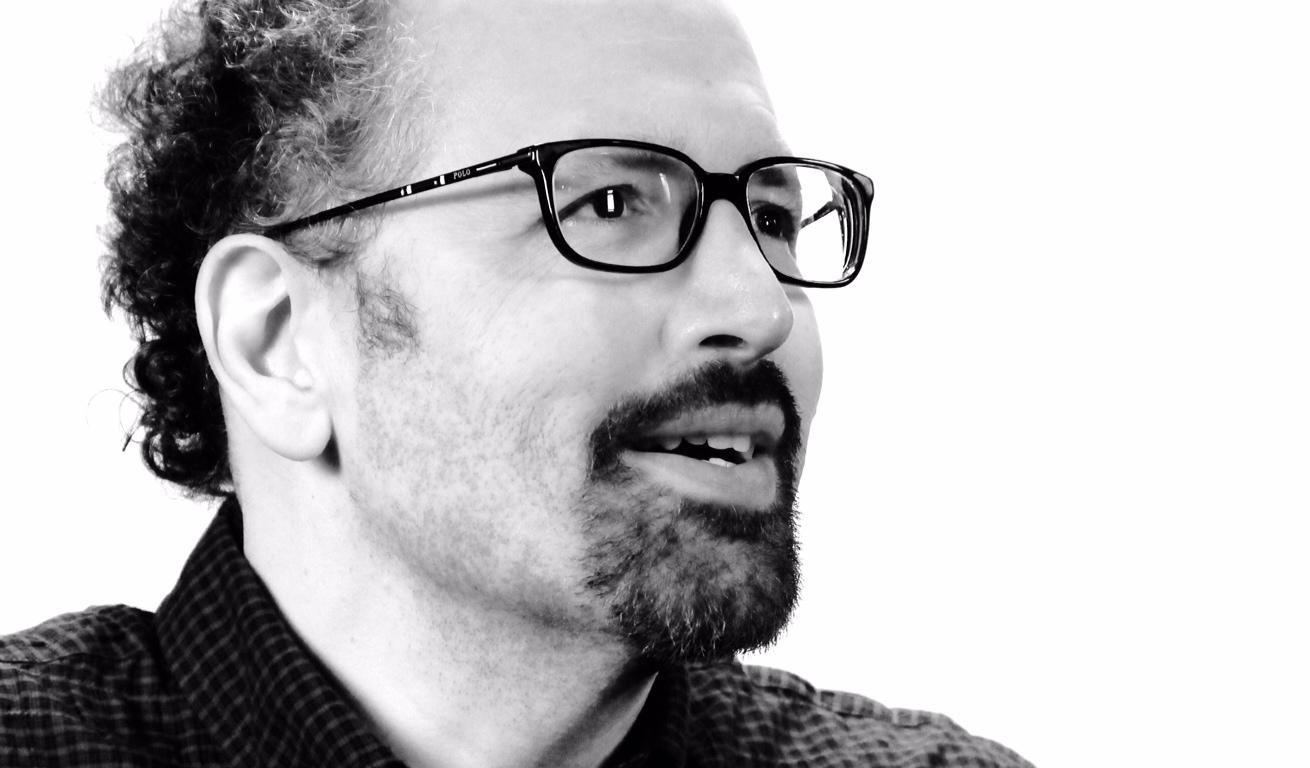
Ask a Prolifically Verbose Script Consultant!

Ms. Hay swears this is what she actually looks like
Ms. Hay swears this is what she looks like

The latest in a series of interviews with script readers and consultants who would be worth your while to work with if you want to get your script in shape. Today’s spotlight is on Lucy Hay of UK-based Bang 2 Write .

1. What’s the last thing you read/watched that you thought was incredibly well-written?

Cripes, difficult to pick something out, I think the last couple of years have been exceptional … For me, as I’m a movie buff, it’s a tie: I loved RUSH, by Peter Morgan; also SAVING MR BANKS by Kelly Marcel and Sue Smith. Both were very different, yet still massively ambitious stories that were visual and yet had loads of heart, too. A lot of the spec scripts I read aren’t BIG enough like that – they confuse potential actual money spend (“how many locations, people, CGI or explosions can I get into this?”) with story ambition, which isn’t the same.

2. How’d you get your start reading scripts?

I went to university to study screenwriting and to pass the course we had to do a six-week placement in the media industry somewhere. I was a young single mum of 21 with no childcare and no money, so going up to London and coach-surfing was out of the question. So I wrote to every production company and every literary agent whose address I could find, asking them if I could read their scripts for them. I ended up mailing – not emailing – 79 letters. I got about 14 replies, most of them saying “thanks but no thanks”. A couple of them invited me in for a chat, including Working Title, which gave me a tour of their offices, which was nice; also an animation studio gave me some toys for my son. The last however, a literary agent, called me in, opened the door to the back room and said: “Knock yourself out, take home as many as you like!” The room was packed with screenplays. Actually full to the brim. So that’s where it started for me!

3. Is recognizing good writing something you think can be taught or learned?

Sure you can learn it, but SHOULD you? Recognizing good writing requires an open mind, but also recognizing where your limitations are. End of the day, you can be objective as you can, but there’s certain stuff you’re never going to “get”. You need to be able to recognize this in yourself and that is a talent, I think; as is the ability to give constructive criticism to a writer. But you can hone this and get better at it. When I started, I made a renowned playwright cry with my feedback, I was that harsh. But that taught me the lesson as a young person I wasn’t *just* looking at a work in isolation on the page, I was also handling people’s dreams. So if you can’t handle either of those two things with care, then stay away from script reading and working with writers else you’re only going to end up buried under somebody’s patio!

4. What are the components of a good script?

A great concept. If you haven’t got that, you got NUTHIN’.

5. What are some of the most common mistakes you see?

Structure and character. Structure because it’s lumpy – especially sagging middles – or there’s non-linearity splurged all over the place. Sometimes all of these things, lucky me! And as for characters … It’s the tragic backstory that does my swede in at the moment. Every single character’s got dead wives and dead kids and dead friends and dead dogs and flashbacks of accidents and anything else you care to mention, especially in genre stuff. LE YAWN.

6. What story tropes are you just tired of seeing?

I don’t like the word “trope” – most of the time people seem to use it on the internet to mean, “something I don’t like”, rather than its actual definition, “a recurrent theme or motif”, which is actually more neutral. Writers can actually NEED tropes as a kind of shorthand; bring something entirely new to the table every single time and you could end up creating a new meaning altogether that derails the story. It’s a difficult balancing act. So there are no specific things I say NEVER do (unless it’s horrible and offensive); instead, think of the things we see often and subvert our expectations of them. Left of the middle is ALWAYS better than something completely out of left field.

7. What are the 3 most important rules every writer should know?

  1. Concept is king (or queen!)
  2. Don’t be boring
  3. There are no rules.

8. Have you ever read a script that was an absolute, without-a-doubt “recommend”? If so, could you give the logline?

It would have to be the new film I associate produced which is coming out in 2015 – I got involved BECAUSE I loved it. ASSASSIN is about a professional contract killer who compromises himself when he realizes that his latest victim is the estranged father of the girl he has fallen in love with. Now, I first read that script back in 2007 when it was called UNTITLED HITMAN THRILLER. Like most readers, I obviously read a lot of spec scripts involving hitmen, but it was immediately apparent to me this one was different than the rest. For one thing, it’s got some GREAT roles for named talent and sure enough, we were able to secure our beloved “King of Indies” Danny Dyer and Gary and Ross Kemp, back together on screen for the first time in over twenty years since THE KRAYS! Very exciting. Plus it has a great story, that reminds me of DRIVE (2011) and other such moody, violent and dark tales. I can’t wait for everybody to see it.

9. How do you feel about screenwriting contests? Worth it or not?

Definitely worth it. The good ones can act as a microcosm of the industry, making good writing rise to the top and offer very real opportunities to the winners and those that place highly. What’s more, for those writers with day jobs, they can offer deadlines and opportunities they may not have been able to seek otherwise, plus competitions with specific briefs and targeted voices can help showcase marginalised screenwriters, especially women and people of colour, but also different age groups/people living in places that aren’t in L.A. and so on. What’s not to like? Of course, there are also those competitions and so on that take the Mick, so it’s buyer beware. But I think this is the case with everything, not only in screenwriting. New writers are not children that need to be cosseted; they’re grown men and women who can make their own choices. All this said, screenwriting contests are not 100% necessary to making a career – I’ve never won a contest in my life!

10. How can people get in touch with you to find out more about the services you provide?

I get everywhere, like germs! Type “Bang2write” into Google and you’ll find me – my website, plus pretty much any social media platform you care to mention. People can find free writing resources and downloads at my site too, or ask me writing questions – you don’t have to use the B2W Script Reading Service to ask. I’m always happy to help. Here you go: www.bang2write.com/resources

11. Readers of this blog are more than familiar with my love/appreciation of pie. What’s your favorite kind?

Pecan pie is my favourite, but it’s hard to get a decent slice in the UK, or at least where I live; all the supermarket versions are rubbish. There’s only one place that does a good homemade one and I stake it out most weekends, ‘cuz my husband loves it too (though I would totes eat the last slice if it was between me and him, sorry that’s just the way it goes). I can however be distracted by a decent mince pie, especially hot, with clotted cream. And actually, treacle tart too. Or lemon meringue pie. Or apple pie. Or cheesecake. In fact, just give me all the pies, in the entire world … No one gets hurt that way.

Trying times, indeed

an apt metaphor if ever there was one
An apt metaphor if ever there was one

You know how they say you’ve got to endure a whole lot of ‘no’s until you get that single magical ‘yes’?

Well, another ‘no’ was added to the pile this week in the form of a “Pass” rating from an industry professional regarding my western spec. And to make it that much better, the “Pass” was applied to both script and writer. Apparently my skills didn’t pass muster, either.

They didn’t have many positive things to say, and I’m not going to say their comments were right or wrong. There may be a lot of helpful info in their coverage, but in the end it’s just their opinion.

A few people offered up a similar reaction:  This is ONE PERSON’s opinion. People will always find fault with your work. The next person may think it’s great. Keep trying. Don’t give up.

Point is: you never become completely immune to criticism.

Was I being a little delusional in my hopes that they’d really like it? I knew they wouldn’t claim it was the best script ever, but even a “Hey, this has potential” would have been nice.

Was I laboring under some false sense of optimism? Was I letting my excitement and enthusiasm get in the way of being totally objective?

Even more so, despite reassurances from friends and trusted colleagues, have I been fooling myself all this time in thinking I actually have talent?

How could anyone in this situation not think along these lines?

Let’s consider my confidence shaken and definitely weakened, but not totally gone. It still stings a bit, but I’ll survive.

And almost as if exactly on cue, later in the day came these two totally unsolicited comments from online connections:

“With the credibility you have with contest wins and that fabulous blog, I’m astonished you’re unproduced.”

“I wanted to say a big fat THANK YOU for your comments on my script! I couldn’t have done it without you. THANKS AGAIN!”

Maybe there’s hope for me yet.

Ask a True Renaissance Script Consultant!*

Julie Gray

*Renaissance as in “those possessing many talents or areas of knowledge”, not the cultural and intellectual movement between the 14th and 17th centuries.

The latest in a series of interviews with script readers and consultants who would be worth your while to work with if you want to get your script in shape. Today’s spotlight is on Julie Gray. I had the good fortune to interview Julie a few years ago just before she relocated to the other side of the planet.

Bonus question: So much has changed for you since I saw you last – you moved abroad and now live in Tel Aviv, Israel. What’s that been like, and what are you up to?

After ten years in Hollywood, it was time for a change. Tel Aviv is an incredibly vibrant city and there is SO much going on in the art scene here, it’s really exciting.

I work with screenwriters and novelists from New York, LA, the UK and Australia and increasingly, filmmakers here. I just interviewed the writer/directors of the Israeli film Big Bad Wolves, which Quentin Tarantino called the best film of 2013. The interview will be in Script Magazine this fall. I go to London every year and teach at the London Screenwriter’s Festival, which is really fun, and I have been volunteering with Amnesty International in Tel Aviv, working with Sudanese refugees on story telling. I founded the Tel Aviv Writer’s Salon in 2013, a group that meets weekly and writes flash fiction. During the war this past summer, I was asked to do a writing workshop for US embassy employees, to write about the trauma of what we all went through and will be doing writing workshops for victims of terror and war here in Israel for an Israeli non-profit later this fall. So I keep pretty busy!

1. What’s the last thing you read/watched that you thought was incredibly well-written?

I read an hour-long drama pilot by a client of mine and I just went insane, it was SO clever and unique. I can’t talk about the premise because it’s so unique and because I got so excited about it that I sent it to several producer friends of mine in Hollywood and the writer has a bunch of meetings coming up! I was so glad to help him and so impressed by his talent!

This summer, I watched a lot of movies but two really stood out – The Dallas Buyer’s Club and The Grand Budapest Hotel. I also watched McConaughey in True Detective; he’s really hitting his stride at this point in his life; it’s a joy to watch him. I’ve been a Wes Anderson fan since day one and so GBH just had me floored. Every single shot, every single moment is so stylized. It reminded me a bit of one of my favorite books, The Hotel New Hampshire.

I went on a real reading bender in the past few months and read A Confederacy of Dunces, All Quiet on the Western Front, Things Fall Apart and Revolutionary Road by Richard Yates. I’d seen the film but the book was better (as is so often said – Wow.) I am also an inveterate reader of The New Yorker and The Atlantic – a real addict of both.

2. How’d you get your start reading scripts?

I was writing scripts, of course, and attending the Writer’s Boot Camp in Santa Monica – I’d won the 2 year professional program through a screenwriting competition and there, at that program I heard about these “readers” and that you could become one. So I did. I was, as it turned out, really good at it and it wasn’t long before I was reading for some really big deal production companies in LA – Bedford Falls, Red Wagon at Sony, Walden Media – it was a great experience! I met a lot of great producers and agents and read scripts all day every day for a long time. It helped sharpen my own sense of what is original – or not – and what really good writing looks like. That kind of repetition ingrains a lot in you about which scripts have a chance in Hollywood and which do not. Lessons I will never forget.

3. Is recognizing good writing something you think can be taught or learned?

I don’t believe I’ve heard that question before! Well, the answer is complex. In order to recognize good writing, you have to READ good writing a lot. I was a freakishly good reader because I am a freakishly well-read person in the first place – and also a movie nut – so my frame of reference is pretty refined. But the question, for a Hollywood reader, is not whether YOU think it’s good writing, the question is whether the producer or agent will think so. And primarily, whether the script is unique and marketable. You learn what is expected in a rather mathematical way, and you rate those things, one by one. Being a good reader is about knowing what the particular company you are working for is looking for, specifically, what the general rules are in coverage, and then how to write up a great summary about what is good or bad in a script. And doing that very, very quickly, over and over again.

Being a good reader happens through experience. Much more of the skill lies in the ability of the reader to communicate as thoroughly and as objectively as possible what is and is not working. You might read a script of a genre you hate – it doesn’t matter what you like, it matters whether this script is written well for that genre. So – you have to know that genre. That’s why, to be a reader, you really have to know your movies, otherwise you’ll say something is unique and original when it was already done in 1947, and then another take on that premise was done again in 1976. If you don’t know that you will get fired very, very quickly. It’s a bit merciless. Readers really have their feet to the fire. It’s the belly of the beast.

But to answer your question, which is really, “what is good writing” – a good screenwriter is one who takes you on such a ride that you forget you are turning the pages. Every character seems real, every action line is cinematic, every plot twist is totally organic – it’s having a way with words that seems effortless. Can this be taught? I think that writers can be taught how to write but that GREAT writers are born that way, to be honest with you.

4. What are the components of a good script?

GREAT CHARACTERS, GREAT CHARACTERS, GREAT CHARACTERS. Oh – and a unique premise. If you have great characters and a unique premise, your structure will fall into place. You have to understand structure, but it won’t work unless the character arc really flows with the structure – informs it. Structure should not be obvious, it should just feel right.

5. What are some of the most common mistakes you see?

Unoriginal ideas. Writers who don’t test their ideas and look and compare and see who else has done this idea – if anyone. In my book, Just Effing Entertain Me: A Screenwriter’s Atlas, I go into great detail about idea testing. It’s crucial. It’s everything. Other common mistakes are things like typos, poor format, clunky action and sluglines. But if I had to point out THE worst mistake you could make and the most common one – being unoriginal wins by a landslide.

6. What story tropes are you just tired of seeing?

1) Any deus ex machina – something that just magically happens and changes the direction of the story. This is very easy for new writers to do but as you get more experienced, you’ll see why this is a big no-no, not only from a Hollywood perspective, but from a creative perspective as well. Creatively, it’s cheating, It’s taking the easy way out instead of letting the possibilities of the story play themselves out.

2) The person who’s had a big accident or someone they love died and now they are this tragic figure that nobody can reach. Oh man. I’m so tired of that one. It’s not that grief doesn’t have a huge impact – I know – I’ve experienced it – but writers often broach grief like it’s a kind of slam dunk, simple emotion – and it’s really not. Watch Ordinary People if you want to explore grief.

3) In a horror script, the character that goes to the door or UP INTO the attic when they hear a strange sound. They go TO the danger – it’s laughable. Scream really sent that up well – what a seminal film. But writers have to remember that we readers have seen and read every script, so surprise us. Not easy, you say? No. It’s not. If it were easy…

7. What are the 3 most important rules every writer should know?

1. Don’t write for the money – you’ll never write from the heart.

2. Watch movies – all kinds – all the time. Know your Hollywood history, understand genres and which movies were seminal and why.

3. Don’t be afraid to write badly! Writing is writing, but real writing is REWRITING.

8. Have you ever read a script that was an absolute, without-a-doubt “recommend”? If so, could you give the logline?

A very few times. Most recently, the client I referred to at the beginning of this interview. Unfortunately I cannot divulge the logline, but it was a mixture of a VERY popular cable show and a Bradley Cooper drama. I’m sorry I can’t share it. I read an unproduced film by the amazing writer Ben Queen, called Slanted and Enchanted and I lost it – I flipped out, it was so good. Ben and I became friends. American Beauty made me cry really hard – but it was already in production. Lucky for me, my best friend was the property master of the film so I got to visit the set and later on, Alan Ball and I had offices near each other while he was doing True Blood and I got to hang out with him and it was amazing.

9. How do you feel about screenwriting contests? Worth it or not?

I ran a screenwriting competition for six years so naturally I think there is worth in them. But the biggest worth is not so much the cash prizes, etc. but the validation you receive. Sometimes just quarter-finaling in a competition is enough of a good feeling to keep you going, and that can be so important in this pursuit! That said, look, be realistic and know that there are millions of competitions mushrooming all over the place and that you have a budget as a writer. So enter only a few every year – the biggies only – and then spend your money seeing movies, buying a how-to book or two, maybe go to a seminar to meet other writers. The ONLY thing that really matters is your writing, so make sure not to get sucked into lottery-like thinking, that if you buy SIX books on screenwriting or go to EVERY screenwriting event, or enter EVERY competition, that somehow this will magically do something for you. Ass in chair. That’s it. But entering a select handful each year can be fun, it can force you to meet deadlines, and it might get you the validation that you need in order to keep writing. The competitions that I consider really worth entering are: Final Draft Big Break, Blue Cat, Page International, the Nicholl (although it is VERY competitive, so know that…), Slamdance and Scriptapalooza. I may have overlooked some, but those are competitions I am very familiar with and know the people who organize them, so I can recommend them heartily.

10. How can people can get in touch with you to find out more about the services you provide?

They can go to my website at juliegrayediting.com or email me at hello@juliegray.info.

11. Readers of this blog are more than familiar with my love/appreciation of pie. What’s your favorite kind?

Coconut Cream – preferably at the House of Pies on Vermont in Silverlake. So many memories there.

Getting a feel for the tactile experience

That's not ink. It's writer's blood (or at least it sure feels that way).
That’s not ink. It’s writer’s blood (or at least it sure feels that way).

The early drafts of my western spec all clocked in at 132 pages. “Way too long!” I was told.

Tips and suggestions on how to tighten things up were provided and implemented. 126 pages. “Still too long! Cut more!” they demanded.

Sleeves were rolled up. Knuckles were cracked. The pounding of computer keys continued. 122. “Keep going!” was the response.

I slaved, toiled and labored until I couldn’t take it any more. 117. “Almost there!”

Feeling rather drained, I took the most effective step of all: I printed out those 117 pages, armed myself with the almighty red pen and got to work.

For some inexplicable reason, when I edit a script on paper, it’s much more effective than working with a digital copy. Lines of text I’d always ignored would suddenly pop as something to cut, modify or move around.

I’ll scribble out an alternative line of dialogue. Try out an impromptu reorganizing of the scene. Cross something out, then change my mind and write ‘keep’ over it. Use my finger to literally block out a line to figure out if the scene still works without it.

Just the other day I cut out half the dialogue in a scene with no significant impact. Would I have been able to do that if I wasn’t working with actual pages? Hard to say, but I’m inclined to believe “probably not.”

As I worked my way through the script, I found more and more opportunities to cut or edit. Of these 117 pages, there’s at least one red mark on just about every page, which includes the plentiful use of red lines through words and/or sentences, and lots of circles and arrows (as in “move THIS to HERE”).

Exhausting as it was, the red pen portion of the process is now complete.

Unfortunately, I won’t be able to digitally apply these edits for a couple of days. The US is currently in the middle of a big holiday weekend, which means extra work shifts for me. Love the holiday overtime, but it’s also less writing time.

I’m not concerned. It’ll happen soon, and I’m looking forward to seeing what the new page total will end up being, as well as the subsequent responses.

It goes without saying that “Yes!” would be ideal.

Ask a Thoroughly Meticulous Script Consultant!

Jim Mercurio

The latest in a series of interviews with script readers and consultants who would be worth your while to work with if you want to get your script in shape. Today’s spotlight is on Jim Mercurio of A-List Screenwriting.

Jim Mercurio is a filmmaker, writer and teacher. The high-concept horror-thriller he directed, Last Girl, won best feature in the 2012 DOA Bloodbath Film Festival (as #12). The Washington Post called his Making Hard Scrambled Movies (production tutorials) “a must for would-be filmmakers.” His workshops and instructional DVDs, including his recent 10-hour set Complete Screenwriting: From A to Z to A-List, have inspired tens of thousands of screenwriters. One of the country’s top story analysts, Jim works with Oscar-nominated and A-List writers. He is finishing up the first screenwriting book that focuses solely on scene writing, The Craft of Scene Writing, for Linden Publishing. To find out about working with Jim, visit his website at http://www.jamespmercurio.com.

1. What’s the last thing you read/watched that you thought was incredibly well-written?

I used to try to see almost every film that was released in a year. Lately, for better or worse, I have had less time to be a viewer. Although I only watch 3-4 TV series at any given time, I really liked True Detective. I like Girls. Lena has a great voice and the show, as well as You’re the Worst, for me, fills in for the quirky little indies that seem to be on the decline. I thought Her was exciting because it was high-concept but indie in spirit. And it could have been made for almost any price. It was one of those films where I can say, “I wish I had made it,” or “I could have or should have written that.” I also look for gems of craft in surprising places. Who can’t love – capital L-O-V-E — the moment in The Avengers when Bruce Banner reveals the secret to the Hulk: “I’m always angry”?

2. How’d you get your start reading scripts?

After grad school, I wanted to figure out screenwriting inside-and-out because I loved screenwriting but I also thought it would be a means to be able to direct. I read probably every screenwriting book and resource available in the 90s. I worked as a development exec for an indie company owned by one of the producers of Gas-Food-Lodging. And then I attended 120 hours of classes from the so-called “gurus” including, McKee, Hauge, Truby, etc. for a review article in Creative Screenwriting. That experience expanded my perspective and spurred my ability to be able to identify and clearly articulate issues in a script. I would do notes for friends and, by word of mouth, I eventually got more people who wanted feedback, so that’s how I started working as a story analyst. With my development background, my private story analysis and contests I have run, I have read more than 5,000 feature screenplays.

3. Is recognizing good screenwriting something you think can be taught or learned?

For the most part, yes, assuming that a reader has some affinity for screenwriting and storytelling. Recognizing a good or very good script that is a good read is a common developable skill. A rarer skill is when a reader can accurately determine whether a script will play as a film. Some scripts deliver a smooth and emotionally satisfying read but would not translate as well to film as would some scripts that may be a less satisfying read.

4. What are the components of a good script?

I like to see solid execution: great dialogue, exploiting concept, unity of theme… all the craft elements that I preach. No longer in the acquisition side of development, I have a more solipsistic approach to material. I want to find scripts I can direct or produce: High-concept scripts with modest budget a la Her or Buried. Or a script with such awesome characters and dialogue that it is imminently castable or packageable. In general, with shrinking or nonexistent development budgets, I encourage all writers to nail the execution, so their scripts are as ready as possible to being shot.

5. What are some of the most common mistakes you see?

6. What story tropes are you just tired of seeing?

My development for outside companies consists of intensive feedback on a few scripts or rough cuts per year. I no longer read 20 scripts per week, so that’s why I combined these two questions. And I will deal with craft issues below.

Impatience. Writers want to rush material to market that isn’t ready. In general, scripts usually aren’t done. The execution isn’t there. It’s several drafts away from being ready to be a movie. For my clients who aren’t already successful writers, the best thing they can do for their career is to go from good to great and write an amazing script.

Clarity. Writers often don’t have a clear picture of how their material relates to the marketplace. I have made several low-concept feature films, so you can learn from my, ah, pain and experience. If you are writing low-concept dramas, unless the script is a masterpiece or can be cast with name actors, you have to accept that the script will only be valuable as a writing sample. If your goal is to sell your next script, you are going to have to say “no” to a lot of your story ideas based solely on their concepts.

7. What are the 3 most important rules every writer should know?

There are no rules and break them at your peril.

I spent a few years and tens of thousands of dollars creating a 10-hour DVD set where I tried to cover the dozens of craft elements writers need to know including story structure, theme, character orchestration, dialogue, writing cinematically, concept, handling exposition and scene writing. I am not sure I can narrow it down to just three from a craft perspective.

I work with Oscar-nominated and Emmy-winning talent whose material is always good, yet they aren’t satisfied. If successful professionals are still fighting to make their scripts better and improve their craft, so should beginners. Regardless of your genre, aim to transcend it. Rewrite it until it sings. Along with concept, one of the most important factors in giving your script a chance is nailing the execution.

8. Have you ever read a script that was an absolute, without-a-doubt “recommend”? If so, could you give the logline?

If you are giving a recommend that means you are reading for someone else and evaluating the material relative to their tastes. There have been scripts that I have loved that weren’t right for the company I was reading for. I get more excited about writers who are a recommend. I want to know what else they have or what they are considering working on next.

There were writers I championed while running the Screenwriting Expo Competition whose scripts would be almost impossible to produce – a $200-million biopic of Michelangelo; a magical realist masterpiece for which there is literally not a young actress in the world whose box office value could carry the movie; a chamber-play western; a devastatingly bleak low-concept drama. But more than a decade later, I keep in touch with those writers: Bill, Nathan, Naida and Lorelei.

I have even helped a few of them to get some non-guild writing work. Not life-changing money but the chance for valuable experience. A reminder that a great writing sample, even if it doesn’t sell, has tremendous value.

9. How do you feel about screenwriting contests? Worth it or not?

See above.

Of course, they are worth it. But be practical about what you hope to achieve from them. Only a miniscule percentage of writers should look at contests as a money-making endeavor.

But contests can pay off in other ways. They can inspire you creatively, encourage you to make your deadlines and help to promote your work. There is also a social aspect. They can lead to you meeting other people.

They can also be a tool to evaluate your writing. There is always subjectivity in reading scripts, but if your script hasn’t advanced in 9 out of 10 (appropriate) contests, then I would suggest not spending more money on contests. Work on making the script better and maybe even consider spending your contest budget on feedback.

10. How can people get in touch with you to find out more about the services you provide?

They can look in to working with me at my story analysis site, www.jamespmercurio.com, or check out my DVD set Complete Screenwriting: From A to Z to A-List at www.a-listscreenwriting.com. My coaching and mentoring approach creates a relationship with clients where I can push and challenge them throughout several drafts of a script until it’s where we want it to be.

11. Readers of this blog are more than familiar with my love/appreciation of pie. What’s your favorite kind?

I have gross points in my last film, so if it ever makes money, that will be my favorite piece of the pie.