Q & A with Brooks Elms

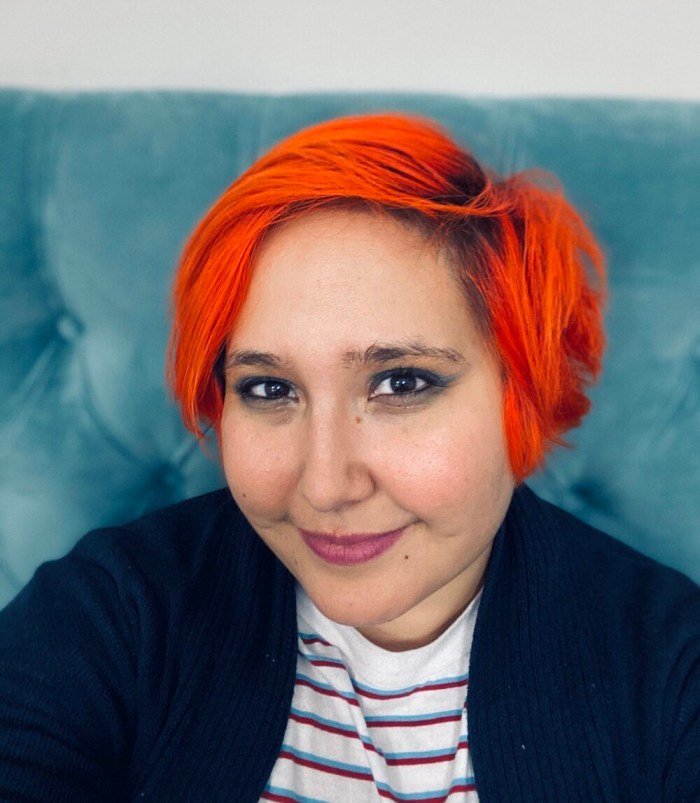
Brooks W Stripes

Brooks Elms is a WGA screenwriter of 25+ scripts with a specialty of crafting grounded personal characters and gut-punch story tension. He’s currently rewriting an Oscar-winning writer. Brooks also loves coaching fellow writers who have a burning ambition to deeply serve their audiences: www.BrooksElms.com

What’s the last thing you read or watched that you thought was incredibly well-written?

JOKER. Because it’s difficult to build empathy for protagonists with flaws that lead to violence against innocent people, especially with all the mass shootings these days. I have ethical questions about whether this was a worthy screenplay to produce because the film can’t help but celebrate what it’s also trying to condemn. And I suspect it will inspire as much (if not more) negative consequences as positive ones – but that makes the screenwriting all the more impressive and skillful. Because this was a very popular film and the bar was VERY high for that level of success.

How’d you get your start in the industry?

Making movies with my friends in high school, which led to NYU film school, then writing, directing and producing indie features. In the last decade, I’ve mostly focused on screenwriting. In between my writing assignments, I taught a screenwriting class at UCLA Extention for a while and now I coach other ambitious writers working at the intermediate to professional levels, as my own schedule allows.

Is recognizing good writing something you think can be taught or learned?

What’s the alternative theory – that people come out of the womb knowing how to write well? It’s a matter of defining what you love about other stories and getting familiar with the craft choices that lead to those results. I teach this to everybody from beginners to veteran writers so…. yup.

What do you consider the components of a good script?

It’s about the harmony between components. The craft is taking elements (premise, hero, goal, conflict, structure, relationships, setting, theme, tone, etc..) and adjusting aspects of them (size, shape, style, amount, etc..) until we find the right collective balance which allows something bigger to speak through the parts.

What are some of the most common screenwriting mistakes you see?

Losing touch with the delight of the process. And stopping because of that.

What story tropes are you just tired of seeing?

Every trope has the potential to be powerful if created with authenticity. It only feels cliche when there’s too much emotional distance from the truth of the intention.

What are some key rules/guidelines every writer should know?

I stay away from language choices like what “every writer should know X”. Those types of words can be a distraction from listening to the subtle impulses of your voice. Instead, I invite people to follow their passion. What excites us about our current story? How can we play with elements to unleash more of that excitement? When we share material for feedback, what’s blocking other people from deeper levels of excitement? “Confusion” is the most common blockage followed by “tepid goals and conflicts.”

Have you ever read a spec script that was an absolute, without-a-doubt “recommend”? If so, what were the reasons why?

The Duffer Brothers’ HIDDEN, which they wrote before STRANGER THINGS. It was a masterful display of milking tension using minimal assets in a scene. I used that script to teach myself how to make a huge impact on the way I write tension.

How do you feel about screenwriting contests? Worth it or not?

ALL the paths toward advancing your career have you pitted against the odds. So just pick the paths that speak to you and your budget. Contests can certainly be helpful so have fun playing that game, and detach from the outcomes. It’s about enjoying the journey and welcoming those that come along that happen to love your work as much as you do.

How can people find out more about you and the services you provide?

Check out www.BrooksElms.com

I run a few programs for writers looking to cross milestones as fast as humanly possible, in ways that are effortless and fun. One program is a deep dive 1:1 mentorship that’s very exclusive and competitive to get into. And I have other ways of helping writers too. So if writers enjoy the content they’ve seen from me online, I suggest they reach out because my team will be happy to help, in one way or another.

Readers of this blog are more than familiar with my love/appreciation of pie. What’s your favorite kind?

Now we’re getting to the essential question. The answer is pecan. It’s rich, heavenly and it shines beneath a scoop of vanilla ice cream. Shout out to banana cream for a close second place. It can be spectacular when it’s baked well, but breaks my heart when it’s often messed up.

Q & A with Lisa Gomez

IMG_4867

Lisa Gomez is a Los Angeles-based screenwriter, novelist, songwriter and a professional story analyst for The Black List. They write screenplays, songs and novels with their twin sister. Together, the twin siblings have placed in the Top 50 of the Academy Nicholl Fellowships in Screenwriting and are represented by Empirical Evidence.

The twins are working on 3 original pilots; a 30-minute dark comedy involving an asexual lead character, a biopic drama pilot in the vein of THE QUEEN’S GAMBIT and a female-driven SHERLOCKian-inspired pilot. Lisa is currently obsessed with Marvel, Disneyland, matcha, and reading as many books and comic books as they possibly can.

What was the last thing you read/watched you considered to be extremely well-written (any medium)?

The pilot of BARRY. It has everything that makes a story compelling and unique. Professional screenwriters have always given aspiring screenwriters these three bits of advice when setting up a character and a world: 1) Start the story with your main character doing something interesting.  2) Show the main character’s day to day, show the audience what a typical day in the life of this main character looks like. 3) Show the audience the main character’s problem. Well, in a whopping 30 minutes, this show delivers all of this and sets up the promise for more.

[Spoilers for the pilot of Barry ahead]. The very first moment of the show shows Barry walk into a hotel room, holding a gun while the camera mostly focuses on the dead body that’s lying on a bed with a bullet through his head. Immediately, this sets up the main character doing something interesting… okay, so, he’s a killer. Possibly a hitman. Whoa, that’s interesting. Then, it shows Barry’s day-to-day. We see him fly home on an airplane, get annoyed at a fellow passenger that opens a window to let the light in (a subtle but effective metaphor), then he plays video games, alone, and takes a shower, alone. Immediately, we get it. This is one lonely and depressed dude that gets no fulfillment from killing.

So, within the first five minutes (and theoretically the first five pages of a screenplay), Barry sets up the main character doing something interesting (killing someone), shows the main character’s typical day to day (he flies home after a hit, he’s alone, bored and does nothing substantial besides killing) and sets up what his problem is (that he’s depressed and gets no fulfillment from his job). It’s a pitch-perfect setup to a show. One could argue that the set-up is traditional and therefore cliché. But because this is a unique character and the premise is so bizarre, Bill Hader and Alec Berg made this setup interesting and makes the audience clamoring for more. And this is all just the first five minutes… if you haven’t seen this show, please do. It’s a masterclass in writing.

One of your job titles is story analyst. What does that job entail, and what are your responsibilities?

A story analyst is essentially someone who gives script coverage for studios, production companies and agencies. In other words, someone who receives a script and has to write notes on that script, on what’s working and what’s not working with the script, if I would pass, consider or recommend the script for the agency/studio/company. I have to read the script in its entirety, write a synopsis of the script, write a logline, describe the main characters and then write comments on why I would pass or recommend the script. Occasionally, in my notes, I offer solutions to story problems.

How’d you get your start doing that?

This is a fun story. My sister actually found an internship listing for a script coverage reader for a literary agency on entertainmentcareers.net. I applied and got the job. I did that for about a year. Then, as luck would have it, a Nicholl fellow walked into my retail job and I recognized him because he spoke at one of the classes that I took at UCLA Extension. We got to talking and he said he could refer me to a low-paying but highly regarded script coverage job. I applied, had to do test notes on a script and then got that job.

Once I started getting more and more experience, I had screenwriting friends I’d met in various networking events in LA refer me to different script coverage jobs. Every friend I met through networking was an aspiring screenwriter that eventually got a job in the entertainment industry and either reached out to me about the script coverage job or I would ask if they knew about any script coverage jobs. This is truthfully the first time I finally understood the importance of networking in this city.

When you’re reading a script, what about it indicates to you that “this writer really gets it (or doesn’t get it)”?

First and foremost, the grammar. I know, that seems like such an obvious answer but it’s true. You would not believe how many scripts I read that have beyond atrocious spelling and grammar. Sometimes the ends of sentences don’t have periods. I wish I was joking.

Secondly, clarity. What do I mean by that? Clarity is probably the easiest and the hardest aspect of writing a great screenplay. Easy because once you put on the page exactly what you want the reader to know, you’re done. Hard because putting exactly what you mean on the page is very very difficult. This is why script coverage or having someone read your script is helpful. It can point out the areas that the writer thinks makes sense but in reality, it doesn’t and it only makes sense to the writer.

Clarity, for me, means a few things. One, that the writing makes sense. For example, if you’re writing an action scene, please write description that is easy to follow and easy to read. The worst thing you can do for a script reader is make them read lines of description a few times in order to understand what’s going on. We get bored and frustrated.

Secondly, that the character’s arcs, story and plot is clear. It sounds simple, but again, most scripts don’t have this. I think it’s because the writer knows the story so well that the writer forgets to put in important and obvious things. For example, I was doing coverage on this script where the main character was queer. It was a very interesting main character, but I didn’t understand why this character’s queerness affected their journey because every character that interacted with this character loved and relished their identity. The writer then told me “Oh, because this story takes place in 2010.” BAM! I now understand the context of the story. But that date was nowhere in the script. It could be little details like that that can make a script clear or unclear.

What do you consider the components of a good script?

Clarity/conciseness. No one wants to read a script that doesn’t make sense, or rambles on too long. Make it sweet and to the point. And make it fun and interesting to read.

An interesting main character that has an interesting and relatable problem. So many scripts I read don’t have this in its entirety. Especially the relatable part. The main character might have an interesting problem, but it’s something that literally no one on this earth can relate to.

When the main character has a goal that’s actually attainable, but also difficult. This is something I don’t see all the time. What’s really important is that your main character has the skills to defeat their problem/the antagonist but it’s still difficult. A great example of this not happening is Star Wars: The Rise of Skywalker. Sure, you know that Rey is strong, but you don’t know specifically how Rey will be able to defeat Palpatine. This makes the story boring because the audience can’t participate in her journey in how she can do that. She just defeats Palpatine. It’s not set up how she can. It just happens. This is story suicide.

The script is great if it has something to say. What is your theme? What is your unique point of view on the world? Not only that, but what is your unique point of view on a specific theme? For example, everyone writes about redemption, but what are you trying to specifically say about redemption? Are you saying it’s not possible (Barry), that it is possible, but a very hard road (Bojack Horseman), or are you saying that it is possible (Star Wars: Return of the Jedi)?

Interesting situations/scenes. If you have a scene where two people argue, that can be boring. If you have a scene with two people arguing in the middle of a mall, that instantly makes it more interesting.

Great dialogue. If you have dialogue I’ve heard before, that makes me cringe. If you have dialogue specific to the character and only that character can say it, it makes me happy.

What are some of the most common screenwriting mistakes you see?

The way screenwriters describe women as beautiful, sexy, or simply defined by their looks. It’s disgusting, objectifying and just plain terrible. It’s 2020. Women have always been complex. It’s time to write us as such.

Too much description. Description writing is very hard, but please don’t have paragraphs and paragraphs of description. Try to write what only needs to be in the script but as simply and concisely as possible.

Cliché dialogue. A lot of the scripts I read have the following lines: “It’s too late!” “You really don’t get it, do you?” “Hi, my name is [blank].” “So, are you new around here?” It’s exhausting. We get it. You’ve seen a lot of movies. Please prove it by not giving us these lines that we’ve all heard a million times. Sometimes it’s inevitable. You have to. But please try to the least you possibly can.

What story tropes are you just tired of seeing?

One-dimensional women. I promise you, women are human beings that have ambitions and feelings that don’t revolve around men.

What are some key rules/guidelines every writer should know?

Write from the heart.

Write with something to say.

Get your first draft out as quickly as possible.

Even if you don’t like outlining, do it.

Read screenplays. They’ll help you write screenplays.

Live life.

Enjoy the process of writing.

Show your writing to people who will give you honest feedback.

Have a clear structure in your story.

Pitch your show/movie idea to your friends. If they don’t like it, either fix what’s wrong with the premise or think of another idea.

Screenwriting contests. Worth it or not?

Yes. Contests are great for deadlines and keeping yourself accountable. Because, if you’re paying that submission fee, you want to submit the best work that you have. However, don’t make your entire screenwriting identity about contests. I did and that got me nowhere. Use them for deadlines and don’t think about them after you submit. Just write the next script.

Follow-up: You’ve placed in the top 50 of the Nicholl. What was the script about, and what happened for you and/or the script as a result?

The Academy Nicholl Fellowships in Screenwriting are amazing. I’ve had friends become Nicholl Fellows and I’ve had friends in the top 50. We all have similar experiences.

That script was co-written with my writing partner, my twin sister. It’s a biopic about the nine weeks that Vincent van Gogh spent with fellow artist and rival Paul Gauguin. What started off as a friendly rivalry between them ended with Vincent cutting his ear off. It was my sister’s and I’s first screenplay… and it was the first draft. When we were announced in the top 50, we got about a dozen e-mails from huge agencies… I’m talking, CAA, WME, Anonymous Content, you name it… we sent them our script and then… crickets. I believe this script wasn’t ready and I also don’t think we sent them out to the agents and managers that would respond to our type of script anyway.

Here’s my biggest piece of advice if you place highly in a reputable script contest: contact the managers and agents you want to or agents that represent writers that write similar scripts to you. If my sister and I did that, I think we would have been represented by now.

How can people find out more about you and the services you provide?

Due to an ever-expanding list of projects, I’ve had to suspend my script consulting services.

Readers of this blog are more than familiar with my love/appreciation of pie. What’s your favorite kind?

Aye, there’s the rub. Unfortunately, I have a gluten and lactose intolerance, so I can’t have pie unless it’s gluten-free and dairy-free. I know, it’s a sad existence. However, if I could have any pie, I personally love apple pie. Maybe because when my stomach could handle those pesky ingredients, I would always love getting apple pies from McDonald’s during my youth and that taste just brings back good, happy childhood memories.

apple pie

Some reading that could lead to thinking

reading 3

Contractors are doing a little last-minute renovation work on Maximum Z HQ, so the benevolent management has given the hard-working staff the day off. Which also means no new content this week.

Rather than leave our faithful and loyal readers wanting, here are links to some posts from years past.

Enjoy.

That’s not the question you should be asking

A population of your creation

I see what you did there, Mr. Kasdan

It was good enough for Spielberg…

Keep your ego out of it

Just the pep talk I/you/we need

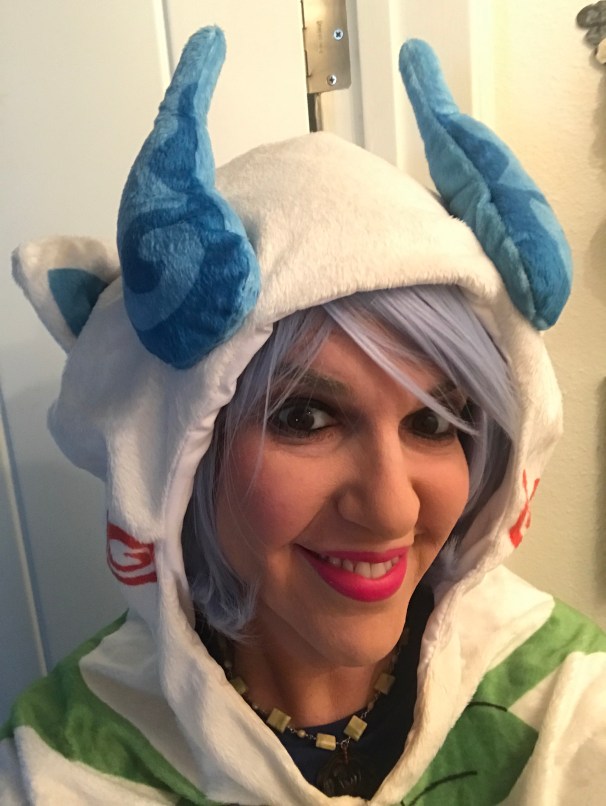
Q & A with Marlene Sharp

Marlene.Sharp.Halloween.2019

Marlene Sharp is a creative and business-savvy entertainment multi-hyphenate who originally hails from New Orleans but is now a (San Fernando) Valley girl. Firmly ensconced in LA life, she currently serves as the Head of IP Strategy and Acquisitions for Rainshine Entertainment and its dedicated animation divisions Kinsane (kids and family focus) and Raijin Studios (animation for teens and grown-ups).

Formerly, as Producer, TV Series, at Sega of America, Marlene worked on much more than the Teen Choice Award-nominated Cartoon Network series SONIC BOOM. For example, her Hedgehog duties took her to the heights of nerd-dom as an official San Diego Comic-Con 2017 panelist.

 As a freelance journalist, Marlene concentrates on pop culture for buzz-worthy fan destinations, such as DOGTV, ToonBarn.comGeekified.net, and CultureSonar.com. As a short film auteur, she has snagged recognition at the Kids First! Film Festival, the Canine Film Festival, the San Luis Obispo Film Festival, and many more.

Marlene is the proud winner of 2019 LA Shorts International Film Fest Script Competition (an Oscar and BAFTA-qualifying fest), at which her backdoor sitcom pilot received a staged reading by The Groundlings. And as a human being, she loves dogs. For proof of the aforementioned, please see her website www.pinkpoodleproductions.com.

What’s the last thing you read or watched that you thought was incredibly well-written?

I love Shia LaBeouf’s screenplay for his autobiographical film Honey Boy. The storytelling is clever! 

Podcasts are a relatively new obsession of mine, and there are a few standout wordsmiths. American Scandal (Lindsay Graham); Broken: Jeffrey Epstein (Adam Davidson, Julie K. Brown); Gangster Capitalism (Andrew Jenks); and Hitman (Jasmyn Morris) immediately come to mind.

How’d you get your start in the industry?

My start in the biz was almost my end in the biz. I was bitten during pre-K and subsequently began serious research on kids in show business. Sesame Street was the inspiration. It seemed like a neat place to be, and I wanted in. During grade school, I devoured library books about stage moms and such, and then told my mother that I needed an acting agent. She said ‘no’ and encouraged me to play with my Barbies instead, which I did in earnest. She continued tough love at every turn and for many years. When I declared a Drama/Communications major in college, though, it was time for the Sharp family to face the music . . . and drama! 

Is recognizing good writing something you think can be taught or learned?

If one is industrious enough, then one could self-teach. For today’s inquisitive, budding writer, there are so many resources (many are free or low cost): books, eBooks, seminars, writers’ groups, classes, online classes, podcasts, YouTube videos. Perhaps the best resource, though, is actual content consumption, especially in the genres that one loves best. 

What do you consider the components of a good script?

Relatable characters and story, clever dialogue, and an unexpected plot turn or two are elements of my favorite scripts. Good non-sequiturs also tickle me!

What are some of the most common screenwriting mistakes you see?

Spelling and grammar errors abound. They’re everywhere!

What story tropes are you just tired of seeing?

I’m really tired of the deus ex machina that recur in garden-variety superhero/fantasy movies, such as the uber hero or uber anti-hero – with his/her signature moves – who appears at the eleventh hour. In my opinion, Joker is groundbreaking (and therefore entertaining), because it discards the usual cliches.

What are some key rules/guidelines every writer should know? 

1) Spell check

2) Proofread

3) Patience, and lots of it.

Have you ever read a spec script that was an absolute, without-a-doubt “recommend”? If so, what were the reasons why?

Yes! A spec script for The Simpsons by my friend Adam Kosloff. The premise is absurd and hilarious. Adam and his writing partner nail Bart’s character; he becomes a grilled cheese celebrity chef. The humor is magical, laugh-out-loud funny. I’ll never forget it.

How do you feel about screenwriting contests? Worth it or not?

Definitely worth it! Such cost-effective personal marketing! Highly recommend!

How can people find out more about you and the services you provide?

1) My business website: www.pinkpoodleproductions.com

2) My script and bible doctoring services: www.wefixyourscript.com 

3) My CV: www.linkedin.com/in/marlenesharp

4) A few of my credits: www.imdb.me/marlenesharp

Readers of this blog are more than familiar with my love/appreciation of pie. What’s your favorite kind?

A solid tie between pumpkin and chocolate!

pumpkin pie 2chocolate pie

Q & A with Jon Kohan

JK.JPG

Jon Kohan is a script consultant and award-winning screenwriter from Johnstown, PA, who’s worked in both film and television. His horror/comedy short Family Game Night earned him a Best Screenwriter nomination from the Shock Stock film festival (along with winning for Best Actor), and his holiday comedy Deer Grandma won Best Comedy at the Show Low Film Festival.

His project Purple Gang is a pilot based on the Purple Gang who operated out of Detroit predominantly in the 1920’s and 1930’s, with over 300 members during their tenure. The series will be inspired by real life characters and events but will not be a non-fiction story.

His comedy/crime short Spilled Paint picked up several Best Short and Best Cast awards on the festival circuit, and is available on YouTube.

What’s the last thing you read or watched that you thought was incredibly well-
written?

Mindhunter, season two, on Netflix. The first season was great, and the second was just as good. I love the show for all the tension-filled scenes that can last ten-plus minutes, and usually just between two or three characters. The writers of that show are super-talented, and I look forward to being able to read and study the scripts to see how to improve my own writing.

How’d you get your start in the industry?

The lead-up is a pretty long story- working different writing jobs as I gained more experience and building a resume of work – but I’ll talk about how I landed my first real gig.

I was doing freelance writing work on a site called Fiverr.com. I still use the site from time-to-time. On my page, at the time, I offered joke writing and screenwriting, but only for shorts.

I had a customer hire me for a short story idea they had. I work on it for about a week and sent it back to them. A couple weeks go by and that customer comes back and says they have an idea for a family film that could even be a television show but needs someone they feel has the talent and skill to write a pilot; maybe even possibly a whole first season.

I jumped at the chance to work on that script, and in fact did write the pilot and the entire first season (10 episodes). About a year after I wrote the pilot, the customer reached out to me again to let me know that the project was going into production. That customer’s name was Alvin Williams. Since working on that pilot, titled Ernie and Cerbie (currently streaming on Amazon Prime), we’ve teamed up on multiple projects and he’s become one of my main collaborators in the industry.

Is recognizing good writing something you think can be taught or learned?

Anyone can probably be taught or learn how to recognize good writing, but something you can’t teach is how to tell a good story. Not everyone can do that. Just because you can write doesn’t mean you can tell a story in the film or television format.

The rules/guidelines of writing a script is what I think makes screenwriting harder
than with other forms of writing. And not everyone can tell an entertaining story. Knowing and understanding what good writing is and looks like makes the viewer smarter, which allows for smarter movies. With a smarter audience, there’ll be a need for more originality – fresh perspectives, which will hopefully open the door to a more diverse and new pool of writers.

What do you consider the components of a good script?

This could be a very long list, but it all trickles down to one major core component: characters.

Not enough big Hollywood movies take the time to craft a film around strong characters, and instead try to build a film around a plot, or worse, action sequences, tone, look, etc.

What do The Dark Knight and Joker have in common other than the obvious that both are Batman films? They’re two of DC’s best films, and both focus more on character than all the craziness around them.

If you have characters we care about, can relate to, or at least understand where they’re coming from, and put them into conflicts that help our characters grow and become something more, you have a winner on your hands.

Even if your film is more about the concept (Independence Day, Godzilla), if you take the time to do the proper character work, you can throw a great one-two punch, something most Hollywood films seem to be lacking nowadays.

What are some of the most common screenwriting mistakes you see?

Formatting issues. No question. Not everyone uses screenwriting software, which is weird to me. If you’re not just writing a script as a hobby, you should invest in the proper industry tools.

I see formatting issues all the time, and those can easily be fixed, and quickly learned.

One of the most common things to see is a script not written like one. So many writers write action lines like they’re writing a novel. Telling us what the character is thinking, why they’re doing something a certain way, what’s going to happen later without us ever seeing it later.

I urge to my clients how “Show, Don’t Tell” is a huge rule they should always be repeating to themselves. How do you present information in a film or TV show? Either through images or dialogue. If we don’t see it or hear it, we don’t know it. When I have a writer I’m working with go back and look at their script again – with that guideline in mind – they’ll see just how much information is in their script that they are telling the reader, but not showing them.

What story tropes are you just tired of seeing?

I don’t know which I hate more:  “You lied to me?” or “There is a prophecy….”

The first is something you hear more in comedies. The second you always hear in
fantasy, adventure, action, etc. If I’m watching a romcom, I KNOW the end of the second act will have “You lied to me?” as dialogue – usually from the female lead.

For most summer blockbusters, fantasy films, the trailer is probably going to have some version of the “There is a prophecy…” line, and the entire setup will be this typical paint-by-numbers hero’s journey story.

What are some key rules/guidelines every writer should know? 

Show, Don’t Tell. (see my response a few questions back)

Formatting – I know just looking at the first page if the read is going to be enjoyable or if it’s going to feel like I’m doing homework. That all stems from the format of the script. If I can glance and see issues, then I know there’s going to be issues with the characters, story, arcs, and so on. Even if you can can’t tell a story, or write good characters, and have something actually happen in your script, at least make the script look like a script. This sets the tone for your reader and lets them know you know what you’re doing.

As a writer, your goal is to get someone to read your script. A horribly-formatted script is an easy excuse for someone not to take the time to read your script. Don’t give them that choice.

DON’T WRITE CAMERA DIRECTIONS! – This is something a lot of first-time writers do in their scripts. I was no different. Learning how to write your action lines properly and how to influence the director in shooting a scene a certain way by the way it’s written not only makes your script stand out amongst the others but it’ll make you a better writer as a whole. I know it has for me, or at least think it has.

Have you ever read a spec script that was an absolute, without-a-doubt
“recommend”? If so, what were the reasons why?

I’ve read scripts from screenwriting friends of mine that have really impressed me. Some of them are super talented, award-winning writers who are going to be names we recognize one day.

As far as reading a spec script that was sent to me to review and give detailed notes on, I haven’t read a script yet I’d stamp “recommend”. Some have come close, but unless you’re lucky and extremely talented, it’s not going to be your first script that you do something with.

The more scripts you write, the better you’ll be. My first script is god-awful compared to my tenth script, and my tenth script is amateurish compared to the latest draft of a script I recently finished.

What would a script need to get a “recommend” from me? As I keep saying, strong characters. Throw in a joke once in a while. Make me want to keep turning the pages. One of the worst things to see is a massive block of action or dialogue, and know the whole script is going to be that way. The more white on the page, the better.

A script could be for the greatest movie ever made, but if’s it’s a difficult chore to read and takes hours – or even days – to complete, I probably won’t see it as a recommended script.

How do you feel about screenwriting contests? Worth it or not?

Worth it – for sure. Screenwriting contests are great to try and win some awards, network with other screenwriters and filmmakers, and get yourself exposure.

With all that being said, if you place in or even win one of the top contests, that’s going to open a lot more doors for you than winning a much smaller contest.

I don’t agree that you must enter contests to be able to get a film produced. I’ve only recently started entering contests and already have several produced projects under my belt, with and more in development.

How can people find out more about you and the services you provide?

My professional website, www.screenwriterjon.com, my Patreon www.patreon.com/screenwriterjon, and my Fiverr www.fiverr.com/jonkohan. You can also check out all of my projects on my IMDB page.

On my Patreon, I offer screenwriting and script feedback services through two different subscription tiers. I’ve already had two filmmakers subscribe to have me write their feature films, so that’s been really exciting.

Readers of this blog are more than familiar with my love/appreciation of pie. What’s your favorite kind?

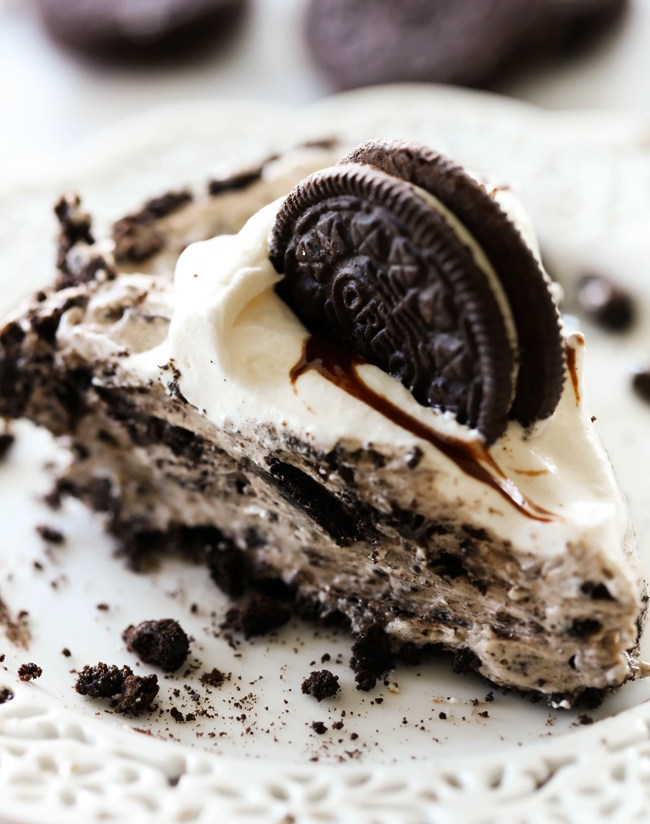
I bet you haven’t heard this one before – Oreo. Store bought or homemade. Either works for me. I have a huge sweet tooth. This may sound like a little kid answer, but it’s the truth.

No-Bake-Oreo-Cream-Pie-3