Q & A with Heidi Hornbacher of PageCraft

A graduate of UCLA’s screenwriting program, Heidi Hornbacher has written numerous features, treatments, and TV pilots for various independent producers. She’s judged for the Slamdance Film Festival screenwriting contest and co-founded the Slamdance Script Clinic. She and her husband founded PageCraft Writing in 2008, offering script coaching and writing retreats in LA and Italy. Her clients include Emmy winners, TV legends, and brand new writers too. Heidi has written, directed, and produced numerous commercials, music videos, and electronic press kits for various artists. She’s currently making a documentary film about British artist Paul Whitehead.

What’s the last thing you read/watched you considered to be exceptionally well-written?

There is so much great TV right now. I was mesmerized by I May Destroy You. Anything that makes me say “wow, I could not have written that” I love. I had a Kenyan writer on my podcast recently and she noted that it was a very African storytelling style which I found particularly interesting. 

How’d you get your start in the industry?

I moved to Los Angeles to go to the UCLA Professionals Program in Screenwriting at night and landed a day job at Paramount as a president’s assistant. From there it was a lot of reading, learning, developing skills, and networking. And just making things without waiting for permission.

Is recognizing good writing something you think can be taught or learned?

I think this is absolutely something that can be taught. If you have a natural instinct it helps but you can train your eye to spot things the same way a sommelier trains to spot subtle flavor differences in wine. When I first started reading for contests I would decide to advance or decline a script based on instinct, but had to develop the facility to be able to say why.

Once I could could point to things like unmotivated dialogue, a major story turn being on the B story but missing from the A story, unearned reveals, etc. it helped me codify those elements into my own writing and into a teachable curriculum for PageCraft.

What do you consider the components of a good script?

Solid characters that have been well developed with clear goals, and positive and negative stakes to achieving those goals. Scenes that work hard to move your story forward and don’t just sit there. Even in a reflective moment, we should be learning something new about the character or they should be learning something about themselves. Every scene having a clear Goal-Obstacle-Outcome, or what we call GOO structure. Yes. EVERY SCENE.

What are some of the most common screenwriting mistakes you see?

Where to begin? The most offensive mistakes are things like not spellchecking (how hard is that?) and grammar errors. Those tell me you just don’t care about your craft or my time, so why should I give my time to looking at your craft?

A lot of scripts that are findable online, etc. are shooting scripts rather than original scripts so I see a lot of bad habits writers pick up from those such as writing in edit and camera direction. There should never be a CUT TO or CLOSE UP ON in your original script. Every slug line implies a cut so there’s that, and you should be able to imply the angle and type of shot by how masterfully you work your action lines.

I see a lot of over-directing the actor from the page. Unless a movement is key to the plot, don’t tell your actors how to move their bodies. The hardest thing about screenwriting is getting your head around the fact that it’s a collaborative art where we often never meet our collaborators because they come in after we’ve done our part. Learning to trust that your actors are going to bring nuance and physical choices to the role can be like a trust fall. If you’ve written the script well with clear context for what that character is going through, the actor will run with it.

What story tropes are you just tired of seeing?

Aside from lazy things like the detective with the board full of photos connected by red string, I’m really tired of societal tropes; rape as a motivator for why a female character becomes stronger, stories that only view Black characters as suffering characters. Can we move on? We’re more nuanced as humans so our stories should be too.

Then there are just overused dialogue lines like “it might just work”, “that went well”, and “we’re a lot alike, you and I.” We actually have a powerpoint with stills from over 40 films and shows illustrating how overused that last one is.

What are some key rules/guidelines every writer should know?

-As I said above: Make sure there is GOO (Goal-Obstacle-Outcome) in every single scene.

-Make sure you have a solid structure and outline before you start writing. You need a roadmap!

-Make sure you’ve done your character work and understand what motivates them. Make sure you’ve done as much work for the antagonist as for the protagonist so the struggle is worth your protagonist’s time. 

-Make sure every major story turn occurs on the A storyline – the external story. Turns on the B and C storylines can serve as point and counterpoint to that but if a turn is missing from the A story, the narrative will feel off and it can be hard to see why. 

-Remember that a script is a blueprint for a visual story and as such everything in it needs to be visual and filmable so no internal writing about what a character feels or remembers – we should get that from how you externalize those feelings. 

-Break up action line chunks by story beat, audience focus or implied new camera angle so they stay below 5 lines each and keep the reader’s eye flowing down the page.

Have you ever read a script where you thought “This writer gets it”? If so, what were the reasons why?

All the time! It’s clear when a writer just doesn’t know the rules versus a writer who knows the rules and breaks them creatively. These tend to be scripts with thoroughly developed characters, great pacing, and a satisfying emotional catharsis. They are scripts with a clear point of view and strong positive and negative stakes for the characters. Their message is the byproduct of a great story and not the sole reason for the story (i.e. the story isn’t preachy).

How do you feel about screenwriting contests? Worth it or not?

It depends. If you do well in a big one, you can get noticed. The right ones can help you get representation or otherwise forward your project. For example, one of my clients just won the Nicholl. She will get lots of meetings off of that.

There are obviously a ton that are a waste of money but it can boost your confidence to get those laurels. There is a backside to that too. When I see scripts in competition with laurels on the title page (DO NOT DO THIS!), it’s like they’re painting a target on themselves saying “find reasons to tear this down” and, except in the rare occasion when it’s a stellar script, we always can.

How can people find out more about you and the services you provide?

Visit us at PageCraftWriting.com. Our next round of script workshops starts in January, we offer one-on-one consulting services, and check out our Hearthside Salons podcast (on Podbean and iTunes) featuring conversations with writers, directors and other creatives.

Readers of this blog are more than familiar with my love/appreciation of pie. What’s your favorite kind?

That’s like asking me to pick a favorite sunset. I love anything fruit-related and made some killer loquat-ginger pies this spring. But I love pecan and pumpkin so I’m happy it’s that time of year. More pie!

Q & A with Naomi Beaty of Write+Co

Naomi Beaty is a screenwriting teacher and consultant who works with writers, producers, and directors at all levels to develop their film and TV projects. Naomi has read thousands of scripts and worked with hundreds of writers, first as a junior development exec at Madonna and Guy Oseary’s Maverick Films, and currently through group workshops and one-on-one coaching.

She also wrote the short, actionable guide Logline Shortcuts: Unlock your story and pitch your screenplay in one simple sentence.

What’s the last thing you read/watched you considered to be exceptionally well-written?

I’ve been bingeing a lot of series over the past several months (who hasn’t?) and the three I absolutely fell in love with have been The Great, Mrs. America, and The Queen’s Gambit.

And I was blown away recently by a script I read for a client, but I haven’t asked if it’s okay to mention him here, so I won’t. But if anyone’s looking for an amazing boxing movie, I’d be happy to connect you!

How’d you get your start in the industry?

Like a lot of people, I went the assistant route. I worked for a producer-manager, which was a great introduction to how the industry works. And then moved into development at a larger production company, which was a real education. 

Is recognizing good writing something you think can be taught or learned?

We all have gut reactions that tell us whether a story moves us, right? But being able to read a screenplay and understand whether or how it’s working takes some experience. So there’s obviously something to be said for whether a screenplay gets an emotional response from you, but we shouldn’t stop there. It takes time and effort and a lot of reading analytically in order to truly understand what makes writing “good.” 

What do you consider the components of a good script?

A strong concept, structure that delivers a satisfying experience, characters we care about and invest in who are transformed by the events of the story, clear, meaningful stakes, dialogue we actually want to hear. And all of those things working together in a way that makes us feel something.

What are some of the most common screenwriting mistakes you see?

There are a bunch that I think fall under one big umbrella, which is: forgetting that you’re a storyteller. We want you to guide us through the story, direct our focus, tease out the tension, all to achieve the effect you want. It’s easy to overlook when there’s so much that goes into just figuring out how to put a story together, you know? But the delivery of it can separate good from great.

What story tropes are you just tired of seeing?

The clumsy hot chick comes to mind. It’s right up there with “beautiful but doesn’t know it.”

What are some key rules/guidelines every writer should know?

I often joke that there are no rules in screenwriting… except these three:

1. Don’t confuse us.

2. Don’t bore us.

3. Make us feel something.

Other good guidelines:

– Know what story you’re writing. That doesn’t mean you have to know on the first draft – sometimes it takes time to figure it out – but until you know, that script is going to be a struggle.

– Make sure you share that story with the audience. We need to clearly understand who wants what, why they want it, what they’re doing to get it, and what’s stopping them. It sounds basic, but you’d be surprised how few scripts really nail all of those pieces.

– Start with the strongest concept you can. It’s something that’s tough to correct for later on.

– Learn how to build and escalate emotional stakes! I don’t think I’ve ever read a script that wasn’t better for it.

– Finish your screenplays whenever possible. Abandoning something halfway through because it doesn’t seem to be working means you never get the chance to learn why it isn’t working, how you could fix it, or what you should do differently next time.

Have you ever read a script where you thought “This writer gets it.” If so, what were the reasons why?

Yes! The script doesn’t have to be perfect, but when it’s clear that the writer knows how to put a story together and can convey it in a way that it feels like a movie – then I know that writer gets it.

How do you feel about screenwriting contests? Worth it or not?

Some are, most are not, but in the end it really depends on what you mean by “worth it.” If you’re just looking for a reaction from a fresh set of eyes and a sense of how your script stacks up against others, there are a number of contests that can offer that.

If you’re looking to actually move the needle in your career, there are very few contests that are worth the cost of entry.

How can people find out more about you and the services you provide?

The best place to find information about my services and workshops is my website! writeandco.com. I also have a short ebook that’s available for free on Amazon, called Logline Shortcuts.

Readers of this blog are more than familiar with my love/appreciation of pie. What’s your favorite kind?

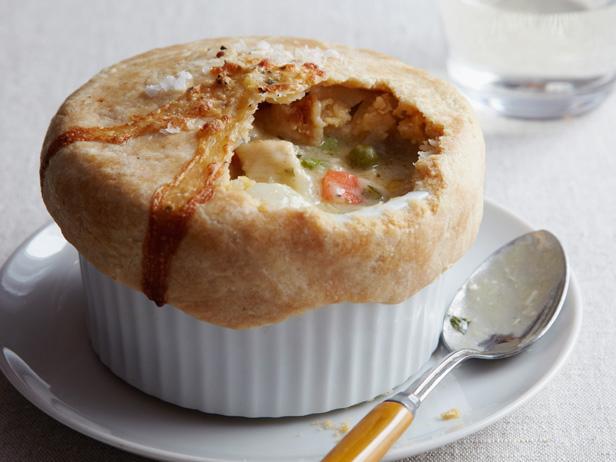
If I’m allowed a savory choice, I’ll take a chicken pot pie. But for dessert, chocolate cream pie with graham cracker crust, please.

Q & A with Michael Lipoma

Michael Lipoma is a WGA writer and a producer whose scripts have placed in the semifinals or higher in every major screenwriting competition, including winning Best Feature and Grand Prize at SLAMDANCE last year. With experience writing on assignment for features and television since 2010, Michael enjoys backing his characters into corners, forcing them to fight their way out or die trying.

He has developed multiple producers’ original ideas into commercially viable screenplays and pilots. He is co-creator and co-writer of a new television series currently in development in New Zealand. He is the lead producer on a feature film project currently in partnership with an A-List actor’s production company. Before writing and producing full time, Michael was Vice President of a $150M company. He also finds writing in the third person a little weird.

What’s the last thing you read or watched that you thought was incredibly well-written?

I have been binge watching The West Wing, and am dazzled by the dialogue–but it’s more than that. Sorkin doesn’t just write great dialogue–it’s the situations he places the characters in that give great dialogue even greater depth. And the dialogue wouldn’t be as meaningful if he hadn’t made these characters people we care about.

How’d you get your start in the industry?

I wrote spec scripts. Bad ones. Then I went to school and learned the craft. Then I just kept writing. While working on a script with a partner, we met a producer at AFM, and within 24 hours, we had a handshake deal to write a feature based on her original idea. That script was The Fall, and last October, it won Slamdance Grand Prize and Best Feature. But that makes it sound too easy. That journey started seven years ago. We attached another producer, have been through more page-one rewrites I can imagine, and have gotten–and incorporated–notes from many, many people.

Is recognizing good writing something you think can be taught or learned?

I believe recognizing good writing can be taught and learned–and you don’t need a teacher. The way to recognize good writing is to read ALL writing. I’ve learned more from giving really deep notes to scripts that were in terrible shape, than reading great scripts. Read every script you can, and when you read something good, you’ll feel it. It’ll sing to you from the center of your chest. But read all of it. After a while, you’ll internalize what’s good and what to stay away from. You’ll feel when a story turn is necessary. And you’ll realize that when watching a movie. I can’t tell you how many times I’ve hit pause on a movie, checked the timer, and said, “Yep. That’s midpoint.”

What do you consider the components of a good script?

The obvious, of course: structure, dialogue, making every syllable mean something. A story that turns, and delivers on the promise the writer made in the premise or opening. Also, a great opening. A killer first page. I’ve been working as a producer for the past five years, and I know within a page whether the script I’m reading has a chance at getting me interested. I do read all the way through, but I’ve always been able to tell within a page or two how it’s going to go. Haven’t been wrong about that yet.

There’s one more component, and it’s just as important to me as any of the other factors that make a good script, and that’s what people are calling today, “voice.” I read a lot of scripts, and many deliver what a script should deliver: Compelling characters, solid structure, serviceable dialogue. All good stuff. But when I read a script with an original voice, that delights me, and makes me want more, more, more!

I’ve also found that writers with a unique voice are fun people to hang with. And when you option a script, you’re going to be hanging with the writer for a few years, and hopefully you’ll end up friends for life. Also, I recognize I’ve strayed a bit from the original question about components of a good script. I do that. I stray.

What are some of the most common screenwriting mistakes you see?

Big blocks of action with no white space. My job as a producer is to read a script all the way through–but when I see solid pages of text, I take a breath, because I know it’s going to be a slog to get through. That’s not to say the script might not be great, but if I can offer advice to writers, make hitting the return key one of your best friends. Your reader will love it.

Another mistake is having dialogue move the story forward. In these cases characters usually tell each other what’s happening or how they’re feeling. That means everything’s on the surface.

What story tropes are you just tired of seeing?

Movies starting at funerals–ugh. Seen it too many times. Watching a big, surprising reversal or twist and discovering it was a dream (that happens more in TV, but still). Also, movie shorthand: a woman throwing up = she’s pregnant. You see a woman SPRINT to the bathroom and barf. Next scene: she’s pregnant.

Another trope that’s actually harmful in my view is when you see scars on someone that indicates they’ve been “cutting” (non-suicidal self-injury), and it’s just “movie shorthand” for a “troubled” teen, or a violent character about to shoot up a crowd. That easy-way-out character development is not only lazy, it stigmatizes people with mental health issues. It needs to stop.

What are some key rules/guidelines every writer should know?

1. If you want to write what speaks to your heart, you should absolutely do so. You get to write whatever you want. But…if you want to sell, or make writing your career, you should understand what the marketplace wants. And I’m not talking about chasing trends. I’m talking about a script with a recognizable structure (I believe humans are hard-wired to respond to structure), a story that makes us want to know what happens next, and a satisfying ending. Oh, crap. I strayed again.

2. Spend as much time on your concept as you possibly can before putting a single word to the script. You’re going to spend the next few months writing this script–make sure the concept is firing on all cylinders before you commit to it. If you do this, you will discover a lovely surprise: people will probably love your script.

3. Sort of a continuation of 2: before I dig into a new spec script (whether TV or feature), I test the concept. I tell it to people and watch them react. Then, I refine it. What’s nice is at this stage, I’m not invested in any great scenes–it’s just a few sentences, so nothing’s precious. Once I get a concept, and I’m satisfied it’s working and marketable, I write the pitch. Straight from concept to pitch–before writing one word of the script. This does a couple things: it helps me discover cool, hooky moments (that only seem to show up when I’m writing a pitch) and it helps me know where I’m going when I start outlining. I think this solves the problem I faced for so many years: writing loglines and pitches after the script is written.

4. This may not work for everybody, but most successful writers I know do this: outline. Outline, outline, outline! You can start at the end, middle, or wherever, but do yourself the favor of writing a solid outline for your script. This is one of the most freeing things a screenwriter can do. It also keeps you from getting blocked or stuck because you always know where you’re going. My analogy for outlining is this: it’s like an actor getting off-book with their dialogue. Once they’ve memorized the dialogue, and it flows through them, only then can they bring the real bits of themselves to their performance. Same with outlining. Once you do the hard story work and get that outline done, your story is there, and it’s working–then, you put in all the cool stuff that delights readers.

5. Make me want to care about your characters. Many scripts I read from emerging writers use their characters as tools to move their story along. People go to the movies and watch TV and immediately try to relate to the character on the screen. There’s a moment when people ask themselves (sometimes unconsciously–but they feel it) “Would I ever do that?” or “Oh, no, what would I do if that happened to me?” The writer needs to make their characters human, relatable, and empathetic. Not necessarily likeable, but relatable. It’s a thing of beauty when an antagonist makes a reader/viewer see a dark side of themselves reflected in the antagonist. So do the character work up front, know who they are and how they’d respond in any situation.

There’s an exercise I’ve asked people to do: take a line of dialogue, and rewrite it as if the character were at gunpoint. Now rewrite it if they were trying to seduce someone. Now try it if they’re terrified. Exact same meaning, but different situations. This exercise can seem absurd, but if you lean into it, it’s actually a lot of fun, and it will reinforce the need to really understand how your character would react in any situation. Once you really understand this about your characters, the audience will respond to them, readers will lean forward when reading them.

6. Make sure your lead is the most interesting.

This has happened to me. My supporting character was way more interesting than my lead. It took a bit of rewriting and really killing some darlings, but once I did that, my lead really sparked off the page. No actor is going to attach themselves to a project if the supporting character has a better part.

Have you ever read a spec script that you immediately thought “this writer gets it?” If so, what were the reasons why?

Absolutely. And I’ve only read two that did that. It started with character. These characters were not only real and full of life, their dialogue was crisp, clear, and every character had a unique voice. Most of the actual meaning was delivered through subtext–and that’s not just for dialogue, it was for the action too. Characters took action that delivered on who they are, or what they needed, or what their wound was that’s been holding them back. Also: there was a lot of white space on the page, which made it a fast read, and allowed me to forget I was reading a screenplay.

How do you feel about screenwriting contests? Worth it or not?

I know there’s a lot of debate about this right now. For me: they’re worth it–but you have to realize the goal, and I think there are two: 1) you want feedback, and 2) you want wins/credibility. For feedback: You’re sending your material out to sets of eyes who have no stake in your success. If you can afford it, get the notes/coverage, too. Look, we all have people who love us, read our stuff, and tell us it’s great. And that feels wonderful, but not really helpful if your goal is to improve your writing and yourself as a writer. There’s nothing more sobering than not placing in a contest, and looking at the 375 names who did, and think: “Damn, every one of those scripts is better than mine–what do I need to change in my script or my writing to get me in that group next time.”

If you can afford the coverage, it’s great to see what a neutral set of eyes thinks about your material. And sure, sometimes the notes are spotty, but there’s ALWAYS something in there that can help if you’re open to it. And being in lots of contests can help you open up to that. For credibility, contest placements/wins in the major competitions can truly open doors. All of that said, be wary. There are some contests that just feel like money mills. Do a little research, and maybe don’t submit to “Jimmy Joe’s Upstairs Screenwriting Bonanza.” Look into competitions. Who are the sponsors, how many years have they been running, what kind of press do they get?

How can people find out more about you and the services you provide?

The best way to learn more about what I do is to contact me directly through my gmail account and not through the production company email or website because those get filtered before I see them. Email: mlipoma@gmail.com.

Right now, I write on assignment for television and features, and provide TV and feature script development, consultation, and rewrite services for projects that have been optioned or have a significant element attached. Since I’m a WGA writer, any writing I do must be with a signatory, but for non-signatories I can provide script consultation and development services, and work with the writer and producer to help the production reach its goals. I tailor my services based on the needs of the project: from a dialogue punch-up to extensive restructuring and rewriting. One of my recent efforts was a page-one rewrite of an action script. 

Readers of this blog are more than familiar with my love/appreciation of pie. What’s your favorite kind?

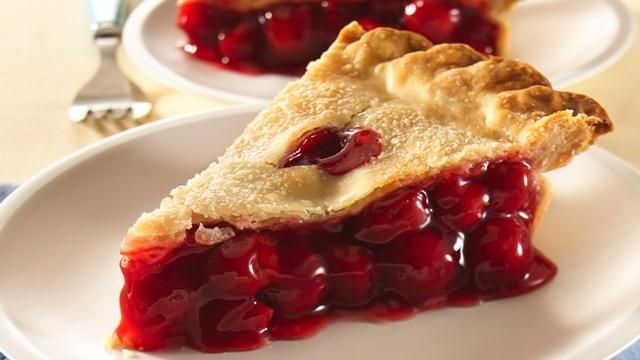
You and I are kindred spirits! Pie is one of my favorite things on the planet! Picking one is kinda like deciding which of my kids I love most, but if forced, I’d have to say cherry. Or a really deep apple. Or pumpkin. Ok, sorry…

Cherry.

There. I said it.

Reading truly is fundamental

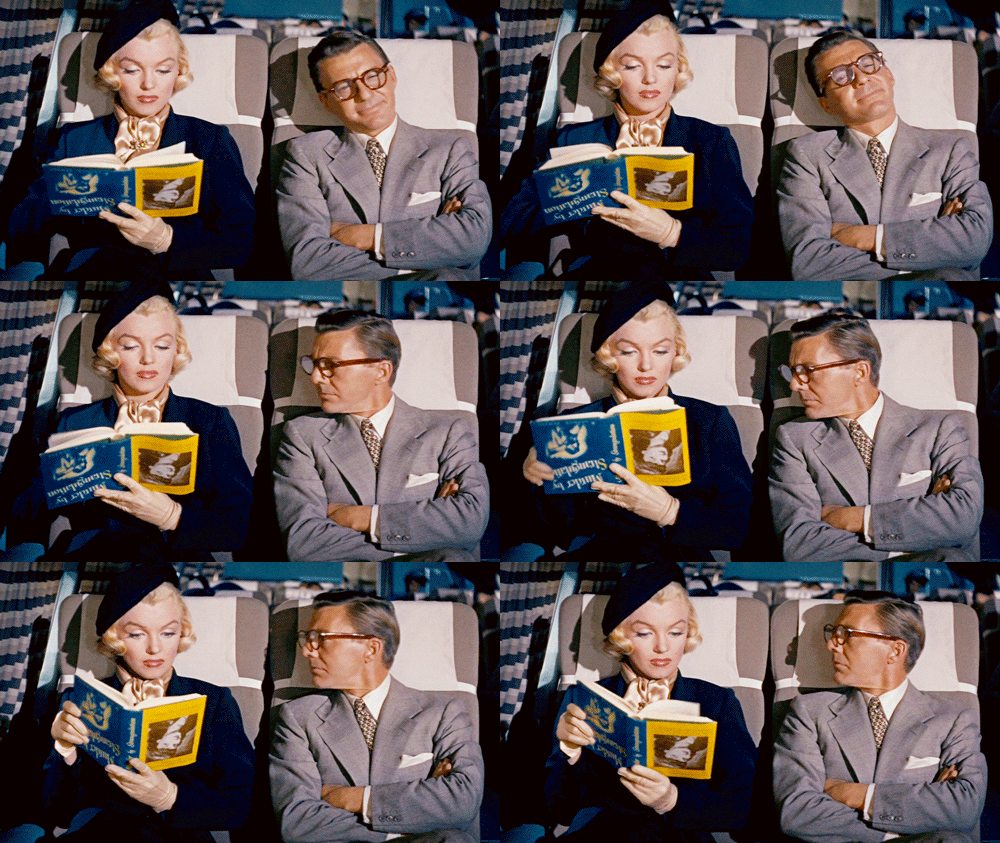
marilyn book

Even though I’ve been spending a lot of time working on new scripts, I’ve also made a recent effort to start reading more scripts.

The contents of the folder on my desktop labeled “TO READ” include around a dozen scripts of well-known produced films and those of my associates within my social network, along with a few I received with the advice “you really should read this”.

It’s a lot of scripts to work my way through. I’ve completed three so far, and each one has been amazing. It’s a fantastic experience I can’t recommend enough.

What’s probably the most important aspect is that taking a look at all these different scripts lets you see the multiple ways of how a story can be told on the page. Each and every script does an amazing job with its own interpretation of “Show, don’t tell.”

It also helps because many times we’re so wrapped up in our own material that reading something new and original where you have no idea what’s going to happen gives your imagination a much needed rest. You can literally just sit back and enjoy the ride.

When you get so wrapped up in the story that you can easily visualize it playing out in your head, and the words and pages just fly by, then you know you’re in the hands of a skilled writer who knows what they’re doing.

Very important – while you shouldn’t try to straight-out copy somebody else’s style, you can at least let it influence how shape your own. Don’t just read a script – study how it’s put together.

Is the writing crisp and colorful? Are you able to follow the story? Is the sequence of events organized so that you can’t imagine it happening any other way? Do the scenes make their point fast and move on? Do the characters seem like actual people? Does the dialogue sound natural and get the point across without being too on-the-nose?

These questions – and so many more – will come up while I’m reading a script for the purpose of giving it notes. But if somebody says “Read this. I think you’ll like it.” and notes are NOT involved, then it’s easier for me to read it just for the sake of enjoying it, and not feel the need to be critical.

That being said, it’s still tough for me to take off my editor’s hat – even for a casual read. It’s not uncommon for me to find the occasional typo or ask a question about something I’m just not sure about. This isn’t me being critical on purpose. Quite the contrary. When something like that takes me out of the story, I want to let the writer know so they can fix it and prevent it from happening for the next reader.

Even though this is a read for enjoyment, certain technical factors still come into play for me. Does it look good on the page? Is there a lot of white space, or do I have to endure big blocks of text? How’s the formatting? Any misspelled words? Pretty much – do they have the basics down?

And the stories themselves – WOW! Some are in genres I love, others totally new to me, and even a few offering a totally new take on an old standard. Even though I may not be a fan of something, I can still appreciate and enjoy a well-told story.

Also very important – after you finish reading, especially if it’s a friend’s script, thank them for letting you take a look, and let them know what you thought of it (preferably in the positive). If it’s a produced script and the writer is on social media, you can let them know that way. I’ve done this a few times, and each time the writer was very appreciative.

At my current rate, I’m getting through about two to three scripts over the course of a week, so I have at least another month to month and a half before the folder empties out.

I’m looking forward to getting through this batch, and even more so when it’s time to start compiling the next one.

Q & A with Mitchell Levin

red shirt

*note – Mitchell passed away in November 2021

Mitchell Levin was born in Detroit, Michigan. He received his BFA in Film from Columbia College, Chicago and his MFA in Dramatic Writing from New York University’s Tisch School of the Arts. He began his career as a Story Analyst at 20th Century Fox in Los Angeles, and as a development executive there worked with Arthur Miller on his screen adaptation of THE CRUCIBLE, which starred Daniel Day-Lewis.

Mitchell has worked, at one time or another, for every major Hollywood studio and has taught screenwriting at UCLA Extension. He recently left Steven Spielberg’s DreamWorks after 22 years as senior Story Analyst. There, he worked on films including GLADIATOR, ROAD TO PERDITION, THE RING, CATCH ME IF YOU CAN, THE HELP, BRIDGE OF SPIES, and more.

What’s the last thing you read/watched you considered to be exceptionally well-written?

It was a clip someone posted of a single scene from the TV show PEAKY BLINDERS, which I hadn’t watched but now will. So tense! Two male and one female gangster threatening a nun at an orphanage where a little girl had been abused. Masterfully written, performed and shot. Very still, but very edge of your seat, very heart in your mouth.

How’d you get your start in the industry?

While I was getting my MFA in Dramatic Writing at NYU back in the ‘80’s I did an internship as a reader for a producer named Martin Bregman, who made SERPICO and SCARFACE, among others. They hired me after the internship was over.

You were a Story Analyst at several major studios. What did that job entail and what were your responsibilities?

I started at 20th Century Fox when I moved out here. Not everyone knows this but the major studios are all signatory to the Story Analyst’s Union, which pays quite well, as opposed to freelance reader jobs. The union was very difficult to get into, even back then, and is virtually impossible now. I was then promoted to development executive and set up THE CRUCIBLE. I actually gave notes to Arthur Miller (he implemented all but two!) I told him, in our first meeting with then-president Roger Birnbaum, that we decided to set THE CRUCIBLE in space. Cute, huh?

After three years I realized being a corporate executive was not for me. I worked as a story analyst for every major studio at one time or another, but spent the past 22 years at DreamWorks. My job was to cover submissions, but also to help develop projects by doing in-depth notes from the time we acquired scripts or books to the time they either went into production or into turnaround.

When you’re reading a script, what about it indicates to you “this writer really gets it”?

Clear, coherent writing. Compelling premise and protagonist. Authentic sounding dialogue. Well-choreographed, not too-dense action if it’s an action piece. Clearly defined central conflict. An interesting world or a new spin on a familiar idea. And hopefully, a story behind the story, i.e., a bigger theme.

Follow-up – have you ever read a spec script that was an absolute, without-a-doubt “recommend”? If so, what were the reasons why?

The only script I remember giving a Recommend to was called THE ASSUMPTION OF THE VIRGIN, back around 2002. It wasn’t a spec, it was written by Anthony Minghella, based on a book set in the Renaissance. Sydney Pollack and Benicio del Toro were attached.

Readers shy away from Recommend because it sets off too many alarms. A Double Consider (for script and writer) is sufficient to let the exec know you’re excited. A Recommend is really sticking your neck out, and if the exec doesn’t agree with you, you worry you’ll be in trouble even if you’re told you won’t be.

Is recognizing good writing something you believe can be taught or learned?

To some extent, of course. Then again, it’s also subjective. One person’s cup of tea may be another person’s cup of swill.

What do you consider the components of a good script?

First of all, a great premise, but they are hard to come by. Beyond that, a compelling protagonist (who doesn’t have to be likable if he/she is fascinating), dialogue that pops, a clearly defined conflict, and always, escalating stakes and hopefully a sense of surprise.

What are some key rules/guidelines you think every writer should know?

– Know your logline. Often I get the sense a writer couldn’t tell me their logline if asked; not concisely, anyway. A one or two sentence synopsis of the story that tells me the inciting incident, who the protagonist is, who the antagonist is, what the central conflict is, what the stakes are, and gives me a sense of the possibilities within the story without giving away the ending.

– Leave plenty of white space on the page. Readers hate lots of dense black text. Don’t overwrite. That goes for dialogue and action.

– Don’t introduce too many characters at once that will be hard to keep track of.

– Don’t give character similar names (Jenny, Joanne, James)

– While the reader has to read and synopsize your entire script, the exec may not read past the logline on the coverage, or past the first 15 pages of your script. You have only that brief window to really engage him/her and let them know “what is” – who, what, where and why – and really grab them.

– Very important – Don’t be boring!!

Are they are any cliches or tropes you’re just tired of seeing?

I hate clichés always, and a trope isn’t necessarily a cliché. If by trope you mean a metaphor or archetype, they can always be done well or poorly, whether it’s “cross-cultural romance” or “reluctant hero”. Certain clichés bug me more than others, because they come up so frequently, like: “EMILY, 25, beautiful but doesn’t know it” or when the villain says to the hero “We’re not so different, you and I”. Or villains named DEVLIN because it sounds like DEVIL. Or when a character says “I just threw up in my mouth a little,” which makes me throw up in my mouth a little. It was funny the first time I heard it in a ‘90’s sitcom, but hasn’t been since. Likewise, the word “amazeballs,” which comes up a lot in comedy scripts, but I doubt anyone has ever actually said it in real life.

How can people find out more about you and the services you provide?

Mitchell passed away in November 2021. At the time of this printing, his website scripstrx25.com was still live.

Readers of this blog are more than familiar with my love/appreciation of pie. What’s your favorite kind?

When I was a kid I wasn’t fond of birthday cake and always asked my mom to make me a cherry pie. My tastes are more sophisticated now. Unfortunately, I’ve since been diagnosed with Type 2 diabetes. This surprised me, as I don’t have a weight problem. When I asked my mom about it, she said, “Oh, yeah, I forgot to tell you.” It seems it runs through the whole family on her side, but it skipped her.

cherry pie 2

So the only pie I tend to eat these days is humble pie, usually on those occasions, and there have been many, when I embarrass myself in front of famous people.