Here’s the windup…

lincecum
I admit it. Local bias.

Interesting discussion the other day with a professional hyphen (writer HYPHEN director HYPHEN script consultant) about my western.

They wanted me to pitch them the story, but without notes. Pretty much without any preparation whatsoever.

This way, they explained, it comes across as “more natural” and “less rehearsed”. I don’t necessarily agree, especially because I despise those momentary pauses which make you rely on saying “um” while your brain races to come up with the next words out of your mouth.

Despite not really having thought about the story that much over the past few months, I did my best to work my way through it and think I did okay. Maybe B-plus/A minus territory. Not fantastic, but not bad operating with pretty much no prep time whatsoever.

I made sure to include key story points and not go into too much detail, and tried to sound excited and upbeat while describing the high-octane action.

After I’d finished, there was a dread-inducing silence that grew with each passing second (maybe 3 in total, but felt more like neverending).

“Hmm,” came the reply. “Not bad.”

Not exactly a standing ovation, but I’ll take what I can get.

They listed what they liked and what could use a little work. Surprisingly, they felt the ending was a little ‘soft’ and their explanations why, to which I calmly disagreed and gave my explanation why.

Even more surprisingly, they then revealed they’d only read up to page 15 and wanted to hear my pitch to see if the rest of the story warranted continuing.

(Just to set things up, this person claims to have given 3 pages of notes just on the first page alone for other scripts. Apart from a few comments about the dialogue, they didn’t really have any for mine, and that when they usually get to around page 10, they jump ahead to the middle, then to the end. But mine they wanted to keep reading. Make of that what you will.)

After hearing my rationalization for the ending, they admitted that they should “probably read it to see if they agree.” In theory that will be happening this week, but we’ll see.

Our discussion then turned to my experience and some of my other scripts, 2 of which they requested to read. A victory, no matter how you slice it.

Looking back, I could have done a much better job at pitching my story – if I’d known I was going to have to do it. Still, if I’m going to be sending out queries about it, I should be prepared to talk about it in a moment’s notice.

So while I while away upcoming hours engaged in the rewrite of the mystery-comedy spec, I’ll try to make the most of potential down-time and re-read the western and maybe put together some kind of FAQ/cheat sheet in case this kind of situation arises again.

And it probably wouldn’t hurt to do the same for those other two – just for good measure.

The me business – a 24/7 operation


The friendliest staff in town!
We’ve got the friendliest staff in town!

What may have been my biggest mistake with my old manager was not doing enough.

I’d toil away on the new script, and send him an occasional email asking if there had been any responses to the first one. They were minimal, which is putting the best positive spin on it.

Why weren’t we getting the results we’d expected? Mostly, I blame myself.

Looking back, I realize now that it was me who wasn’t being the more proactive one. He was a busy guy with other clients to handle. Instead of handing off the material with the instruction of “I’ve got a script to write. You do what you have to,” I should have been making his job easier by doing the research, finding the names and providing the contact info so all he had to was send off an email.

Lesson learned. Behavior modified. Jump to the present.

Now being representation-free, I’ve no choice but to be the proactive one. Nobody’s coming to me, so I’m exploring numerous avenues to get to them.

-query letters. A few managers have requested the script, with more being targeted.

-researching producers and production companies who’ve made films similar to my scripts

-expanding my network and connecting with writers on community sites, which includes face-to-face meetings with those in the immediate vicinity when applicable

-publicizing my scripts and their loglines on said sites and public forums, which has resulted in not only more connections, but offers to read the scripts. Feedback is always invaluable, and somebody’s status in the industry can change overnight, so any connection is a potential good one.

My former m.o. was to devote as much time as possible to writing, rewriting and polishing. But for now, that’s just not an option anymore.

Time for a little diversification.

It’s just as important now to set aside some time each day to find some potential recipients for my material. Even if it’s only 20-30 minutes of researching names on IMDBPro, that’s still a few small steps in the right direction.

Even if something may feel like the longest of shots, I remind myself I’ve got absolutely nothing to lose, and the worst that can happen is somebody says no.  If that happens, I shrug it off, move on to the next name and try again.

Reduce heat; let simmer for 2-3 months

I look exactly like that after finishing each draft, flour and all
Exactly how I look after finishing a draft, even though the flour wreaks havoc with my keyboard

It took a little longer than expected, but the revamped outline for the pulpy adventure spec is finally done.

As is my usual practice, I won’t take another stab at it for at least a couple of months partly because I’m feeling a little burned-out on it. This has been my primary focus for the past couple of months, and I just need a short break from it.

The other reason is I’m getting ready to jump into rewriting the Christmas-themed mystery-comedy. Notes are in place, so hopefully it won’t take too long.

But getting back to the outline, my original thought upon finishing it was the standard “It’s better than it was, but still needs a lot of work,” but experience has taught me that this may not necessarily be the case anymore.

I like to think I’m a stronger writer compared to a few years ago, so while I would never consider the material as it reads now as perfect, it may surprise me when I return to it as to how much better it is than I remember.

At least that’s what I’m hoping for.

On the other hand, I could read it and think “Where did that come from?”, “Well, that’s not going to work,” or even “Hmm. How much wine did I have that day?”

Taking it another step further, taking this break will enable me to pretty much forget a lot about the story, so I’ll be able to read it with fresh eyes and potentially come up with fresh ideas about how to improve it.

All things being equal, I like the way it turned out and am looking forward to getting back to it.

But first things first. Time to shift from the fight against monsters wreaking havoc to seeking out answers behind seedy goings-on in a holiday metropolis.

As always, watch this space for updates.

Why so hostile?

Angry voice!
Angry voice!

I’ve been making an effort over the past few weeks to build my network of writing acquaintances, which has involved connecting on assorted social media networks.

Several of these include groups of like-minded people that offer up the opportunity to ask questions, get feedback, etc.

One of them was about loglines.

Feeling fairly confident but open to suggestions about the one for my western, I typed it in, hoping somebody might have some helpful comments.

Within minutes, the response came in: “…or? What’s at stake? What are the consequences?”

Hmm. Well, her train’s been stolen, which…puts her livelihood at stake?  And it’s going to be used in a major heist, so the consequences are…widespread? I’ve always hated this part. Maybe I’m not giving enough information?

I wrote back: “open to suggestions.”

Past experience with logline feedback via online forums, while occasionally frustrating, has sometimes yielded positive results.

Sometimes.

A few minutes later: “I’m a producer and script consultant, not a psychic. If I knew what the story was about, knew the protagonist’s motives, knew what the antagonist was doing and why, and knew what was at stake and the consequences of certain actions, I would make a suggestion. However, with so little on offer, there’s little I can do other repeat what I’ve already said.

I’m not arguing anything after the word ‘psychic’. It’s not easy to get all of that across in a logline. It’s much harder than most writers realize.

(Side note – I love it when somebody backs up their comments with the proclamation of their qualifications. As expected, a quick internet search of this person’s “producer and script consultant” credentials yielded both jack and squat. It took a lot of effort to not ask them for more details.)

Desperately seeking resolution, I offered: “Would you be willing to take a look at the 1-page synopsis to get a better understanding of the story?

Soon afterward: “based on your logline, no”

And that was that.

While I didn’t have a problem with the actual advice, there just seemed to be this overall tone of angry condescension in their text. “Grr! I know what I’m talking about! My advice is infallible and you’re an idiot if you don’t listen to me! Grr! Argh!” Maybe I was just reading too much into it?

Honestly, it kind of nagged at me for the rest of the day. I always thought the point of these groups was to help each other. Sure, sometimes people just don’t get it, but I’m more likely to appreciate your comments if you seem willing/interested in actually helping me.

Later in the day, somebody with no connection to me whatsoever called this person out for being unnecessarily cruel (a bit harsh, but I understood where they were coming from). I made a point of staying totally out of what soon became a snippy back-and-forth of “I’m right, you’re wrong”.

So much for taking part in that group again.

Still seeking some kind of help, I tried again on a different forum, but approached it from a different angle.

I listed the logline plus some key story details that might help, adding how I was seeking some bolstering in terms of including stakes and consequences. (The original responder may have come across as an asshole, but I didn’t think their advice was wrong.)

There was a significant difference in the responses. A lot were not only helpful, but practical and encouraging, including this gem – “I love this logline. If I were a producer I’d want to read it. Hell, I still want to read it, just because it sounds like fun.”

I felt a little better, had what I felt was a stronger logline, and a few requests to read the script. Nice.

As part of that aforementioned back-and-forth, my original responder said they were just preparing new writers for the kinds of responses they should expect from the industry if they submit “subpar material”.

While I can understand that kind of thinking, it seems that people are more likely to heed your advice or suggestions if you actually come across as helpful, rather than sound like we’re wasting your time and the last thing you want to deal with right now.

But then again, I’m just a nice guy to begin with, so what do I know?

Building up to what it all comes down to

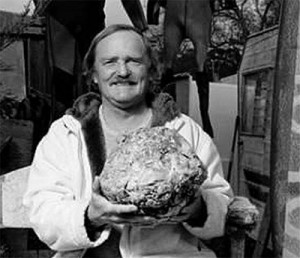
What he's holding represents what's at stake. Think about it.
What he’s holding represents what’s at stake. Hint: It’s not a rock

Time now for a very, very important question every writer needs to face:

Do you know how your story ends?

You come up with an idea, then proceeded to develop, shape, and organize all the stuff that happens in the middle, which eventually has led us to the where we find ourselves now: the big payoff. What the whole thing’s been about.

Everything your characters have been doing have been leading up to this. In theory, your first two acts have been about the protagonist’s world undergoing some drastic changes, how they dealt with it and now it looks like the bad guy’s going to win.

Which brings us to the grand finale that is Act Three, where our hero must somehow find a way to overcome these seemingly insurmountable odds, defeat the antagonist and hopefully come out of the experience a different person than the one they were way back when we first met them.

That being said, there’s still more to it.

-Your protagonist has a physical goal (what they want) and an emotional one (what they need). They can achieve both, just one or neither. Which applies to yours, and have you effectively steered the action to ensure that result? Can we see the changes they’ve undergone?

-Working with a subplot or three? If they haven’t wrapped up by now, better make sure to do it soon. Do you really want the reader to wonder “Hey! What happened to the part about ____?”

-Even a supporting character needs an arc to complete. Have you given each of them enough attention throughout the story to make this happen, and does their story wrap up in a convincingly believable way?

One of the most valuable lessons I’ve learned about putting a story together is that the central question (“Will the hero achieve their goal?”) is raised with the inciting incident around page 10, and each subsequent plot point raises it again, albeit with the stakes a little higher each time.

What happens in Act Three is where you show us how the central question is answered.

-And now, the much-heralded return of Movie of the Moment! This time, a way overdue look at GODZILLA (2014).

Wow. Everything PACIFIC RIM should have been. Instead of non-stop giant monster action, we get only glimpses as the focus is directed at the human aspect of the story. A much more effective approach.

While it’s not hard to suspend disbelief when it comes to a movie about giant monsters rampaging/duking it out in the downtown area of the city where I live, perhaps the most amazing piece of cinematic fiction (as observed by both K and myself) was in the background of one scene where a garage sign read “All-day parking $15”.

Now that’s make-believe.