Ask an Inspiring-the-Aspiring Script Consultant!

Amanda Pendolino copy

The latest in a series of interviews with script readers and consultants who would be worth your while to work with if you want to get your script in shape. Today’s spotlight is on Amanda Pendolino.

1. What’s the last thing you read/watched that you thought was incredibly well-written?

I really liked THE SKELETON TWINS. It blended comedy and drama in a way that I think is very hard to do. It also got its plot moving in the very first scene, and brought out the humanity in characters who make terrible mistakes.

2. How’d you get your start reading scripts?

I first learned to write coverage while interning at a production company. Then I did more coverage when I worked as an assistant at an agency. After I left the agency, a former coworker of mine had moved onto a production company and hired me as a freelance reader. All my other reading jobs also came about through friends/contacts.

3. Is recognizing good writing something you think can be taught or learned?

Hmm, that’s hard. Your own personal taste isn’t really something that can be taught, but yes, I do think you can learn what it is that producers and studios are looking for.

4. What are the components of a good script?

A compelling concept and visual world, well-developed characters, an interesting plot with conflict and movement, authentic dialogue.

5. What are some of the most common mistakes you see?

Many writers don’t take enough time to develop their concepts. Is your idea enough to sustain a MOVIE or entire SERIES? Is it fresh and original and interesting – and is your concept clearly established? Other mistakes include boring characters (you need to be writing ROLES that can attract top actors) and plots that unfold without any twists or turns. New writers also sometimes write prose that fails to create mood/atmosphere/tone. Every moment of your script is an opportunity to show off your specific voice and writing ability.

6. What story tropes are you just tired of seeing?

Women who are sex objects; women who are too perfect/idealized; one woman in a script with twenty guys.

7. What are the 3 most important rules every writer should know?

-Writing is rewriting. Don’t send a script out until it’s ready.

-Read scripts and watch TV/movies voraciously.

-One single script probably won’t launch your career. Sometimes the best thing to do is move on and write a new script.

8. Have you ever read a script that was an absolute, without-a-doubt “recommend”? If so, could you give the logline?

I recommended the script IMOGENE by Michelle Morgan, which became the movie GIRL MOST LIKELY. The logline I wrote for it was “After getting dumped and losing her job, a desperate young woman gets banished to New Jersey. After she discovers that her father is still alive, she sets out to find him, hoping that he’s the impressive parent she’s always been looking for.”

9. How do you feel about screenwriting contests? Worth it or not?

Certain ones are reputable, like the Nicholl Fellowship – but in most cases, the people who win contests don’t really get anything as a result. Many people who run screenwriting contests don’t actually put you in touch with anyone, and most producers/agents/etc aren’t going to be impressed that you won some random contest. “Anybody can win a contest,” my old agency boss used to say. Go ahead and enter a contest if you can see actual evidence of previous winners launching careers, but don’t hinge all your career success on winning a contest. It would be a mistake to think that entering a contest is the only thing you need to do to get your work out there.

10. How can people get in touch with you to find out more about the services you provide?

You can check out my website at amandapendolino.com or email me at aspiringwriterblog@gmail.com.

11. Readers of this blog are more than familiar with my love/appreciation of pie. What’s your favorite kind?

I also love and appreciate pie! I’m going to have to go with classic apple pie – with vanilla ice cream on top, of course.

Ask a Thoroughly Meticulous Script Consultant!

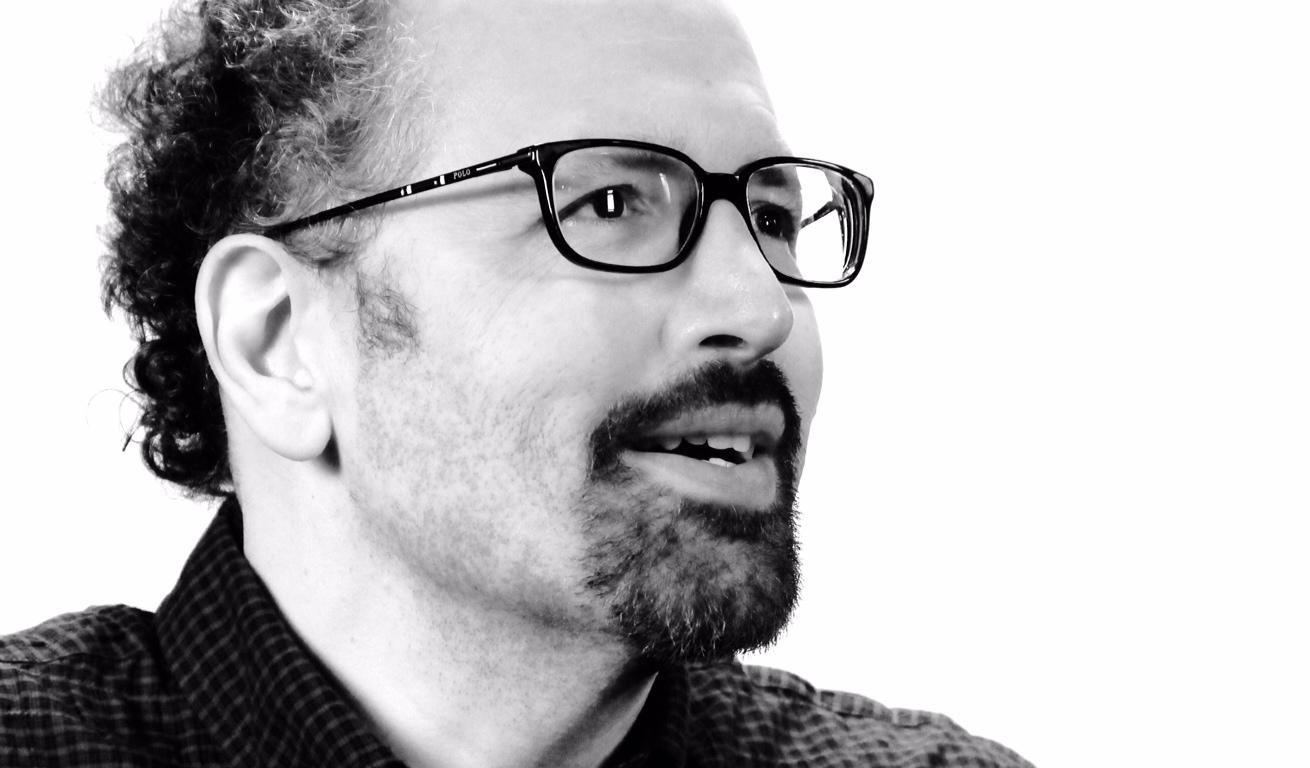
Jim Mercurio

The latest in a series of interviews with script readers and consultants who would be worth your while to work with if you want to get your script in shape. Today’s spotlight is on Jim Mercurio of A-List Screenwriting.

Jim Mercurio is a filmmaker, writer and teacher. The high-concept horror-thriller he directed, Last Girl, won best feature in the 2012 DOA Bloodbath Film Festival (as #12). The Washington Post called his Making Hard Scrambled Movies (production tutorials) “a must for would-be filmmakers.” His workshops and instructional DVDs, including his recent 10-hour set Complete Screenwriting: From A to Z to A-List, have inspired tens of thousands of screenwriters. One of the country’s top story analysts, Jim works with Oscar-nominated and A-List writers. He is finishing up the first screenwriting book that focuses solely on scene writing, The Craft of Scene Writing, for Linden Publishing. To find out about working with Jim, visit his website at http://www.jamespmercurio.com.

1. What’s the last thing you read/watched that you thought was incredibly well-written?

I used to try to see almost every film that was released in a year. Lately, for better or worse, I have had less time to be a viewer. Although I only watch 3-4 TV series at any given time, I really liked True Detective. I like Girls. Lena has a great voice and the show, as well as You’re the Worst, for me, fills in for the quirky little indies that seem to be on the decline. I thought Her was exciting because it was high-concept but indie in spirit. And it could have been made for almost any price. It was one of those films where I can say, “I wish I had made it,” or “I could have or should have written that.” I also look for gems of craft in surprising places. Who can’t love – capital L-O-V-E — the moment in The Avengers when Bruce Banner reveals the secret to the Hulk: “I’m always angry”?

2. How’d you get your start reading scripts?

After grad school, I wanted to figure out screenwriting inside-and-out because I loved screenwriting but I also thought it would be a means to be able to direct. I read probably every screenwriting book and resource available in the 90s. I worked as a development exec for an indie company owned by one of the producers of Gas-Food-Lodging. And then I attended 120 hours of classes from the so-called “gurus” including, McKee, Hauge, Truby, etc. for a review article in Creative Screenwriting. That experience expanded my perspective and spurred my ability to be able to identify and clearly articulate issues in a script. I would do notes for friends and, by word of mouth, I eventually got more people who wanted feedback, so that’s how I started working as a story analyst. With my development background, my private story analysis and contests I have run, I have read more than 5,000 feature screenplays.

3. Is recognizing good screenwriting something you think can be taught or learned?

For the most part, yes, assuming that a reader has some affinity for screenwriting and storytelling. Recognizing a good or very good script that is a good read is a common developable skill. A rarer skill is when a reader can accurately determine whether a script will play as a film. Some scripts deliver a smooth and emotionally satisfying read but would not translate as well to film as would some scripts that may be a less satisfying read.

4. What are the components of a good script?

I like to see solid execution: great dialogue, exploiting concept, unity of theme… all the craft elements that I preach. No longer in the acquisition side of development, I have a more solipsistic approach to material. I want to find scripts I can direct or produce: High-concept scripts with modest budget a la Her or Buried. Or a script with such awesome characters and dialogue that it is imminently castable or packageable. In general, with shrinking or nonexistent development budgets, I encourage all writers to nail the execution, so their scripts are as ready as possible to being shot.

5. What are some of the most common mistakes you see?

6. What story tropes are you just tired of seeing?

My development for outside companies consists of intensive feedback on a few scripts or rough cuts per year. I no longer read 20 scripts per week, so that’s why I combined these two questions. And I will deal with craft issues below.

Impatience. Writers want to rush material to market that isn’t ready. In general, scripts usually aren’t done. The execution isn’t there. It’s several drafts away from being ready to be a movie. For my clients who aren’t already successful writers, the best thing they can do for their career is to go from good to great and write an amazing script.

Clarity. Writers often don’t have a clear picture of how their material relates to the marketplace. I have made several low-concept feature films, so you can learn from my, ah, pain and experience. If you are writing low-concept dramas, unless the script is a masterpiece or can be cast with name actors, you have to accept that the script will only be valuable as a writing sample. If your goal is to sell your next script, you are going to have to say “no” to a lot of your story ideas based solely on their concepts.

7. What are the 3 most important rules every writer should know?

There are no rules and break them at your peril.

I spent a few years and tens of thousands of dollars creating a 10-hour DVD set where I tried to cover the dozens of craft elements writers need to know including story structure, theme, character orchestration, dialogue, writing cinematically, concept, handling exposition and scene writing. I am not sure I can narrow it down to just three from a craft perspective.

I work with Oscar-nominated and Emmy-winning talent whose material is always good, yet they aren’t satisfied. If successful professionals are still fighting to make their scripts better and improve their craft, so should beginners. Regardless of your genre, aim to transcend it. Rewrite it until it sings. Along with concept, one of the most important factors in giving your script a chance is nailing the execution.

8. Have you ever read a script that was an absolute, without-a-doubt “recommend”? If so, could you give the logline?

If you are giving a recommend that means you are reading for someone else and evaluating the material relative to their tastes. There have been scripts that I have loved that weren’t right for the company I was reading for. I get more excited about writers who are a recommend. I want to know what else they have or what they are considering working on next.

There were writers I championed while running the Screenwriting Expo Competition whose scripts would be almost impossible to produce – a $200-million biopic of Michelangelo; a magical realist masterpiece for which there is literally not a young actress in the world whose box office value could carry the movie; a chamber-play western; a devastatingly bleak low-concept drama. But more than a decade later, I keep in touch with those writers: Bill, Nathan, Naida and Lorelei.

I have even helped a few of them to get some non-guild writing work. Not life-changing money but the chance for valuable experience. A reminder that a great writing sample, even if it doesn’t sell, has tremendous value.

9. How do you feel about screenwriting contests? Worth it or not?

See above.

Of course, they are worth it. But be practical about what you hope to achieve from them. Only a miniscule percentage of writers should look at contests as a money-making endeavor.

But contests can pay off in other ways. They can inspire you creatively, encourage you to make your deadlines and help to promote your work. There is also a social aspect. They can lead to you meeting other people.

They can also be a tool to evaluate your writing. There is always subjectivity in reading scripts, but if your script hasn’t advanced in 9 out of 10 (appropriate) contests, then I would suggest not spending more money on contests. Work on making the script better and maybe even consider spending your contest budget on feedback.

10. How can people get in touch with you to find out more about the services you provide?

They can look in to working with me at my story analysis site, www.jamespmercurio.com, or check out my DVD set Complete Screenwriting: From A to Z to A-List at www.a-listscreenwriting.com. My coaching and mentoring approach creates a relationship with clients where I can push and challenge them throughout several drafts of a script until it’s where we want it to be.

11. Readers of this blog are more than familiar with my love/appreciation of pie. What’s your favorite kind?

I have gross points in my last film, so if it ever makes money, that will be my favorite piece of the pie.

Ask a Nicholl-winning Script Reader!

1465249_10202485687454053_1139689699_n

The first in a series of interviews with some script readers who would be worth your while to work with if you want to get your script in shape.

Today’s spotlight on: Doug Davidson!

Not only is Doug Davidson a Nicholl Fellow, but his script LETTER QUEST has the distinction of being the only animation script to ever achieve that honor.

1. What’s the last thing you read/watched that you thought was incredibly well-written?

DAWN OF THE PLANET OF THE APES. The most compelling character to hit the movies in a while is an ape. Caesar is a textbook protagonist. An extraordinary individual doing extraordinary things under extraordinary pressure. When you can end a movie by zooming in on the lead character’s face, and not have it feel cheesy, you know you’ve done something right.

2. How’d you get your start reading scripts?

I started in a screenwriting group, a large group that lasted several years. Early on, we agreed on always giving each other formal written feedback, because if you don’t have to write your feedback down, then you don’t think nearly as hard about it. When you put your feedback in paragraph form, you realize you have to make sense, you have to be consistent and you have to justify what you say. It gave me the discipline to write constructive, reasoned feedback instead of just tossing out opinions.

3. Is recognizing good writing something you think can be taught or learned?

Recognizing perfect writing is easy and intuitive. Anyone can do it. Recognizing the potential in a promising script that isn’t quite working yet, that takes more experience. And it takes a writer’s mentality. You need to study the craft for years. There are rules that are easy to memorize, but how to apply them, that’s much more difficult. Blindly applying the rules doesn’t lead to good writing, or good feedback.

4. What are the components of a good script?

The craft has to be there, and then there has to something else, a plus one. It could be funny comedy. It could be insight. It could be a new idea. That’s the “talent” part. You might think it’s this “plus one” that’s missing from most scripts, but I find the opposite to be true a lot of the time. Often a script has this amazing unique element, but the nuts and bolts of the story just aren’t in place yet. That’s when making the extra effort to put all the craft elements together really pays off.

5. What are some of the most common mistakes you see?

One of the most common mistakes I see is writers thinking a plot point (or character trait or thematic element) is clear on the page when in actuality it’s really not. At least not clear enough. It happens all the time, even to seasoned writers. That’s why feedback is so important. It’s not about saying your vision is wrong. It’s about saying your vision isn’t quite visible. Yet. The trick is to make sure everyone can see it.

6. What story tropes are you just tired of seeing?

Just about any story idea could work with the right execution. That said, I’ve come across a surprising number of scripts about screenwriters writing screenplays. Autobiography finds its way into most scripts, but it really helps to disguise it just a little.

7. What are the 3 most important rules every writer should know?

(1) Don’t (2) Give (3) Up.

8. Have you ever read a script that was an absolute, without-a-doubt “recommend”? If so, could you give the logline?

Nothing is absolute, but I’ve read more than a dozen really excellent unproduced scripts that I would recommend. I won’t go into the loglines here, but they’ve spanned just about every genre. I love to stay in the loop with the scripts I’ve read, especially the great ones. Several are optioned, several have placed very well in major contests and two have well known actors attached. Many of the writers of these scripts have secured representation as well. It requires some grit, but first-rate work will eventually get you places in this industry.

9. How do you feel about screenwriting contests? Worth it or not?

Screenwriting contests are absolutely worth it. It’s not the only path to success or a guarantee of success, but I know a fair amount of writers who have benefited greatly from contest placements. If you get an opportunity to read for a contest, I recommend that too. I’ve done it and learned a lot from the experience.

10. How can people get in touch with you to find out more about the services you provide?

My website is www.fourstarfeedback.com. I have a screenwriting blog there based on my experiences in the industry (and the numerous mistakes I’ve made). I’m also happy to answer specific questions via the email listed on my site.

11. Readers of this blog are more than familiar with my love/appreciation of pie. What’s your favorite kind?

I love pie too! I like to bake my own key lime pies. They’re pretty easy to do. I also love coconut custard, blueberry and anything with peanut butter. But my favorite would have to be . . . pecan. A great pecan pie has a sludgy quality – an intensely sweet sludge – balanced by a nutty crunch. Thanks for thinking of me, Paul! We’ll have to get together sometime for some coffee, and pie.