Exactly! -OR- The perfect fit

robot monster
Not as good as a gorilla suit and a retro space helmet, but mighty darned close

The new story has been in development for a few weeks now, and I can proudly say it’s coming along nicely. Plot points are in place, and the filling-in between them continues, albeit slowly. Still quite a ways to go, but any progress is good progress.

The more I work on it, the more excited I am to take this one on. I love the concept, think it’s got a lot of potential, and it just seems like it’ll be a lot of fun to write.

Full disclosure – it’s a horror-comedy, and that’s all I’m saying for now.

Part of my usual writing m.o. is seeking out feedback from other writers. Since the actual story is still under construction, I opted to start with the basics and asked a handful of savvy colleagues their thoughts on the logline.

Reactions were positive. Plus, some keen insight and suggestions as to what might make the story even more unique and original, and how to avoid “stuff we’ve seen in these kinds of stories before”. Those, in turn, triggered a new round of ideas, which then led to unearthing what may prove to be the most important idea of them all:

The thing that gets it all started.

Not the inciting incident, but a certain something that forms the foundation of the story itself – before the actual events of the story get underway. Without this, the story wouldn’t even be able to exist (or at least be a lot tougher to pull off).

It was perfect.

A feeling most satisfactory, to be sure.

But wait. It gets better.

A little more time (plus some invaluable real-life-based research) caused me to discover that not only does this new idea do a rock-solid job of tying the whole story together, but it creates constant, relevant, and increasing conflict for all the characters,  makes for a great ticking clock, and really lets me have fun with the whole concept.

Goosebumps, I tell ya!

As fun as it was to come up with that, the hard work’s just beginning. Second and third acts need a ton of work. Doing whatever I can to avoid cliches and tropes usually associated with this kind of story. And to address the comedic aspect, really trying to make it funny.

Won’t be easy, but as I’ve discovered with my most recent rewrites, might not be as totally insurmountable as expected.

Actually, I bet it’ll be a blast.
Let the ensuing commence!

mountain climber 2
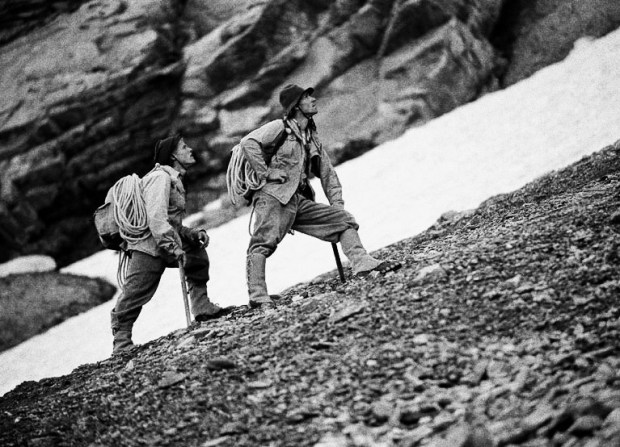
That was when our heroes realized things were about to get a lot tougher from here on in…

When I write out a scene, I have a pretty solid idea of what needs to happen in it; how to make it follow the one before it, and lead into the one after it.

Sometimes it ends up the way I intended, and sometimes it needs a little more punching-up.

And a lot of the time, that punching-up involves making things more complicated, which does a simultaneously effective job of upping the conflict, which was already a necessity.

This whole process most recently came into play while working on a scene in the pulp spec. I’d planned out what was supposed to happen, and on the surface, it seemed okay.

And then I wrote it, but it wasn’t the same as I’d envisioned. It was still missing a vital component, and I couldn’t determine exactly what.

Did it successfully connect the scenes before and after? Was there conflict? Did it advance the necessary elements?  Yes on all counts, but it still seemed off.

I read through it again. It was tight and efficient, and did what it was supposed to. But this second read also revealed the hidden problem that was nagging at me.

It was too tight and efficient. The protagonist accomplished what they were supposed to, but it needed to be tougher for them to do so.

So back I went to the planning-out stage, tossing in a few more wrinkles to make it that much harder for my hero. Although they still achieve their goal within the context of the scene, this time I made sure they really earned it.

Plus, the new complications really emphasized the overall nature of the story, which is always good.

This isn’t to say that every scene has to have some kind of monumental obstacle to your protagonist, but the journey towards their goal shouldn’t be an easy one. It might not even be a physical thing; maybe your hero has to overcome an internal or emotional problem.

It may be easier for you to keep things simple and straightforward, but unfortunately that makes for dull storytelling. Making things more complicated for your protagonist may complicate things for you in putting it all together, but it will definitely make for a better story while also improving your skills as a writer.

Don’t hold back. Put both yourself and your protagonist through the wringer. You’ll both be better for it.