Ask a Most Excellent Script Consultant!

Wayne McLean

The latest in a series of interviews with script readers and consultants who would be worth your while to work with if you want to get your script in shape. Today’s spotlight is on Wayne McLean of Wayne’s Movie World.

-update on May 4, 2018 – Wayne passed away on April 30th from congestive heart failure. He provided me with some great notes for my western, and enjoyed getting my updates regarding its progress. He was very savvy when it came to writing advice, extremely generous with offering it, and overall just a very nice guy.

1. What’s the last thing you read/watched that you thought was incredibly well-written?

The Imitation Game, Nightcrawler, Whiplash.

2. How’d you get your start reading scripts?

I fell into it by accident. I was in a writers’ group. One of the guys was produced and went to Toronto for a pitchfest. He brought back 95 or 100 scripts. I read them all and called each writer to give input. No charge. After about 90 phone calls I said, “I can do this.” My 25-year career in broadcasting really helped. That was about 10 years ago.

3. Is recognizing good writing something you think can be taught or learned?

I work with writers and their scripts to provide the focus necessary to perfect the skills required for the CRAFT of screenwriting in relation to their scripts. Then, through a careful process, the writers and I work together to develop their talents to enable them to become proficient in the ART of screenwriting.

4. What are the components of a good script?

Amazing writing with a unique point of view. Compelling, riveting characters. Crackling dialogue. Powerful subtext on all levels. Scenes and situations that are fresh. Marketable.

5. What are some of the most common mistakes you see?

Clichés. Sending out a script that isn’t ready for the market.

6. What story tropes are you just tired of seeing?

Characters waking up from a dream. Fragmented concepts. Two-dimensional characters.

7. What are the 3 most important rules every writer should know?

I don’t ascribe to the idea of ‘rules’. I prefer to see a writer following guidelines and principles. The script must be entertaining, entertaining and entertaining.

8. Have you ever read a script that was an absolute, without-a-doubt “recommend”? If so, could you give the logline?

I cannot disclose loglines. All materials submitted are confidential and conform to my rules of privacy. I do have some clients with million dollar concepts.

9. How do you feel about screenwriting contests? Worth it or not?

If a writer can afford it, enter as many contests as possible. Use them as an opportunity to develop writing skills and ask if there is input available from the judges.

10. How can people get in touch with you to find out more about the services you provide?

(See note above. Wayne’s website & email have been shut down.)

Check out my website waynesmovieworld.com or email me at wayne@waynesmovieworld.com.

11. Readers of this blog are more than familiar with my love/appreciation of pie. What’s your favorite kind?

Pumpkin.

Taking comedy seriously

My objective
My objective

It’s been a long time since I attempted to write a comedy, but the process has begun and I plan to see this through to the end. (the latest – hit the page 10/inciting incident plot point as of yesterday.)

Quite a challenge, to say the least.

For the time being, my objective is to produce two pages a day. Three if I’m on a roll. “That’s all?” you may ask. Yep, because a lot of that time is spent going back and fine-tuning the jokes.

I’ll crank out a scene, which usually includes a first pass at the jokes, then rewrite them multiple times until I think each one works. I’ve yet to hit the bullseye the first time out, nor do I expect to. It takes as long as it takes. I’m not in a rush.

If you don’t write comedy, you’d be surprised how tough it is to come up with a joke that isn’t a cliche, or has been heard before. Which is why it’s been such an unexpected positive result to discover that each day it gets a little easier. Not much, but just enough to make it seem slightly less daunting.

But add to that how comedy is subjective and everybody’s sense of humor varies, and we’re right back to extremely daunting.

What”s proven to be a huge help has been reading other comedy scripts and watching a lot of comedies to study how those jokes are done. I’ve really come to appreciate the Tina Fey/30 Rock-style, in that the joke, no matter how absurd it may be, fits in seamlessly and organically. Counter to this is the old-fashioned way (“Who cares what’s going on? Here’s a joke!” (rim-shot)), which feels forced and shoe-horned in, and is often not that funny. A cautionary example of what to avoid.

I suppose it’s even possible my daily output could potentially increase by an additional one to two pages, but I don’t want to strain myself.

-Thanks to everybody who contacted me after the developments of last week. It’s nice to know you’re not alone when things get dark, and a lot of those same people are more than willing to help you pull yourself out of it. A combination of working on the comedy, plus some encouraging feedback on the western (and its logline) have really helped put me in a better mood.

Ask a Chock-full-of-Moxie-and-Gumption Script Consultant!

Amanda Nelligan

The latest in a series of interviews with script readers and consultants who would be worth your while to work with if you want to get your script in shape. Today’s spotlight is on Amanda Nelligan, aka Scriptgal.

Amanda was born and raised in Western Massachusetts. She attended Brown University and received a Bachelor of Science degree in biochemistry. While at Brown, Amanda became involved with the Brown film society and its weekly comedic film magazine – The Film Bulletin – which cemented her life-long love of movies. After working briefly at a medical research lab, Amanda moved to Los Angeles and embarked on her film career. Her first job was as an assistant to a literary agent. From there, she worked at Disney, then ran development for a number of production companies. Amanda went back to grad school in psychology and worked as a therapist and as a research project manager at UCLA before launching ScriptGal. Amanda enjoys baking, hiking and scuba diving and lives with her husband in Sherman Oaks, CA.

1. What’s the last thing you read/watched that you thought was incredibly well-written?

I can’t pick just one – different movies are great for different reasons. I really enjoyed NIGHTCRAWLER – whip-smart dialogue and a character I’ve never seen before. It also had a resolution that defied convention. EDGE OF TOMORROW is a meticulously plotted, fun, time-bending action film, which is so hard to do right. And WHIPLASH didn’t miss a beat (pardon the pun.) In terms of television, TRANSPARENT was terrific. JUSTIFIED and THE AMERICANS are two incredibly well-written series I never miss.

2. How’d you get your start reading scripts?

I moved to Los Angeles shortly after college. My first industry job was for a boutique literary agent who had an A-list roster, so my introduction to Hollywood was through writers. After that, I worked as a development exec – meaning my job was to find scripts and to work with the writers to develop those projects into viable features and television shows. I worked as a creative executive at Disney, then ran development for two production companies. I didn’t like all the politics/crap in the movie business, so I left and went to grad school and worked in another field for a while. But movies are my passion and I love working with writers, so ScriptGal started as an experiment, in a way, and three plus years later. here I am.

3. Is recognizing good writing something you think can be taught or learned?

I think recognizing good writing is a matter of natural instinct, which not everyone has, plus a lot of practice – a.k.a. reading. And reading everything – not just screenplays. Novels, essays, short stories, etc. As a script reader, you need to understand what makes a good story. I think a rule of thumb is that when you forget you’re reading, you know the writing is good – good writing transports you.

4. What are the components of a good script?

A compelling protagonist or anti-hero and a worthy antagonist. We should be able to relate to the protagonist in some way. The antagonist can be a classic villain, a disease, a monster or even the weather. But no matter what the story is, it’s essential that we care what happens. Also, a good script needs to make you feel something. Joy, sadness, fear… Bottom line, the script needs to tell a good story. It can be written in crayon and have a million typos, but if the story is compelling it will shine through.

5. What are some of the most common mistakes you see?

Too much description. It’s a real skill to write just enough to give you sense of what the audience will be seeing and hearing on screen. If the color of someone’s dress isn’t essential to the story, don’t include it. Another related mistake is describing things that would be impossible for an audience to know. Stuff like a character’s face shows the pain of the loss of his wife two years earlier. That’s cheating – essential information needs to be revealed the way the audience would discover it on screen.   Another mistake is not having enough conflict – which results in the story not being as dramatic as it needs to be.

A lot of people are hung up on so-called screenwriting “rules” — don’t use “we see” or any camera directions, etc. I think a) those rules aren’t true – good produced scripts do use them and b) no one working in the industry today cares about those rules one bit. Or even thinks about them. Bottom line – people want good stories.

6. What story tropes are you just tired of seeing?

I just read a script where a guy gets fired and comes home early to find his wife cheating on him. I’ve seen that a million times – so to me it signals a lack of imagination. I think a trope is fine if it is the best thing for your story – but you should always try to put some sort of fresh spin on it. Also, audiences love when a trope is turned on its ear – the best example is the fight scene in RAIDERS OF THE LOST ARK – when instead of getting into the expected hand-to-hand battle, Harrison Ford shoots the bad guy. So when writers find themselves contemplating a trope, they should always ask themselves whether or not they can surprise the audience instead.

7. What are the 3 most important rules every writer should know?

-Writers write. You have to be in this for the long haul. If a script doesn’t work or sell, move on to the next. No successful writer I know parachuted in with the coolest script ever and then sailed on to fame and fortune. The best of the best have a lot of failed scripts in their filing cabinets. Or, these days, in the cloud. This business is a grind.

-Writers rewrite. You need to be able to make changes to your initial drafts and ideas – you need to be able to “kill your darlings,” meaning abandoning things you may love in furtherance of the story. Also, this is a collaborative business – everyone who reads your script will have notes. That doesn’t mean every note will be a good note, but it’s your job to recognize the good ones when they come along and manage the bad ones.

-“Take Fountain.” – Bette Davis. Okay, the real rule is outline. Outline like crazy – especially right after the idea comes to you. A lot of newer writers seem to get bored with their own ideas after awhile and make changes that are destructive. You need to lock in the story that got you excited in the first place and don’t doubt that it will excite readers/viewers as well.

8. Have you ever read a script that was an absolute, without-a-doubt “recommend”? If so, could you give the logline?

No. To me “Recommend” means go shoot it, as is, tomorrow. I never say never, but I could probably write notes on every successful movie out there. The rewriting stops after the scene is shot. Actually, that’s not even true. A lot of rewriting happens in the editing room. For people who love the show THE AMERICANS, and even those who don’t, I highly recommend the Slate-produced TV Insider podcast about the show. It’s a conversation between the story editor and various writers on the show, often including the showrunners. They are rewriting until the last second.

9. How do you feel about screenwriting contests? Worth it or not?

I think a select few are meaningful to industry execs – The Nicholl FellowshipAustin Film Festival, and UCLA’s Samuel Goldwyn. I think the others may help a writer’s self-esteem, but I’m not sure how many actual doors they open in Hollywood.

10. How can people get in touch with you to find out more about the services you provide?

They can email me at Amanda@ScriptGal.com and check out my website www.scriptgal.com.

11. Readers of this blog are more than familiar with my love/appreciation of pie. What’s your favorite kind?

I love ALL pie – much better than cake, in my book – but if I have to pick one it’s strawberry rhubarb. The contrast between sweet and sour – that’s drama.

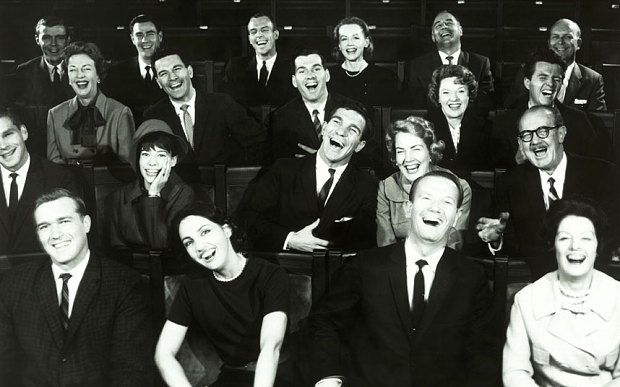
How low can you go? Quite, apparently.

Nothing funny about it

We all experience “one of those days”, but it’s totally another thing to have “one of those weeks”.

Exhibit A: Yours truly.

The week started off nicely. I had the good fortune to meet and chat with script consultant, interviewee and overall mensch Danny Manus. (For all you gentiles out there, “mensch” is Yiddish for “nice guy”.)

While awaiting notes on the western rewrite, I opted for an academic approach to writing the first draft of the low-budget comedy. I was going to read some good comedy scripts and see what lessons they could impart. The call went out asking for quality examples of this kind of writing, and some trusted colleagues came through. (Thanks, chums!)

That’s when the notes started to come in.

As my grandfather used to say – oy. To say they were heartbreaking is putting it mildly. I can honestly say they were given with the best of intentions and most definitely not mean-natured, but my faith and belief in my writing ability was given a thorough thrashing. And then some. (Although one note-giver, to their credit, did acknowledge that this is a “shitty, frustrating part of the process,” and advised me to not give up. I appreciated it, but it didn’t help much.)

The descent into a dark pit of despair had begun. I’ve been here before, and I do not like it. Any writer knows this comes with the territory.

My brain and subconscious were relentless in working in tandem to make me feel totally and utterly worthless as a writer. Any hopes or dreams I had about succeeding had been ground into a fine powder and cast to the winds, only to be blown right back into my face.

And then came the coup de grace: the response to a pitch I’d submitted to a production company last week. They’d passed with a brief 2-sentence rejection, including this gem: “Wanted more specificity with the throughline.” Keep in mind that my perception was a little out of whack at the time, so my overall reaction could be summed up with a very simple “What the fuck does that mean?”

Even reassurances from my wife and texts from a friend were little consolation. Thoughts of “failure” and “loser” were screaming inside my mind. Believe me when I say I did not sleep well that night.

But after I woke up and went through my getting-ready-to-leave-for-work routine, I kept telling myself that there had to be some kind of light at the end of the tunnel, emphasis on “had to be”. Giving up most certainly wasn’t an option. It had also been suggested to totally abandon the story as it was and start anew, which wasn’t ideal because I still have a lot of confidence in this story. Thinking straight was not going to happen any time soon.

Almost as an antidote came another set of notes, this time with lots of positive things to say, plus a few more comments of support and sympathy. These helped. That and desperately trying to refocus my attention on something, anything, that might help my creativeness and confidence get back on track. This is where the aforementioned comedy scripts factor in. They helped, too.

This is an extremely tough business to break into. There will be a lot more heartache and disappointment. Some days it’s easier to deal with, and sometimes it just slams you flat on your back. And since I can’t imagine doing anything else, I continue to learn how to roll with the punches and keep going.

As has been the case many times before, my condition has improved. My resiliency is stronger. My desire to succeed burns brighter than before. I won’t be giving up. All I have to worry about now is writing a script that’s funny. Easy peasy, right?

-Little did I know that while I was dealing with my own problems, a maelstrom of controversy was developing online. Apparently a successful writer who co-hosts a popular podcast about screenwriting made some disparaging remarks about script consultants, one in particular, based on an article the latter had written.

Seeing as how I’ve posted over 3 dozen interviews with consultants (with more on the way), I felt as if I could at least say something about this, especially since it involves this consultant.

I’d read the article in question a few weeks ago and found it extremely helpful. I’d already contacted the author last month about an interview, mentioning how much I’d enjoyed this article and a few of his other ones. He consented to the interview, and appreciated the kind words about his work.

All of the consultants I’ve interviewed have been gracious and grateful to have taken part, and each one is eager to help their clients improve. I’ve been asked which of them I’d recommend. Simple: all of them. Do your due diligence and find the one that seems to be the best fit for what you need.

The writer in question has been working for quite some time. He gets paid a lot of money to write movies that, to me, just suck. He’s also entitled to his opinion, but I’d hate to think that all the aspiring writers out there are looking to him for career advice.

-Half-marathon update. Did the Oakland 13.1 this past Sunday with a time of 1:58:16, thereby accomplishing my goal of under 2 hours. See? Perseverance does pay off.

Ask a No-Mincing-Words Script Consultant!

Glenn Benest

The latest in a series of interviews with script readers and consultants who would be worth your while to work with if you want to get your script in shape. Today’s spotlight is on Glenn Benest.

1. What’s the last thing you read/watched that you thought was incredibly well-written?

I loved Nightcrawler – an incredible script starring Jake Gyllenhaal.

2. How’d you get your start reading scripts?

I’ve been a professional screenwriter for many years as well as a teacher of screenwriting. I liked to teach because it got me out of my house and around people, sharing the thing that I loved.

3. Is recognizing good writing something you think can be taught or learned?

Yes, once you understand the craft of screenwriting, it becomes clear what constitutes a great script. You can learn this craft like any other. I teach many techniques for writing better dialogue, creating believable characters, scene development, etc.

4. What are the components of a good script?

First of all, a strong structure, then well developed characters who go through believable changes in a story, witty, terse dialogue and scenes that have strong conflict.

5. What are some of the most common mistakes you see?

Formatting that is incorrect, scenes that don’t end strongly, a poor sense of structure and protagonists that don’t engage us emotionally.

6. What story tropes are you just tired of seeing?

I don’t know what this means.

7. What are the 3 most important rules every writer should know?

The connection between the reader and the protagonist has to be deeply emotional, the story has to have a strong beginning, middle and end and the dialogue has to be witty and engaging.

8. Have you ever read a script that was an absolute, without-a-doubt “recommend”? If so, could you give the logline?

I’ve helped launch six films in my screenwriting workshops, including “Scream” and “Event Horizon.” They didn’t begin as “winners” but promising concepts that we developed until they were great. I don’t just read and recommend scripts, I help develop them from beginning to end and don’t let a script go out until it’s ready.

9. How do you feel about screenwriting contests? Worth it or not?

Worth it. Anything that can get you attention is beneficial.

10. How can people get in touch with you to find out more about the services you provide?

Go to my website at www.glennbenest.com or email me at gbenest@pacbell.net.

11. Readers of this blog are more than familiar with my love/appreciation of pie. What’s your favorite kind?

Pecan with vanilla ice cream on top.